 Connexion
It’s the People Who Craft a Career in Radio
This is the first in a series about the author’s experiences helping to launch and operate WDOG(LP) “The Rock Dog.”
I’ve had a career unlike many of my peers and have been fortunate to gain a wild amount of experience in radio, TV, broadcast, A/V and cable television — even including “cable FM.”
I started at age 13 in local cable TV production, and next year I will celebrate 50 years of playing radio and TV.

My first radio experience came at 16 at WJER(AM/FM) in the Dover-New Philadelphia area of Ohio. The owner at the time, Gary Petricola, once told me he had to hire me because I was using up all their applications!
By 17, I was studying communication at Ohio University and working for the university’s NPR, PBS, cable FM and carrier-current AM stations.
At 22, I was on the air outside Madrid, Spain, with the Armed Forces Network.
Over the years, I’ve been a rock jock in Denver, Cleveland, Columbus and elsewhere. I’ve served as the chief engineer for the largest 4K video system under one roof in the country at the New World Symphony.
I’ve also been a director of engineering at TV stations from Cleveland to Miami to Zanesville. At one point, I spent seven years as the A/V manager for a billion-dollar basket manufacturer, working out of a seven-story basket-shaped headquarters in Newark!
Surround sound
Though the experiences were wonderful, the people I worked with were the best part. I constantly surrounded myself with people smarter and wiser than me. Even though many worked for me, I ended up learning from THEM, every day!
My actual first radio station was built at age 10 when I commandeered the family’s one-stall garage.
Using Suzuki motorcycle boxes, refrigerator boxes and duct tape, I built studios and offices. By wiring record players from the speaker output through light dimmers, I created my audio board.
My transmitter was my grandfather’s old Knight-Kit amplifier, which magically transmitted around six places on the AM dial for about a block and frequently shocked the bejesus out of me!
Since that first station, I’ve handled everything from on-air talent and programming to engineering at numerous stations.
I’ve had the great pleasure of working with some of the kindest and most talented people in the industry, from Dave Robbins of CBS to Art Wonderlich, who gave a young Alan Freed his first gig at WAKR in Akron in the early 1950s.
My on-air friends were all just regular people who knew we had the best, most fun and often lowest-paying jobs a person could ask for. From the late Jim Chenot to Steve Kelly, I worked with the best of the best.
Studio builds
Part of my career has included building brand-new facilities and stations from scratch. That spans radio, TV and even a statewide TV sports network: ROCK Entertainment Sports in Ohio. Every single experience has served as a foundation for the next adventure.
In radio, I was fortunate to build a Class C adult album alternative station in Dallas for North Texas Public Broadcasting.
That station, KKXT(FM), utilized WheatNet to tie into sister NPR station KERA(FM) and TV in the same facility. The design was fun and unusual because it integrated multiple live-performance areas, allowing the on-air personality to run the mixer for a band performing live in the studios.
Besides that powerhouse Class C signal, I’ve also built three LPFMs over the past 22 years. The first was WNHS(LP) for Newcomerstown High School in Ohio, followed by WDNP(LP) in Dover, Ohio, and most recently, WDOG(LP) in New Philadelphian.
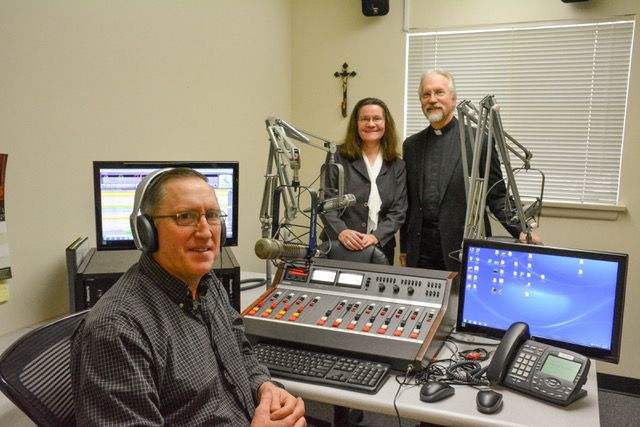
That station, “The Rock Dog,” is where this series of articles begins. WDOG is a tiny 100-watt LPFM with a big sound and lofty goals. It’s the culmination of all my previous experiences and the lessons taught to me by everyone I’ve worked with over the years.
Everything from the programming and engineering to the community involvement stems from ideas by brilliant engineers, programmers and personalities I’ve been blessed to call friends.
Brotherly love
WDOG(FM) was envisioned long before the third LPFM window opened about five years ago.
My younger brother, Steve, wanted to keep having fun in radio.
Like me, he started as a high school kid working for Petricola at WJER. Steve had experience doing everything from on-air work and programming at WBTC in Uhrichsville, to selling spots for Clear Channel. Eventually, we started discussing doing radio like we did in the old days, but with the added advantage of modern technology.
With a few years left until the third LPFM window, he formed a group, assembled a board and registered a nonprofit to meet basic FCC requirements. Bad Dog Educational Media was formed, and discussions began on how it might serve a role in the community.
The window opened, the nonprofit filed and a construction permit was granted.
Thanks to the good people at commercial country outlet WDOG(FM) in Allendale, S.C., we were permitted to use their call letters. The idea of The Rock Dog started to come together, leaning on everything we had learned about branding, marketing and imaging.
Long before the first day of broadcasting, the real work began. In my next article, I’ll dive into how we put the programming together to make The Rock Dog happen, followed by an exploration of the technology, branding, marketing, imaging, overall sound and community involvement.
Stay tuned!
[Related: “10 Tips for Starting Your New LPFM Station”]
The post It’s the People Who Craft a Career in Radio appeared first on Radio World.