Vue lecture

Exhibitor Viewpoint: Fraunhofer IIS at the 2026 NAB Show
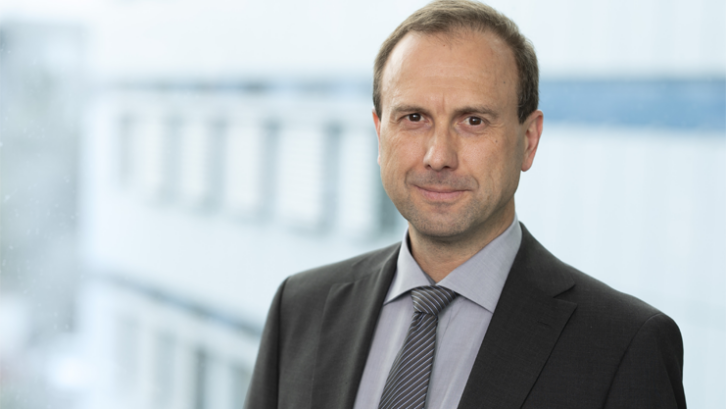
Mark Gayer of Fraunhofer IIS
Marc Gayer

With the 2026 NAB Show approaching, we’re providing you a series of previews asking exhibitors about their plans and expectations.

Marc Gayer is head of the Audio and Media Technologies’ Business Department at Fraunhofer IIS.

Radio World: Most attendees will have heard of Fraunhofer but may not realize its scale. Briefly, what is it and what is its core business?

Marc Gayer: Fraunhofer is Europe’s largest applied research organization, with 32,000 employees across 76 institutes, covering everything from communication systems and AI to health, mobility and media technologies. 

Fraunhofer IIS is one of the biggest institutes and home to the Audio and Media Technologies division — the people behind mp3, AAC, xHE‑AAC and today’s MPEG‑H and JPEG XS standards.

Our core mission is to develop technologies that turn scientific excellence into real‑world solutions such as efficient audio and video codecs and personalized, immersive sound. Our technologies are used for broadcast and streaming infrastructure as well as in advanced tools for content production and distribution. Continuous collaboration with global broadcasters, device manufacturers and standardization bodies ensures that our innovations reach audiences worldwide.

RW: What products or themes will you highlight at the NAB Show?

Gayer: Our focus will be on next-generation audio and professional media workflows, with major highlights from our audio and video technologies.

  • MPEG‑H Audio for broadcast and streaming — We’ll showcase new integrations of the MPEG‑H Renderer into Avid Pro Tools and Marquise Technologies’ MIST, enabling more creators to produce, QC and master immersive and personalized audio within existing workflows. We also present cloud‑based MPEG‑H Audio production and transmission workflows developed together with AWS and technology partners.
  • JPEG XS for ultra‑low‑latency, visually lossless video transport — Fraunhofer IIS will present the Emmy Award‑winning JPEG XS codec and its SDK, supporting ST 2110‑22, RTP, MXF and integration into CPU/GPU/FPGA/ASIC workflows — essential for IP‑based studio, cloud and live production environments.

RW: Fraunhofer codecs have played important roles in audio and radio broadcasting. What recent developments should we know about?

Gayer: Fraunhofer continues to advance the codecs that power today’s broadcast and streaming ecosystems. 

Recent developments include broader integration of MPEG-H Audio into cloud workflows as well as into even more professional production tools and consumer devices. 

In streaming, xHE-AAC remains a key technology for consistent, high-quality audio under variable network conditions, and adoption continues to grow across devices and platforms.

Beyond broadcast and streaming, our codec portfolio also advances next‑generation communication and immersive media, with IVAS and MPEG-I as emerging codecs enabling spatial experiences for phone calls and VR/XR applications. 

These efforts are complemented by innovations such as the integration of xHE‑AAC into modern messaging through its adoption in RCS ecosystems and LC3plus for low‑latency audio, which also has a lossless operation mode.

A particularly dynamic development is happening in Brazil, where the new DTV+ (TV 3.0) system uses MPEG‑H Audio as the mandatory audio codec. 

Consumer devices are now arriving on the market, including TVs with full MPEG‑H feature support, enabling Brazilian viewers to enjoy immersive and personalized audio at home. While Brazil leads the way, we also see growing interest from other markets in Latin America that watch this global media powerhouse closely. We expect many broadcasters to monitor the rollout of DTV+ and the viewer response during major events such as the upcoming World Cup — and some may explore similar audio innovations as Brazil’s ecosystem evolves.

RW: What have been the most important recent developments in AI for these areas?

Gayer: Within audio, the biggest shift has been the rapid move from classical signal processing to AI‑enhanced, context‑aware processing. 

For Fraunhofer IIS, this includes advances in AI‑based noise reduction, echo control, beamforming and dialogue enhancement — technologies that now adapt automatically to complex acoustic scenes in real time. 

At the same time, AI‑assisted tools are enabling more efficient broadcast and production workflows, from cloud‑based rendering to automated quality control, helping broadcasters scale modern, flexible production environments with less manual effort.

RW: What other trends will you be watching for at the convention?

Gayer: We expect strong momentum in cloud‑native and hybrid production workflows, particularly as more broadcasters adopt IP‑based infrastructures and seek interoperable, scalable audio tools. 

Personalized and accessible audio continues to gain importance, with viewers expecting adjustable dialogue levels, multiple commentary options, and mixes tailored to their listening environments. 

Additionally, the growing use of ultra‑low‑latency IP transport — supported by technologies like JPEG XS — is reshaping live production and enabling more distributed, collaborative workflows across studios and cloud platforms at the scale seen across NAB this year.

RW: What else should we know?

Gayer: Fraunhofer IIS develops technologies across the entire media chain and works with broadcasters, manufacturers and standards bodies to ensure real‑world deployment. Our goal is to make next-generation audio practical, accessible and ready for today’s workflows, a commitment reflected in the MPEG-H Audio and JPEG XS solutions we are showcasing at NAB, whether in immersive broadcasting, efficient streaming or the emerging world of personalized and interactive media experiences.

NAB Show Booth: W2343

[Read more interviews in this series.]

The post Exhibitor Viewpoint: Fraunhofer IIS at the 2026 NAB Show appeared first on Radio World.
  •  

Bauer Media Pushes Android Automotive App

The Rayo app is now built-in to the Android Automotive operating system.

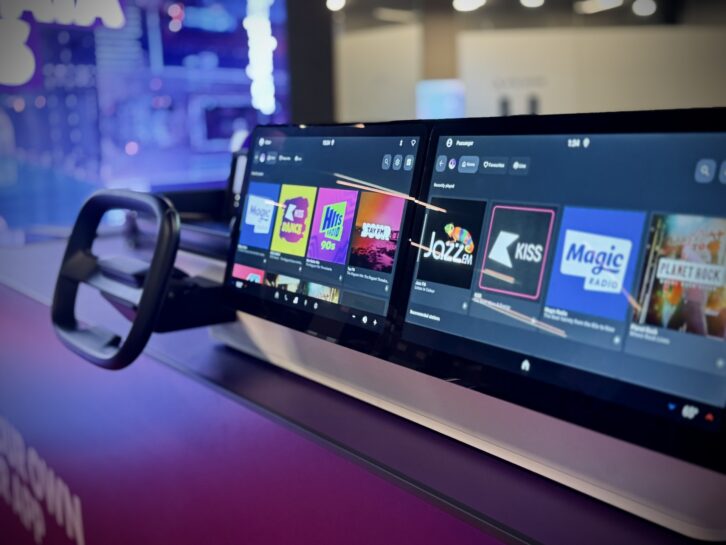
Bauer Media has released a new Android Automotive version of its Rayo app, available within connected car systems of BMW and Mini vehicles in the United Kingdom and Portugal. 

The company seeks to use the new connected car integration to aid its plans to turn “broadcast scale into digital growth.” The app was built using Radioplayer’s white-label Android Automotive OS platform and is supported by distribution through the Appning Apps Market Solution. 

Rayo is also available on iOS and Android, or online, according to Bauer Media. It offers live stations across the group’s audio portfolio, and Bauer Media said there are plans for on-demand audio and podcast features. 

BMW Group joins the app launch as a partner OEM.

Android Automotive vs. Android Auto

Radioplayer’s Android Automotive technology allows stations to offer their streams into native in-car environments, while Appning supports distribution through its platform designed for in-car app marketplaces.

The distinction between Android Auto — which requires a smartphone to project content onto a vehicle display — is that Rayo runs natively on Android Automotive, making vocal controls and dashboard interfaces accessible to drivers, the company said.

Bauer Media operates approximately 104 radio stations across nine different countries in Europe.

[Related: “Campaign Highlights “Unique Joys” of Radio in the Car”]

The post Bauer Media Pushes Android Automotive App appeared first on Radio World.

  •  

GBS Welcomes Findings of India Government Study

GeoBroadcast Solutions said its MaxxCasting and ZoneCasting technologies received a vote of confidence from a study by the government of India.

The company’s international arm Geo Global said the research, which was conducted in 2024 and recently made public, “validated” the performance of those systems.

“The study, conducted by Prasar Bharati’s Research Department at the government-owned All India Radio (AIR) FM station in Bengaluru, confirmed that the technologies deliver enhanced coverage and seamless listener experiences across a single-frequency network (SFN),” Geo Global said in a press release.

It quoted Dev Viswanath, managing partner of Geo Global, saying the study “sets the stage for final approvals and broader deployment. We are now positioned to support activation across hundreds of government-owned and commercial radio stations in one of the world’s largest and most dynamic broadcast markets.”

It said the report found that synchronized booster transmitters enabled smooth, uninterrupted transitions between coverage areas, even in dense urban environments and challenging terrain.

“In fully synchronous (MaxxCasting) mode, transitions between the primary signal and boosters were seamless, with no perceptible impact to audio quality,” according to Geo Global.

“The study also evaluated ZoneCasting capabilities, demonstrating precise geographic content delivery with minimal transition zones. Field testing conducted by Prasar Bharati engineers, on foot and in vehicles, confirmed consistent audio quality and reliable performance throughout the station’s coverage area.”

It said the report concluded that Geo Global’s technology claims were “fully substantiated.”

The company posted a link to the findings.

The post GBS Welcomes Findings of India Government Study appeared first on Radio World.

  •  

Ofcom Notes Launch of 100th Small-Scale DAB Multiplex

U.K. media regulator Ofcom said 100 small-scale DAB digital multiplexes have now been launched nationally under a program that began about four years ago.

“Small-scale DAB provides a low-cost way for local commercial, community and specialist music services to take to the digital airwaves,” it said.

ExeDAB, serving East Devon, is number 100. It is run by commercial station Radio Exe and community broadcaster Phonic FM. “It brings a variety of additional digital radio services to the towns of Honiton and Sidmouth, including Devoncast Radio and Sid Valley Radio.”

Ofcom quoted its Director of Broadcast Licensing and Program Operations Paul Mercer saying the launch “marks another major milestone meaning that even more listeners can benefit from local, diverse content, as well as boosting the local economy.”

Ofcom has also awarded small-scale DAB multiplex licenses to serve Armagh, Derby, Guildford, Woking, Weymouth, Dorchester and Bridport.

And it said it is consulting on a request by TorDAB Ltd. to change the area to be served by the Torbay small-scale radio multiplex service.

The post Ofcom Notes Launch of 100th Small-Scale DAB Multiplex appeared first on Radio World.

  •  

esRadio Deploys DHD Audio Consoles

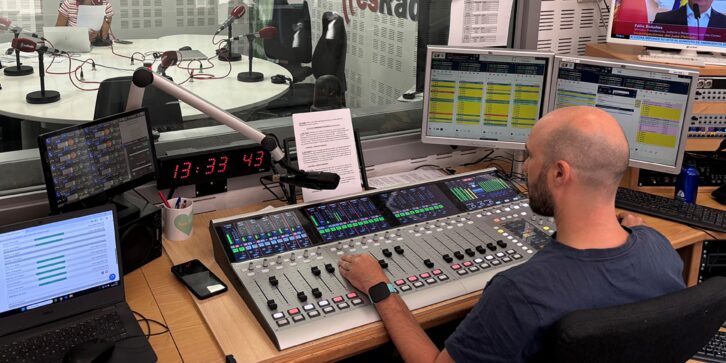
A view of a radio studio with a person sitting at a DHD audio console
One of the DHD RX2 audio production consoles at esRadio’s studios in Madrid.

From the Radio World “Who’s Buying What” page: FM and online broadcaster esRadio in Spain is using two DHD RX2 audio production consoles at its studio headquarters in Madrid. The broadcaster is part of the Libertad Digital media group.

“esRadio offers a robust news service plus in-depth coverage of cultural and economic topics as well as general entertainment,” according to DHD.

“It is today the fourth-largest commercial general-interest radio network in Spain. The RX2 consoles and associated equipment were supplied and commissioned by Agrupación de Servicios y Productos de Audio (ASPA).”

The installed configuration consists of two consoles, each with 18 physical faders. Each console comprises three fader modules and one control module; its capacity is doubled by a layering function that allows control over more channels without taking up additional space.

Other features include 10.1-inch touchscreens integrated into each section that allow channel setup and centralized control.

esRadio installed a DHD 52-7523 core matrix for routing broadcast signals and communication between consoles. For daily management of its broadcasts, it uses XFrame Radio automation software developed by ASPA.

Users and sellers can submit announcements for “Who’s Buying What” by email to radioworld@futurenet.com.

The post esRadio Deploys DHD Audio Consoles appeared first on Radio World.

  •  

Lawo Names Jamie Dunn CEO

Headshot of a man smiling, wearing a lilght blue jacket over an open-collared business shirt
Jamie Dunn

Jamie Dunn has been named the CEO of Lawo AG.

Dunn joined Lawo in 2011 and has served as Vorstand and deputy CEO since 2024.

“His long tenure with the company, deep market understanding and global experience form a strong foundation for the future,” the firm stated.

Philipp Lawo steps down from the Vorstand corporate board and joins its supervisory board.

“This move reflects Lawo’s commitment to strengthening corporate compliance by more clearly separating management and control functions across its governing bodies,” Lawo said in the announcement.

Lawo’s management board now consists of Jamie Dunn (CEO and Vorstand), Claus Gärtner (CFO and Vorstand), Andreas Hilmer (CMO), Christian Lukic (CSCO), Phil Myers (CTO) and Ulrich Schnabl (COO).

Michael Sonnabend, chairman of the supervisory board, said the change achieves a continuity in leadership.

“With his transition to the supervisory board, Philipp Lawo will continue supporting Lawo’s development and ensuring that the values of the Lawo family remain at the heart of the company’s culture,” it stated. “As the sole ‘Vorstand’ of Lawo Holding AG, he will be responsible for the strategic direction of the entire Lawo Group, reinforcing the focus on long-term stability and sustainable growth.”

Headquartered in Germany, Lawo’s business markets include broadcast television and radio, performing arts, houses of worship and professional AV. It was founded in 1970 by Peter Lawo.

The post Lawo Names Jamie Dunn CEO appeared first on Radio World.

  •