Vue lecture

What Should the FCC Consider in an NCE Translator Window?

The FCC has released the details of its proposed noncom educational band (88.1–91.9 FM) translator filing window, of which its commissioners will hold a vote to open a public notice on Feb. 18.

But are there other considerations it should make before proceeding?

Consulting engineer Edward (Ted) Schober is getting his opinion in early and he has laid out a detailed list of items he said the commission should consider that he filed in prior to a comment period that would come if the commission, as expected, approves the notice.

Schober felt his framework would enhance both the public interest and equitable distribution of authorizations.

Under the current plan the FCC has put forth, an eligible applicant for new FM translator construction permits for noncom educational stations in the reserved band would have to be a licensee or permittee of an existing NCE FM or noncommercial AM radio broadcast station or LPFM. Any proposed translator would rebroadcast the primary channel.

The FCC proposes a limit of 10 applications nationally for each applicant.

For LPFMs, however, the limits are lower. According to the proposal, a Tribal LPFM would be limited to four translator applications, while all other LPFMs would be limited to two translator applications.

Schober believes the commission’s effort is laudable in that the proposal seeks to avoid the landslide of applications for FM translators distant from the primary station.

(Read Edward Schober’s comments filed to the FCC.)

But he asked the FCC to consider other options that he felt would guarantee the public interest is served, its staff is not overwhelmed and the applications to be granted are equitably reviewed.

A fair count

Schober’s first suggestion is that if an applicant has existing FM translator licenses, either in the NCE band or the non-reserved band, the total count of existing translators should be included in the translator cap for this window. That would, naturally, render some licensees ineligible.

In addition, he said that when a licensee entity has a majority of its board or other governing body also serving as the majority of another licensee, both or all the entities should be considered as a single entity.

Schober also proposed that if an applicant wished to surrender one or more existing FM translator authorizations, conditioned on a grant of a translator authorization in this new window, the entity should be permitted one additional translator application for each translator license or LPFM license surrendered.

He told the FCC he believes applicants should be prohibited from transferring existing translators or the primary station to a different party in order to increase the number of NCE FM translator applications eligible to file in this window.

Schober, who has been providing engineering counsel for hundreds of commercial and noncommercial AM, FM and translator stations for the past 45 years, said since LPFM stations are designed to provide service to a specific local area, and not provide wide area coverage, perhaps there should be limitations to their translator ambitions.

For example, he said that a translator should be denied if its proposed 60 dBu coverage extended more than approximately 30 miles from the LPFM’s own 60 dBu contour, with the exception of Tribal and public safety entities.

Tiebreakers

Observers have wondered if the FCC might modify its existing rules to consider mutually exclusive applications, or where two or more applications can’t be granted.

Schober had several suggestions in such scenarios for NCE translator applications.

  • When mutually exclusive applications are tendered, the distance from the FM translator’s 60 dBu contour to the primary station’s 60 dbBV contour (up to approximately 30 miles, with zero distance most preferable) should be the primary tiebreaker between the applications.
  • If a noncom full-power station or an LPFM station F(50,50) 60 dBu or AM 2 mV/m contour serves only a portion of an urbanized area, and a proposed new NCE FM translator’s F(50,50) 60 dBu contour serves a portion, or all, of that same urbanized area, the distance between service contours should be considered zero — or given higher priority.
  • Mutually exclusive applications with greater distance than 30 miles between the proposed and primary station contours should be withheld until all the more local applications are granted, then the remaining applicants given an opportunity to amend.
  • Fill-in translator applications should be evaluated as having zero distance between primary and translator contours, provided that at least half of the fill in translator’s F(50,50) 60 dBu contour is shown to have primary station service of less than 70 dBu contour using the Longley-Rice model.

The commission could assign whatever weight it chooses to assign to fill in FM translators that will carry HD-2, HD-3 or HD-4 programming of the primary station, Schober wrote.

Special cases

Schober proposed that Tribal entities and public safety should be permitted any number of NCE FM translators whose 60 dBu contour remain at least 90% within their reservation or area of jurisdiction, provided they have no other NCE FM translator applications that are outside the physical area of jurisdiction or responsibility.

Applicants for new FM translators within the window should be exempt from the cap if all the applications, and the principal community of the primary station are within the same minor insular outlying area, provided the applicant has no applications outside that minor outlying area. That includes applications in the USVI, Guam, Northern Mariana Islands and American Samoa.

For the purpose of greatest frequency utilization and efficiency, he said that waivers should be granted to authorize NCE FM translators co-channel to the primary station, or to other co-channel NCE FM translator applications repeating the same primary station, provided that the F(50,10) 54 dBu of the new NCE FM translator remains within the F(50,10) 40 dBu contour of the primary station.

These should be conditioned that all other stations are fully protected, and proven FM synchronization methods must be used, Schober wrote.

“The nature of noncommercial educational FM stations does not entail the competitive issues that are raised with commercial broadcast stations, so there is no controversy concerning the expansion of the service contour of NCE FM stations,” he wrote in the proposal.

The commission has already said it will not accept applications for major modifications to existing NCE reserved band translators.

If the FCC adopts the proposal at its Feb. 18 meeting, a comment period will commence once the notice is printed in the Federal Register.

[Do you receive the Radio World SmartBrief newsletter each weekday morning? We invite you to sign up here.]

The post What Should the FCC Consider in an NCE Translator Window? appeared first on Radio World.

  •  

Petition Would Ease a Short-Spacing Restriction

A new petition before the FCC seeks the elimination of a section of the rules that pertains to short-spaced FM assignments.

Consulting engineer Charles Anderson wants the FCC to be able to accept applications that specify a short-spaced antenna location for which minimum distance separations are not met.

Anderson says the current language is outdated given the maturity of the band. He thinks the FCC should shift its allocations priority to improving existing facilities.

The relevant part of the rule specifies an “absolute minimum distance” for commercial FM stations, below which no amount of power reduction or signal contour overlap protection may be used to site an antenna.

The rules allow commercial FMs to request sites that are “short-spaced” to other stations by protecting existing service from interference through specific “contour protection” requirements, ensuring the new station’s predicted interfering signals don’t overlap with protected contours of other stations.

Anderson says the rules often allow transmitter site flexibility, especially in congested areas, but that the troublesome subsection prohibits the FCC from accepting applications that specify a short-spaced location for which stated minimum distance separations are not met.

It’s a “strict go/no-go limitation,” he writes. But throughout his years assisting broadcasters to improve their facilities, the “limitations in subsection (e) to §73.215 are the major impediment to existing facilities utilizing directional antennas and contour protection to move to locations that better serve their market areas.”

In many cases, he continues, broadcasters are seeking to relocate to existing towers when sites are lost, or when it is not economically viable to replace aging towers or sustain existing land and tower leasing rates inflated by wireless services.

Andreson calls it noteworthy that reserved-band stations — some 41% of FMs in the country — have never been subject to the restriction on the use of contour spacing.

“While painfully obvious to broadcast engineering professionals, it is useful to observe that there is no inherent nor even significant difference in FM propagation and reception for radio stations in the 88 to 92 MHz reserved portion of the FM band for which the subsection (e) limitation does not apply, and for radio stations in the 92 to 108 MHz non-reserved portion of the FM band for which subsection (e) does apply.”

He says broadcasters are often faced with the difficulty and expense of constructing new towers, because the restrictions frequently have blocked the use of a station’s existing tower for upgrades or the use of other towers when sites are lost or become prohibitively expensive.

Anderson cited an example of a rural Alabama broadcaster being denied a 0.44 km (1,441 feet) waiver in order to upgrade from Class A to C3 at the station’s licensed site even though there was no prohibited overlap.

“Acquisition and tower construction for a new site were financially prohibitive and the expanded 60 dBu service to an additional 58,820 listeners, a 192% increase, was thwarted. In many other cases stations have lost tower sites and the availability of alternate towers was severely limited” by the subsection rule.

The directional antenna 15 dB maximum to minimum rule and the 70 dBμ city-grade coverage rule provide adequate protection from extreme short-spacings, he told the FCC.

In his filing Anderson describes himself as a “heritage” broadcast engineering consultant, adding in a footnote that he has prepared the engineering portions of more than 1,000 FCC applications, engineering exhibits and petitions over 45 years.

The timing of his petition coincides with Chairman Brendan Carr’s “Delete, Delete, Delete” initiative seeking to do away with outdated rules and regulations.

The post Petition Would Ease a Short-Spacing Restriction appeared first on Radio World.

  •  

Final Thoughts: Jacobs on His CES Takeaways

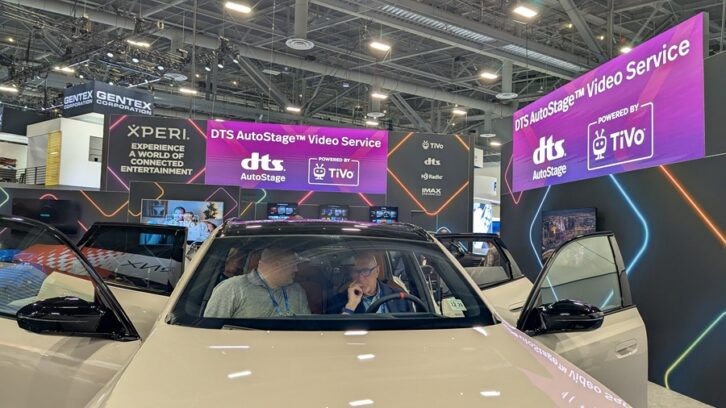
Attendees sit in a car on exhibit in the Xperi booth at CES. Signage highlights the DTS AutoStage Video Service
Xperi signage emphasizes the DTS AutoStage Video Service

Veteran radio consultant Fred Jacobs has had a month to reflect on what he saw at CES in Las Vegas. 

The fact is, Jacobs says broadcast radio was again nearly absent from the tech fest. Xperi’s DTS AutoStage with HD Radio was displayed in a shiny new Mercedes-Benz CLA, but beyond that there wasn’t much for radio broadcasters to celebrate; and even that display was showcasing the platform’s video capabilities.  

You can watch Jacobs Media’s CES debriefing webinar at the bottom of this story. It includes his choices for “Worst of Show” products such as audio “lollipops” and an AI robot companion for children, as well as a sampling of exhibits directly relevant to radio such as SoundHound’s agentic AI ecosystem and will.i.am’s Raidio.FYI platform.

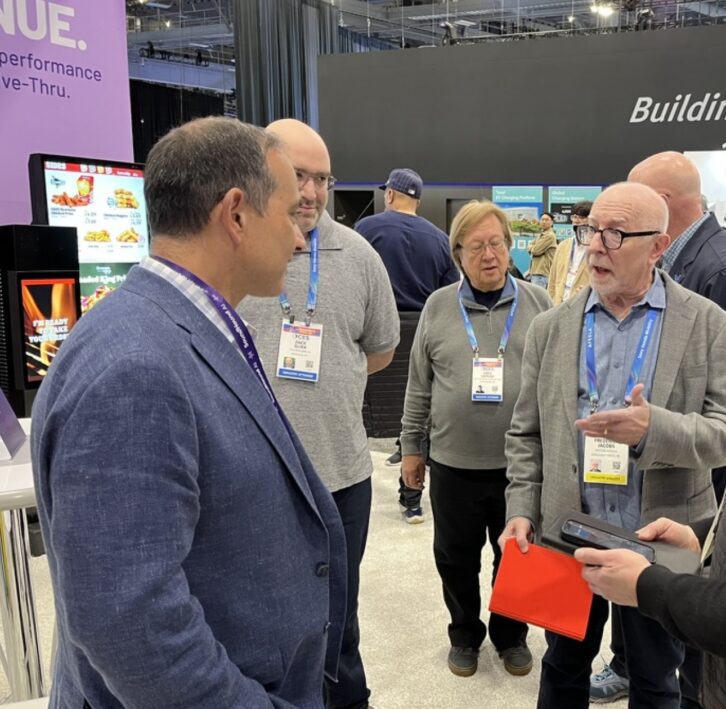
Fred Jacobs visits the SoundHound booth. The exhibitor highlighted its agentic AI offerings.

Jacobs says he remains interested in making connections between new technology he sees at CES and how it could be applied to the broadcast radio industry. 

Along with his brother Paul, Fred Jacobs searched the floor at the Las Vegas Convention Center for every bit of technology that involved radio or could affect the broadcast ecosystem. 

As he describes the show in a blog post: “CES is unorthodox, challenging and mind-bending all at the same time.”

The race for AI innovation continues and the uses are stunning, Jacobs told Radio World. AI is far beyond just a buzzword; it’s foundational to most new technologies. 

“It’s accelerating content creation and spreading across broadcast applications,” he said. “The omnipresence of AI again this year overshadowed everything else. That speaks volumes about where it’s all headed.”

The car remains the main focus for radio broadcasters, he said. “But this was a more cerebral CES. Less gadgetry and more AI. The tsunami or avalanche of AI is how I see it. And really, advanced applications of AI. 

“It required a lot more thought of what all of this means for radio. AI is infiltrating every product.”

[Related: Read John Garziglia’s posts for Radio World from the show floor.]

AI affects every square inch of new vehicle space, Jacobs says.

“Autonomous, heads-up displays, voice controls, infotainment delivery, safety and the passenger economy. Automobiles will soon be AI platforms.”

Yet carmakers were hardly represented, outside of a few autonomous vehicles. There were lots of cars, but these were used to show how AI is tying together gadgets and platforms for the convenience of the consumer.

“We’ve seen the pullback from the days car companies filled North Hall, and later the new West Hall, often with massive displays. This year, the big OEMs were missing in action. BMW was the exception, but their display was off in the Silver Lot. On top of that, perhaps surprisingly, infotainment was only a small part of their showcase.” Chinese carmaker GWM also had a display. 

Jacobs learned how quickly AI is changing the way people interface with technology.

For example, electronics company LG wants to create a home hub of artificial intelligence that will control all of the connection points in the household, from appliances, maybe a robot and even to the dashboard of a car. The electronics manufacturer had the largest booth at CES.

A key takeaway is that AI is becoming more of a companion, “like an agent or assistant.” As Ford says about its own offering: “The Ford AI Assistant isn’t just another piece of software you talk to occasionally; it’s an intelligent thread woven seamlessly through every aspect of your life with Ford.”

Radio should take note, Jacobs said, because “It’s companionship, something that most media outlets do not have, but radio always has.”

He was disappointed not to see more of radio.

“We even opted not to sponsor our broadcasters’ tours this year because we just didn’t sense a lot of interest following a difficult 2025, so that didn’t help radio attendance. But in the main, the broadcaster turnout was disappointing especially when you consider who was there,” he said.

Over at the crowded C Space event in the Aria, iHeartMedia did have a presence. 

SiriusXM staged a huge display at C Space, which caught Jacobs by surprise. On a Jacobs Media webinar recapping the convention, Chris Brunt of Jacobs Media said SiriusXM welcomed guests in a significant display space.

“Their CEO was there, and he revealed half of their new cars now have a return path for data, which means they can show listener data to advertisers and their DJs and listeners can interact through the technology. Just more in-car developments that will have an impact on terrestrial radio,” Brunt said.     

Back in the LVCC West Hall, Xperi made the U.S. debut of its advanced DTS AutoStage platform. It now offers in-car video streaming based on its TiVo platform. Xperi said that five OEMs have adopted the video platform. 

Xperi, Jacobs said, is “clearly going headlong into the video space. That should tell you something because these are radio people, but they see the importance of video streaming in the car.”

Still, the presence of DTS AutoStage and HD Radio was encouraging.

“With other dashboard ecosystems, broadcast radio has been mostly an afterthought, if that. With AutoStage, radio is still primary, and it shows. 

“In addition, there’s the data. Xperi’s heat maps are impressive, providing radio broadcasters with actual in-car usage from the expanding AutoStage platform.”

Mercedes showed the latest version of its GLC model. Its AI-based MB.OS platform featured an optional MBUX Hyperscreen almost 40 inches wide. 

Personalization and customization continue to be key elements for music delivery systems, Jacobs says. After what he saw at CES, it’s even more clear that AI will play an important role in anticipating our moods and tastes.

“Radio delivering its content on other platforms — apps, YouTube, newsletters, podcasts — can provide consumers with the types of programming and listening options they’ve come to expect from new technologies,” he said. 

“The difference is that radio, when it’s doing its job, features favorite personalities who know and can reflect the local vibe.

“And then there’s the live element, something that digital media typically lack but radio can still deliver. A show like CES is a reminder to radio it must strategically be a different kind of information and entertainment medium in a rapidly evolving digital environment.”

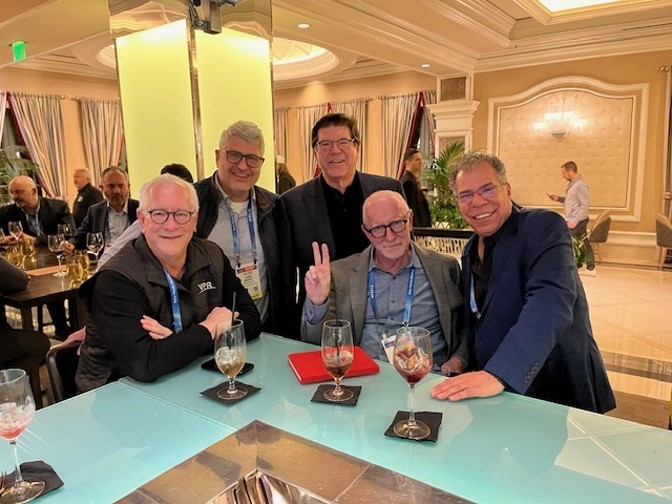
Radio industry professionals Paul Jacobs, Chris Brunt, Steve Newberry, Fred Jacobs and Tony Garcia compare notes at CES.


While CES may have underwhelmed on the radio front, Jacobs says it isn’t that technology is leaving radio behind. 

“While it’s true you can wander around CES and never bump into a radio, the beauty of this show is you can easily experience technology that can make radio more efficient, scalable and even better, depending on how it’s applied. That’s the reality of the AI megatrend, a technology that is showing up everywhere, across all media and industries,” he said.

“I think radio companies are quietly using AI technology more and more, but they aren’t talking about it much. It is the kind of thing where anyone in the organization can participate and make a difference, so the democratization of content and ingenuity is exciting. 

“But they must dive in and learn. Social media had a similar growth pattern. Often broadcasters talked about it but many didn’t personally participate in it. That’s the case with a phenomenon like TikTok now. You can’t just talk about it — you’re got to walk the talk.”

You can watch Jacobs Media’s CES debriefing webinar below.

[For News Like This See Our Show News Page]

The post Final Thoughts: Jacobs on His CES Takeaways appeared first on Radio World.

  •  

FCC Cites Errors in Dismissing Fla. LPFM Application

The FCC says an LPFM hopeful failed to respond “fully and accurately” to a request for more information, so it has dismissed its application for a station in Hudson, Fla.

The commission rejected the application from Money Matters Educational Inc. (MME). The FCC found its response to be “problematic, incomplete and uncredible.”

MME had applied in the 2023 LPFM filing window, but its paperwork drew scrutiny for several errors and omissions.

The FCC questioned the location of the proposed main studio and whether its board members resided within the required distance. Board members must live within 10 miles of the proposed antenna site, according to FCC rules.

On its application, MME listed Hamon Francis Fytton as sole director. Yet Florida law requires not-for-profit corporations to have a minimum of three directors, according to the FCC. In addition, the entity’s Articles of Incorporation list three other individuals as directors: Kirby Julian, Ruben Alcoba and Luis Villa.

“None of these three individuals is included as a party to the LPFM application,” the FCC wrote in its dismissal.

In November 2024, the FCC sent a letter of inquiry seeking additional information, including confirmation of MME’s directors, notarized declarations from each individual attesting that they authorized the filing of the application and copies of each individual’s driver’s license.

The FCC says MME responded and provided some but not all of the information.

MME told the FCC it had permission to use space in an office building at the address on the application “as the main studio, headquarters and transmitter site for the proposed station.” However, it failed to provide written confirmation from the building owner, only promising to send confirmation later, which it never did, according to the FCC.

As for providing identification of the directors of the corporation, MME’s response included a copy of Fytton’s license, the FCC said, but not for the others in question.

In fact, as MME’s response explained, Kirby Julian had died nearly a month before the filing of the application.

“The LOI response further states that Luis Vila is no longer associated […] with MME, and that Ruben Alcoba was travelling out of the country and unavailable at the time of the response,” according to the FCC.

MME stated that copies of identification for “Kirby Julian and Luis Vila would not be forthcoming,” but that a driver’s license for Ruben Alcoba would be supplied “after his return from travel.”  The Audio Division said it never received a further filing.

In addition, the driver’s license for Fytton indicated he resides in Fort Pierce, Fla., about 150 miles from the proposed community of license. And in their response to the letter of inquiry, officials provided a different address for Fytton in Melbourne, outside the residential requirements.

With those strikes against MME, the FCC stated it had no option but to reject the LPFM application.

“In this case, MME has failed to respond timely to the Audio Division’s request for necessary information,” wrote Albert Shuldiner, chief of the Audio Division. “The failure to comply therefore renders the application defective.”

The FCC has dismissed several other LPFM applications recently for various reasons.

The post FCC Cites Errors in Dismissing Fla. LPFM Application appeared first on Radio World.

  •  

Nautel Adapts to Shifting Technology Winds

Transmitter technology continues to advance, with trends toward modularity, redundancy, remote control and efficiency. In addition, broadcasters quickly are embracing virtualization, and more airchain functions are being redesigned as software that can run with or in the transmitter itself. 

Manufacturer Nautel is at the center of these developments. Nautel makes high-power, solid-state RF products for broadcast radio. Its products include transmitters for FM, AM and digital broadcasting including HD Radio, DAB and DRM.

Nautel has deployed approximately 20,000 transmitters in at least 177 countries since its founding in 1970. President/CEO Kevin Rodgers has been with the company for 40 years, joining it in 1985 when it made only AM transmitters. 

The privately held firm has about 250 employees worldwide; it is headquartered in Hackett’s Cove in the Canadian province of Nova Scotia. It also operates a manufacturing facility in Bangor, Maine. 

Radio World asked Rodgers, 64, about challenges facing the transmitter business, where growth will come from and the company’s perspective on tariffs as its operations straddle Canada and the United States.

Kevin Rodgers
Kevin Rodgers

Radio World: Kevin what would you identify as the most important challenge facing broadcast RF manufacturers today? 

Kevin Rodgers: There isn’t a single challenge. The industry is at a turning point, where technology is shifting from legacy analog RF broadcasting to modern digital and IP infrastructure. This is forcing manufacturers to redesign products that are compatible with hybrid RF/IP networks and digital modulation schemes like HD Radio and DRM. 

This shift requires new approaches to exciter design, signal transport, security and compliance and adds to the engineering challenges when designing new transmitters. Transmitters are now expected to integrate seamlessly with IP networks.  

Customers aren’t just buying RF transmitters anymore, they want control systems, monitoring, analytics and remote diagnostics all built in. This of course means a transmitter manufacturer needs not only top RF and power supply design engineers, but also software and firmware talent.

RW: How would you characterize the health of the transmitter business globally?   

Rodgers: North America remains the core of the radio broadcast market but there are exciting things happening across the globe in Asia, Africa, Latin America. And certainly DAB+ has transformed radio in Europe.

RW: What areas of your business are likely to drive Nautel business growth in 2026?  

Rodgers: Primarily it’s FM around the world. That’s traditional FM broadcasting, and obviously continued interest in digital broadcasting, HD Radio. We all know that it got off to a slow start, but we’ve certainly in the last five years found that people are interested in it around the world.

RW: How big of a growth segment is HD Radio for you?

Rodgers: We continue to hold a passion for digital radio. I’m still blown away by the sound quality of an HD channel, and radio broadcasters do an amazing job of making their content sound spectacular compared to non-radio streaming alternatives. 

We’ve been one of the voices underlining the importance of stations getting their fair chunk of real estate on the modern car dashboards, and we’re doing everything we can to make HD an easier and less expensive option for any broadcaster that hasn’t yet adopted it. So yes, we see HD as an important proposition for broadcasters and we’ll continue to innovate in that space.

RW: What about the demand for AM transmitters?

Rodgers: AM as you know is up and down around the world. We still see some opportunities, but most of North America has moved away from AM in general. There are specific areas where AM is still very popular and is a great source of revenue in some locations. But interest in North America has moved to FM where there’s room.

There are opportunities worldwide for high-power AM. I know there’s an opportunity in Pakistan right now where there’s some interest in high-power AM.

RW: Nautel has only ever designed solid-state transmitters from its beginnings. How did that happen?

Rodgers: That’s correct. We got started by producing radio beacons, which at the time were popular around the world. And in the late 1960s that technology was all tube-based. 

Our founders decided that they could use solid-state technology to make a much more reliable radio beacon. And that’s how the company started with their solid-state heritage, with an exponentially more reliable radio beacon transmitter.

We also consider ourselves to be the first company to successfully commercialize a solid-state broadcast transmitter. We were very excited when we started making 30 kW and 40 kW transmitters about 15 years back and saw the industry complete that evolution from tubes to solid-state in even the largest transmitters.

RW: And AM was Nautel’s first interest?  

Rodgers: Yes. The radio beacon frequency range is 190 to 535 kilohertz, so it was a natural progression to move into the AM broadcasting band, which is just above 530 kilohertz. Then having been very successful in AM for most of the 1980s, we moved into FM in the early 1990s.

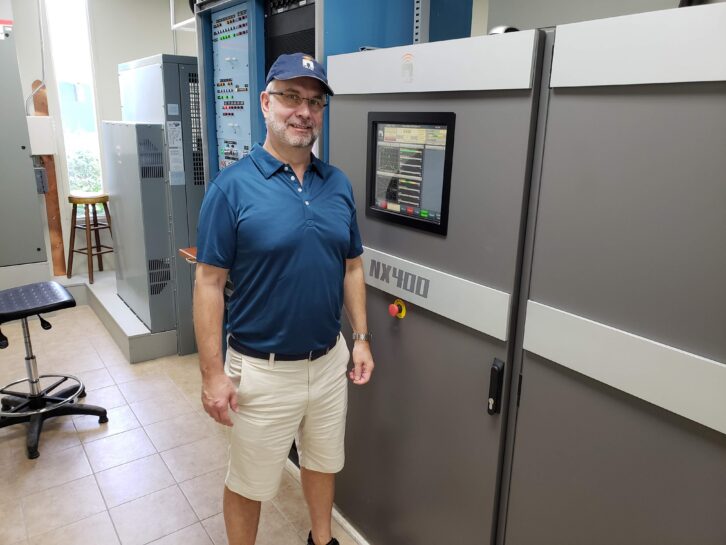
Rodgers with the Nautel NX400 transmitter used by Trans World Radio on Bonaire.

RW: How have tariffs and Canadian/American political tensions affected Nautel’s business?

Rodgers: All manufacturing entities in North America are managing through some aspects of changing regulations. You could say that Nautel is a pan-North American business from a manufacturing standpoint. 

By design we’ve had two mirror image production facilities in the U.S. and north of the border for more than five decades. That allows us to optimize production for our customers and have resilience should we ever have a disaster recovery situation.

As for any impact of the changes, all I can say is that Nautel had a very strong year in 2025 and prospects for an even stronger 2026, so I guess we’re doing the right things to manage through tariffs and the changes, with our customers always top of mind. 

RW: Are supply chain problems still an issue in RF manufacturing? 

Rodgers: The global supply chain challenges have improved somewhat in the past year but all companies face the occasional hiccup. We have fantastic relationships with our major vendors so are able to keep ahead of most issues, but there are still surprises that come up.

Recently we almost ran out of fans, but at the very last minute our suppler came through with two skids of fans, approximately 2,000 pieces, and we were able to ship transmitters on time.

RW: What technology developments will Nautel highlight at the spring NAB Show?

Rodgers: I think broadcast engineers will have lots of reasons to stop by our booth. It’s too early, and we won’t let the cat out of bag just yet, but broadcasters have watched Nautel really push the envelope on digital radio via our software-based air chain approach. This year will definitely continue that trend along with a few other surprises.

RW: Nautel’s Radio Technology Forum at NAB, often still called the Nautel User Group or NUG, is moving from the Flamingo to the Westgate Las Vegas Resort. What will be new there? 

Rodgers:  Over the years, we’ve really tried to make this a cross-industry event appealing to all broadcast engineers and not just Nautel customers. This year it’ll be addressing broad topics of concern to all broadcasters, including how many more functions of the traditional radio air chain we might eventually see built into transmitters. 

[Related: “Nautel Moves Its Radio Technology Forum”]

The jury is still out on that one. In a sense the only two components of an over-the-air air chain that can’t be implemented in software are the microphone and transmitter, so it will really come down to how broadcasters want to host these components. 

Different situations or preferences may determine if components might be hosted in server, or in the transmitter, or in the cloud or in a combination of two or more of the options to achieve resiliency. 

We’ve focused a lot on the audio processor and HD Radio components because we can link those elements together to eliminate FM-HD blend drift completely. We also feel that elements of the automation system make a lot of sense to be at the transmitter site so that if connectivity is lost, content can keep flowing seamlessly for hours until a connection is reestablished.

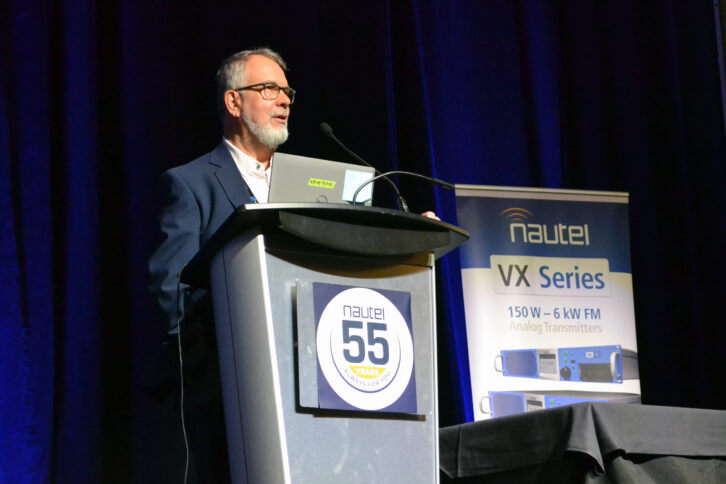
The leader of Nautel speaks at a company event during the NAB Show in 2024.

RW: A couple of years ago Digital Alert Systems, Telos Alliance and Nautel proposed EAS alerting for radio with a networked approach, dubbed EAS at the Edge. Is there anything new in that area?   

Rodgers: Yes, we did a demonstration together to show an example of how EAS can fit into a software-based air chain. Since that time there has been lots of discussion on how to move EAS forward into modern IT and air chain infrastructures. As industry and regulators work together to define any changes to EAS infrastructure, Nautel stands ready with a flexible software-based architecture.

RW: What is your top business goal as the leader of the company for 2026?  

Rodgers: A couple of things. This applies to myself, and I encourage my team as well, to be excellent listeners to our broadcast customers. It’s the only way we can stay true to our mission of serving their needs.

Another area where we hope to help broadcasters this year is taking advantage of the car dashboard to keep radio front and center, and help our customers find new sources of revenue, relevance or donations. When radio prospers, we all prosper, so we have a deep partnership in helping broadcasters be their best. 

RW: How about possible major consolidation in the U.S. through changes in ownership caps? How could that affect your business?

Rodgers: That’s a hard one to predict at this time. We’re certainly ready to support any broadcaster that may need to modernize their infrastructure as the result of consolidation or station ownership changes.

RW: How did you get started in this business? 

Rodgers: While attending the University of New Brunswick, I began a summer job in the engineering department at a local radio station, CFBC(AM), maintaining a Harris MW-50. After graduating in 1985 with an electrical engineering degree, I joined Nautel.

I was responsible for customer service. This included field work and telephone support. Being in the trenches with broadcast engineers allowed me to learn their pain points and how to build a company that can better address those needs and serve them into the future.

RW: Who were your mentors early on?  

Rodgers: Nautel’s founders were Dennis Covell, Dave Grace and John Pinks. Their influence in my early years at Nautel still guides me to this day.

RW: What do you enjoy doing in your time away from the office? 

Rodgers: When I can, I like to tinker in the garage. I have a passion for restoring old cars and get real enjoyment from seeing results from a hands-on effort. My favorite restoration is my 1970 E-Type Jaguar. 

[Related: “Nautel’s Wendell Lonergan Reflects on a Remarkable Career”]

The post Nautel Adapts to Shifting Technology Winds appeared first on Radio World.

  •  

LPFM Advocate Warns FCC of Possible Side Effects of More Consolidation

A group that advocates for low-power FM stations is worried that any changes made by the FCC to current ownership rules for commercial broadcasters will have consequences on smaller community-based radio services.

In fact, it said if the commission relaxes ownership limits for primary broadcasters, it should update LPFM’s ownership limits in unison, to ensure consistency, fairness and preservation of community-based service.

The Low Power FM Advocacy Group (LPFM-AG) is among the thousands of filers who have commented during the FCC’s proceeding on broadcast ownership rules, which could result in major reforms and the elimination of AM and FM ownership caps.

“If ownership limits are relaxed, the resulting increase in local market power will have predictable downstream effects on smaller broadcasters unless complementary measures are considered,” according to the group’s filing.

The recent reply comments, signed by Dave Solomon, executive director of LPFM-AG, outline its concerns about further radio ownership consolidation and how increased local market power affects broadcasters that lack those advantages.

“Increased concentration alters the economic environment in which smaller broadcasters operate, particularly those without access to multi-station sales operations, regional branding, or capital reserves,” the group wrote.

In addition, Solomon said the FCC’s existing rules for the LPFM broadcast service create many challenges, despite the service being closely aligned with the commission’s localism objectives.

Restrictive ownership rules for LPFM

Right now, a party cannot hold an “attributable interest,” as defined by the FCC, in more than one LPFM station. Radio World has reported on repeated LPFM application rejections as a result of the ownership limit rule.

Solomon cautioned that LPFM operators are currently hampered by the most restrictive ownership, transfer and technical rules of any broadcast service.

“These constraints become more consequential as ownership consolidation increases elsewhere in the broadcast landscape,” he wrote.

(Read LPFM-AG’s reply comments, filed on Dec. 25.)

Therefore, the advocacy group is concerned that commercial broadcast ownership changes without parallel reform for LPFM would amplify existing asymmetries and increase pressure on community-based services.

If LPFM ownership rules were updated with reasonable “guardrails,” the group asserted that the service would be better assured that increased concentration does not operate “to the exclusive benefit of large clusters,” while leaving small and community broadcasters “increasingly exposed.”

The group pointed out that the commission has already determined that a rigid one station ownership limit for LPFM is not universally appropriate. Under existing FCC rules, according to the group, certain applicants are “expressly permitted to hold attributable interests in more than one LPFM station where doing so is necessary to serve their communities effectively.”

Specifically, the LPFM advocacy group noted that the commission already allows Tribal applicants and public safety or governmental entities operating within their jurisdiction to own up to two LPFM stations.

In addition, under current rules, LPFM stations may not be transferred for fair market value, according to the group.

“As a result, LPFM licenses are frequently surrendered rather than transferred,” LPFM-AG said.

AM broadcasters face similar challenges

Meanwhile, the LPFM advocate argued that small, locally-owned AM broadcasters face the same threat as LPFMs if further commercial ownership consolidation is allowed by the FCC.

They often rely on a single FM translator to remain viable. In addition, the group said, many AMs are minority owned and serve local or cultural communities.

LPFM-AG, which claimed over 500 low power FM radio stations have been killed off in the past 15 years, said noncommercial broadcasters also face comparable structural exposure.

“LPFM stations depend on local underwriting, fundraising and volunteer support. Neither service can realistically compete for local economic support against large clusters with dominant market presence,” the group wrote.

The LPFM advocacy group said commenters in the record supporting deregulation repeatedly argue “that rigid, legacy rules should give way to more flexible, service-based standards.”

Solomon argued that applying that same logic requires examining whether LPFM ownership transfer, and technical restrictions remain necessary in all circumstances.

“Absent such LPFM reforms, existing LPFM transfer and ownership restrictions will continue to force license surrender and permanently deprive communities of locally originated radio service,” Solomon wrote.

(Read our ongoing coverage of comments the FCC has been taking in its review of broadcast ownership rules.)

The post LPFM Advocate Warns FCC of Possible Side Effects of More Consolidation appeared first on Radio World.

  •  

NRB Would Drop AM Caps But Keep FM Limits

When it comes to local ownership caps, the National Religious Broadcasters believes the FCC should treat the AM and FM bands differently.

It thinks the commission should adopt “a measured, service-specific” approach, eliminating AM restrictions but keeping the caps for FM. It says the bands face “materially different” market conditions.

The commission is weighing the future of ownership limits as part of its quadrennial review. In each of the largest markets, a licensee currently can own up to eight commercial radio stations and no more than five on each band (FM/AM) in the market. The cap shrinks as the number of stations in a market decreases.

NRB represents 1,100 Christian broadcasters and media organizations in radio, television, digital and emerging platforms.

NRB said the elimination of local restrictions on AM would help stabilize, promote and revitalize the band.

“AM radio faces a distinct and well-documented set of technical, economic and competitive challenges. In this environment, continued application of local ownership caps no longer meaningfully advances the commission’s core policy objectives.”

It said AM ownership flexibility can serve as a stabilizing mechanism, allowing operators to combine resources, spread fixed costs and reinvest in facilities and programming that might otherwise be lost.

“Greater flexibility could also facilitate technical improvements, including transmitter modernization, signal upgrades and enhanced emergency-alert capabilities.”

But NRB urges the commission to retain its local limits for FM radio.

It says FM stations continue to play a central role in local markets, maintain strong audience reach and serve as primary platforms for locally originated news, public affairs, educational and community programming.

Relaxing FM limits would risk accelerating consolidation in precisely the segment of radio where localism and viewpoint diversity remain most vibrant and most vulnerable, NRB believes.

It said that for faith-based, educational and mission-driven broadcasters in particular, local FM ownership is not merely a structural consideration but a prerequisite for serving distinct communities with programming tailored to local needs.

“Further consolidation of FM ownership would likely reduce opportunities for independent ownership, narrow editorial diversity and weaken the connection between licensees and the communities they are licensed to serve.” The association says that would run counter to the objectives of the Communications Act and the commission’s commitment to a locally responsive broadcast system.

NRB expressed concern that further consolidation would “disproportionately harm independent, mission-driven broadcasters, who lack the scale, capital and national infrastructure of large broadcast groups,” and it said increased consolidation “would reduce educational and public-interest programming, which depends on local commitment and community service, not commercial scale or national efficiencies.”

[Related: “NAB Presses FCC to Accelerate Broadcast Ownership Changes”]

The post NRB Would Drop AM Caps But Keep FM Limits appeared first on Radio World.

  •  

NAB to FCC: Take 100 MHz of Upper C-Band, but No More

USSI, C-Band, satellite delivery, earth station
A USSI Global field engineer performs maintenance on the satellite dish of a customer in Miami. Photo: USSI Global

The Federal Communications Commission’s carousel of repurposing satellite spectrum keeps spinning and broadcasters are hanging on tight.

The FCC clearly has a hunger for spectrum to further expand terrestrial 5G and other wireless services in the United States. Chairman Brendan Carr has repeatedly made that abundantly clear. He wants to “restore U.S. leadership in wireless.”

But just how much spectrum should the FCC repurpose for its use? The National Association of Broadcasters is cautioning the FCC to consider it carefully.

The commission is required by statute to auction at least 100 MHz of upper C-band (3.98 GHz–4.08 GHz) spectrum no later than July 2027. However, the FCC is proposing to auction up to 180 MHz (from 3.98 GHz–4.16 GHz) through competitive bidding; and wireless providers want even more.

Regardless of the outcome, broadcasters will be impacted, NAB said. The upper C-band is essential to the broadcast industry for satellite program contribution and distribution, according to the NAB, and its use has only intensified since the lower C-band auction less than five years ago.

NAB said in comments filed on Jan. 20 that the commission should limit the auction to 100 MHz to ensure that broadcast customers are fully protected and bear no harm throughout the transition.

Any greater amount of auctioning, the association warned, would cause “material disruption to broadcasters.

Furthermore, NAB argued that to the extent that broadcasters are forced to transition because more than 100 MHz of the upper C-band is auctioned, they should not be forced to bear the costs of the transition.

The costs, as was the case in past transitions, should be borne by auction winners, NAB said.

The comments are NAB’s initial submission in the open proceeding on the Upper C-band; comments had been due to the commission by Jan. 5, and reply comments by Feb. 3. Several groups, however, including NAB, had asked the commission for more time.

A more complex coordination

A previous auction in 2020 for the lower C-band, which generated $81 billion in net licensing fees for the FCC, required massive coordination between broadcasters and satellite companies to move services to 4.0–4.2 GHz., but NAB said another move for broadcasters would be even more complicated and require more time.

Even with a “planned transition, incumbents undoubtedly will bear some material inconvenience. On the other hand, a hasty transition would materially degrade and interrupt broadcast services,” NAB said.

(Read NAB’s complete filing on the Upper C-band with the FCC.)

NAB said that SES, the major provider of C-band satellite services to broadcasters in the U.S., has stated that most incumbent users can be “repacked” quickly into a reduced C-band if reallocation is limited to about 100 MHz.

Still, the broadcaster advocacy group said “there inevitably will be some disruption to incumbent users as a result of aggressive repacking. But repacking all or most users within C-band will be far less disruptive than forcing those users into other satellite spectrum or alternative platforms.”

During the previous transition, NAB told the FCC many earth stations required only filtering, repointing and modest “inside” equipment upgrades, which could be completed within the lump sum reimbursement amount of $17,000 for a receive-only earth station with dual feeds.

Going into the first repack, the FCC said there were approximately 20,000 registered earth stations used by broadcasters to receive satellite transmissions.

However, NAB pointed to reported delays from many C-band users of over two years to get reimbursed for costs consistent with the cost catalog. The group is asking the commission to streamline reimbursement processes or provide significant “up front” monies so that incumbents are not out-of-pocket millions of dollars for several years.

This time around a total move of broadcast satellite services out of the C-band to the Ku-band, for example, would be considerably more expensive, NAB said.

In contrast, the group says a C-band earth station that must move to Ku-band would often require construction of an entirely new earth station — including a second antenna, cabling and supporting equipment — to allow for dual-illumination during the transition period. It estimated the relocation cost would be more than $400,000.

Wish list

The broadcast industry learned valuable lessons from the previous lower C-band transition, according to NAB, which led to a wish list of sorts from the group if another move happens. Those include:

  • Preference for a single transition: The transition of incumbents out of the lower C-band was completed in two phases. A single transition is preferred by NAB.
  • Transition plans must be public: The commission should make clear that such plans will be publicly available for review and comment.
  • Interference protection must be enforceable: NAB said there must be an enforcement mechanism to ensure recommendations and procedures are implemented.
  • Prioritizing uplink frequencies for the remaining C-band: NAB shared concerns raised by the North American Spectrum Alliance that the reduced C-band downlink spectrum has created significant challenges coordinating uplink frequency use with terrestrial microwave users.

Aeronautics industry has altimeter interference issues

Beyond the multi-billion-dollar costs associated with relocating incumbents out of C-band, NAB said auctioning more than 100 MHz would also substantially increase both the costs of radio altimeter replacement and the risk of interference to those systems.

The operating band of radio altimeters sits at 4.2–4.4 GHz. The aeronautics industry has previously warned the FCC it has concerns about interference between the adjacent spectrum bands.

“Limiting the auction to 100 MHz, which would confine terrestrial operations to below 4080 MHz, would minimize the potential for interference to existing radio altimeter systems and could allow some aircraft to avoid equipment replacement,” NAB said.

NPR

Separately, in its own recently filed comments, National Public Radio echoed many of the sentiments of NAB about the repurposing of spectrum. NPR reminded the FCC that public radio stations utilize the upper C-Band to receive programming via satellite feeds.

It says it supports the commission’s efforts to satisfy the congressional mandate to make mid-band spectrum available for terrestrial wireless services and to “restore U.S. leadership in wireless.”

However, NPR says the FCC should ensure that incumbent users of the upper C-band are either unaffected by the reallocation or made whole after transitioning away from the upper C-band.

Read NPR’s comments here.

Comments in Docket 25-59 can be read at www.fcc.gov. Reply comments are due by Feb. 18.

[See Our Business and Law Page]

The post NAB to FCC: Take 100 MHz of Upper C-Band, but No More appeared first on Radio World.
  •  

SAG-AFTRA Opposes Any Changes to Broadcast Ownership Rules

SAG-AFTRA

Labor union SAG-AFTRA says further media consolidation will allow broadcast conglomerates to cut even more jobs, hurting local radio and television newsroom operations.

Of all the filings to flood the FCC during its ongoing broadcast ownership review – over 2,100 in all so far – perhaps none better reflect the opinion of the thousands of broadcast employees that might be negatively affected by further broadcast consolidation. 

Radio World has been covering both filings and reply comments — which were due Jan. 16 — including recent entries from the National Association of Broadcasters and musicFirst Coalition and the Future of Music Coalition

The Screen Actors Guild – American Federal of Television and Radio Artists is the largest labor union representing media artists, including, including more than 160,000 actors, announcers, DJs voiceover artists and program hosts.

The organization is urging the commission to keep its current local radio ownership and local television multiple ownership rules in place. SAG-AFTRA believes the rules remain necessary to serve the public interest and to “advance the agency’s three traditional policy goals of competition, localism and viewpoint diversity.”

Jobs at stake

In its comments filed in December as part of the FCC’s quadrennial review process, SAG-AFTRA wrote that the elimination or relaxation of the broadcast ownership rules also risks detrimental impacts on employment within the broadcast industry, particularly in smaller markets.

It’s something the organization believes has been evident during past periods of media consolidation.

“To achieve the economies of scale the companies claim are necessary, conglomerates often centralize work and content production operations that were once the responsibility of local stations,” the organization told the FCC.

Radio and TV broadcasters are already compressing wages and eliminating jobs, including those once held by SAG-AFTRA members, the organization said.

The union cited data from the Radio Television Digital News Association’s 2025 survey, showing that the median radio news operation has only one full-time news staffer, while the average operation dropped to 3.2 full time staffers, down 0.5 from 2024.

Part-time staffing also declined last year, and the trends are consistent across markets of all sizes, according to SAG-AFTRA.

TV news staffing levels are also dropping, according to the organization. In local TV, news employment has been trending down, with the latest RTDNA/Newhouse survey reporting total full-time local TV news employment of 27,066 in 2024, a 2.9% decline from the prior year, and down 3.3% from the 2021 peak, according to the labor union.

Five Forces test

The current media landscape is highly consolidated with a small number of conglomerates having expansive reach, SAG-AFTRA said in comments to the FCC, leaving little room for competition.

SAG-AFTRA said the FCC’s current ownership rules, therefore, serve a “pro-competitive purpose within the television and radio markets.”

Given the existing scope of consolidation, the union says relaxation of the rules would undoubtedly jeopardize “localism and viewpoint diversity” and could result in job loss and economic harm, particularly in smaller local markets.

SAG-AFTRA proposes the FCC use Michael Porter’s “Five Forces” framework to assess the current ownership rules. Porter is the famed Harvard Business School professor who developed the framework often used to analyze industry competition. The framework examines the five “competitive forces” that shape rivalry and profitability:

  • Threat of New Entrants
  • Bargaining Power of Buyers
  • Bargaining Power of Suppliers
  • Threat of Substitutes
  • Competitive Rivalry

SAG-AFTRA said the five forces are to be evaluated by first weighing each force separately, then collectively to “judge the overall intensity of competitive pressure.”   

The union says Porter’s first force, barriers to entry, is particularly applicable to broadcasting, which depends on the exclusive use of a scarce public resource.

“To address this force, among others, Congress conditioned broadcast licenses on service to the public interest, providing licensees use of the airwaves, but not ownership,” the organization said.

With entry constrained, the union wrote, preserving competition in today’s environment depends on preserving legitimate rivalry among the existing licensees and preventing any one owner from gaining leverage over key “buyer” relationships — such as local advertisers and even viewers — and other market forces.

In addition, it said the current rules also help limit owner’s ability to gain outsized leverage over buyers and over key inputs/suppliers, such as network affiliation relationships and high-value programming.

Further, they reduce the risk that consolidation turns “competition” into nothing more than cost-cutting and centralized decision-making that diminishes investment in genuinely local coverage, the labor union said.

While the threat of substitutes, particularly from digital and online media is very real, the actor’s guild said in the broadcast context it does not automatically replicate the competitive constraints that matter most for the public interest broadcasters are meant to serve.

The guild pointed to a court case — Zimmer Radio of Mid-Missouri v. FCC — as an example of why “grounded, force-by-force competitive analysis should matter in connection with the rulemaking.”

In its decision at the time, the Eighth Circuit accepted that the commission may conclude that non-broadcast competition, standing alone, is insufficient to achieve the public-interest objectives historically associated with broadcasting, the union says.

The court deferred to the FCC’s market definitions where the agency provided a rational explanation, SAG-AFTRA told the commission.

Central to its argument, SAG-AFTRA believes that the current ownership rules remain an important tool for preserving competition.

Notably, they help prevent a small number of companies from accumulating outsized control over the highest-reach local outlets, particularly in markets where the number of stations is inherently limited.

“They help preserve real choices for local advertisers and help ensure communities get meaningful local news by reducing the risk that consolidation turns competition into cost-cutting, centralized decision-making, and less investment in truly local coverage,” the organization wrote.

(You can read SAG-AFTRA’s full comments here.)

SAG-AFTRA’s argument about applying the Five Forces test drew the attention of Connoisseur Media and several other broadcast companies in their own reply comments to the FCC. They believe that the proposed competition test “actually demonstrates that consolidation is necessary in the broadcast radio industry.” You can read their discussion about it in their filing (on page 43 of the PDF, labeled as page 38).

Comment on this or any article. Email radioworld@futurenet.com.

The post SAG-AFTRA Opposes Any Changes to Broadcast Ownership Rules appeared first on Radio World.
  •  

NAB Presses FCC to Accelerate Broadcast Ownership Changes

NAB x FCC

The National Association of Broadcasters said FCC Chairman Brendan Carr and his fellow commissioners should strike down local radio and television ownership restrictions in order to create a competitive balance for all within today’s “radically transformed” media landscape.

NAB is asking the FCC to do away with all radio ownership caps and subcaps and it made its case in the 87-page reply comment filing, reinforcing the argument the association laid out in December in its original comments to the commission.

“Despite dramatic changes in how Americans consume media, local broadcasters continue to be shackled by rules first crafted nearly a century ago – rules that do not apply to our competitors,” NAB said in its filing on Jan. 16.

At present, in each of the largest radio markets, a licensee can own up to eight commercial radio stations, but the subcaps limit a licensee from owning more than five in each band in specific markets. The cap shrinks as market size decreases.

Those caps are “artificially restricting the scale of local broadcasters, and thus their ability to attract investment, audiences and the advertising revenues needed to serve their communities,” according to NAB.

Central to its argument, NAB believes that competition from online content providers and digital ad platforms – not from within the radio industry –  has caused the “precipitous declines” in audience share and advertising revenues suffered over the past two decades.

A 30-year cycle

The FCC is in the middle of its 2022 Quadrennial Review process and has been collecting comments on the future of radio ownership limits — Jan. 16 was the deadline to file reply comments.

The commission’s 2-1 Republican majority is viewed by most observers as being generally supportive of broadcast ownership reform. What’s not clear is how far it might go in relaxing the current rules.

NAB, the broadcast advocacy group, argued in its comments that critics of reform rely on “legally untenable arguments and very selectively chosen data to ignore today’s competitive media landscape.”

Specifically, the group said that there are less than a handful of parties on the record calling for the retention of the now 30-year-old radio caps, and they are simply repeating old arguments that have already been refuted by broadcasters.    

“Time has long since run out on these parties’ repetitive, unmeritorious and hypocritical arguments,” the NAB told the FCC.

In its filing, NAB argued that retention of asymmetric ownership restrictions has prevented radio from increasing taking advantage of economic, investment and competitive opportunities on a local scale to gain audience and advertising revenues.

By doing so, NAB believes, media companies can better maintain and even enhance their news, emergency information and entertainment offerings in local communities across the country at no cost to the public.

Small broadcasters on board

In extensive comments, the NAB refutes several of the dissenters’ arguments surrounding the outcomes of several high-profile court cases, including the Supreme Court’s decision in FCC v. Prometheus

(Read NAB’s Jan. 16 reply comments to the FCC in their entirety here.)

The association urged the commission to reject arguments from opponents of reform who claim that smaller broadcasters en masse oppose modernization of the local radio caps and that only radio conglomerates support changes.

“In fact, a number of small and mid-sized broadcasters have called in this proceeding for repeal or at least relaxation of the local radio caps, including a broadcaster owning only two stations and others owning radio stations in only one market,” it said.

[Related: “Radio Groups to FCC: Ownership Caps Threaten Survival”]

As Radio World reported, the National Association of Black Owned Broadcasters (NABOB) is on the record opposing any changes to the local radio ownership rule, but NAB countered arguments made by the group that further consolidation would cause the further decline of Black station ownership.

NAB said the declining revenues of Black-owned stations cited by NABOB were consistent with the economic struggles of smaller radio broadcasters and those in mid-sized and small markets.

“Rather than somehow supporting the retention of outmoded ownership caps, as NABOB suggested, radio stations’ limited and declining ad revenues call for repeal of those economically harmful local caps,” NAB wrote in the filing.

NAB also refuted arguments made by the musicFIRST Coalition and the Future of Music Coalition, claiming the groups have made it clear they oppose reform of the radio ownership caps due to their frustrations about failing to convince Congress to alter copyright law and impose new performance rights fees on radio stations.

That’s something NAB argued is “totally irrelevant” to the current proceeding.

In addition, NAB said the coalitions represent the music industry, which is dominated by three consolidated international record labels.

“The three major companies jointly generated about $2.9 million per hour in 2023. In remarkable contrast, in 2023 and 2024 the vast majority of radio stations garnered less – and often much less – than $2.9 million per year in advertising revenues.”

Read more on the arguments from musicFIRST Coalition and the Future of Music Coalition here.

Pulling no punches

NAB at times was quite expressive in its use of language in its filing to the FCC.

The association wrote of a critic “while pretending in this proceeding to cry yet another river over the struggles of small broadcasters to compete; and then: “NAB trusts that all the ink certain commenters metaphorically spilled in failing to undermine the Eighth Circuit’s conclusion….”

Accordingly, the group urges the government agency to move fast and eliminate its unnecessary and harmful local broadcast ownership rules.

“NAB urges the commission to conclude this proceeding quickly and finally rid the media marketplace of these artificial and competition-distorting restrictions imposed on broadcasters alone,” the association concluded.

Comment on this or any article. Email radioworld@futurenet.com.

The post NAB Presses FCC to Accelerate Broadcast Ownership Changes appeared first on Radio World.
  •  

FCC Dismisses LPFM Applications Citing Localism Rules

Aerial Shot of Multiple Lane Highway with Houston Skyline in the Distance
The Houston skyline visible in the distance on a Summer afternoon. Three of the five LPFM applications dismissed were in the Houston area. Credit: halbergman/Getty Images

For LPFM applicants, 10 miles matters — a hard lesson learned by five parties from the 2023 filing window.

The FCC has dismissed their applications after the commission determined each of the five failed to meet its localism requirements. One of the five also violated its foreign ownership guidelines.

Four of the applicants were for stations in Texas, while another was near Las Vegas in Nevada.

To qualify as a local entity in a top 50 urban market like Houston-Galveston, San Antonio or Las Vegas, an applicant must satisfy one of two criteria regarding the distance from its proposed transmitting antenna.

The applicant’s physical headquarters must either be within 10 miles of the transmitter site, or at least 75% of the board members must reside within 10 miles of the transmitter site.

Localism and foreign ownership cited

First, in Texas, the FCC dismissed an application for a new LPFM on 101.5 FM in Macdona, Texas, which is near San Antonio, filed by Holly USA Espirit Church. The church aspired to use the signal to “provide the best opportunity for people to become fully devoted followers of Christ,” according to its application articles.

Although it did not factor one way or another into its final decision, the Media Bureau noted in its account that the address listed on the church’s application, Pasadena St. in San Antonio, appeared to be the location of a church of a different name. In addition, according to signage visible on Google Maps, the address also appeared to be the location of an existing radio station, K213FJ(FM), “La Nueva 90.5 FM,” the Media Bureau said.

The dismissal, dated Jan. 16, is based on two primary violations of FCC rules and federal law. The applicant failed to meet the FCC’s localism requirements. In fact, all three directors listed by the group lived over 180 miles away from the market, the Media Bureau said.

The Media Bureau said that the church also violated foreign ownership guidelines. Foreign entities are prohibited from owning or voting more than 20 percent of a broadcast licensee, according to the FCC’s rules, yet the commission said that two of the three directors are foreign nationals from Cuba and Honduras.

More Texas troubles

Meanwhile, The Church of the Last Call sought a new low power FM station in Whaley Corner, about 30 miles southwest of Houston. It sought to broadcast on 96.1 FM with programming that would enrich its community with “cheerful music and with informative, helpful topics.”

However, according to the Media Bureau’s account, the church also failed to meet the localism requirements mandated by FCC rules.

The FCC’s investigation found the address provided as the application’s headquarters, on Huntington Wood Dr. in Houston, is approximately 15 miles from the proposed transmitter site, exceeding the 10-mile limit.

In addition, none of its three directors met the residency requirement. The commission therefore concluded the organization is ineligible to hold an LPFM license due to these geographic discrepancies.

In another dismissal, the FCC threw out the LPFM application of Radio Casa de Adoracion TX for a new LPFM station on 95.1 FM in Spring, Texas, which is also near Houston.

Similar to the other applicants, the Media Bureau said the applicant failed to meet geographic requirements for eligibility — again, the 10-mile rule.

“Although Radio Casa certified that it met both requirements, the FCC found these certifications to be false based on the following geographic data,” the commission wrote in the dismissal.

Radio Casa’s listed headquarters, at 200 Dominion Park Drive, is approximately 12 miles from the proposed transmitter site, exceeding the 10-mile limit. In addition, none of the applicant’s three directors live within the required 10-mile radius.

Finally, the Media Bureau nixed an application for a new low power FM on 99.7 FM in Alvin, Texas, not far from Houston, after the applicant also failed to meet the distance requirements.

The FCC says its findings discovered YAHWEH HTX listed its headquarters as being in Pasadena, Texas, which is about 19 miles away from the proposed transmitter, exceeding the 10-mile limit.

YAHWEH HTX also struck out when the commission found that it none of its three directors met the residency requirement, all living more than 10 miles from the proposed transmitter site.

The organization said it desired to use the station to broadcast family programs such as cooking lessons, children’s entertainment, sports and religious preaching.

Snake eyes in the desert

Another LPFM applicant near Las Vegas also was denied a bid due to its failure to meet the commission’s localism requirements. USA Church in the Hills applied for a license for a new LPFM station on 97.9 FM in Mt. Charleston, Nev., but the FCC’s investigation confirmed its headquarters is actually 26 miles away from the antenna, well beyond the 10-mile limit.

Plus, the church failed to satisfy the board member residency mandate. The FCC found that all three directors reside in Houston, Texas over 1,200 miles away from the site.

The FCC said it dismissed the church’s application due to the errors.

The church sought the station to help its members “grow in faith so that they can achieve all their goals on this earth and can live the life that God has already delegated to them.”

[Do you receive the Radio World SmartBrief newsletter each weekday morning? We invite you to sign up here.]

The post FCC Dismisses LPFM Applications Citing Localism Rules appeared first on Radio World.
  •  

House Oversight Hearing on FCC Puts Chairman in Spotlight

Federal Communications Commission (FCC) Chairman Brendan Carr (L) greets Communications and Technology Subcommittee Chair Rep. Richard Hudson (R-NC) as he prepares to testify before the House Energy and Commerce Committee in the Rayburn House Office Building on January 14, 2026 in Washington, DC
FCC Chairman Brendan Carr greets Communications and Technology Subcommittee Chair Rep. Richard Hudson (R-NC) as he prepares to testify Wednesday. Credit: Win McNamee/Getty Images

FCC Chairman Brendan Carr appeared before a House oversight hearing on Wednesday and responded to a wide range of partisan questioning over his actions since he became leader of the government agency.

All three FCC commissioners appeared before the committee, including Olivia Trusty and Anna Gomez. The spotlight was mostly on Carr and his deregulatory policies since taking over as chairman in early 2025.

However, Gomez, the lone Democratic commissioner, also had a prominent role in answering questions from House Energy and Commerce committee members.

Defining public interest

The committee’s Democrats asked pointed questions about Carr’s definition of “public interest” and the role it plays in FCC policymaking. Carr was strident in defending the use of the public interest standard when managing broadcast licenses.

“What the Supreme Court has said on this issue is that, quote: ‘No one has a First Amendment right to a license.’ So the FCC enforcing the public interest standard on broadcasters, according to the Supreme Court, doesn’t violate the First Amendment and doesn’t constitute censorship,” Carr said.

When fielding a question about the standard from ranking member Rep. Doris Matsui, the top Democrat on the telecom subcommittee, Carr said: “The FCC has an obligation to enforce the public interest, and that’s very unique as to broadcasters. Again, if you step back, broadcasters are unique among all other distributors of news and information because they have a license.”

Carr continued: “Among all other distributors of information or even data, they have a license given them by the federal government and that necessarily means the government has excluded other voices that might have wanted to use those airwaves; and so they have an obligation to stand not just in their own shoes, but in the shoes of their entire community of license. And that means they have to operate differently than a cable channel or a podcast or social media.”

Commissioner Gomez suggested Congress should impose “guardrails” for the FCC to follow in defining the public interest standard.

Formally speaking

WASHINGTON, DC - JANUARY 14: Federal Communications Commission (FCC) Chairman Brendan Carr testifies before the House Energy and Commerce Committee in the Rayburn House Office Building on January 14, 2026 in Washington, DC. The committee heard testimony on oversight of the Federal Communications Commission. (Photo by Win McNamee/Getty Images)
Brendan Carr testifies before the House Energy and Commerce Committee. Credit: Win McNamee/Getty Images

Meanwhile, Carr faced harsh criticism from Democrats but effusive praise from Republicans for his handling of FCC matters early in his tenure as chairman.

Democrats on the committee zeroed in on Carr’s recent claim that the FCC is not an independent agency. Critics on the committee questioned the legitimacy of Carr’s claim.

When asked directly if he made the statement, Carr replied: “I said the FCC is not, formally speaking, an independent agency.”

Rep. Frank Pallone (D-N.J.) said Carr has engaged in “quid pro quo” in favor of the president, and is abusing his power to violate Americans’ rights.

“Our duty to conduct oversight of the FCC has never been more critical than it is today, because in Trump’s ongoing crusade to chill free speech, punish news networks and vilify American journalism, there has been no greater ally than Chairman Brendan Carr,” Pallone said in opening remarks. 

[Related: “Carr Stands Up for His Policies in Senate Hearing”]

Commissioner Gomez answered a question from Pallone about the FCC’s independence:

“Congress set up the FCC as an independent agency because it feared that the agency should not be subject to the whims of one person or one political party. That is why we have an independent multi-member expert body that regulates our communications medium,” Gomez testified.

“So when we declare that we are not independent, what we are doing is not recognizing what Congress wanted when it created this independent agency, but we are also putting way too much power into one person and then doing their political whims.”

New York Rep. Yvette Clarke, a Democrat on the committee, was direct in her criticism of Carr over what she called “the weaponization” of the FCC.

“Less than one year into his tenure, the FCC under Chairman Carr has given this committee many worthy avenues of exploration and oversight, most of which appear to stem from his new role as an obsequious partisan fulfilling President Trump’s desire to exact revenge on his perceived enemies and line the pockets of the oligarch class,” she stated.

However, instead of questioning Carr about his tactics, Clarke turned to Gomez and asked her about why the independence of the FCC is essential to its credibility.

Gomez said it’s important to have an independent agency because it must be seen as an expert body that makes decisions based on that expertise and not based on the policies of one administration.

Ownership caps

WASHINGTON, DC - JANUARY 14: (L-R) Federal Communications Commission (FCC) Chairman Brendan Carr, Federal Communications Commission (FCC) Commissioner Anna Gomez and Federal Communications Commission (FCC) Commissioner Olivia Trusty testify before the House Energy and Commerce Committee in the Rayburn House Office Building on January 14, 2026 in Washington, DC. The committee heard testimony on oversight of the Federal Communications Commission. (Photo by Win McNamee/Getty Images)
FCC Chairman Brendan Carr and Commissioners Anna Gomez and Olivia Trusty testify before the House Energy and Commerce Committee. Credit: Win McNamee/Getty Images

There were calls to modernize outdated ownership restrictions and lift the national TV ownership cap from committee chairs Brett Guthrie (R-Ky.) and Richard Hudson (R-NC).

Guthrie asked Carr about the importance of media modernization and how removing outdated regulations allows broadcasters to better compete with big tech.

Carr’s reply dealt mostly with television and the loss of balance between local TV stations and television networks.

“One of the main concerns I have with respect to media policy is you have on the one hand all of these individual licensed local TV stations, and on the other hand you have these national programmers, including Disney, Comcast, a handful of others. And over the years historically we had a balance between the national programmers and the licensed local TV stations,” he said.

“But recently what we’ve seen is those national programmers have just consolidated and amassed a massive amount of power. And we’re losing that balance between the national programmers and the actual local TV stations.”

Carr had emphasized in his opening statement that the FCC is working to “empower local broadcasters to serve the public interest and meet the needs of their communities.”

The commission is considering changes to broadcast ownership rules as part of its quadrennial review process.

Rep. Raul Ruiz (D-Calif) described Carr as “a tool of President Trump’s Project 2025 agenda,” and said Carr’s ultimate plan is to “suppress freedom of speech and those who criticize Trump and to forcefully favor Trump’s billionaire friends and supporters in order to control the content.”

Ruiz asked Gomez about the wisdom of further broadcast consolidation.

“What happens when we have too much consolidation by these national corporations that own these local broadcasters is we lose the diversity of voices and we lose that local news content. Couple that with the defunding of public media and we are also losing even more voices in our local communities,” Gomez said.

Spectrum authority

Republicans on Wednesday asked mostly about telecom issues, including the expansion of high-speed internet and the FCC’s renewed spectrum authority.

Texas Rep. August Pfluger was among those asking Carr about the FCC’s timeline to make additional spectrum available for 5G and other wireless services. The FCC’s authority to hold spectrum auctions had lapsed under the Biden administration.   

“We’re finalizing rules for the upper C-band, which will clear at least 100 megahertz,” Carr said. “We’ve sought comment on clearing up to 180 Megahertz. There’s also active work underway on the 7 gigahertz band, on the 2.7 Gigahertz band, and even unlicensed.

“Again, this month alone we’re voting to supercharge Wi-Fi by allowing higher power devices. In addition, we are clearing the barriers in the secondary markets so spectrum that wasn’t fully loaded, that could have been sitting fallow, is moving into the hands of carriers that are loading it and lighting it up and increasing speed.”

Congress has authorized the FCC to auction off 800 MHz of spectrum for commercial broadband by 2034.

[Do you receive the Radio World SmartBrief newsletter each weekday morning? We invite you to sign up here.]

The post House Oversight Hearing on FCC Puts Chairman in Spotlight appeared first on Radio World.
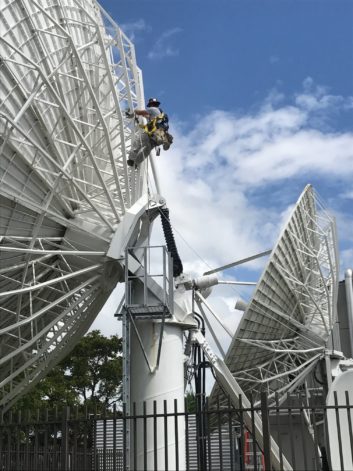
  •  

FEMA Says “Expired Digital Certificate” Caused Monday’s EAS Test Error

An expired IPAWS digital certificate prevented radio stations from receiving FEMA’s IPAWS Required Weekly Test (RWT) on Monday, according to people familiar with the developments. 

Broadcasters’ EAS units rejected Monday’s weekly test when the message was flagged as “expired” by most EAS boxes, the sources said. The weekly EAS test message “errored out” on most devices.

Barry Mishkind’s Broadcasters’ Desktop Resource reported that FEMA acknowledged the issue. A statement he attributed to FEMA said: 

We discovered after the IPAWS RWT chron job launched the Monday morning IPAWS RWTs that the associated IPAWS digital certificate in use had expired. As individual EAS devices are required by FCC Rules to check CAP message digital signatures, the EAS device should have flagged the incoming RWT as expired. 

“Let’s consider this week to be a test of EAS device security.” the statement read. “We have replaced the expired digital certificate. Next week’s messages will be properly signed with a valid digital certificate.” 

Monday’s mixup is similar to issues Radio World reported on in March 2023, when the IPAWS RWT was being rejected by EAS units and declared invalid for several weeks. At the time, FEMA said the digital certificate the agency used to sign its automated RWT messages had expired. 

FEMA says EAS devices are required by FCC Rules to check CAP message digital signatures. FEMA uses digital signatures to ensure the authenticity of messages. The IPAWS system checks the digital signature upon receipt and accepts or rejects the message.

FEMA told Radio World in 2023 it would assess its certificate management process and make improvements to prevent future issues.

For stations that did not log a failure for Monday’s test, specifically DASDEC units, FEMA previously suggested checking the EAS device’s configuration and enabling signature checking.

FEMA told broadcasters in 2023 that the expired digital certificate issue does not affect EAS messages sent by local or state authorities. It only affects the IPAWS automated RWTs.

An email to FEMA for further comment about Monday’s issue was not immediately returned.

[Sign Up for Radio World’s SmartBrief Newsletter]

The post FEMA Says “Expired Digital Certificate” Caused Monday’s EAS Test Error appeared first on Radio World.
  •  

Cumulus Scores Win in Lawsuit Against Nielsen

Cumulus Media is rating it as a big win. A federal judge has granted Cumulus a preliminary injunction preventing Nielsen from implementing its “network tying” policy, which is at the center of a lawsuit between the companies.

Judge Jeannette A. Vargas ruled on Dec. 30 that Cumulus has supported its claim of irreparable harm and said the company will likely succeed with the antitrust claims it has brought against Nielsen. She also slammed a lid on how much Nielsen can charge the company for its national radio ratings.

The judge decided that Cumulus had demonstrated that a preliminary injunction was necessary to prevent irreparable harm.

“Cumulus has a strong likelihood of succeeding on the merits in this case … the balance of hardships weighs toward Cumulus, and … the public interest weighs in favor of a preliminary injunction,” she wrote.

Nielsen also is prohibited from charging a “commercially unreasonable rate for its national ratings report as a complete, standalone product.” The order sets a rate that is equal to or lower than the highest annual 2026 rate Nielsen charges any broadcaster, whether network or local, for nationwide ratings.

The order will remain in effect for the duration of the litigation, as Cumulus’ antitrust case goes forward.

Monopoly claims

The legal fight is putting a spotlight on the relationship between U.S. radio broadcasters and the industry’s most prominent ratings provider. Cumulus is the second-largest radio broadcaster in the United States by station count and the third-largest by revenue, according to BIA Advisory Services.

The suit was filed by the broadcaster in October in the U.S. District Court for the Southern District of New York.

It claims that Nielsen holds a monopoly over national radio ratings and has a policy that will force broadcasters also to purchase local radio ratings from Nielsen rather than from a ratings competitor.

Cumulus argues in the suit that Nielsen’s new “tying policy” is illegal because it forces its local stations to buy Nielsen’s local radio ratings data, which Cumulus says are overpriced, instead of another service.

According to Cumulus, Nielsen’s tying policy works this way: Any radio operator with local stations that also owns a national network must purchase Nielsen’s local radio ratings data for all those local markets in order for the network to receive credit in Nielsen’s comprehensive national data.

Cumulus owns approximately 400 stations in 84 radio markets in the United States. Westwood One is the national-facing network arm of the company.

Cumulus claims that Nielsen has mandated the purchase of separate local ratings in order to access national broadcast radio analytics, and Cumulus says this violates federal and state antitrust laws.

“Such tying is a classic abuse of monopoly power and a clear-cut violation of the antitrust laws,” Cumulus argued, “and violates section two of the Sherman Act.”

Cumulus has stopped buying local ratings for some diary markets, including all markets measured twice a year and even some continuously measured diary markets, according to a report in Inside Radio.

The broadcaster has won several victories in its case against Nielsen. First, the judge approved a motion to fast-track the discovery process and set several early deadlines. She also ruled that the identities of third-party radio companies testifying in the case could be with withheld amid fears of potential retaliation.

At a hearing in early December, Nielsen described the matter as a “run-of-the-mill pricing dispute” and defended the tying policy.

“There is no data for nationwide without the local reports,” the company wrote. It told the judge its policy ensures Nielsen’s revenue is aligned with costs so its audio measurement service remains “sustainable.”

In a filing, Nielsen claims “the plaintiff is earning $700 million in revenues but wants to renew its contract with Nielsen but pay 50% for the same services.”

Nielsen has said it gave Cumulus several options, including giving the broadcaster standalone national ratings and local products without the tying policy that brought on the suit.

Cumulus argued that Nielsen is a monopoly, citing “clear and uncontested evidence that Nielsen is the only provider of national radio ratings data in the United States. Without comprehensive national ratings data, a national network cannot effectively compete for advertising business or generate revenue.”

Not including Westwood One in national ratings in markets where Cumulus doesn’t buy local ratings, it says, harms the network’s ability to sell ad inventory, jeopardizing relationships with clients and ultimately hurting affiliate stations, according to previous Cumulus filings.

Cumulus further supported its monopoly claims by saying Eastlan Ratings, another provider of local radio ratings data, is foreclosed by Nielsen’s anticompetitive tactics from entering new markets.

However, Nielsen says in a filing that argument “is belied by Eastlan’s recent growth and its ability to enter a market with just one customer.”

Eastlan is adding markets “reasonably well,” Nielsen says, adding 18 new markets in 2025 and securing the business of multiple former Nielsen customers.

[Are you receiving the Radio World SmartBrief newsletter each weekday morning? Sign up here.]

The post Cumulus Scores Win in Lawsuit Against Nielsen appeared first on Radio World.
  •  

AM Broadcasters Ask for More Translator Flexibility

A coalition of broadcasters in the United States would like the FCC to give AM stations a fresh opportunity to acquire and move FM translators.

The group of 19 AM operators has asked the FCC to reopen its 2016 filing window that allowed AMs to acquire and relocate translators as part of its “AM revitalization” initiative.

Class C and Class D AM broadcasters dominate the coalition. They believe their proposal “will allow for substantial FM translator transmitter site and channel moves, enabling additional FM translators to rebroadcast AM stations.”

In addition, they would like the FCC to allow each AM to move up to three translators. They also hope the commission will allow the acquisition of translators that are farther away. And they would like this AM translator “window” to be made permanent.

The proposal does not call for the creation of new FM translator licenses; it deals with rules for how AM stations can acquire and move them.

Proven approach

Although the FCC recently has been closing dormant dockets, the AM revitalization docket remains open.

The window a decade ago permitted an AM broadcaster to acquire an FM translator and relocate it on any available frequency for local service using the rebroadcast of the AM station programming. Another window the next year allowed additional AMs to apply.

The group filing the petition is headed by Press Communications under President Robert McAllan. It includes names familiar at the FCC for their advocacy on behalf of smaller AM broadcasters, including Bud Walters, Matthew Wesolowski and Larry Fuss. (The full list is at the bottom of this story.)

They told the FCC that FM translators have saved hundreds of AMs from going off the air. They said stations have seen increases in listenership, advertising revenue and community engagement.

But they said the challenges facing the AM band have only intensified. Those include ever-increasing noise floor levels, continued degradation of audio receiver quality, variable (if any) nighttime service, and digital technological change in the marketplace.

They said AM stations “continue to experience a disproportionate decline in listenership.” They cited Nielsen data indicating that AM listenership represents less than a third of broadcast radio station audiences with FM picking up the balance, and that younger demographics rarely use AM.

They believe more than one-third of AM stations still lack at least one companion FM translator.

A reopening, they said, would benefit small, often minority-owned AM stations, many in rural areas. They said such owners often lack the capital or market conditions to launch digital services or may not have the financial capability or spectrum availability to obtain a full-service FM license.

More flexibility

They told the FCC that the greatest accomplishment of the revitalization initiative was giving AMs the ability to substantially move FM translators to locations where they could more effectively rebroadcast programming.

In 2016, the translators could only be moved from within a 250-mile radius of the subject station’s transmitter site and must be located within 25 miles of its transmitter.

A reinstatement would not require a “totally new major rulemaking infrastructure,” the broadcasters believe.

As before, they ask that the FCC provide an initial time period of perhaps 120 days in which only Class C and Class D AM stations could file.

But they also requested “minor enhancements.”

They would like the FCC to offer stations, “especially those with daytime-only operation or low-power and critical nighttime patterns,” the opportunity to obtain up to three FM translators to run within the 25-mile limit. In the previous window AMs could move only one.

“In many areas of the nation, and particularly in Zone 1, largely higher-power second-adjacent channels severely limit translator power levels,” they wrote. “Thus, the need for multiple translators to better emulate the daytime coverage of many Class D and Class C AM stations.”

They suggest a cap of three so that no AM is forced out of the market for translators by a large entity acquiring dozens of signals for a particular AM station, or by a competing AM “usurping” the FM translator spectrum in a market.

They also advocate broadening the purchasing reach from 250 to 500 miles, primarily to assist stations on the east and west coasts, the borders with Canada or Mexico, and the Gulf. (Apparently sensitive to politics, the filing simply used the name “the Gulf.”)

“This change is important as AM stations located near coastal or border areas were hampered in under the 2016 filing windows by having many fewer potential FM translators to acquire due to not having a full circumference of 250 miles dues to a truncation by such borders or the coast.”

Additionally, the broadcasters asked that their proposed “window” be made permanent.

“Rather than further limiting for the future the availability and the number of translators for purchase to eligible AM stations, a permanent change to the FCC’s rules to allow for moving FM translators to serve AM stations going forward will avoid spectrum warehousing and gamesmanship which often occurs upon the opening of a time-limited window,” they wrote.

[Read the petition here.]

Example

A footnote in the filing provides a case study of how this might benefit a broadcaster.

“Press Communications LLC is the licensee of WHTG(AM), a Class D 500-watt daytime-only station licensed to Eatontown, N.J.,” it states.

“The station currently has one companion FM translator W264DH, which only reaches about 20% of the AM’s daytime coverage. Adding one or more translators would greatly enhance WHTG’s ability to better serve its existing listening audience, and more importantly, develop new audience.”

It noted that Press also has a construction permit on file to move W264DH to another location within 25 miles of WHTG’s transmitter site.

“But without an additional translator, that move is a zero-sum game, as some listeners will lose FM service without a second translator to replace W264DH at the existing site.”

Conclusion

The petitioners noted AM radio’s role in public alerting. They cited the perceived desire of FCC Chairman Brendan Carr to help make sure that all broadcasters remain competitive well into the future.

“AM broadcasting technology is now over 100 years old, which is eons in a world that went from 56k digital dialup modems to gigabit speeds in a little over a quarter of that time. The laws of physics tell us there is little we can do to overcome the technical limitations inherent in AM service,” they wrote.

“Indeed, reinstating the 2016 AM Radio Revitalization translator modification filing windows for FM translators will help ensure AM broadcasters’ high level of service well into the future.”

The groups that filed the petition are SSR Communications, Simmons Broadcasting, Kaspar Broadcasting, Mountain Top Media, Priority Communications, Virden Broadcasting, South Seas Broadcasting, Delta Radio Network, Hancock Communications, WYCQ, The Cromwell Group, R & F Communications, Eureka Broadcasting, O-N Radio, Viper Communications, Mentor Partners, Genesee Media, Dakota Broadcasting and Community First Broadcasting.

[Related: Read comments by REC Networks in reaction to this petition.]

The post AM Broadcasters Ask for More Translator Flexibility appeared first on Radio World.

  •  

Radio Groups to FCC: Ownership Caps Threaten Survival

Large radio groups have historically been nearly unanimous in their support of relaxing — or doing away with entirely — the ownership caps that limit the number of stations a single company can own in a single market.

But now some small-market broadcasters are also joining in with their endorsement.

In comments filed during the commission’s review of the current ownership review cycle, five ownership groups said that the increased flexibility would allow smaller radio companies to pool resources, bolster emergency operations and invest in more local content.

[Related: “Seven Radio Companies to the FCC: Lift Ownership Caps”]

They also cited increased competition in the marketplace from a plethora of audio and digital services, such as Pandora, Spotify, Sirius XM, YouTube, Alphabet, Meta, Apple and Amazon; none of which existed in their current form when the Local Radio Ownership Rule was enacted decades ago.

As the list of competitors has grown into the audio space once dominated by radio broadcasters, they have also siphoned off advertising revenue that once belonged exclusively to broadcast radio, the groups said.

Unshackled

Reno famous downtown sign - Reno, Nevada, USA.
Reno, Nev., this past March. Credit: David Shvartsman/Getty Images

Reno Media Group and Americom Limited Partnership, commonly controlled companies, said the ownership limits must be eliminated, or at a minimum, substantially revised, due to shrinking revenue shares for radio broadcasters.

The broadcast companies, which operate a cluster of radio stations in Reno, Nev., said that today’s stark realities cry out for multiple ownership reform “that will remove the shackles from local radio broadcasters” and allow them to compete in the broader audio and 21st century marketplace.

Reno Media Group and Americom told the FCC it has seen sharply reduced advertising billings amid the rapid rise and popularity of digital streaming, including a year-to-year decline of approximately 23% from 2024. The groups said the pace of decline has also accelerated.

Acquiring more stations within a market, Reno Media Group and American said in recent comments, would give owners a way to compete effectively moving forward, by “harvesting the economies of scale and savings inherent in consolidating operations,” while also reducing aggregate costs.

In addition to revising the radio ownership caps, Reno Media Group and Americom urged the FCC to revisit the current over-the-air radio “product marketplace” to include non-broadcast audio services such as digital platforms since “radio’s competitors operate without restrictions comparable to those imposed on radio.”

The FCC declined to do so during the 2018 quadrennial review, the groups said, which is why broadcast radio is still currently defined as a “unique market” by the FCC. They argue that the concept that radio is a marketplace unto itself is an out of touch viewpoint.

“Consider only the hundreds of channels SiriusXM brings to car radios,” the companies wrote, “or the essentially limitless audio libraries Spotify, Apple Music and Pandora make available to online users.”

One hand tied

Meanwhile, Seven Bridges Radio, which owns an AM/FM combo in the Jacksonville, Fla., said it believes that relaxation of the radio subcaps is a step that the FCC should take to make the competitive circumstances of radio broadcasters better.

“Making this modest regulatory change (tiny in comparison to the influx of powerful new competitors), would give radio additional opportunities to expand, react to competitive market conditions, and provide the truly local programming that listeners expect and deserve,” Seven Bridges wrote.

In similar comments, Cromwell Media, which owns and operates radio stations in several small markets and in Nashville, Tenn., argued for change, saying that the commission’s ownership rules are “woefully” out of date.

“Given the artificial ownership restrictions placed on radio broadcasters, radio stations face these massive corporations with one hand tied behind the back,” Cromwell wrote. “They are prevented from achieving the economies of scale they desperately need.”

It said the commission’s severely outdated treatment of radio as a “siloed market” affects broadcasters and local citizens in markets of every size, but is especially hard on smaller and midsized markets.

“Those markets need strong local radio so that citizens can receive vital local information,” Cromwell wrote. “Yet, under the current ownership restrictions, smaller communities often find local radio stations struggling and unable to provide the level of service these communities need and deserve.”

AM-specific regulations

In Richmond, Va., where Mobile Radio Partners operates four AM stations and three FM translators, owner Michael Mazursky told the commission there should be no ownership caps on AM radio stations.

He also asked the FCC to make the AM band more useful to the public.

“I think there are many technical upgrades that can help AM radio operators like myself be more financially successful with new technology ideas to utilize the AM bandwidth,” Mazursky said in recent comments.

Currently, in a market with 30–44 stations, an entity may own seven stations, with no more than four in AM or FM. In a market with 15–29 stations, a broadcaster may own six, with no more than four in one band. And in a market with 14 or fewer, an entity may own five with no more than three in one band, provided it does not own more than half of the stations in the market.

Comments in the FCC’s ongoing broadcast ownership review cycle can found online at the commission’s website.

[Do you receive the Radio World SmartBrief newsletter each weekday morning? We invite you to sign up here.]

The post Radio Groups to FCC: Ownership Caps Threaten Survival appeared first on Radio World.

  •  

Groups Ask FCC to Alter Course on Radio Ownership Reform

Not everyone is on board with the FCC waiving the local radio ownership caps. Several interested groups are vehemently arguing against changes, saying a repeal would only bring more consolidation and monopolization of the airwaves without any benefits. 

The FCC’s current quadrennial review is considering relaxing or doing away with local radio ownership rules that limit how many stations one company can own in a single market.

The NAB and most radio broadcasters have been vocal in support of changes, and NAB now has called for a total repeal of ownership limits.

However, the National Association of Black Owned Broadcasters (NABOB) is dead set against further consolidation.

In new comments to the FCC, NABOB cites numerous reasons why deleting ownership caps and subcaps is unacceptable. It says the rule is the only tool the commission has to prevent further consolidation of radio ownership and prevent the further decline in Black station ownership in the United States.

“Increased consolidation of ownership in the broadcast industry reduces opportunities for minorities to enter the business or to grow,” the group said in recent comments. “NABOB is particularly opposed to any changes in the Local Radio Ownership Rule, because most existing Black American broadcast owners are in radio.”

NABOB says Black broadcast ownership has declined since 1995. The commission’s own data shows that Black people and other minorities are still “woefully underrepresented” in the ownership of radio and TV stations, according to NABOB. In 2023, the percentage of Black-owned full-power FM stations stood at 2%, with AM station ownership at 4%. The organization says Black Americans comprise 13.7% of the U.S. population.

[Related: Seven Radio Companies to the FCC: Lift Ownership Caps]

The current ownership subcaps rule is scrutinized by NABOB in its filing. The subcaps rule limits the number of radio stations that a licensee can own in a market, in either the AM or FM service. In the largest Nielsen markets, a licensee may own up to eight radio stations, but the subcaps rule limits that licensee to owning no more than five stations in either the AM or FM service. NABOB says that means major broadcast groups still need to own AM stations to maximize the number of signals and market share under the current rules.

Specifically, NABOB says the subcaps rule was adopted to protect AM radio. However, without it, “further devaluation of AM stations in relation to FM stations would result in a loss of service to many Americans who rely on AM radio for local news, information, sports and weather. 

“And for AM station owners, including women and minorities, it could destroy the financial value of their AM assets.  An abandonment of AM by large numbers of companies would have another negative impact on smaller AM station owners.”

Separately, the musicFIRST Coalition hasn’t changed its tune about local radio ownership rules, echoing its comments from previous reviews: “The current FM ownership caps remain necessary to protect the public interest in competition, localism and viewpoint diversity.” 

The group takes no position on whether the commission should relax AM ownership limits.

Consolidation of commercial FM ownership following the passage of the Telecommunications Act of 1996, the coalition says, led to centralized playlist control, significant reductions in local programming staff, as well as diminished opportunities for airplay and promotions for new and local artists. 

In fact, “listener research shows growing dissatisfaction with radio’s predictability and repetitive playlists, underscoring the continuing importance of locally-programmed, independently-owned FM stations as sources of diverse music, viewpoints through both spoken word and music lyrics and locally produced programming.”

The musicFIRST Coalition, a group of artists, labels and music organizations, believes relaxing FM ownership limits would disproportionately harm viewpoint diversity and localism on AM/FM stations; devalue already-struggling AM stations; threaten AM radio’s role in public safety; and create barriers to entry, particularly for minority broadcasters and women, whom historically have struggled to obtain capital for purchase of broadcast stations. 

The FCC must retain the current Local Radio Ownership Rule for FM radio to protect independent AM/FM radio operators who compete locally against larger radio clusters, the group stated in its comments.

The coalition has taken sides in broadcast matters previously, pressuring Congress to kill the AM Radio for Every Vehicle Act unless it is linked with their efforts to secure a performance royalty on radio broadcast airplay. Like the AM bill, the American Music Fairness Act has not seen a full vote in the House and Senate. 

Finally, advocacy group Free Press told the FCC that “local media” is unique among all forms of media in that radio stations require broadcast licenses, and the scarcity of those requires regulation that maximizes the number of unique licenseholders. 

“This scarcity, broadcasting’s pervasiveness and the central fact that a federal government agency alone determines who can use these airwaves to speak, means that by definition a broadcast license holder’s speech is privileged above that of other speakers,” Free Press stated in its comments.

Free Press believes “the proceeding once again brings into focus the failure that is the commission’s relentless policy of broadcast media ownership deregulation stretching back more than two decades now.”

It continued: “The commission has failed to achieve the agency’s goals and Congress’s statutory mandates, in large part because it has often shown total fealty to the broadcast industry’s policy arguments equating its own financial interests with the public’s interest.”

Free Press says the commission is moving forward with plans to give the industry a “green light to monopolize the public airwaves.”

The group was dire in its prediction if the FCC repeals local ownership limits: “While the public has already lost so much from years of rampant consolidation, there’s still more to lose. The few remaining broadcast media ownership rules are the only barrier to the formation of local media monopolies. If the commission further weakens or eliminates these rules, it will irrevocably harm broadcast competition, localism and diversity.”

You can review filed comments in this quadrennial review (Docket MB 22-459) at the commission’s website.

[Do you receive the Radio World SmartBrief newsletter each weekday morning? We invite you to sign up here.]

The post Groups Ask FCC to Alter Course on Radio Ownership Reform appeared first on Radio World.
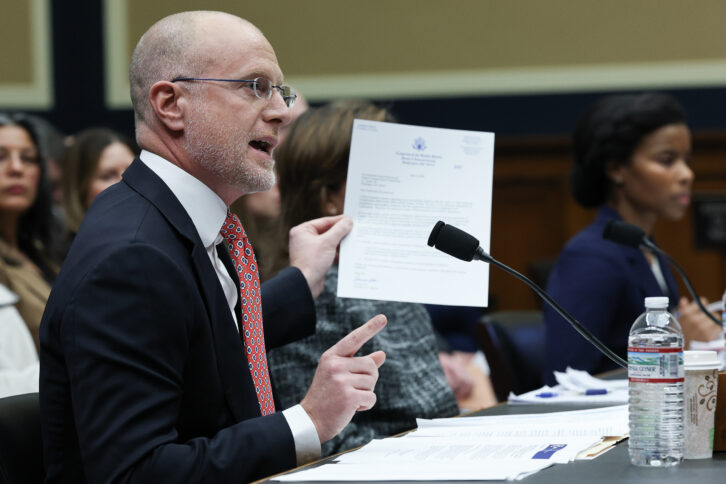
  •  

Carr Stands Up for His Policies in Senate Hearing

A man and two women in business clothes sit at a hearing table in Washington. The man is speaking into a microphone.
Brendan Carr, Olivia Trusty and Anna Gomez, from left, at the hearing on Capitol Hill. Photographer: Kent Nishimura/Bloomberg via Getty Images

FCC Chairman Brendan Carr appeared before a Senate oversight committee on Wednesday and faced harsh criticism by Democrats on various topics including threats against TV broadcasters for carrying ABC comedian Jimmy Kimmel. One senator said Carr should resign.

Republican Olivia Trusty and Democrat Anna Gomez also appeared and faced direct questioning from committee members, but the controversial chairman was the main focus.

Issues raised during the meeting included Carr’s “Delete, Delete, Delete” initiative to do away with outdated regulations, spectrum reallocation and current broadcast ownership rules.

But it was Carr’s use of public interest and “news distortion” policies that sparked the most debate.

Carr had met in advance with several Senate Republicans to prepare for the onslaught of questions. He touted his accomplishments in an opening statement, saying the pipeline has reopened to freeing more spectrum to advance next-generation technologies now that Congress has restored the commission’s auction authority.

However, following statements by Sen. Ted Cruz (R-Texas), chairman of the Committee on Commerce, Science and Transportation, and ranking member Sen. Maria Cantwell (D-Wash.), the committee quickly focused questions on Carr and his actions in his first year as chairman.

At the center of much of the hearing was Carr’s actions following the Kimmel monologue controversy. Carr was critical of Kimmel’s comments on his late-night TV show and faced backlash after pressuring broadcasters to take the ABC program off the air in late September. Carr warned then that local broadcasters that aired Kimmel could face fines or loss of licenses.

At the time, Cruz was sharply critical of Carr. He took a more conciliatory tone during the hearing.

Cruz did say that the government cannot “force private entities to take actions that the government cannot take directly. Government officials threatening adverse consequences for disfavored content is an unconstitutional coercion that chills protected speech.”

Carr defended his actions, saying he was enforcing the public interest standard as charged by Congress. “We should be enforcing those rules and policies,” he said.

Republicans on the committee were generally complimentary of Carr’s policies. Carr clashed often with Democrats, including Sen. Amy Klobuchar of Minnesota.

“After Jimmy Kimmel’s monologue, you went on a podcast and suggested that ABC should take Kimmel off the air, saying, ‘We can do this the easy way or the hard way.’ Those were your words. Do you think it is appropriate to use your position to threaten companies that broadcast political satire?” she asked.

Carr responded: “I think any licensee that operates on the public airwaves has a responsibility to comply with the public interest standard, and that’s been the case for decades.”

Klobuchar asked Carr for his thoughts on comments made by President Trump on social media this week following the stabbing deaths of actor Rob Reiner and his wife.

“Senator, look, Democrats on this dais are accusing me of engaging in censorship, and now you’re trying to encourage me to police speech on the internet. I’m simply not going to do it,” Carr replied.

He continued: “Let’s step back. Broadcast TV is fundamentally different than any other forms of media, whether it’s cable or podcast or soapbox on the main street. There’s a public trustee model that Congress has set up.”

Carr deflected some of the Democrats’ criticism of his attempts to chill free speech. He said that Democrats in Congress previously wrote letters to cable companies pressuring them to drop Fox News, One America News Network and Newsmax because they disagree with the political perspectives of those cable channels.

“We have jurisdiction with respect to the broadcast airwaves uniquely to ensure that their operations are in the public interest, and there’s very specific rules in broadcast hoaxes and news distortion,” he said.

Sen. Edward Markey charged the chairman with turning the FCC into the “Federal Censorship Commission.” Markey said Carr should resign.

“Chairman Carr, you are not reinvigorating the public interest standard; you are weaponizing the public interest standard. That is what the Carr FCC is doing every single day.”

Markey also discussed the FCC’s investigation of a San Francisco radio station that reported on an ICE raid in real time on air. KCBS(AM) aired an immigration enforcement report; Carr had accused KCBS of failing to operate in the public interest and opened an inquiry.

A recent report in the L.A. Times said station staffers later claimed Carr’s complaints eventually sparked changes to the station’s newsroom operations due to political pressure.

Carr testified: “Broadcasters understand perhaps for the first time in years that they’re going to be held accountable to the public interest, to broadcast hoaxes rules, to the news distortion policy. I think that’s a good thing.”

Sen. Ben Ray Luján (D-N.M.) debated Carr on whether the chairman considers the FCC an independent agency.“Senator, thanks for that question. I think there’s a test for this in the law, and the key portion of that test…” Carr said before being interrupted by the senator.

“Yes or no is all we need, sir. Yes or no, is it independent?” he asked.

Carr: “The FCC’s not an independent agency formally speaking.”

Sen. Gary Peters (D-Mich) asked Carr about free speech for broadcasters.

“So this should be a pretty easy question. Do you think the FCC should protect free speech?” Peters asked.

Carr: “Yes.”

“Okay. So if you will not revoke licenses … you won’t revoke licenses or retaliate if they’re simply engaging in free speech?”

“Senator, first of all, the Supreme Court has expressly said there is no First Amendment right to an FCC license. And the Supreme Court has said that the FCC enforcing the public interest standard on licensees is not a violation of the First Amendment or censorship,” Carr replied.

Other topics were brought up during the meeting, including broadcast ownership rules that are the subject of the next scheduled quadrennial review. Republican Sen. Jerry Moran of Kansas urged the commission to change the ownership rules to enable local broadcasters to compete with today’s media giants.

“Local broadcasters are hugely important and provide the news, the weather, the sports; and we need to make certain that their viability is enhanced by ownership rules that the commission has talked about and considering,” Moran said.

Carr has repeatedly indicated strong support for broadcast ownership reform but didn’t offer an opinion during the oversight committee hearing.

[“NAB Urges FCC to Remove All Radio Market Caps”]

Committee member Sen. Marsha Blackburn, Republican of Tennessee, asked about Carr’s efforts to stem a new form of payola, what she called “show-ola” in which broadcast stations allegedly pressure artists to play their station events in exchange for airplay.

“They particularly like to couple this with threats of reduced airplay if the band or the artist cannot give them these free events,” Blackburn said.

Carr replied: “Historically, there’s been a law on the books that prevents radio stations from accepting or seeking unreported payment of money or any other compensation to influence airplay, the time that music is played on the station.

“One concern that you brought to my attention early on, including through a letter earlier this year, is that a lot of radio stations are holding music festivals, and the concern that’s been raised is that they are effectively pressuring musicians, that could be ones that are well off or ones that are just getting started, to perform for free under threat that they may suffer airplay on radio stations if they don’t do that. I think that’s a concern. We issued an enforcement advisory right after being aware of this from you, and we are going to be and are investigating some issues around this.”

[“FCC Chairman Questions iHeart About Artist Compensation at Music Festivals”]

This was the first Senate Commerce Committee oversight hearing with all seated FCC commissioners present in more than five years, though the FCC normally has five, not three, members.

The post Carr Stands Up for His Policies in Senate Hearing appeared first on Radio World.
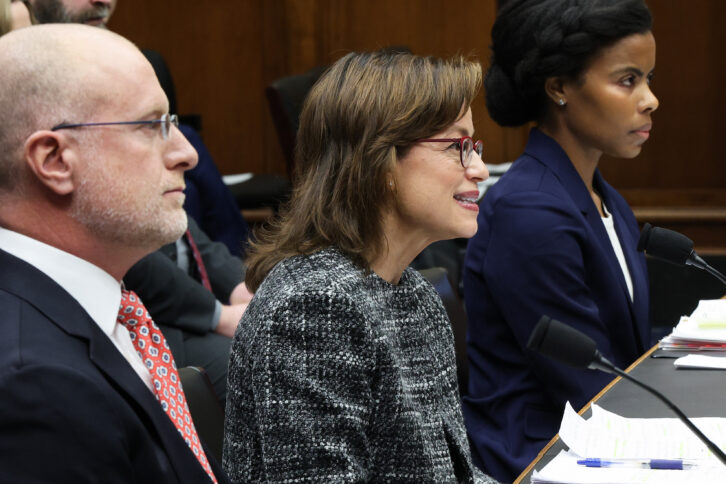
  •