
Vue normale

Reçu hier — 11 avril 2026

CapeTalk 567 Keeps It Real With XPN-AM

11 avril 2026 à 17:27
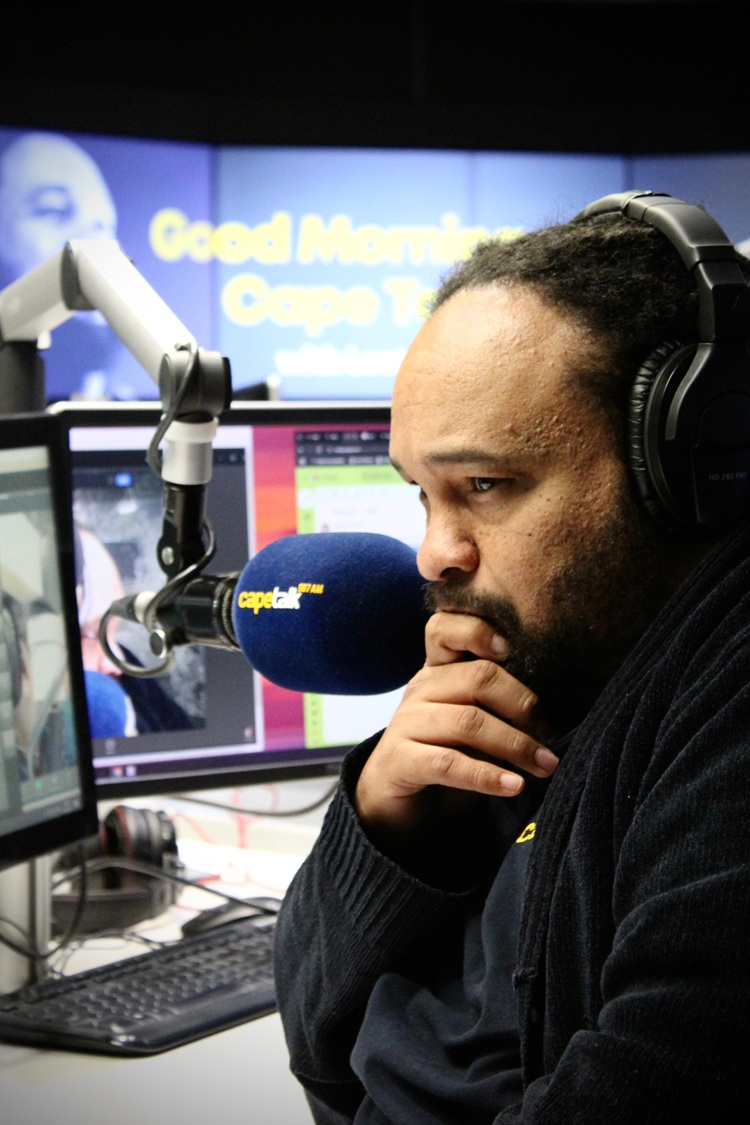
Vaughan Taylor sits working at a computer screen
Vaughan Taylor

Radio World Buyer’s Guide articles are testimonials intended to help readers understand why their colleagues chose products to solve various technical situations. This month’s focus is on-air audio processing.

The author is a transmission specialist for Primedia Broadcasting. He is responsible for the transmission operations of 947/702 in Johannesburg and KFM/CapeTalk 567 in Cape Town, South Africa.

The word emoji owes its humble origins to the combination of two Japanese words for “picture” and “letter,” adding dimension to what otherwise would have been a “flat” or unemotive text message.

Primedia Broadcasting kicked off the year with a fun and modern out-of-home billboard campaign for CapeTalk 567, featuring today’s lingo.

Three examples of social media posts with messages like "All Talk, No Cap" and "Let's Talk IRL"
Several examples of the social media campaign messages

While CapeTalk 567 prides itself on keeping things “real” with listeners through its programming content, there are technical systems that must work together to get the audio to its listeners as accurately and efficiently as possible.

CapeTalk 567 has been on the air for 28 years, primarily through its medium-wave footprint, serviced by a 25 kW transmitter on the outskirts of Cape Town operated by signal distribution service provider Sentech. It also streams its audio via the Primedia Plus app and as well as the DSTV Audio Bouquet (Channel 885).
Lester Kiewit sits at a microphone listening on headsets to a caller
Morning host Lester Kiewit.

For every commercial station on the radio “dial” (be they AM, FM or digital OTT platforms), there’s an ongoing conversation about how audio can be suitably “enhanced.” This is part of creating the sonic signature that adds to the listener’s experience when tuning into a particular station.

Broadcast audio processing over the years has remained a contentious topic for radio’s creative and engineering teams. Suffice it to say, the audio processor brings together the efforts of two diverse endeavours.

From an engineering perspective, the processor takes the lead in ensuring the transmission parameters (i.e. peak modulation) are always fully respected.

The “artistic” component considers how the audio is to be manipulated to create a particular sonic signature, through increasing perceived loudness along with achieving overall consistency of the program material.

There have been changes over the last 20 years or so that have affected audio quality on traditional transmission platforms.

In the world of medium-wave AM, it is both important and appropriate to maximize the density of the received audio, to ensure the audio remains intelligible.

External noise from devices such as LED lighting, laptops, computer power supplies and electric fences may impinge on a listener’s receiver, causing degradation in overall intelligibility. Studies have shown that this increase of external noise has been as much as 20 dB.

The only mitigation would be to increase audio density.

Years ago CapeTalk 567 had elected, via service provider Sentech, to use an Orban 9200 Optimod AM, which was installed at the transmitter site. This was at the time a departure from the traditional “analog” style of processing, as it made use of digital signal processing techniques.

Through investigation and listening tests, we found that the internal processing architecture of the 9200 presented some limitations for allowing a significant increase in audio density without degrading overall audio intelligibility.

It was clear that enhancing the audio quality of CapeTalk 567 now would require replacing the processor. I considered the options and elected Orban’s XPN-AM, purchased through Orban’s SA representative Prosound. They have been responsible for Orban’s South African sales and support since 1980.

The XPN-AM would be installed at Primedia’s Greenpoint studio facility. The 9200 would be retained as a backup at the transmitter site.

Having two independent audio processing paths within the XPN — one feeding the present AM signal and the other feeding both audio stream/DSTV platforms — provided us the maximum benefit for our signals, and the added benefit of being able to adjust the unit remotely rather than while standing in front of it.

The XPN’s processing enhancements have benefited CapeTalk 567’s on-air signals. Station Manager Tessa van Staden and Technical Operations Coordinator Brett Kannemeyer both have noted improvements in audio intelligibility, clarity and consistency across its broadcast platforms.

A further significant benefit is in the processor’s application to AM systems that permit the use of Modulation-Dependent Carrier Level technology, the dynamic reduction in carrier levels with the change in modulation levels.

MDCL can produce significant savings in transmitter energy consumption, an important consideration for AM radio stations. MDCL implementation is a priority for the Sentech-owned Nautel NX25 transmitter later this year.

The post CapeTalk 567 Keeps It Real With XPN-AM appeared first on Radio World.

Reçu avant avant-hier

K-LOVE Embraces Efficiency With GatesAir

26 mars 2026 à 10:00
Mike Huckeby and Micah Pace with the FAX 10K at KNKL.

Radio World Buyer’s Guide articles are testimonials intended to help readers understand why their colleagues chose particular products to solve various technical situations. This month’s articles focus on transmitters.

Deep into its migration from tube transmitters, K-LOVE Radio is gaining early returns from modern solid-state FM technology from GatesAir.

Recent upgrades at stations in Billings, Mont., and Tremonton, Utah, highlight how modern transmitter design can deliver measurable operational, sonic and business benefits.

In January, K-LOVE installed a new GatesAir Flexiva GX FM transmitter at KLRV(FM) in Billings, replacing a rack-hungry system. Shortly thereafter, a Flexiva FAX FM and HD Radio-ready transmitter was installed at KNKL(FM), replacing an aging tube transmitter and dramatically modernizing an RF site that covers listeners Salt Lake Valley and north to near the Idaho border.

“These are the first solid-state GatesAir transmitters we’ve deployed in this part of the K-LOVE network,” said Ron Huckeby, field engineer for Montana and Wyoming.

“It’s part of a broader transition. The goal is to retire almost all tube transmitters by 2027.”

Physical footprint and operating efficiency were major drivers at KLRV. The Flexiva GX5K’s compact, rack-mounted design allowed engineers to reclaim significant rack space while avoiding increased lease costs.

“The GX is about a third of the size of the transmitter it replaced,” Huckeby said. “That power-to-size ratio is impressive and it’s very lightweight. One person can lift a 10 kW unit before adding power supplies.”

At KNKL, the benefits were audible, Huckeby said. The new Flexiva FAX10 transmitter replaced a tube-based system that relied on older excitation technology.

“The transmitter and exciter cleaned up the audio considerably,” Huckeby said. “The adjacent modulation monitor data told the story right away: cleaner baseband, better stereo performance, and less distortion.”

Beyond sound quality, Huckeby points to reliability and maintenance as key advantages. Solid-state architecture minimizes catastrophic failures, while modular PA design and off-the-shelf power supplies simplify service.

“Unless it’s an exciter failure, most solid-state issues won’t take you completely off the air,” he said.

Huckeby praised the Flexiva GUI, calling it intuitive and well-suited to today’s IT-centric engineering environment. “The interface is user-friendly and outshines competitive solid-state GUI designs,” he said.

Supporting the transition is GatesAir channel partner SCMS, which provided sales and pre-installation support. “Our representative Doug Tharp answers his phone,” Huckeby said. “He is attentive and understands the business of transmission.”

The K-LOVE upgrades mark a step toward greater efficiency, improved audio performance and a future-ready RF infrastructure without the operational burdens of tube technology.

Info: www.gatesair.com

[Read More Buyers Guide Reviews]

The post K-LOVE Embraces Efficiency With GatesAir appeared first on Radio World.

LECOM Radio Deploys Ecreso

24 mars 2026 à 19:03
Hal Kneller with the new transmitter.
The author with the new transmitter.

Radio World Buyer’s Guide articles are testimonials intended to help readers understand why their colleagues chose particular products to solve various technical situations. This month’s articles focus on transmitters.

The author is director of engineering at LECOM Radio.

LECOM Radio has deployed a new Ecreso FM AiO Series 2 kW transmitter at station WVIJ in Port Charlotte, Fla., part of a five-station simulcast of WSRQ Sarasota, serving southwest Florida. 

The installation marks a significant milestone as the first Ecreso 2 kW AiO transmitter on air in the Americas, reinforcing LECOM Radio’s commitment to modern, efficient and highly integrated broadcast infrastructure.

The 2 kW model completes the Ecreso FM AiO Series power range, joining the 100 W, 300 W, 600 W and 1 kW versions. Designed as am integrated, software-defined platform, the transmitter combines multiple broadcast functions into a compact 3RU, 50-pound chassis, dramatically reducing footprint, external equipment and overall system complexity while delivering outstanding on-air sound quality.

LECOM Radio deliberately waited for the AiO version of the 2 kW model, receiving one of the first units from the second production run. This timing proved advantageous, as several refinements were incorporated following the initial rollout. 

Prior to delivery, the transmitter was tested and licensed at WorldCast Systems’ Miami facility, where the Extreme software package was enabled and verified before installation.

The Extreme bundle activates the full feature set including a built-in five-band audio processor, AoIP decoder compatible with APTmpX and uncompressed PCM, AES192 MPX inputs, integrated RDS/RBDS encoder, stereo generator, surge protection and an extended 10-year warranty. 

Importantly, the AiO platform allows broadcasters to upgrade functionality at any time via simple software licensing, with no hardware changes.

Replacing a 2005-era solid-state transmitter of the same power level, the Ecreso unit delivers dramatically improved performance at a fraction of the size and cost. 

Efficiency has been particularly impressive, with measured performance of 83 percent PA efficiency and 95 percent power supply efficiency, translating into reduced operating costs and thermal load. Maintenance is simplified through front-access fan and power supply replacement, and excellent internal access for modules and boards.

Installation was straightforward, completed by two people. The system is fed via AES192 over the public internet, using dual ISPs for redundancy, with additional PCM and analog audio paths configured as backups. 

Monitoring and control are handled through the intuitive web-based GUI, complemented by SNMP support and GPIO integration with LECOM Radio’s Burk remote control system.

Technical support from WorldCast Systems’ Miami team proved responsive and knowledgeable, with local inventory of spare parts and repair capabilities ensuring long-term operational confidence.

After several weeks on air, the Ecreso FM AiO Series 2kW has exceeded expectations. Its combination of efficiency, integration sound quality, and software-driven flexibility positions it as a compelling solution for broadcasters seeking a future-proof FM transmission platform. I believe we will have many years of excellent service from this new 2kW AiO series transmitter.

Info: www.worldcastsystems.com/en

[Read More Buyers Guide Reviews]

The post LECOM Radio Deploys Ecreso appeared first on Radio World.

Prairie Winds Broadcasting Upgrades With Nautel

23 mars 2026 à 16:00

Radio World Buyer’s Guide articles are testimonials intended to help readers understand why their colleagues chose particular products to solve various technical situations. This month’s articles focus on transmitters.

Brian Lundquist, left, and Chief Engineer Don Brintnall in a room loaded with Nautel transmitters.

Prairie Winds is a regional broadcasting group with stations covering the Dakotas and western Minnesota. 

“I’m the president, GM and owner, which means I also change filters, mow, shovel and make the coffee,” said Brian Lundquist, owner of Hub City Radio and Big Stone Broadcasting.

“We have a very capable chief engineer, Don Brintnall, who handles our transmitters, among other duties.”

Over a dozen years, the company has been migrating its stations to Nautel transmitters, starting with an NV20 in 2012. 

“We now have FM NVLT, VX, VS and GV units, and AM NX and J1000 transmitters, and upgraded an NV15 to a GV20.”

A pending order with Broadcast Supply Worldwide for two more NVLT 20s will equip KGIM-FM and KNBZ(FM) in Aberdeen, S.D. With the latest order, Prairie Winds will raise its total to 16 Nautel units.

“Installing Nautel transmitters has been, overall, a smooth process. One of our most challenging installs was challenging only because it was difficult to get the old tube-type transmitters out of the way! They are much bigger and heavier than the new Nautel units.”

Another installation had them scratching their heads over rack space, but it could be solved more easily with the space-efficient designs.

“We love our Nautel units. They are easy to use, low maintenance, extremely efficient and have outstanding reliability. We are also impressed with Nautel customer service. They’re always there whenever we have a question. With our most recent purchase, we are almost 100 percent Nautel … only one more station to go.”

Info: www.nautel.com

The post Prairie Winds Broadcasting Upgrades With Nautel appeared first on Radio World.

Bext Does the Job in Harsh Colorado Climate

18 mars 2026 à 17:54
The transmitter site is at the base of a grain elevator.

Radio World Buyer’s Guide articles are intended to help readers understand why their colleagues chose particular products to solve various technical situations. This month’s articles focus on transmitters.

ScarboroughRadio’s KFII(FM) is a start-up Class A station in Hugo, Colo., that came about via FCC Auction 109 in 2021. 

KFII(FM) logo

It is a classic hits station that provides coverage of an area southeast of Denver, stretching from the Colorado Springs-Falcon area to Stratton along I-70. 

At first owner Scott Scarborough used an older Armstrong tube transmitter but says he had issues including a plate voltage transformer failure. “The station stayed on, but it would frequently fail.”

He decided to buy a new transmitter and shopped for a year, looking for a model suitable for reliable operation in Colorado’s drastic weather swings. 

That climate has proven a challenge. Scarborough said he has relied on retired engineer Ray Ubrecken, Hugo resident and shopkeeper Fred Lundy, engineer Vlad Fomitchev and contract engineer Kit Haskins to help with problems involving internet, coaxial line and the tower structure.

Also, this transmitter site is at the base of Flagler Cooperative’s grain elevator, adding an extra layer of dust. 

ScarboroughRadio chose a Bext XL 3000 purchased from Technical Account Executive Colin Courtney.

“The transmitter was powered on within two hours,” Scarborough said.

Bext XL 3000

“It comes with a 7/8-inch flange and a very nice AC power harness. You can get RDS as a paid option. The manual is shipped on a jump drive. As most manufacturers recommend, save the box if it needs to be returned.”

The model is available with an optional multiband audio processor. Other options include AES-EBU digital audio input, Dynamic RDS/RBDS encoder, AoIP and SNMP2.

Scarborough said he has directed his sales team to fund the purchase of another XL 3000 as a spare. 

The unit comes with a two-year warranty, with longer coverage available as an option.

Scott Scarborough said he would like FCC Chairman Brendan Carr to explore a possible A-10 power increase. 

“At 92.3, KFII(FM) could go up to 10 kW without interference. The station could ask to become a 6 kW Class A or consider a Class B power increase.”

Info: https://bext.com

[Read More Buyers Guide Reviews]

The post Bext Does the Job in Harsh Colorado Climate appeared first on Radio World.

❌