 Connexion
Nautel Adapts to Shifting Technology Winds
Transmitter technology continues to advance, with trends toward modularity, redundancy, remote control and efficiency. In addition, broadcasters quickly are embracing virtualization, and more airchain functions are being redesigned as software that can run with or in the transmitter itself.
Manufacturer Nautel is at the center of these developments. Nautel makes high-power, solid-state RF products for broadcast radio. Its products include transmitters for FM, AM and digital broadcasting including HD Radio, DAB and DRM.
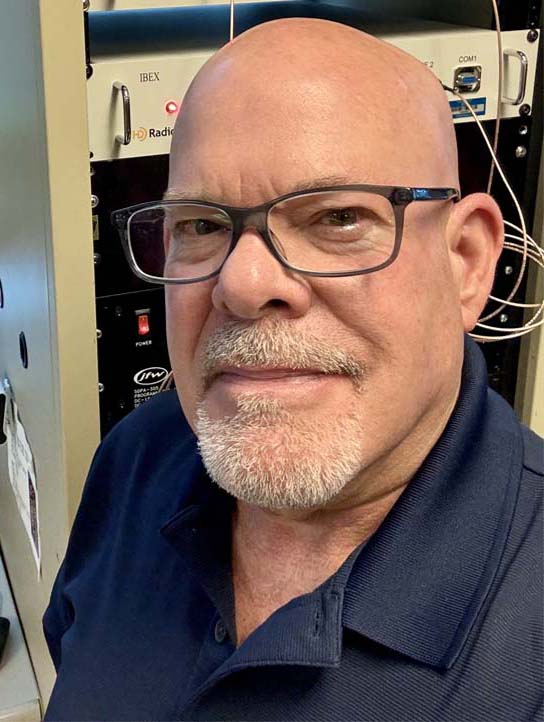
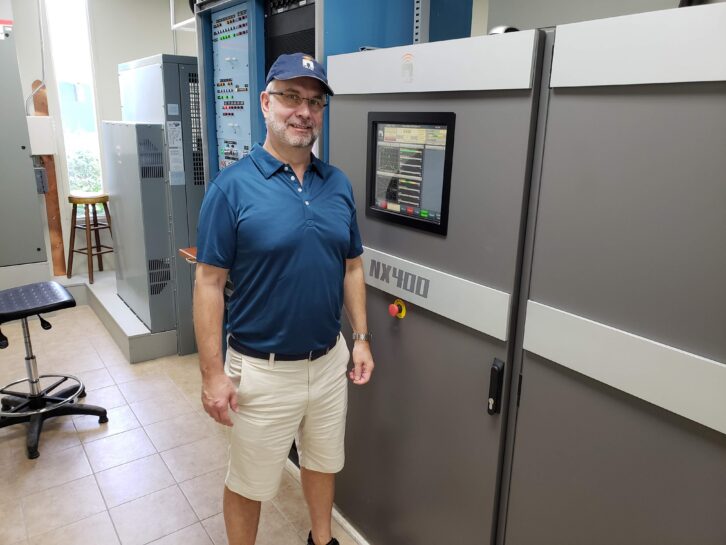
Nautel has deployed approximately 20,000 transmitters in at least 177 countries since its founding in 1970. President/CEO Kevin Rodgers has been with the company for 40 years, joining it in 1985 when it made only AM transmitters.
The privately held firm has about 250 employees worldwide; it is headquartered in Hackett’s Cove in the Canadian province of Nova Scotia. It also operates a manufacturing facility in Bangor, Maine.
Radio World asked Rodgers, 64, about challenges facing the transmitter business, where growth will come from and the company’s perspective on tariffs as its operations straddle Canada and the United States.

Radio World: Kevin what would you identify as the most important challenge facing broadcast RF manufacturers today?
Kevin Rodgers: There isn’t a single challenge. The industry is at a turning point, where technology is shifting from legacy analog RF broadcasting to modern digital and IP infrastructure. This is forcing manufacturers to redesign products that are compatible with hybrid RF/IP networks and digital modulation schemes like HD Radio and DRM.
This shift requires new approaches to exciter design, signal transport, security and compliance and adds to the engineering challenges when designing new transmitters. Transmitters are now expected to integrate seamlessly with IP networks.
Customers aren’t just buying RF transmitters anymore, they want control systems, monitoring, analytics and remote diagnostics all built in. This of course means a transmitter manufacturer needs not only top RF and power supply design engineers, but also software and firmware talent.
RW: How would you characterize the health of the transmitter business globally?
Rodgers: North America remains the core of the radio broadcast market but there are exciting things happening across the globe in Asia, Africa, Latin America. And certainly DAB+ has transformed radio in Europe.
RW: What areas of your business are likely to drive Nautel business growth in 2026?
Rodgers: Primarily it’s FM around the world. That’s traditional FM broadcasting, and obviously continued interest in digital broadcasting, HD Radio. We all know that it got off to a slow start, but we’ve certainly in the last five years found that people are interested in it around the world.
RW: How big of a growth segment is HD Radio for you?
Rodgers: We continue to hold a passion for digital radio. I’m still blown away by the sound quality of an HD channel, and radio broadcasters do an amazing job of making their content sound spectacular compared to non-radio streaming alternatives.
We’ve been one of the voices underlining the importance of stations getting their fair chunk of real estate on the modern car dashboards, and we’re doing everything we can to make HD an easier and less expensive option for any broadcaster that hasn’t yet adopted it. So yes, we see HD as an important proposition for broadcasters and we’ll continue to innovate in that space.
RW: What about the demand for AM transmitters?
Rodgers: AM as you know is up and down around the world. We still see some opportunities, but most of North America has moved away from AM in general. There are specific areas where AM is still very popular and is a great source of revenue in some locations. But interest in North America has moved to FM where there’s room.
There are opportunities worldwide for high-power AM. I know there’s an opportunity in Pakistan right now where there’s some interest in high-power AM.
RW: Nautel has only ever designed solid-state transmitters from its beginnings. How did that happen?
Rodgers: That’s correct. We got started by producing radio beacons, which at the time were popular around the world. And in the late 1960s that technology was all tube-based.
Our founders decided that they could use solid-state technology to make a much more reliable radio beacon. And that’s how the company started with their solid-state heritage, with an exponentially more reliable radio beacon transmitter.
We also consider ourselves to be the first company to successfully commercialize a solid-state broadcast transmitter. We were very excited when we started making 30 kW and 40 kW transmitters about 15 years back and saw the industry complete that evolution from tubes to solid-state in even the largest transmitters.
RW: And AM was Nautel’s first interest?
Rodgers: Yes. The radio beacon frequency range is 190 to 535 kilohertz, so it was a natural progression to move into the AM broadcasting band, which is just above 530 kilohertz. Then having been very successful in AM for most of the 1980s, we moved into FM in the early 1990s.
RW: How have tariffs and Canadian/American political tensions affected Nautel’s business?
Rodgers: All manufacturing entities in North America are managing through some aspects of changing regulations. You could say that Nautel is a pan-North American business from a manufacturing standpoint.
By design we’ve had two mirror image production facilities in the U.S. and north of the border for more than five decades. That allows us to optimize production for our customers and have resilience should we ever have a disaster recovery situation.
As for any impact of the changes, all I can say is that Nautel had a very strong year in 2025 and prospects for an even stronger 2026, so I guess we’re doing the right things to manage through tariffs and the changes, with our customers always top of mind.
RW: Are supply chain problems still an issue in RF manufacturing?
Rodgers: The global supply chain challenges have improved somewhat in the past year but all companies face the occasional hiccup. We have fantastic relationships with our major vendors so are able to keep ahead of most issues, but there are still surprises that come up.
Recently we almost ran out of fans, but at the very last minute our suppler came through with two skids of fans, approximately 2,000 pieces, and we were able to ship transmitters on time.
RW: What technology developments will Nautel highlight at the spring NAB Show?
Rodgers: I think broadcast engineers will have lots of reasons to stop by our booth. It’s too early, and we won’t let the cat out of bag just yet, but broadcasters have watched Nautel really push the envelope on digital radio via our software-based air chain approach. This year will definitely continue that trend along with a few other surprises.
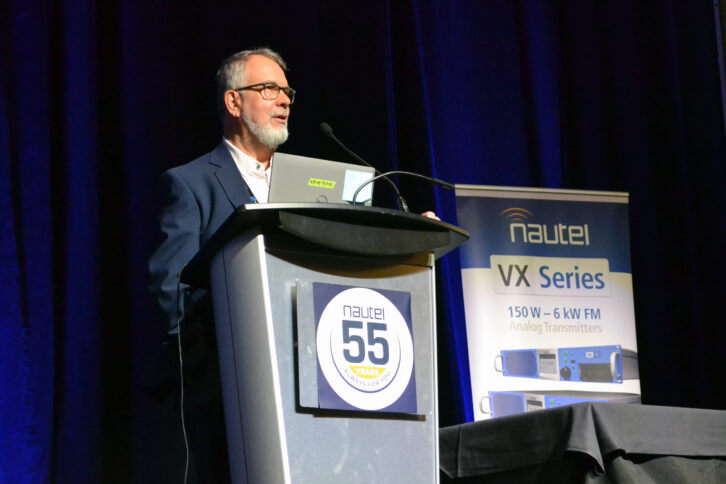
RW: Nautel’s Radio Technology Forum at NAB, often still called the Nautel User Group or NUG, is moving from the Flamingo to the Westgate Las Vegas Resort. What will be new there?
Rodgers: Over the years, we’ve really tried to make this a cross-industry event appealing to all broadcast engineers and not just Nautel customers. This year it’ll be addressing broad topics of concern to all broadcasters, including how many more functions of the traditional radio air chain we might eventually see built into transmitters.
[Related: “Nautel Moves Its Radio Technology Forum”]
The jury is still out on that one. In a sense the only two components of an over-the-air air chain that can’t be implemented in software are the microphone and transmitter, so it will really come down to how broadcasters want to host these components.
Different situations or preferences may determine if components might be hosted in server, or in the transmitter, or in the cloud or in a combination of two or more of the options to achieve resiliency.
We’ve focused a lot on the audio processor and HD Radio components because we can link those elements together to eliminate FM-HD blend drift completely. We also feel that elements of the automation system make a lot of sense to be at the transmitter site so that if connectivity is lost, content can keep flowing seamlessly for hours until a connection is reestablished.
RW: A couple of years ago Digital Alert Systems, Telos Alliance and Nautel proposed EAS alerting for radio with a networked approach, dubbed EAS at the Edge. Is there anything new in that area?
Rodgers: Yes, we did a demonstration together to show an example of how EAS can fit into a software-based air chain. Since that time there has been lots of discussion on how to move EAS forward into modern IT and air chain infrastructures. As industry and regulators work together to define any changes to EAS infrastructure, Nautel stands ready with a flexible software-based architecture.
RW: What is your top business goal as the leader of the company for 2026?
Rodgers: A couple of things. This applies to myself, and I encourage my team as well, to be excellent listeners to our broadcast customers. It’s the only way we can stay true to our mission of serving their needs.
Another area where we hope to help broadcasters this year is taking advantage of the car dashboard to keep radio front and center, and help our customers find new sources of revenue, relevance or donations. When radio prospers, we all prosper, so we have a deep partnership in helping broadcasters be their best.
RW: How about possible major consolidation in the U.S. through changes in ownership caps? How could that affect your business?
Rodgers: That’s a hard one to predict at this time. We’re certainly ready to support any broadcaster that may need to modernize their infrastructure as the result of consolidation or station ownership changes.
RW: How did you get started in this business?
Rodgers: While attending the University of New Brunswick, I began a summer job in the engineering department at a local radio station, CFBC(AM), maintaining a Harris MW-50. After graduating in 1985 with an electrical engineering degree, I joined Nautel.
I was responsible for customer service. This included field work and telephone support. Being in the trenches with broadcast engineers allowed me to learn their pain points and how to build a company that can better address those needs and serve them into the future.
RW: Who were your mentors early on?
Rodgers: Nautel’s founders were Dennis Covell, Dave Grace and John Pinks. Their influence in my early years at Nautel still guides me to this day.
RW: What do you enjoy doing in your time away from the office?
Rodgers: When I can, I like to tinker in the garage. I have a passion for restoring old cars and get real enjoyment from seeing results from a hands-on effort. My favorite restoration is my 1970 E-Type Jaguar.
[Related: “Nautel’s Wendell Lonergan Reflects on a Remarkable Career”]
The post Nautel Adapts to Shifting Technology Winds appeared first on Radio World.