Vue lecture

What Kind of Fire Extinguisher Should You Use?
An engineer checks a fire extinguisher.
Getty Images/Kunakorn Rassadornyindee

Contributor Dan Slentz passes along a relevant question from Doug Nelson: What kind of fire extinguisher should you install at your transmitter site?

There are six common types, according to manufacturer Kidde:

  • Dry chemical agent extinguishers form a crust to remove oxygen and keep it from spreading. 
  • Water types absorb the heat, cool the burning material and remove oxygen. 
  • Wet chemical types seal the fuel to prevent vapors from igniting and cool the fire. 
  • Carbon dioxide types remove the oxygen and replace it with pressurized CO2 gas.
  • Halotron is a clean agent fire extinguisher that discharges a non-conductive rapidly evaporating liquid. 
  • And foam types smother the fire by creating a barrier or film of foam.

According to the National Fire Protection Association, extinguishers carry a letter rating that corresponds to the type of fire a device can put out:

  • Class A are fires in ordinary combustible materials, such as wood, cloth, paper, rubber, and many plastics. 
  • Class B are fires in flammable liquids, combustible liquids, petroleum greases, tars, oils, oil-based paints, solvents, lacquers, alcohols and flammable gases.
  • Class C fires involve energized electrical equipment.
  • Class D are fires in combustible metals such as magnesium, titanium, zirconium, sodium, lithium and potassium. 
  • And Class K are fires in cooking appliances that involve combustible cooking media like vegetable or animal oils and fats.

With all the equipment at a transmitter site, you certainly don’t want to use an extinguisher that will leave a residue that can ruin the electronics. To avoid damage, steer clear of Class A and B dry chemical extinguishers. 

Engineer Blaine Wilson writes that Halotron, made by American Pacific, is a brand of “eco-friendly” halocarbon fire extinguishers that are non-conductive and leave no residue, suitable for Class A, B and C fires. 

You should also consider an extinguisher’s rating and weight. The sites mentioned above have information to guide you.

What’s your experience? And have you ever had to use an extinguisher at your site? Email me.  

Engineer Steve Michaels suggests you take this question to your local fire department.

This seems a good idea on several fronts. First, you will get the latest information. Second, many departments will offer a free fire inspection of the transmitter site. Third, it’s a nice excuse to build a relationship with your local emergency responders.

Tube rebuilding

With Microwave Power Products closing the former Econco facility, engineers will be looking for an alternative source for tube rebuilding. 

Steve Tuzeneu writes that Massachusetts-based Kennetron rebuilds vacuum tubes, oscillator tubes, power grid tubes and electron valves used in broadcast and industrial applications. Do you have experience with the company to share? 

Frank fixes a leak

Consultants Frank and Dave Hertel share a simple fix to a problem that you might encounter. It’s an emergency end cap for a 1-5/8-inch transmission line.

Perhaps you are on a job and the station’s “staff IT engineer” has an old transmission line adapter on a line that is leaking air excessively. His nitrogen tank is going “empty” once a day. 
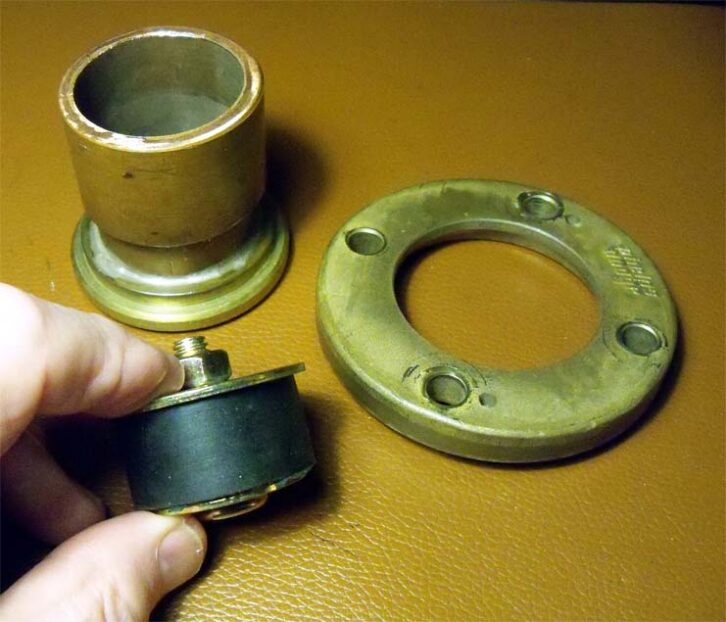
The flange adapter disassembled.

The nitrogen tank feed for the 1-5/8-inch line unfortunately is in parallel with a 3-1/8-inch line. The leak occurred when the engineer removed the 1 kW FM transmitter in order to send it to the factory for repair.

Since he didn’t have a spare transmitter, he and management understood they would be off the air for some time. Fortunately, they also realized that their high-power transmitter should be protected by having nitrogen on its 3-1/8 line. The nitrogen feed is simultaneously on both the 3-1/8 and the 1-5/8 line so it would not take on any moisture.
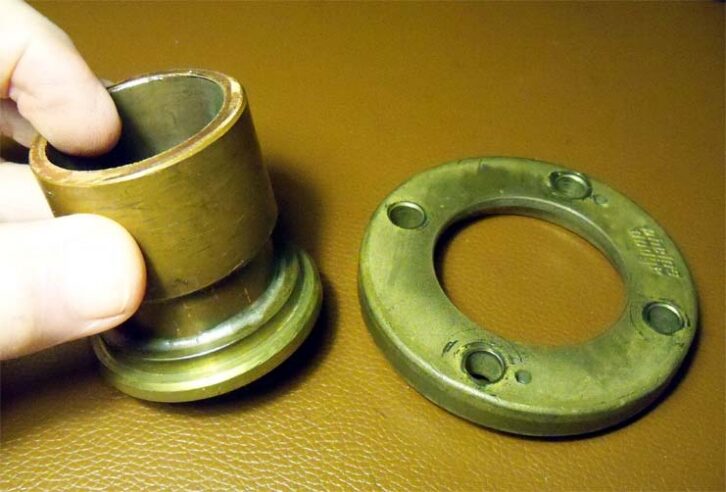
Assembling the plug.

Lady Luck must have been with them because a previous RF engineer had left a stockpile of parts and pieces. They found an old cut-off EIA 1-5/8 flange and converted it into an end cap. The flange caps the bottom run of the EIA flanged 1-5/8 coax while keeping pressure on both coax lines.
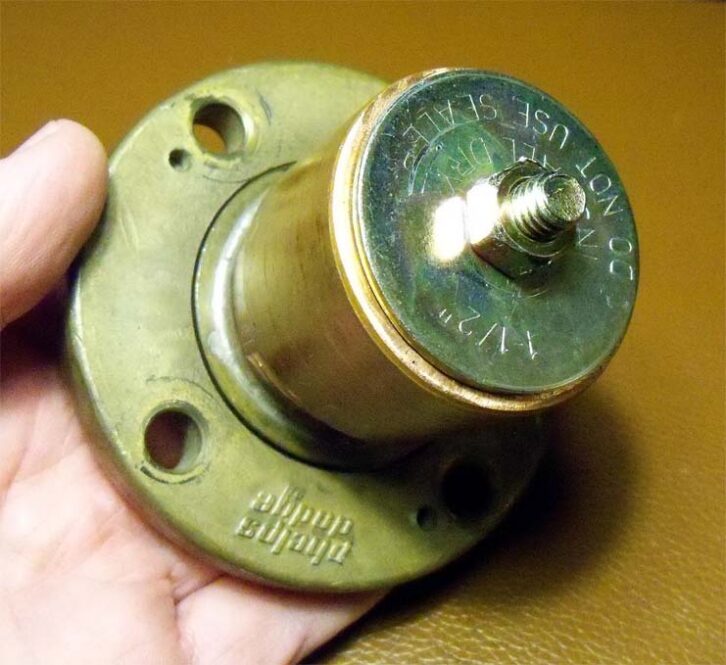
The finished adapter.

The photos show you how to correct the station’s line pressure requirement while awaiting a new, non-leaking adapter/connector for the 1-5/8-inch line and the return of the transmitter.

This can be used outside, if need be. It will withstand winter and summer conditions. The plug for the coax end is a 1-1/2-inch expandable freeze plug, also known as a welch plug, available from Amazon or an auto parts store.

Workbench submissions are encouraged and qualify for SBE re certification credit. Email johnpbisset@gmail.com.

[Read Another Workbench by John Bisset]


The post What Kind of Fire Extinguisher Should You Use? appeared first on Radio World.
  •  

Turn Your Phone Into a Barcode Scanner

A longtime consulting engineer who now works for the federal government saw our discussion of mnemonics for remembering the resistor color code. He shares one he learned in college. It goes “Budweiser Beer Rots Our Young Gut, But Vodka Goes Well.” Hey, whatever works!

Barcode lookup

I was chatting with some colleagues recently and we all agreed that the smartphone may well be the best invention for engineers of modern times. These apps do pretty much everything.

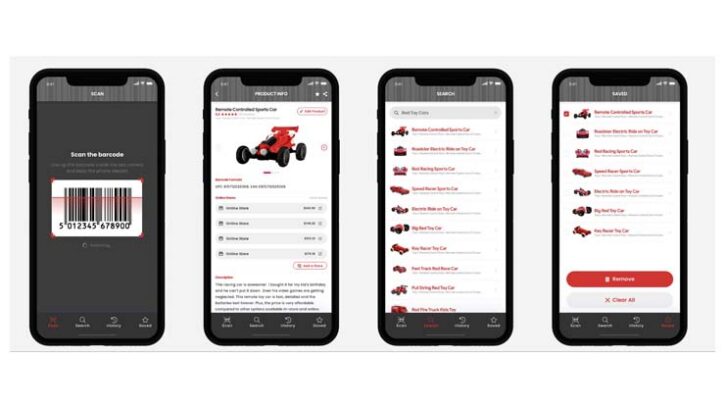
Barcode Lookup turns your phone into a barcode scanner.

Paul Sagi just told me about an app called Barcode Lookup that turns your phone into a barcode scanner. It contains 1.6 billion codes.

Let’s say you spot a product at the hardware store but want to know more about it or compare prices from other sources. Open this app on your phone to scan or plug in the UPC number. You will see descriptions, images, online stores, reviews and other useful information. You can also store the results.

The platform contains five barcode types known as Global Trade Item Numbers. They include UPC, EAN, ISBN, JAN and ITF-14.

The app is available on the Apple and Google app stores. Learn more about this simple but fascinating tool.

Broadcast manuals

How about a stroll down memory lane? Frank Hertel, principal engineer with Hertel Engineering, told us about a great page that has many old equipment manuals and catalogs.

The page is part of the invaluable WorldRadioHistory site run by David Gleason. It’s under Technical & Electronics, listed as “Catalogs of Equipment Manufacturers.”

It’s fun to peruse, say, a catalog of equipment from Bradley Broadcast from the 1990s (several of which were edited and co-designed by our editor Paul McLane in a previous job), or to read a manual for AEL transmitters, or look over documentation about a Tapecaster cart machine.

Do you miss names like McMartin, Allied Broadcast, PR&E or Schaefer? Get ready to go down the rabbit hole.

Priceless data sheet

We’ve mentioned in the past that the audio performance of old Western Electric transformers, many of which were used for equalized remote service, makes them a keeper.

This data sheet from the late 1950s identifies various transformers manufactured by Western Electric.
This data sheet from the late 1950s identifies various transformers manufactured by Western Electric. Click to download.

San Francisco projects engineer Bill Weeks shares a data sheet from 1958. It identifies the transformer type (first column) and the operating specs in subsequent columns.

This is too small to read here, so we’ve posted it and you can download it as a PDF.

Archie’s site tips

In a recent Workbench, Dale Lamm shared a list of things to do before leaving a transmitter site, the kind of reminders you might want to post by the door.

We asked for more ideas. Archie Simpson responded with these:

  • Are AM ATUs at each tower base closed and locked?
  • Are the tower fences closed and locked?
  • Is the generator fenced in and locked?
  • Is the satellite dish fenced in and locked?
  • Have the computer monitors been turned off?
  • Have all non-security lights been shut off?

And finally, one that can easily forgotten easily at 3:20 a.m.: Is the alarm turned on and the remote control not left in “local” mode?

Air conditioning caution

With warmer weather coming for most of our readers, Florida-based engineer Don Browne reminds us also to keep an eye on the air conditioning at the transmitter site.

Check the air outlet and intake, and determine the difference in temperatures. Depending on outside conditions, the difference should be around 15 to 20 degrees F.

Air conditioning systems generally can be expected to only cool to about 20 degrees below the outside air temperature. But if the system isn’t cooling efficiently, act before you have a problem.

Lights, camera … no, LIGHTS!

My former Telos colleague Kirk Harnack has joined the technical staff of Josh Bohn’s company MaxxKonnect.

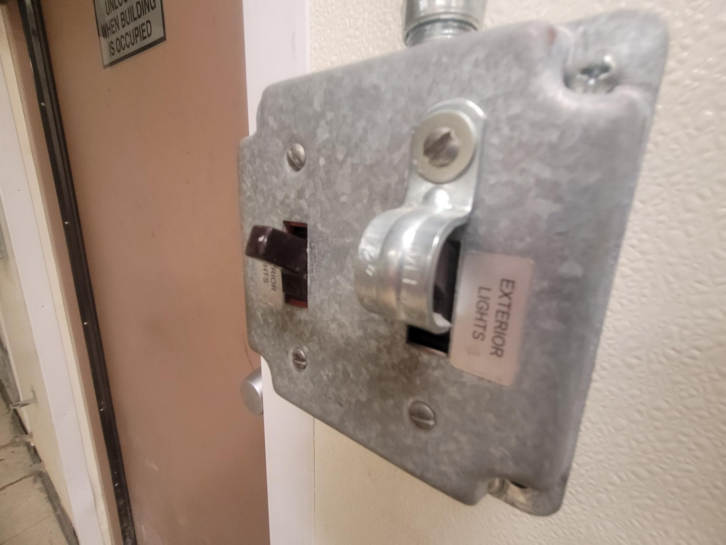
Kirk also is a broadcaster and installed color WiFi cameras at his transmitter sites. He intentionally leaves on the LED overhead lights for best visibility. But sometimes people turn a light switch off, impairing the use of the cameras.

Use a cable clamp to prevent yourself and others from turning off light switches accidentally.

To prevent that, he installs cable clamps. When someone really wants to turn the switch off they can do it with a screwdriver.

Kirk is always ready with a good tip. He learned this one from broadcast engineer Ray Vaughn.

Workbench submissions are encouraged and qualify for SBE recertification credit. Email johnpbisset@gmail.com.

[Read Another Workbench by John Bisset]

The post Turn Your Phone Into a Barcode Scanner appeared first on Radio World.

  •