Vue lecture

PREC Returns Amid Turbulent Times in Pubradio
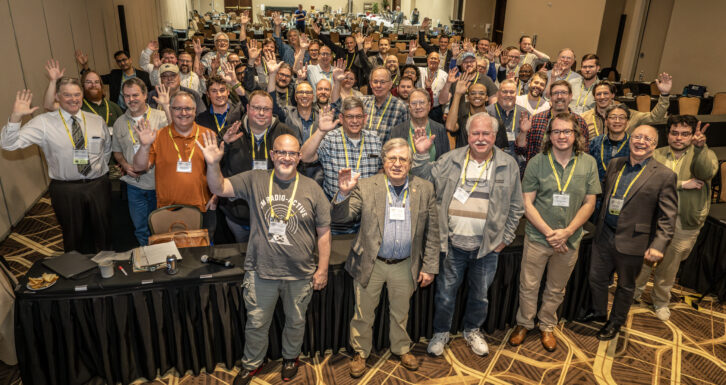
Attendees at last year’s PREC posed for our camera.credit:
Photo by Jim Peck
Attendees at last year’s PREC posed for our camera.
Credit:Photo by Jim Peck

The Association of Public Radio Engineers is preparing the 26th Public Radio Engineering Conference, which returns to Las Vegas with a focus on navigating the uncertain future of public broadcasting.

The event will take place Thursday, April 16, and Friday, April 17, at the Tuscany Suites and Casino, preceding the NAB Show.

This year’s speakers include engineers, representatives from product manufacturers and other recognizable industry names. PREC is public radio’s yearly gathering for broadcast engineers of all experience levels.

This year’s guiding theme is “what’s next.” While the content remains mostly technical, the dramatic changes in public media over the past year give the discussions a unique context.

According to APRE President Scott Hanley, the association board designed the event with that shifting landscape in mind. He also believes this is the one time of year such a large and diverse group of public radio technology experts can gather.

“We decided that our conference had become even more important than years past, as we face a future where effective, sustainable operation is at risk and important to our communities,” Hanley said.

Sample Thursday sessions include:

  • “Audio Processing: How to Tune It and Why It Matters,” by Leif Claesson of Claesson Edwards
  • David Layer of NAB presenting “AM Radio in the 21st Century”
  • “Transmission System Troubleshooting Techniques” by Steve Wilde of American Amplifier
  • “The Magic of LTSC and Other Ways to Make Legacy Tech Work,” by Scott Hanley, Darrell McCalla and William Harrison.
  • “The Data-Driven Dashboard: Leveraging AutoStage Analytics for Public Media” by Juan Galdamez of Xperi.

[Related: “How Boosters Can Help AM Stations”]

A sample of Friday’s schedule:

  • “Advances in FM Antenna Technology” by Cory Edwards of Dielectric
  • “NCE Translator Window and Other Legal Updates” by Derek Teslik of Gray Miller Persh
  • An update on NPR Distribution by NPR’s Badri Munipalla, Jon Cyphers and Mike Pilone
  • “Studios (Or No Studios At All): Some New Ways of Thinking” by Scott Fybush of Myriad broadcast software
  • “How Engineers Contribute to Public Radio Revenue Growth,” Jeff Soderberg of StreamGuys

The newly formed Public Media Infrastructure will also present on Friday; its speakers were pending at this writing.

Organizers have held the in-person conference price flat at $350 for members since 2024. They also offer a virtual attendance option for engineers unable to travel. 

He also said APRE is expanding its financial aid footprint. The funds are designated both to assist attendees with financial needs and “to encourage the next generation of technical talent to get firmly engaged in the public media engineering community sooner rather than later,” according to Hanley.

The conference concludes on Friday evening with the annual APRE Awards Dinner at Lawry’s Prime Rib.

[Read more Radio World preview coverage of the NAB Show and related events happening in Las Vegas this month]

The post PREC Returns Amid Turbulent Times in Pubradio appeared first on Radio World.
  •  

NPR Distribution Highlights New Adaptable Receiver

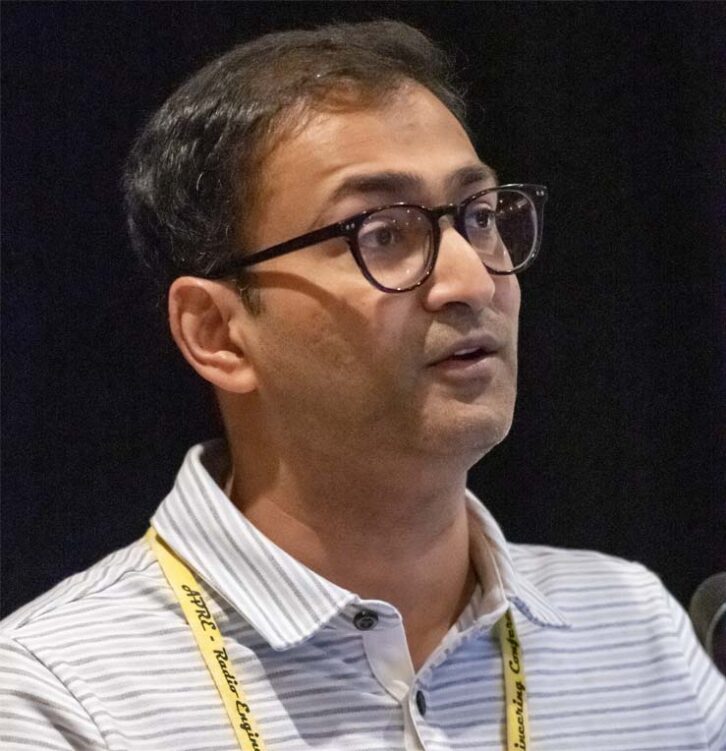
Badri Munipalla
Badri Munipalla (Photo by Jim Peck)

Representatives of NPR Distribution will speak during the Public Radio Engineering Conference at the Tuscany Suites and Casino in Las Vegas, preceding the NAB Show.

Badri Munipalla is vice president, NPR Distribution, which manages and operates the Public Radio Satellite System. It distributes approximately 400,000 hours of content annually to some 1,200 stations.

Radio World: Which members of the NPR team are presenting at PREC?

Badri Munipalla: Thank you, Paul, for taking the time to talk with me. We appreciate the opportunity to speak with our public radio colleagues each year to talk about how we’ve listened to their needs and developed solutions to address them.

Three members of NPR Distribution will be speaking at the conference. Joining me will be Jon Cyphers, senior manager, product and product support, Distribution, and Mike Pilone, enterprise architect, Distribution. They have been instrumental working with our team on ContentDepot and other recent developments.

RW: What is the topic?

Munipalla: We’ll provide updates about the PRSS and ContentDepot, public radio’s broadcast distribution and management platform. 

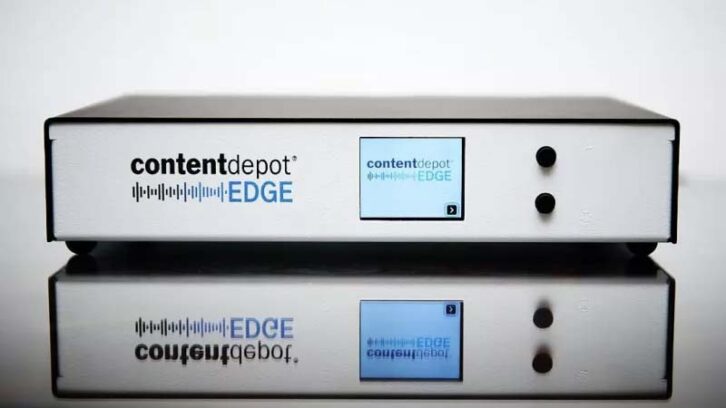
This year, in addition to discussing improvements to ContentDepot, we will provide updates on the next-generation ContentDepot Edge receiver that the NPR Distribution team has developed. It is a best-in-class terrestrial distribution receiver for live broadcast that will transform how public radio stations receive programming across America.

The integration of local and national news and programming is essential to the public radio experience. To advance innovations in broadcast distribution, NPR Distribution is introducing this low-latency terrestrial receiver. ContentDepot Edge, currently being piloted, enables stations to retain the core functionality of their existing distribution platform while adding new capabilities, including station-to-station content sharing, geo-targeted delivery and enhanced metadata, monitoring, and playback functionality. This is a significant development in broadcast distribution.

RW: The past year has brought huge changes to public radio, specifically in how the ecosystem is funded. How has this affected the work you and your team do to support public radio engineers and stations?

Munipalla: NPR remains committed to supporting the PRSS and public radio stations, and providing best-in-class reliable broadcast content management and distribution services, as we have for decades. 

No changes are planned in that commitment, despite the loss of federal funding. In fact, underscoring our commitment to stations, NPR announced to the public radio system in November that we would immediately dedicate additional resources toward fortifying the public radio system. NPR secured five years of federal interconnection funding prior to the dissolution of CPB. 

The NPR Board of Directors approved full and total relief of PRSS interconnection fees for two years for all interconnected public radio stations. 

The defunding of public media by Congress has brought uncertainty to a system that is vitally important to many Americans. We remain committed to advocating for public sources of funding to support the public radio system.

RW: How does NPR Distribution’s relationship with its users change now that Public Media Infrastructure is on the scene?

Munipalla: NPR Distribution’s support for interconnected stations hasn’t changed. We have multi-year funding, and have provided relief to all interconnected stations during these challenging times. 

We continue to deliver reliable distribution services through PRSS, and we are delivering on future technologies that will respond to the needs of tomorrow’s public media. Our hardware and software are already developed, and operating both in pilots and in production. No other provider can offer that, and none has a track record of delivering like PRSS. 

We are working with our users to launch the ContentDepot Edge hardware and software solution designed to operate over public internet connections including fiber, 5G and satellite internet service providers.

Promotional image of the new NPR receiver.

What will change is that we will work with them to help ensure this new receiver will smoothly integrate with the existing ContentDepot platform to provide higher audio quality, faster file transfers and plug-and-play usability — all while maintaining NPR’s high standards for uptime and dependability. 

One example is the recent collaboration of NPR with KCUR in Kansas City, Mo., to keep the station on the air when KCUR faced an urgent move to relocate its core broadcast equipment to its transmitter building in a single weekend. KCUR and NPR took the opportunity to work together to deploy ContentDepot Edge rapidly without interrupting its broadcasts. 

Because the technology is designed to be highly adaptable and run over standard broadband, KCUR didn’t have to wait to rebuild complex satellite downlink infrastructure at its temporary setup.

Station engineers and general managers are already enthusiastic about this 21st-century solution for the system. This is consistent with our mission as we led the way to satellite delivery, to online content management through deploying the ContentDepot platform and now to a reliable terrestrial solution.

Through 2026 and beyond, we’ll be working closely with our public media colleagues at stations and producing organizations to address their needs and exceed their expectations in providing reliable, accessible and affordable broadcast content management and distribution.

Info: www.nprdistribution.org

[For News Like This See Our Show News Page]

The post NPR Distribution Highlights New Adaptable Receiver appeared first on Radio World.

  •