
 Connexion
How Richard Ross Kept the City That Never Sleeps On the Air
He managed to work nearly 65 years in the biggest city in the U.S., and in doing so, earned the admiration of his broadcast engineering peers.
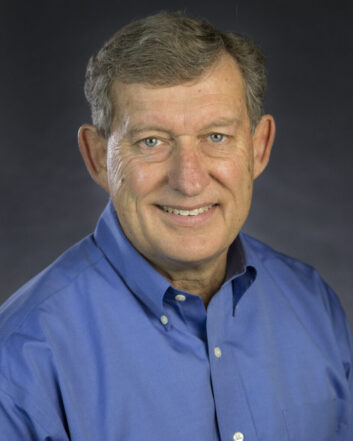
Richard Ross, a longtime chief engineer in New York City, died on Feb. 12 at the age of 89. He is survived by his daughter Erica, who shared many details with us from his life.
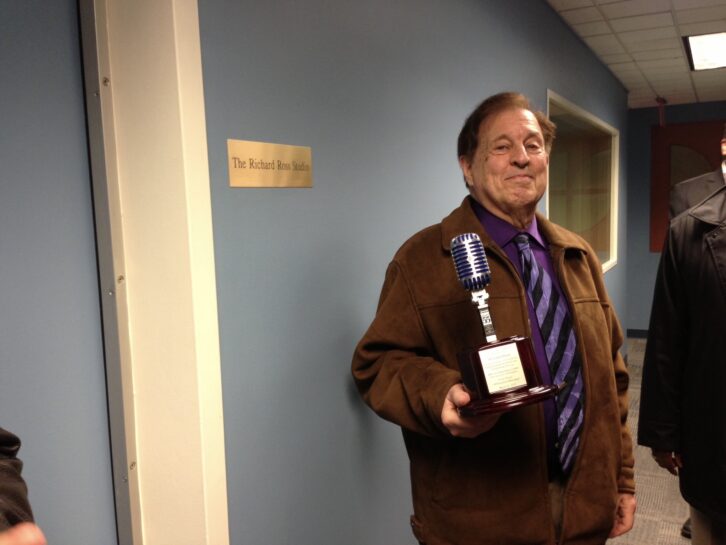
Ross joined 1280 WADO(AM) in the summer of 1972 as a relief engineer. By his count, he would withstand eight ownership changes until his retirement as chief engineer from Univision Radio in June 2020 at the age of 84.
Fellow engineers would call Ross frequently after his retirement, and for a time, he offered consulting services.
“He had a kind of Harry Potter-like knowledge of it all,” Erica said.
“Those who knew Richard lost a member of their family with his passing,” said Santos Lebron, engineering supervisor at Univision Radio New York.
Lebron’s relationship with Ross went back decades; they met when Lebron was hired as a relief engineer at WADO in 1977. He and others remembered Ross for being well-dressed and possessing a level-headedness, amicable toward all and harboring a bit of a mischievous side.
Ross knew of his fortune to work in the Big Apple for so many decades. “It is a rare occasion where one starts their career in any major city and they eventually work their way up the line to more important positions in major communications hubs,” he wrote in a piece for Storyworth.
Along with WADO, Ross spent many hours with the equipment above the Empire State Building when Heftel Broadcasting purchased 105.9 WNWK(FM). Univision’s radio footprint in New York would continue to grow with the addition of 92.7 WQBU(FM) in Garden City, followed by the trade of 105.9 with New York Public Radio for 96.3, then WQXR(FM), in 2009.
Early life
Ross was born to Helen and Edward Ross in May 1936 as an only child on Manhattan’s Upper West Side.
Erica recounted how he developed a knack for machines and tinkering early on. By age 10, Ross was already experimenting with his apartment building’s elevator controls — even figuring out how to send the doorman to the wrong floors.
For several years, he attended a boarding school in western North Carolina near the Blue Ridge Mountains. The experience of navigating his way back to Manhattan via train sparked a lifelong fascination with locomotives.
He later attended Brooklyn Technical High School, where he joined the radio club and, according to Erica, officially “caught the bug.”
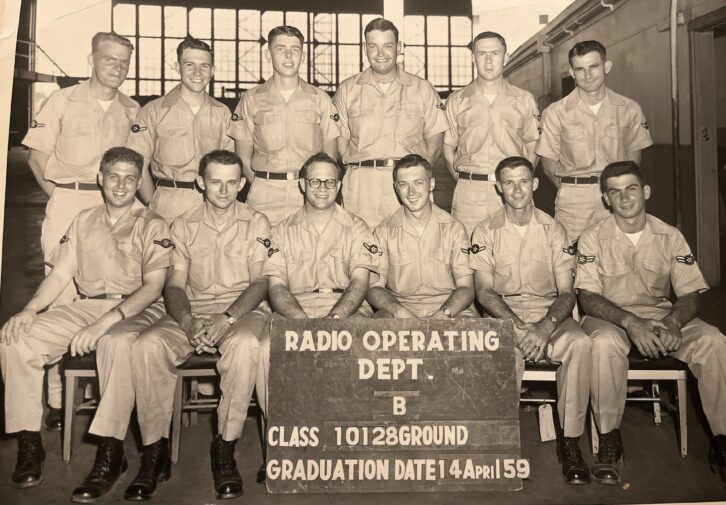
Ross studied at the University of Bridgeport, earning his associate’s degree in electrical engineering. He went on to serve three years in the communications division of the New York Air National Guard and completed basic training at Keesler Air Force Base in Biloxi, Miss.
In 1958, he got his break into the radio business, joining Municipal Broadcasting System’s WNYC(AM/FM) as a provisional engineer.
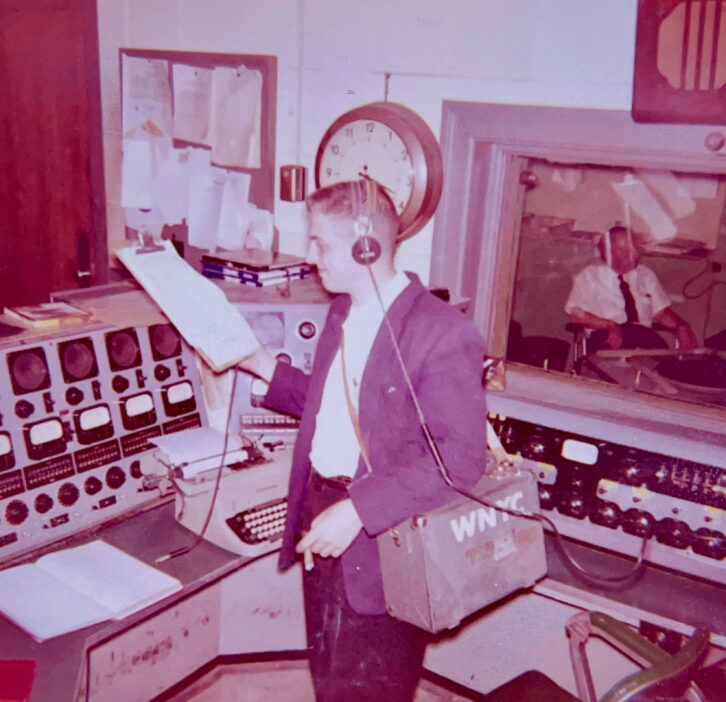
Ross aimed to become permanent pending a civil service exam. Passing the exam, however, didn’t guarantee a full-time position due to fierce competition from others. But WNYC’s chief engineer at the time, Hom Hong Wei, offered some reassuring advice, and Ross got the position.
He would credit Wei as being one of his most influential mentors. At WNYC, Ross found himself exploring hidden corners of the city.
“I got to go places that nobody else goes such as walking to the top of Washington Square Arch and yes, there is a locked stairway in the south leg of the arch,” Ross would recount.
Many decades at WADO
By the early 1970s, Ross transitioned to WADO as a summer relief engineer.
For a time, he found the energy to work at both WADO and WNYC, before becoming permanently entrenched at the Spanish-language AM station, where he’d work well into the 21st century.
He wondered how he had the stamina to manage it all.
He’d go solely full-time at WADO, but Ross’ role went beyond its day-to-day. During the ’70s, the AM station would broadcast Black gospel music on Sundays, and it had brokered agreements with several churches in the south Bronx and Harlem.
Ross was tasked with recording the services, lugging RCA reel-to-reel machines to the locations. Others were known to turn down those assignments for one reason or another, but Ross happily obliged.
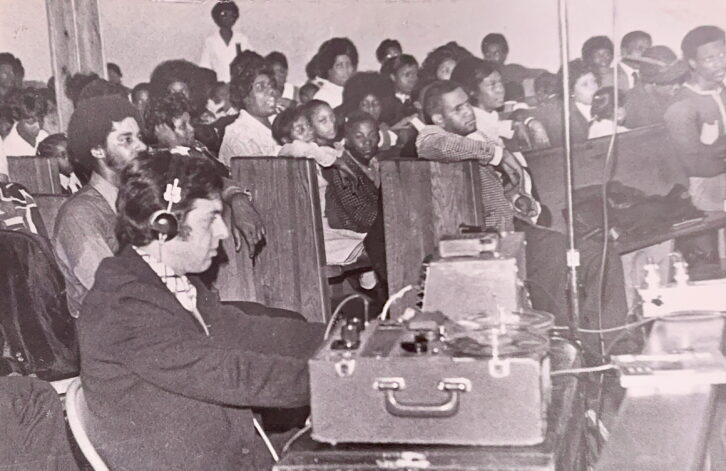
Even after WADO stopped airing the programming, he became entrenched with the churches, who would ultimately approach Ross to do separate recordings of the services. He would handle multiple recordings in a single day during the 1980s, and continued doing so through at least 2005.
They affectionately referred to him as “Brother Ross, our Gospel engineer,” viewing him as a part of their community. The services would be taped and sent to radio stations across the U.S. that aired Black gospel.
His spirit was evident in other ways. Ross became a member of the IBEW Local 1212, the labor union for broadcast engineers, in 1963.
He rose in its ranks, becoming part of the union’s executive board. Ross would stay even after he became WADO’s chief engineer in 1985, following the passing of his good friend Phil Greenstone.
With what would have been considered a management position, it was unusual for someone like Ross to remain in the union, both Erica and Lebron said. Ross wrote that he felt it was an honor.
“He was more than a colleague; he was a brother in every sense of the word,” IBEW 1212 wrote while remembering Ross on its website.
“All of us in this profession share the same situation,” Ross wrote in his Storyworth of his IBEW role. “We all know each other in New York City and once each month we meet to eat, drink and be merry and discuss our war stories.”
Ross was also a loyal member of the Society of Broadcast Engineers.
Meadowlands move
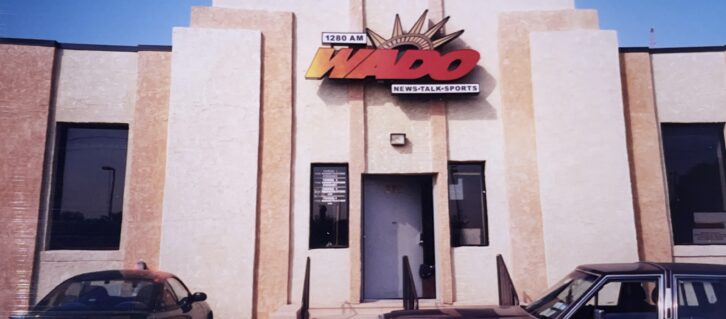
As the broadcast landscape evolved, Lebron remembered Ross best for coordinating WADO’s transmitting power increase in the New Jersey Meadowlands at the end of 1999.
As recounted by Scott Fybush, WADO had used a Blaw-Knox diamond-shaped tower from its transmitter site on Paterson Plank Road in Carlstadt. It ran 5 kW day and night as part of a power restriction on regional channels like 1280.
But the FCC lifted that restriction in the early 1990s. WADO sought to upgrade to 50 kW by day and 7.2 kW at night, which required a new antenna system.
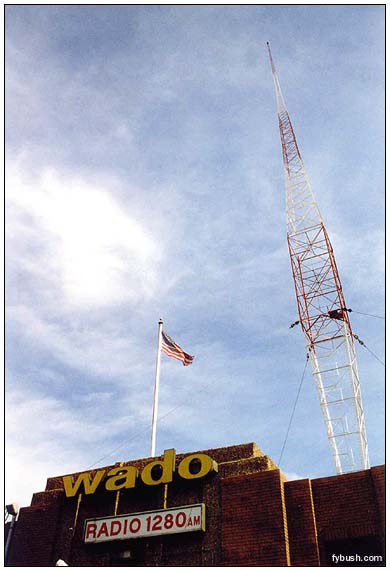
The venerable Blaw-Knox tower came down, and three new towers were needed, along with a complete renovation of the 1930s-era building that housed its transmitters.
Then-owner Hispanic Broadcasting had filed for a construction permit, but most of the actual work did not commence until just prior to its expiration, which acted as a hard deadline.
As Ross wrote in his Storyworth, from October 1999 and for the next four months, he visited the Meadowlands site daily to complete the project under great stress and pressure.
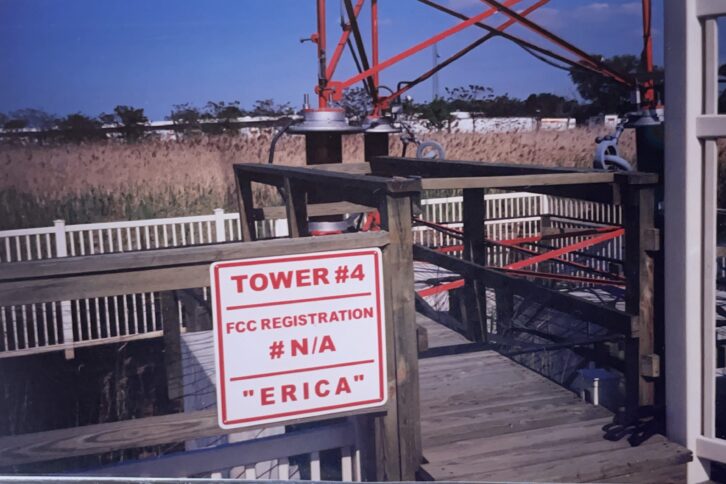
Construction took place on sensitive riparian land. It required a year of hearings costing over $1 million, involving the state of New Jersey, the Army Corps of Engineers and the U.S. Coast Guard.
Laying down and completely removing temporary wooden plank roads alone cost $675,000, according to Ross. Union dock workers were hired to build a 1,000-foot boardwalk to the towers, and a crane had to be rented from the Tappan Zee Bridge.
With the main transmitter building modified and the heat shut off, crews worked late into the winter nights, running copper straps between the four towers with only a porta-potty out back.
He recounted the moment of truth:
“On February 1, I invited David Lykes, Hispanic Broadcasting’s chief operating officer, to come up from Dallas to push the activate button at 6 p.m.,” Ross wrote. “My heart was in my throat, but the damn system worked.”
The antenna system was designed by Ron Rackley of du Treil, Lundin & Rackley, who consulted on the project and praised Ross for its execution.
True to form
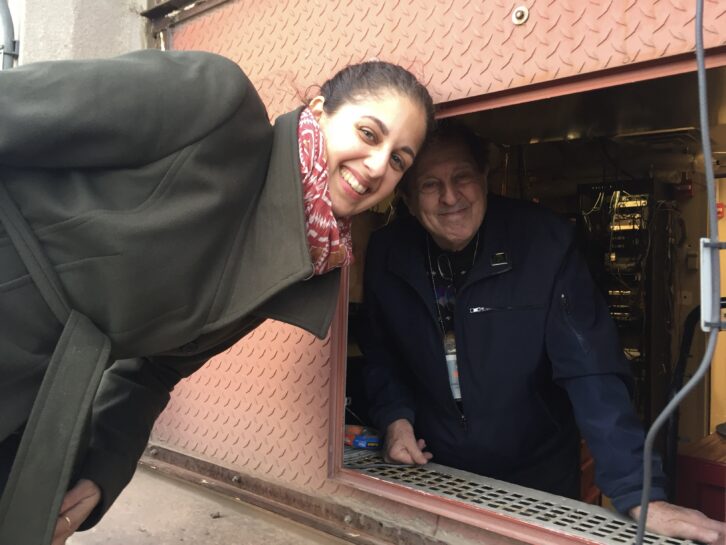
There were many other, less high-profile wins as well, often accompanied by 2 a.m. phone calls.
Ross was also well-known for his thorough tours of the Empire State Building’s broadcast facilities — Erica said multiple people have told her that those tours were highlights of their careers.
Also an amateur radio operator (K2RNR), Ross had many interests outside of radio, including locomotives and nature.
He loved the city, but ever since his boarding school days in western North Carolina, he became infatuated with the peace of a mountainside setting. Since the late 1960s, Ross owned a property in Kunkletown, Pa., in the southern portion of the Pocono Mountain region.
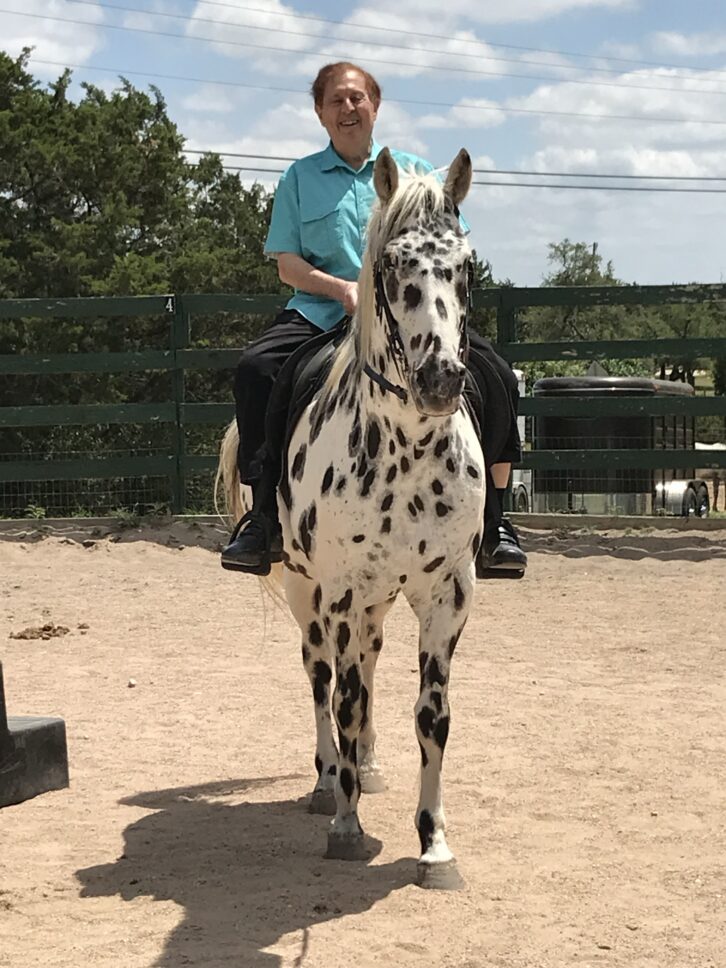
A lover of nature and an adamant conservationist, he viewed the country home as a sanctuary for wild animals. But he’d continue to call the Big Apple his main home and it was the only place he’d ever work.
In 2013, Univision honored his 50 years of broadcasting service by naming a studio after him.
True to his nature, he hated the attention and adamantly hoped people wouldn’t use the milestone to do the math on his age.
Ross passed away at home in his Hell’s Kitchen apartment — where he lived since 1964 — just shy of his 90th birthday.
Fittingly, the coroner described the lifelong engineer’s unforeseen cause of death as “an electrical short circuit of the heart.”
A memorial and celebration of life for Ross will be held Sunday, April 12, at the Masonic Lodge No. 72 in Secaucus, N.J.
The post How Richard Ross Kept the City That Never Sleeps On the Air appeared first on Radio World.

 Geoff Rich, a longtime radio executive who is credited with leading the “Dr. Laura” program, died Thursday night in Los Angeles.
 The
The