It's no secret that Firefox has been steadily losing ground over the past decade or so. Despite efforts to revitalize this once beloved titan of the internet, the market share just hasn't returned, and Mozilla's recent choices haven't been helping the cause. That being said, Mozilla hasn't given up, and after many false starts, it seems like current leadership is ready to give it a go at regaining ground.
The recently introduced built-in Firefox VPN feature is an example of this, as are the (admittedly controversial) AI-powered enhancements recently shipped in recent releases. But are these enough to give Firefox a real chance to claw its way back to the top, or at least make it relevant enough to survive?
Let's talk about it, and see where things might be headed for our favourite red panda.
Is Firefox really dying?
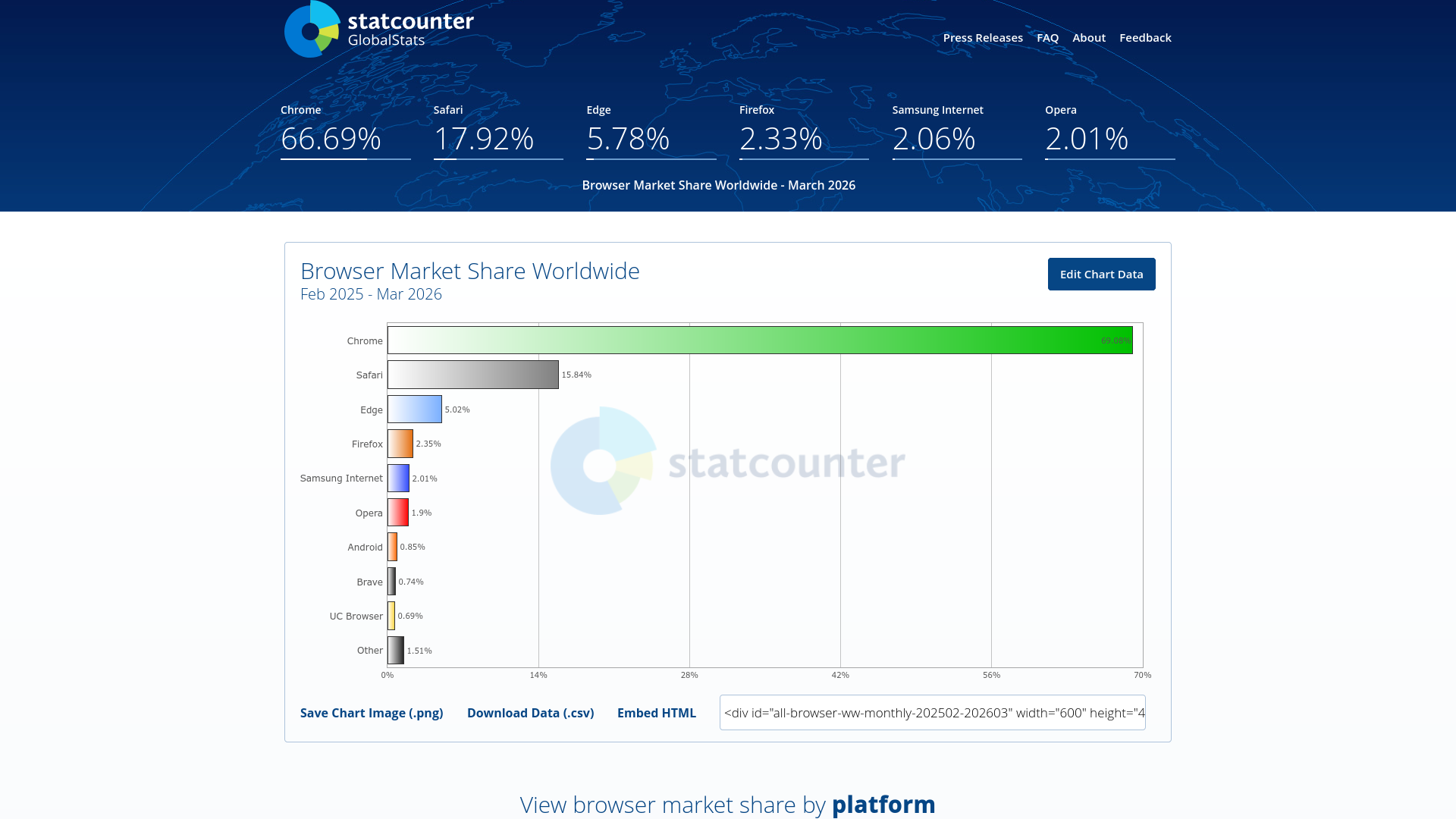
Firefox isn't faring so well on stat counter in recent years
Since we’re asking whether Firefox can be resurrected, it shouldn’t come as a shock that, by the numbers, Firefox is not in a particularly good place. Since the launch of Google Chrome, Firefox has gradually, and then more rapidly, fallen from its former position to the point where it now accounts for just 2.29% of global browser market share, according to Statcounter. That’s down from 7.97% in 2016 (which is still quite minimal), a drop of roughly 5.7 percentage points in the last decade alone.
Of course, a low market share does not mean an open-source project is literally “dying”. But Firefox is not just a project. It is also a product, and as a product, it has an incentive not just to exist or survive, but to thrive. Right now, the long-term trend suggests it is doing neither especially well.
What happened to Firefox's popularity anyway?
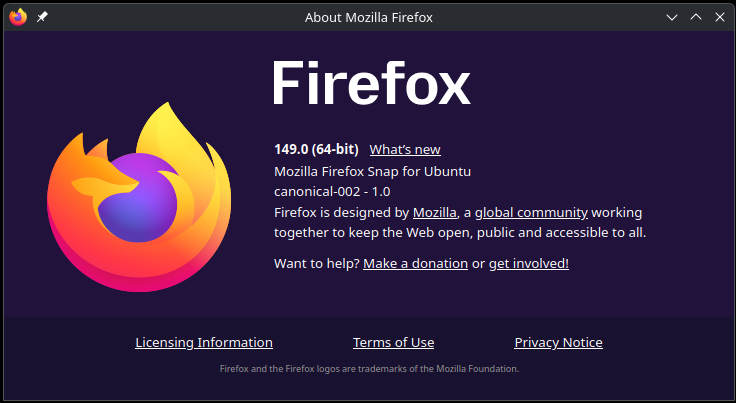
Firefox is still getting regular release despite the falling market share
It’s easy to snigger and say “Chrome happened, heh!” but that wouldn’t do the whole story justice. It’s unfair to say that the resignation of former Mozilla CEO Brendan Eich in 2014 and the subsequent creation of Brave is responsible for Firefox’s decline, even if that episode is sometimes cited as one more nail in the Firefox coffin.
Instead, the reality is a bit more complicated, and it’s worth paying attention to before we answer the questions posed by our overall premise.
For starters, Firefox has reinvented itself a bit too often in a relatively short timeframe, and unfortunately, these reinventions have at times blindsided loyal users. From Australis to Quantum/Photon, and later Proton, Mozilla has seemed to be in a relentless search for a new Firefox aesthetic. On the surface, no pun intended, this may not seem like a big deal, because after all, “a UI is just another coat of paint”, right?
💡
Did you know? Firefox is gearing up for yet another interface change. You can learn all about it in our coverage on Firefox Nova.
The problem with change is friction
Too many changes in a short time can leave users feeling overwhelmed Pexels / cottonbro studio
Every change is another experience for users to get used to, and adjusting to change brings friction. The more change, the more friction, and the more friction the greater the frustration. Eventually, users get tired and move on.
By contrast, Chrome and most of Firefox’s major competitors have remained comparatively stable in their core look and feel over time, which reduces the friction users feel when moving from one version to the next. Furthermore, Firefox lost its legacy extension system and full browser theming in 2017, and before that, the standout Panorama tab groups feature in 2016. You can see the Firefox 57 transition point in Mozilla’s own release notes.
Simply put, Firefox suffers from a war of its own attrition. So the question then becomes can its new features heal the scars the old wounds left behind?
Why the new VPN matters, if they get it right
Of all the moves Mozilla has been making in Firefox recently, this one perhaps has the greatest potential to be the sleeper hit Firefox has needed for a long time. After all, Mozilla has long positioned itself as a champion of privacy and security, and Firefox still retains a stronger reputation for privacy than many of its mainstream rivals.
Unlike AI features, which many users may ignore, distrust, or actively avoid, built-in privacy tools solve a problem people already understand.
That said, Mozilla needs to be careful not to make some of the same obvious mistakes that have hurt other browsers in the past. Just as importantly, it needs to resist the temptation to keep this feature restricted to only a select few in the long run.
Don’t give us a glorified proxy
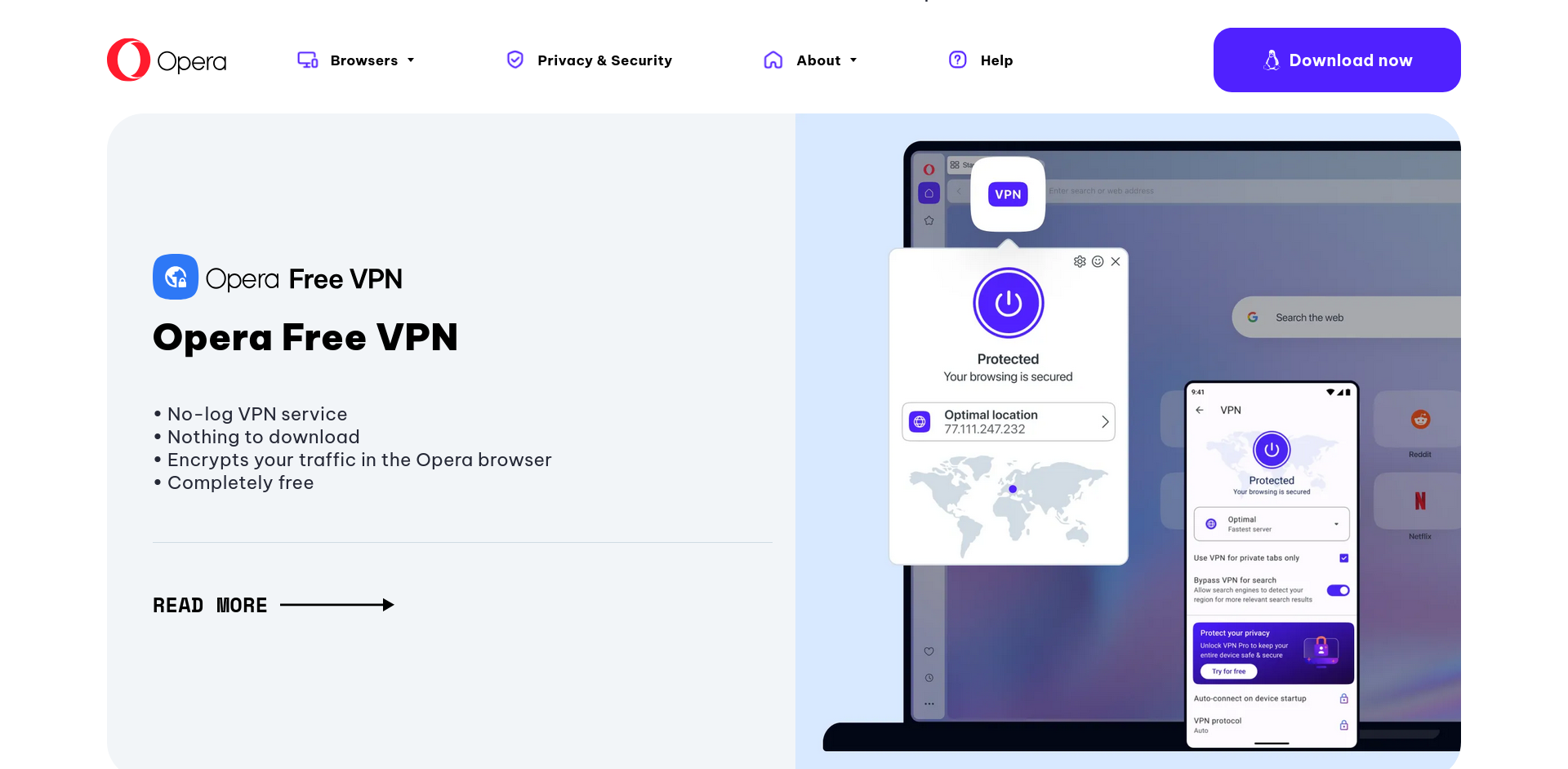
Opera VPN has come under fire in the past for not being a true VPN service
Opera tried this, and to my knowledge, it is still essentially that, despite carrying the name of a VPN. If Mozilla is serious about this effort, then it needs to make sure that what it is calling a VPN actually delivers on what the term implies.
If this is going to matter, it cannot feel like a half-step, a marketing hook, or a dressed-up proxy with a more fashionable label. It needs to be useful, absolutely trustworthy (a very hard sell), and accessible enough that ordinary users can feel the benefit without having to decode the fine print first.
It needs to be for everyone, or it shouldn’t exist at all
That stance may sound a little hardline, but it is the stance Firefox needs if Mozilla truly intends to make this feature matter on the global stage. A privacy feature cannot meaningfully strengthen Firefox’s position if large parts of the world are excluded from using it.
The world is not limited to the US, UK, Europe, and Canada. It never was. If Mozilla is going to introduce a feature like this, it needs to be available worldwide, or it risks sending the message that a large subset of highly connected users, many of whom also contribute to the open-source technologies that make these features possible, do not matter enough to be included. Mozilla, of all companies, needs to prove that this is not its position.
AI: Not for everyone, but maybe enough for some
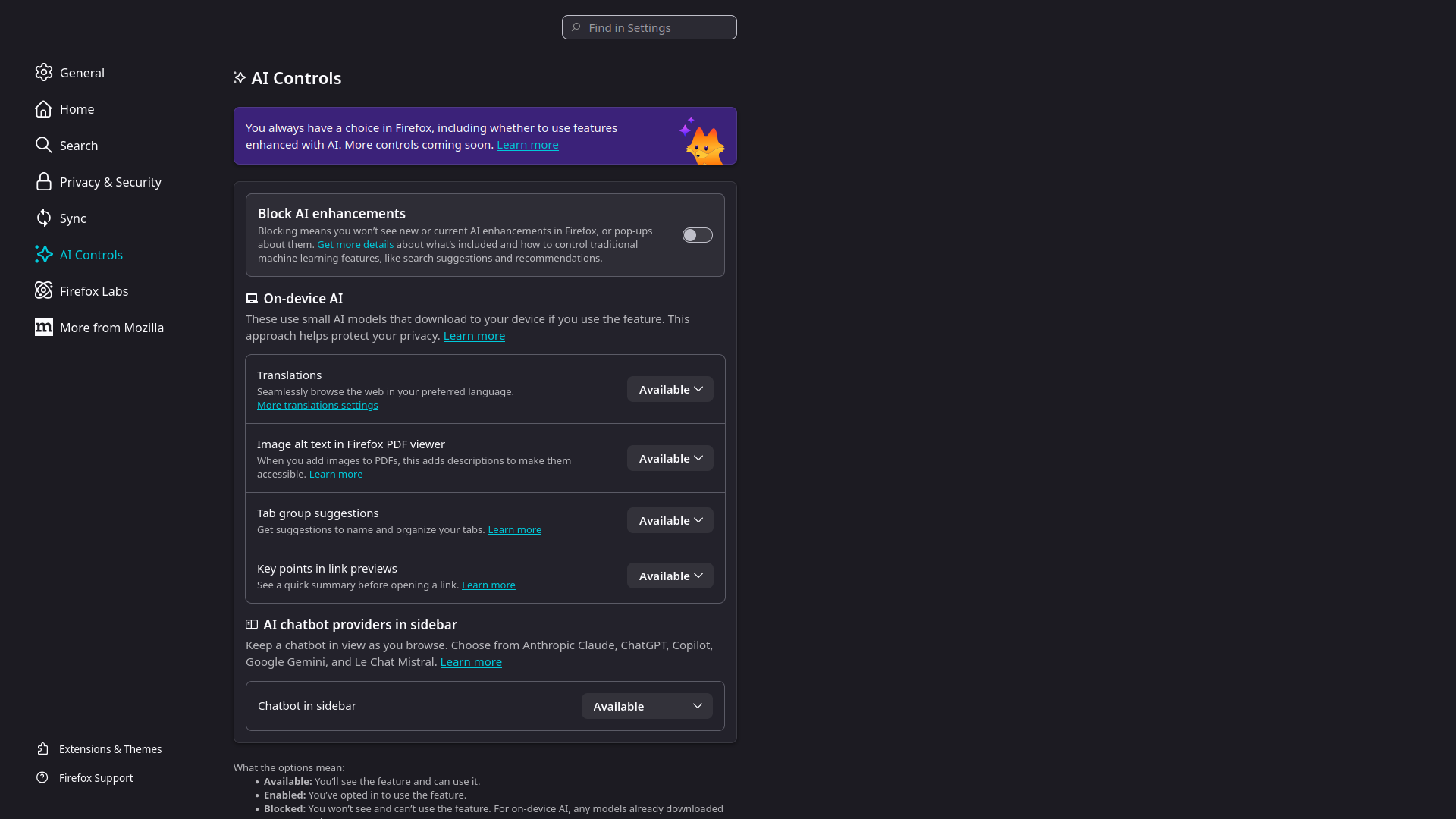
The AI settings in Firefox Preferences show Mozilla is leaning heavily towards local solutions
It's important to understand the approach Mozilla is taking here, since this is an area where things often get framed through sensationalism rather than reality. Yes, Mozilla is adding AI features to Firefox, and at a fairly brisk pace. However, these features are still optional, though Mozilla choosing to make them opt-out rather than opt-in might leave a bad taste in some users' mouths. Mozilla’s current AI controls are part of that wider balancing act.
That being said, some users not only won't mind these features, but may sincerely expect them to be present in any modern browser, and be disappointed without them. After all, there's a very real market for the likes of Microsoft's Copilot and Google's Gemini: casual users who aren't too deeply concerned how something works so much as whether they can use it or not.
Striking the balance
Mozilla is trying to market Firefox with a more balanced approach, but will it work?
The key here isn't so much about whether Mozilla/Firefox should abandon AI altogether. It's clearly a direction Mozilla is dead set on exploring, even as privacy concerns continue to dominate the conversation. The real trick is to find a way for these features to exist while also doing something genuinely useful.
Poor article summaries and gimmicky integrations are just not going to win many people over, certainly not in the long run. But on-device tools that provide translations, help users conduct better research, navigate their browsing history more intelligently, or just generally get real work done faster without sending their data off into the void? Now that's a story most people can confidently get behind.
That's where Mozilla may have a real opening. Sure, AI isn't likely to be the thing that single-handedly "saves" Firefox, even if done "right". Yet, if it's handled carefully, it could help Firefox feel current, capable, and competitive to the kinds of users who now expect these conveniences to exist.
Counterpoint: What about the competition? Is everyone doing it?
Vivaldi is known for its bells and whistles. AI isn't one of them
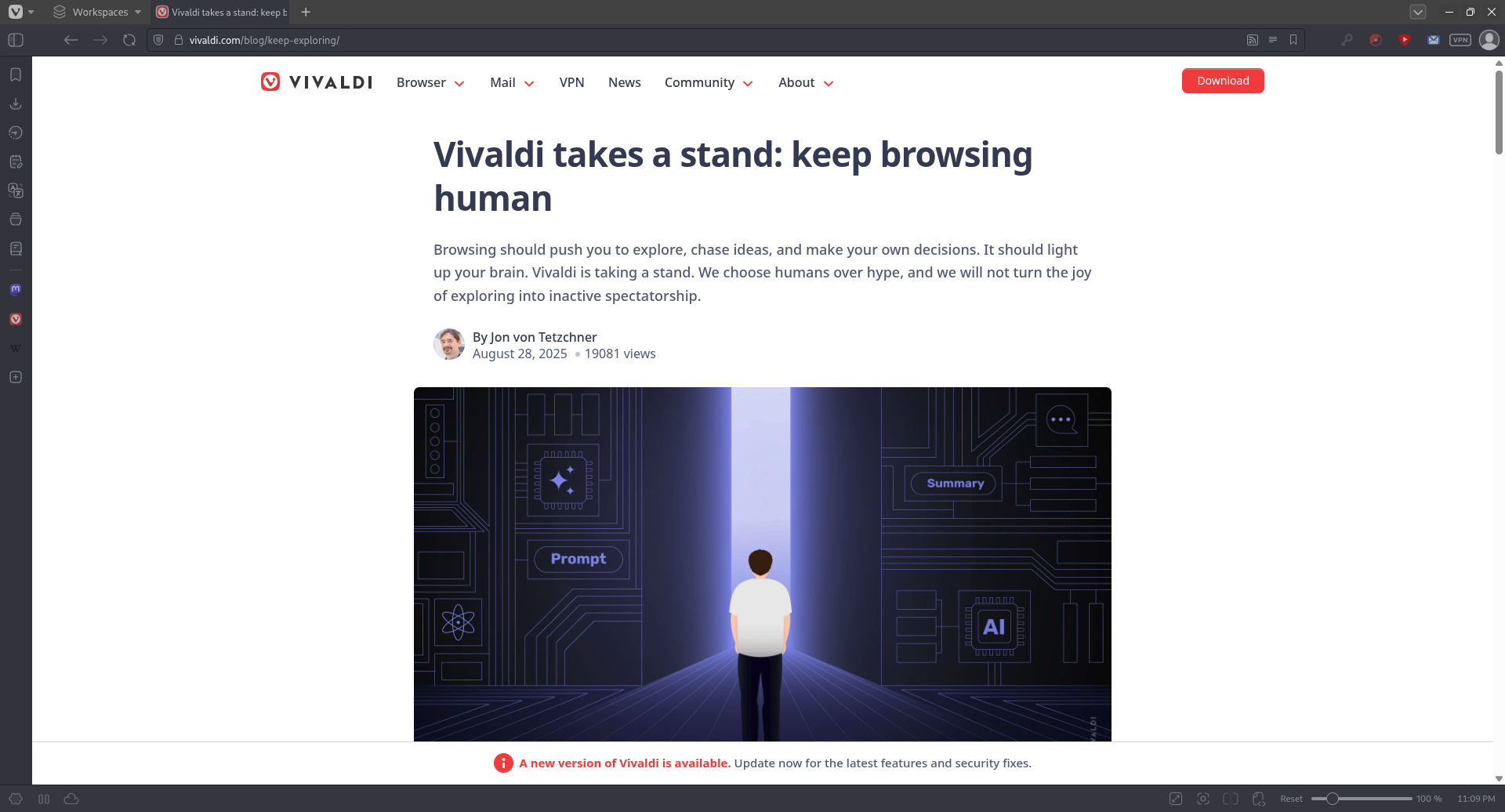
No, and if we're looking at benchmarks of success, this really matters. For example, Vivaldi, the "spiritual successor" to the pre-Chromium-clone Opera, has firmly chosen not to integrate generative AI features into the browser. They've been quite explicit about this stance with their "keep browsing human" messaging.
In a world where it seems every major browser vendor is diving in head-first, this is a bold decision that helps Vivaldi stand apart from a market increasingly saturated by the same talking points and "checklist features" that feel like mere buzzword copycatting. This is also one of the reasons why Firefox forks like Waterfox and others have continued to hold solid, faithful communities.
Truthfully, Firefox has often been chosen because it's not like the crowd: it's not Chrome, it's not a clone (it still uses its own Gecko engine), and it's the one major browser that has historically dared to remain not only independent but substantively different. So while some users won't mind a little assistance here and there, the Firefox faithful may be more likely to be the ones turned off by the "AI everywhere" trend that's taken over the internet. For those users, restraint can be a selling point in itself.
What this means for Firefox
Mozilla is clearly trying to keep the Firefox brand relevant and alive. Will these new efforts be enough?
What Mozilla is pursuing here is still quite the gamble. They're playing the fine line between the privacy-focused legacy of Firefox and the "assisted future" that the world is headed towards. It may look like the right way forward for some, but might very well be a death knell to others.
Mozilla may believe in striking a balance by keeping these features flexible, optional, and in some cases locally driven. The problem is that balance is hard to achieve, and even harder to effectively communicate.
So Firefox's real challenge isn't just adding new features. It's in convincing people that it still knows where to draw the line. If Mozilla gets that balance right, Firefox may come across as modern without feeling overstuffed. If they get it wrong, it risks alienating users who just wanted a browser with boundaries.
The secret benefit of drawing attention
"AI", "privacy", and "VPN" sure are great ways to stir up conversation, if this is the aim Pexels / Mikhail Nilov
It would be remiss of me to close out without addressing the one thing that this new strategy by Mozilla may be most succeeding at: getting us to talk about Firefox again. Sure, not all the talk around Mozilla's recent decisions has been positive, and if we're being fair, they have given us some reasons for pause. However, if there's one thing attention does well, it's getting people to see what all the fuss is about, even if they're otherwise not sold or even all that interested.
Maybe that's what Mozilla is angling for with Firefox after all - and if they can manage to stick the landing, all this increased attention and coverage might just be the key to getting new (and old) users to try this new flavour of Firefox ice cream and find that we like it.
Is it all enough?
Will the new features keep up with the ambitious branding and fresh energy?
Frankly, it's a bit too early to tell, though the reality is that trends can often be shifted by the most unexpected winds of change. No one expected Chromebooks to become a success, until they were. At one time, no one saw smartphones coming, now they're everywhere. What drove those trends? Tiny, seemingly innocuous factors, and simple, seemingly unimportant features. The same can happen with Firefox and its ambitions to recapture its position in the hearts and minds of users around the world. Could the new VPN and more, but cleverly handled AI integration be the secret sauce to push things over the line?
Only time will tell, but maybe, there's a chance this time.
When it comes to open-source office suites, we're not short on options, despite what it may seem at first glance. Yet, without a doubt, two names stand head and shoulders above all others. LibreOffice and ONLYOFFICE sit unchallenged as the most popular office solutions built and distributed on open principles. Both are solid in their own rights, and both have loyal communities that swear by them and no others. But between the two, which one is right for you?
In this article, we'll have a closer look at both office suites, with a friendly comparison of their strengths and weaknesses and what makes them truly unique, especially compared to each other. By the end, you'll be better equipped to choose which one you'd prefer, if you so desire.
A note on testing methodology
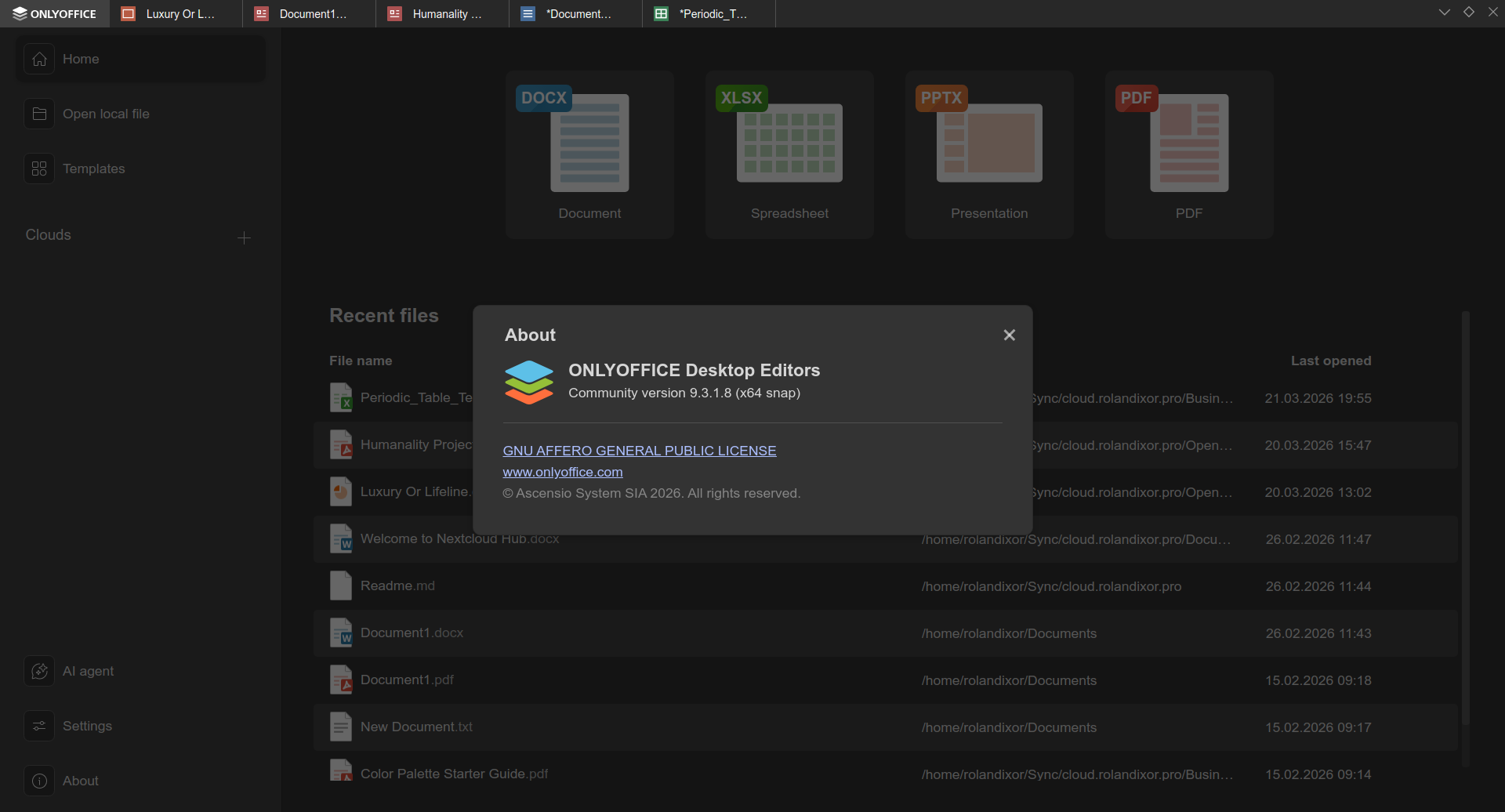
For the sake of fairness, both office suites were tested on the same system running Ubuntu 25.10, and represent the latest available release of either suite at the time of writing. For LibreOffice, that's 25.8.4.2, and for ONLYOFFICE, 9.3.1.8.
My test system is fairly powerful, though no longer cutting-edge: an MSI GE76 Raider with an 11th Gen Intel Core i7, 64GB of RAM, and NVIDIA RTX 3060 graphics. Most of the screenshots and hands-on impressions in this article were taken in a KDE Plasma 6 (on Wayland). However, GNOME is my usual desktop environment, so some real-world impressions described here also reflect longer-term use there.
I'll briefly touch on online/self-hosting availability, since both office suites have web-based solutions available, but a full review of either suite's web versions isn't covered in this article.
🗒️
As always with software like this, your experience may differ depending on your hardware, desktop environment, graphics stack, and workflow.
Meet the "contenders"
No office suites were hurt in the making of this "showdown"
It's highly likely that you're already familiar with either one of these two, but even so, it's still good to get a little insight and history of each one. LibreOffice is technically the older of the two, though the office suite that became ONLYOFFICE was in fact first released in the same year that LibreOffice was forked.
LibreOffice: the unbeatable survivor
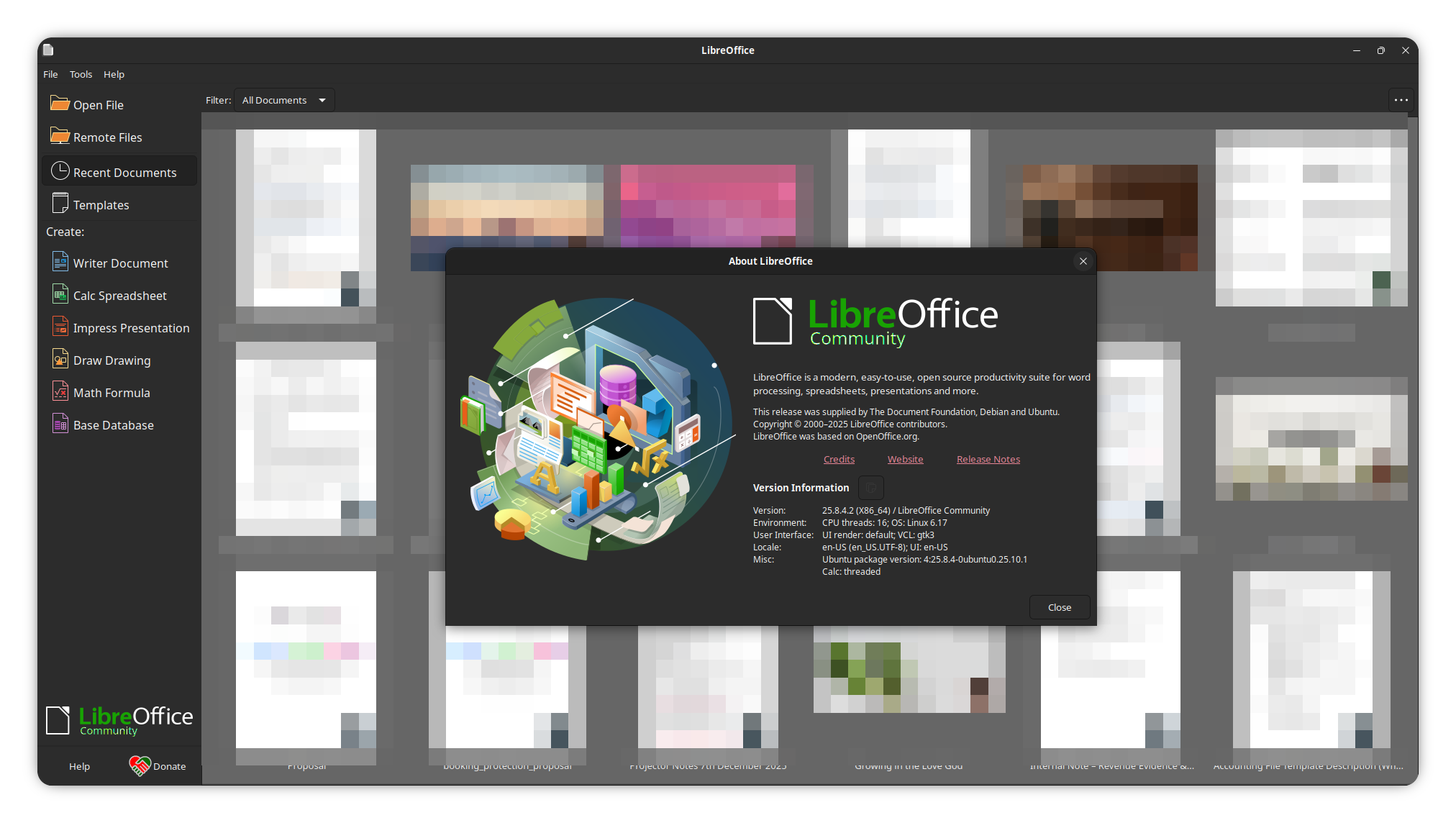
LibreOffice 25.8.4.2 running on Ubuntu 25.10
Consisting of 6 major applications, Writer, Impress, Calc, Draw, Base, and Math, LibreOffice is the phoenix that arose from the ashes of the once famous OpenOffice.org (now Apache OpenOffice), after Oracle's acquisition of Sun Microsystems in January 2010 put OpenOffice.org development in danger of being discontinued.
The Document Foundation chose the name LibreOffice after they were unable to acquire the OpenOffice.org trademark, and the organization took over the mission to continue developing OpenOffice.org as an open-source effort (itself born out of the StarOffice source code, released on October 13, 2000).
LibreOffice and The Document Foundation continue on today as more than a legacy, but a living legend among the wider open-source community, constantly adding new features, improving compatibility with other office suites, and even bringing new life to older file formats, through the Document Liberation Project.
Technically the younger of the two, ONLYOFFICE began life in 2010 as TeamLab, a platform for internal collaboration, before its evolution into the broader office suite that was later rebranded as ONLYOFFICE in 2014. On the desktop, ONLYOFFICE is built around four main editors: Documents, Spreadsheets, Presentations, and PDFs.
With this background in mind, it's easy to see why ONLYOFFICE stands out as the chief of online collaboration among open-source office suites.
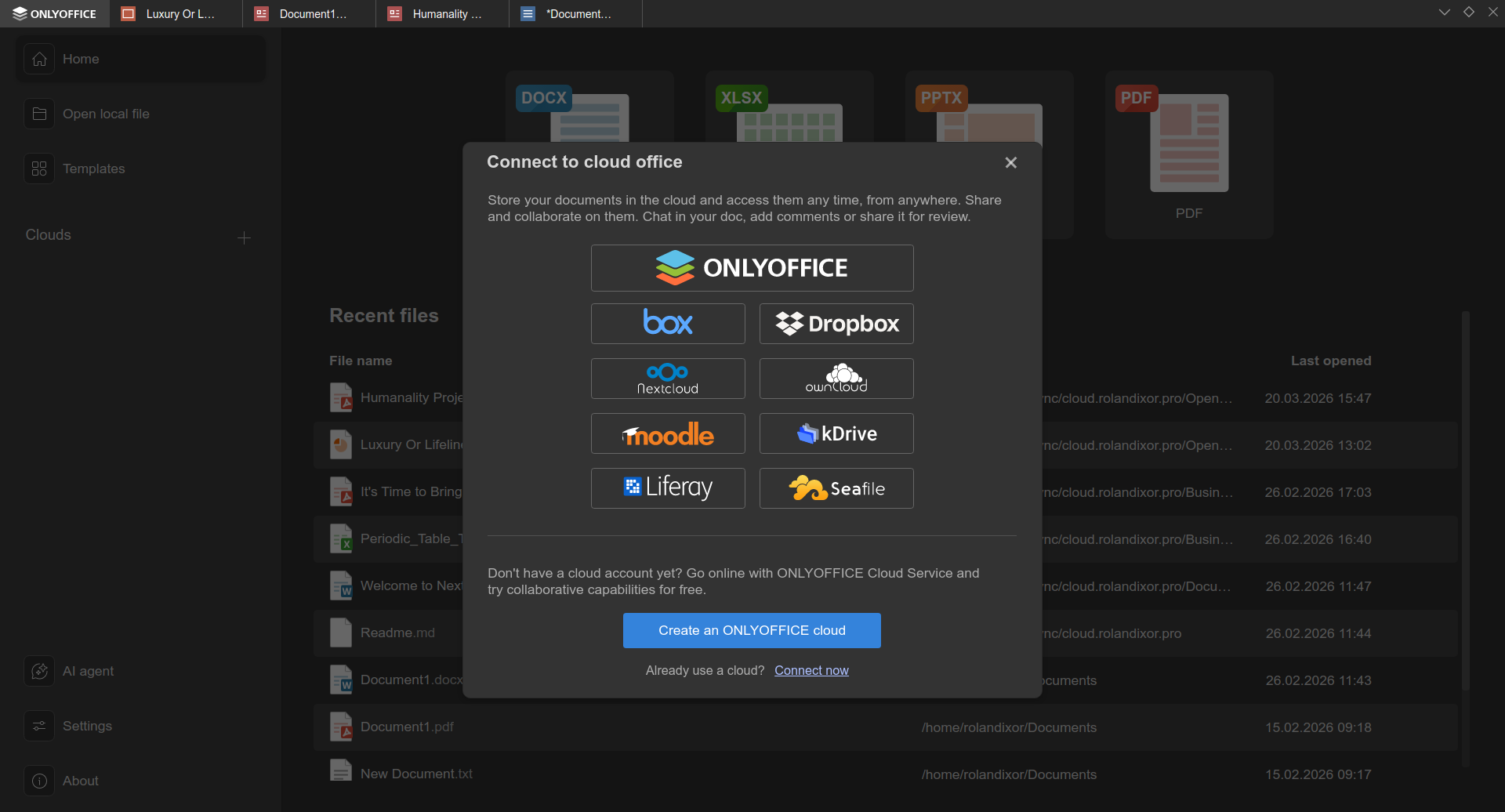
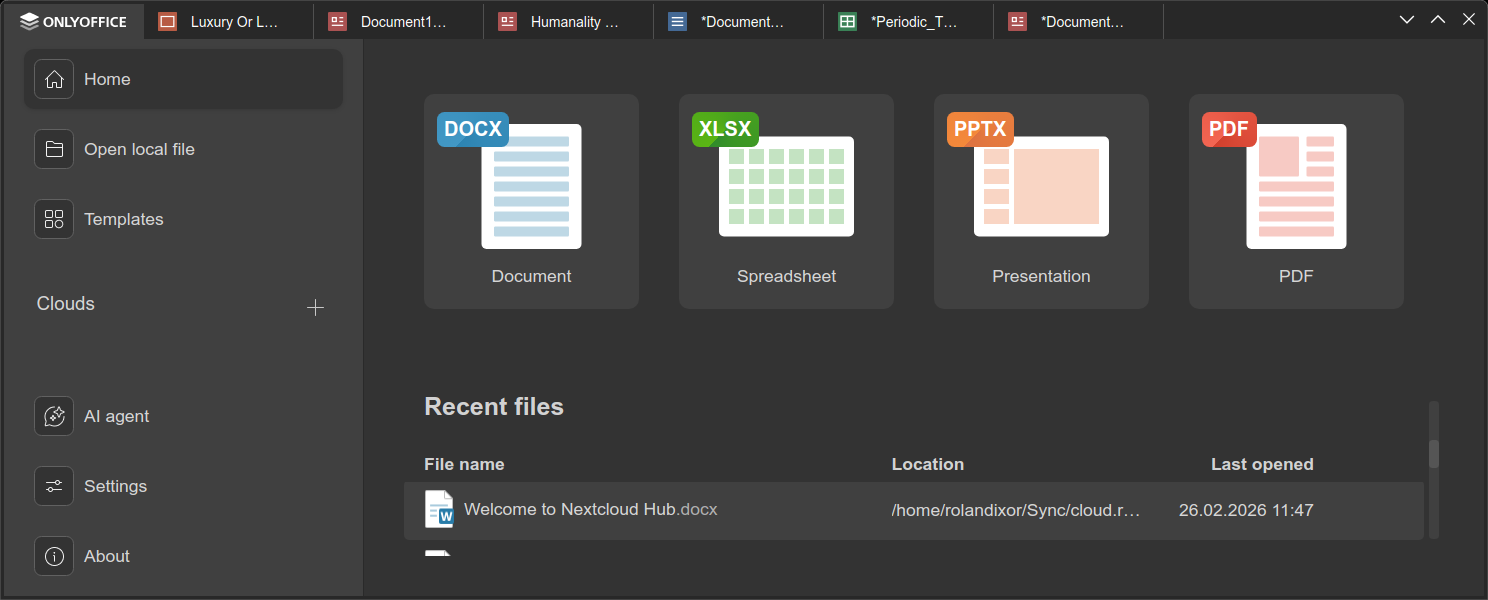
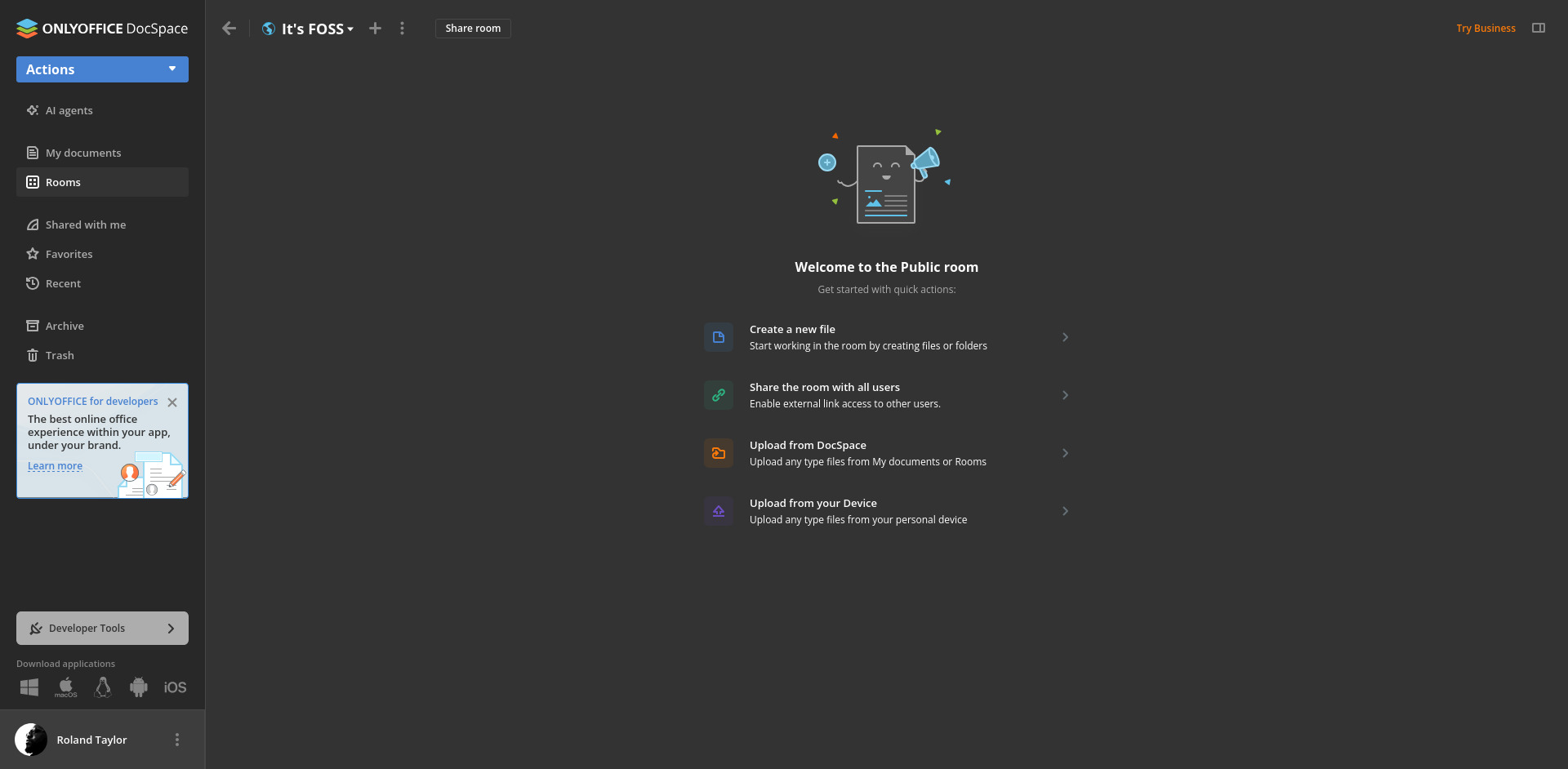
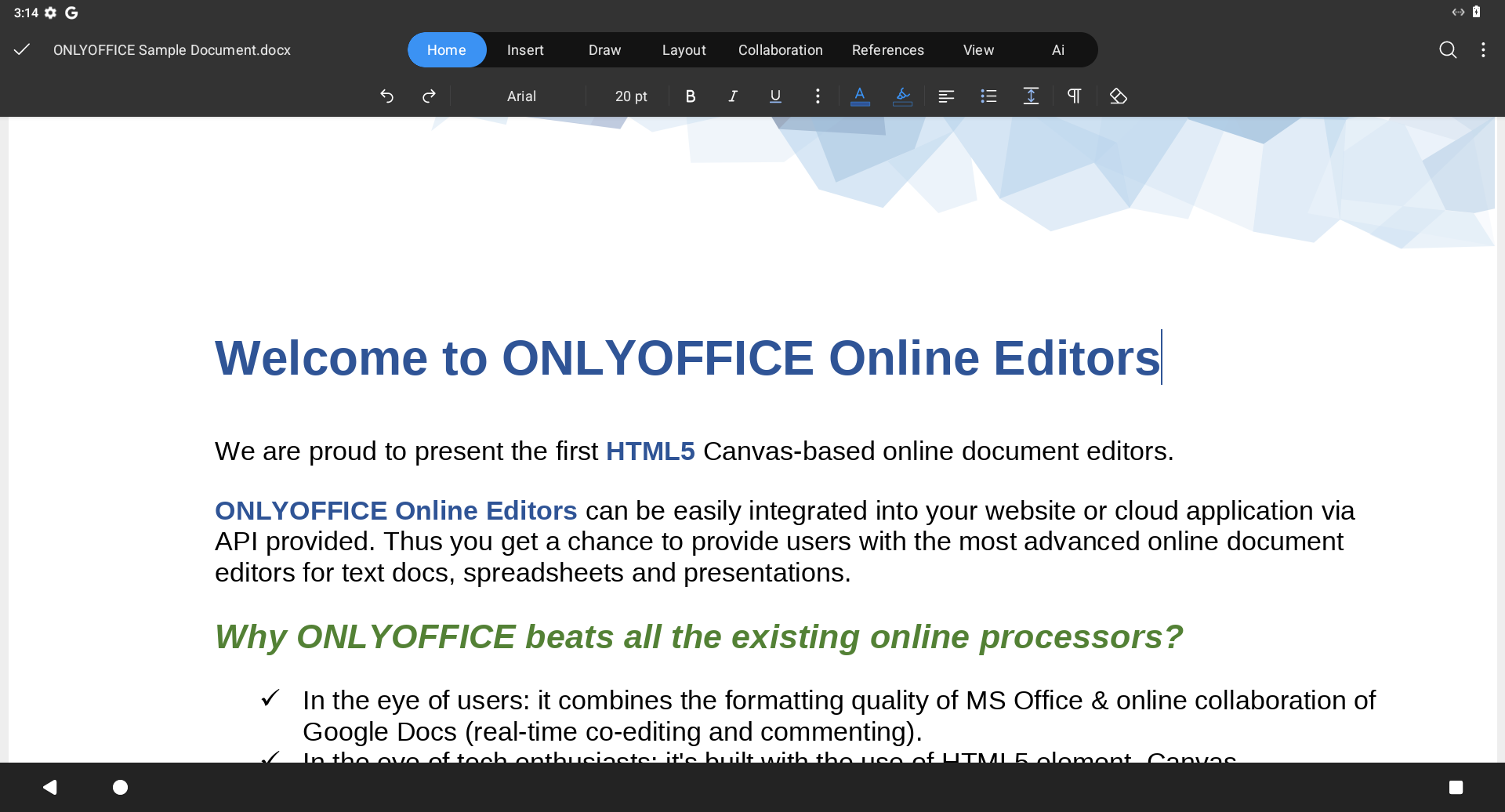
ONLYOFFICE handily puts cloud connectivity right at your fingertips
Its robust sharing and interoperability features make it a perfect solution for collaborative work in distributed teams, or for one individual working across multiple devices and locations.
File formats are not just a matter of taste. They can define the limits of what a document can store and preserve, affecting everything from formatting and formulas to comments, transitions, and animation compatibility between office suites. While there is real value in choosing open, well-documented formats, there is still a critical need for compatibility with the dominant player in the field: Microsoft Office.
Both LibreOffice and ONLYOFFICE offer strong support for Microsoft Office document formats, but there are some notable differences in the breadth and consistency of that support. If cross-platform compatibility is important to you, or you work in an environment where Microsoft formats are a requirement, those differences can easily become a deciding factor.
Beyond this, these suites differ significantly in their format focus, with ONLYOFFICE focusing on more traditional, modern formats, while LibreOffice preserves support for numerous legacy formats from many other office suites and applications.
LibreOffice: All-in on ODF, with growing support for other formats
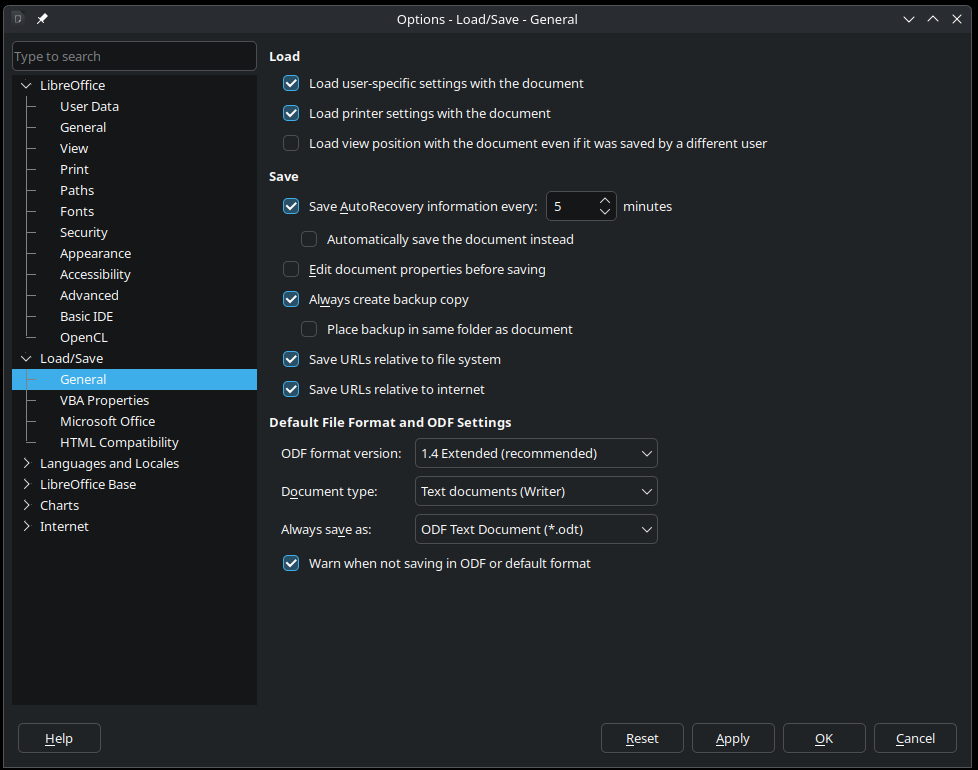
LibreOffice lets you choose the default format for its main editors
Being developed under The Document Foundation, one of the strongest champions of the Open Document Format (ODF), it should come as no surprise that LibreOffice uses these formats natively across all of its applications. Writer uses Open Document Text (ODT), Impress uses Open Document Presentation (ODP), Calc uses Open Document Spreadsheet (ODS), and so on. In theory, these formats can be opened in any office suite that supports this open standard and preserve full functionality.
Unfortunately, the reality tends to be disappointing in practice. Even though ODF is an open standard and well documented, many office suites still lack full support for its more complex features. The result is that increased data loss in other applications is real — from broken formatting, to altered layouts, to wholly unsupported features.
Ironically, because LibreOffice also offers broad support for both the Office Open XML (OOXML) formats, and older Microsoft document formats, these can sometimes provide a smoother experience for collaboration across different office suites. You can even make these formats the default for some LibreOffice applications. In other words, LibreOffice may be most faithful to ODF, but Microsoft’s formats often remain the practical choice for interoperability.
💡
Special note: With Microsoft Publisher going defunct in October, it's good to know LibreOffice supports these files as well.
ONLYOFFICE: Native support for Microsoft Office formats
ONLYOFFICE was designed from the ground up around Microsoft formats
Unlike LibreOffice, ONLYOFFICE was deliberately built around the Office Open XML (OOXML) format, the standard used by Microsoft Office. ONLYOFFICE not only uses DOCX, XLSX, and PPTX for its default outputs, but also as the internal translation of other formats. In practice, this typically translates to ONLYOFFICE having strong compatibility with documents generated in Microsoft Office, especially text documents.
Yet, while this deeper compatibility is a plus on one end, it does come with an unexpected tradeoff. Particularly, ODF documents, while supported, do sometimes fail to convert cleanly, which I've found to result in a loss of formatting or other issues. So, while it's nice to have greater interoperability with Microsoft Office, you might want to reconsider if you're planning to exchange complex documents between ONLYOFFICE and LibreOffice.
Another difference between the two is that ONLYOFFICE doesn't offer the depth of legacy format support available with LibreOffice. To be fair, this won't matter much to the average user, since most documents created in the last twenty years or so were likely saved in formats that are well supported across modern office suites. However, if you're trying to recover or work with files from older or less common apps, such as AbiWord or Microsoft Publisher, you'll be out to sea. ONLYOFFICE specifically targets widely used formats and a narrower set of alternatives.
User interface comparison
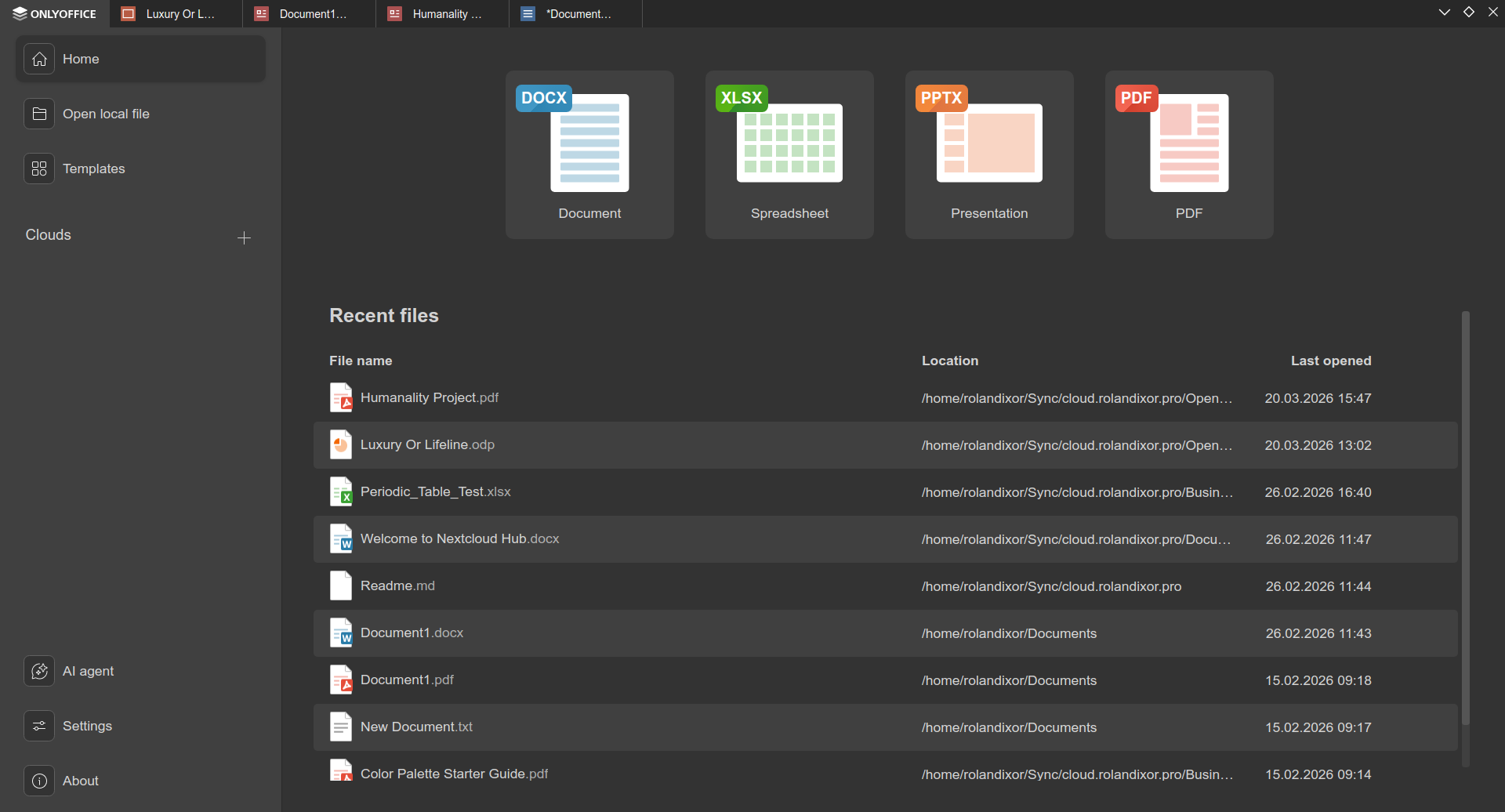
No doubt, this is one area where these two office suites couldn't be more different. For starters, ONLYOFFICE is designed to more closely resemble the more popular and familiar Microsoft Office-style "Ribbon" interface, which was first introduced in Office 2007. LibreOffice on the other hand, has long defaulted to a more traditional interface of toolbars and sidebars, before introducing its own "Ribbon-like" interface, along with a selection of others that sit somewhere in between.
Beyond this superficial difference, they use different toolkits for their interfaces, with LibreOffice using its own "VCL" toolkit, and ONLYOFFICE being built on Qt5 and web technologies.
LibreOffice: Highly versatile, unfairly maligned
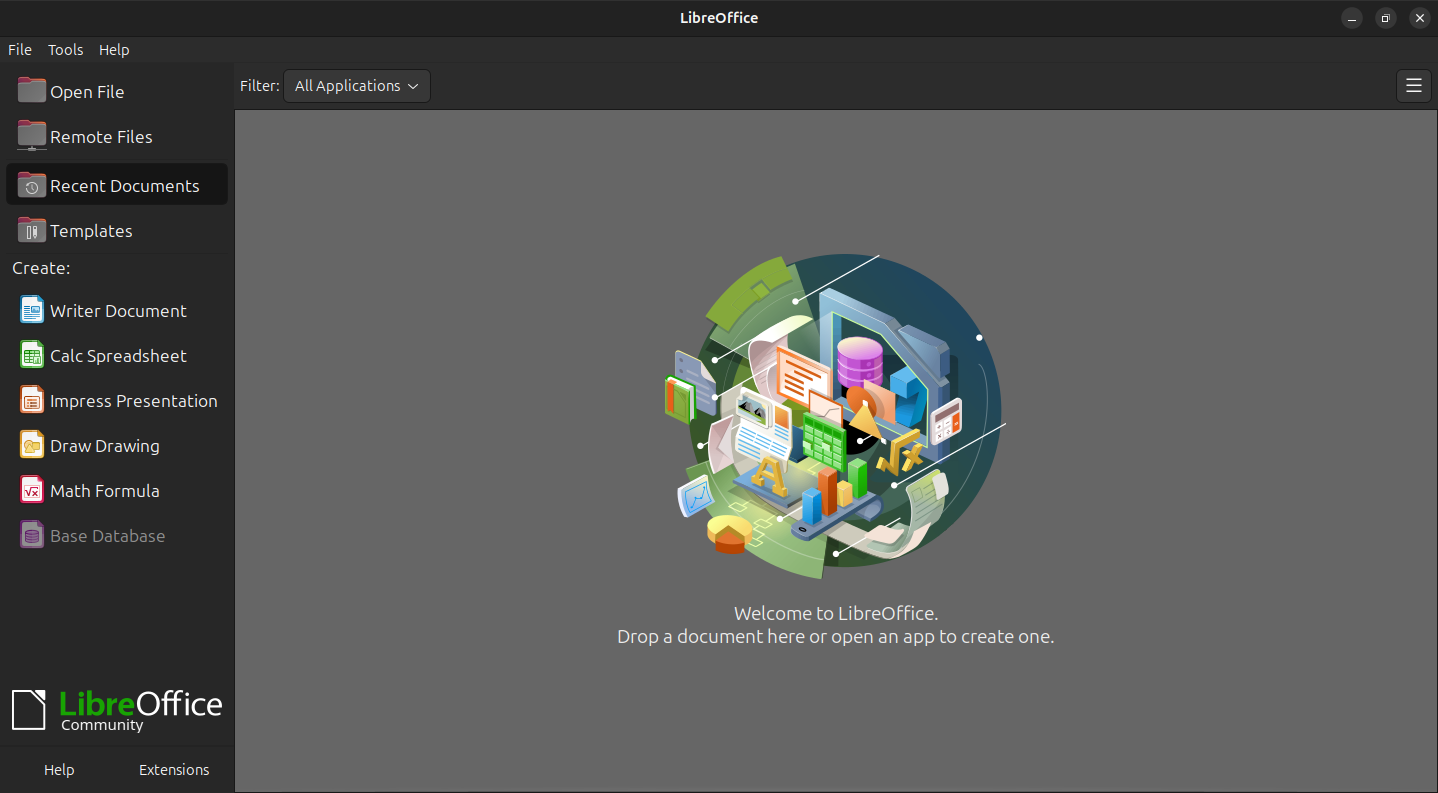
The home screen in LibreOffice
LibreOffice is notorious for its interface, but unfortunately it's because many find it to be somewhat "outdated". To be fair, this is really a mostly matter of taste. LibreOffice interface paradigm emphasises practicality, functionality, and reliability over visual appeal, and its interface is a reflection of this. It hails from a time when applications were judged equally by how much they could do, versus how easily you could get it done.
As a result, the interface can seem a little crowded to some users and perhaps even a little confusing, but LibreOffice overcomes this challenge by presenting users with even more functionality:
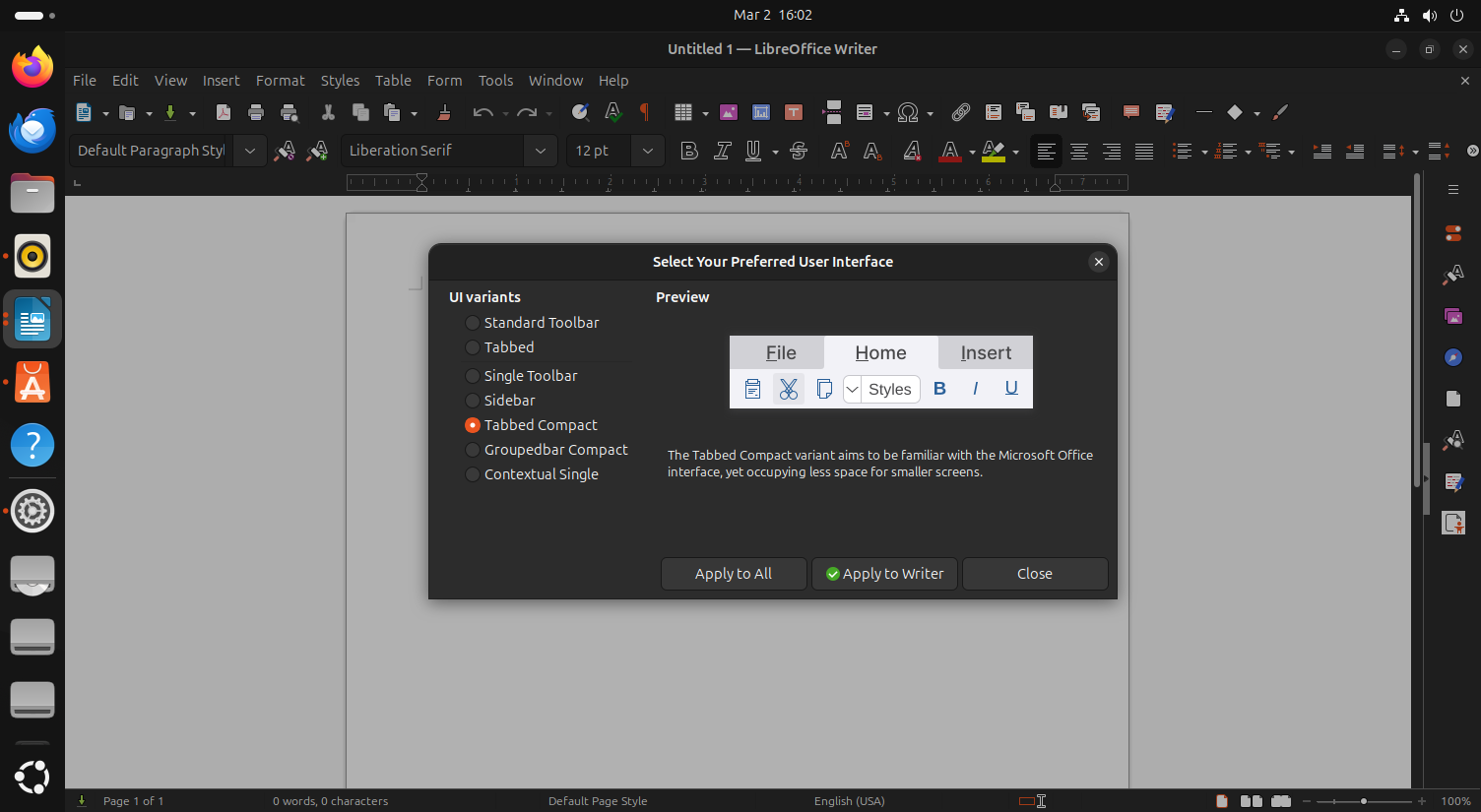
Switching interface styles in LibreOffice Writer
Not only does LibreOffice let you choose between interface styles, it lets you choose styles on as per-application or global basis, so you have the most appropriate UI for your individual needs.
ONLYOFFICE: Familiar for Microsoft Office denizens
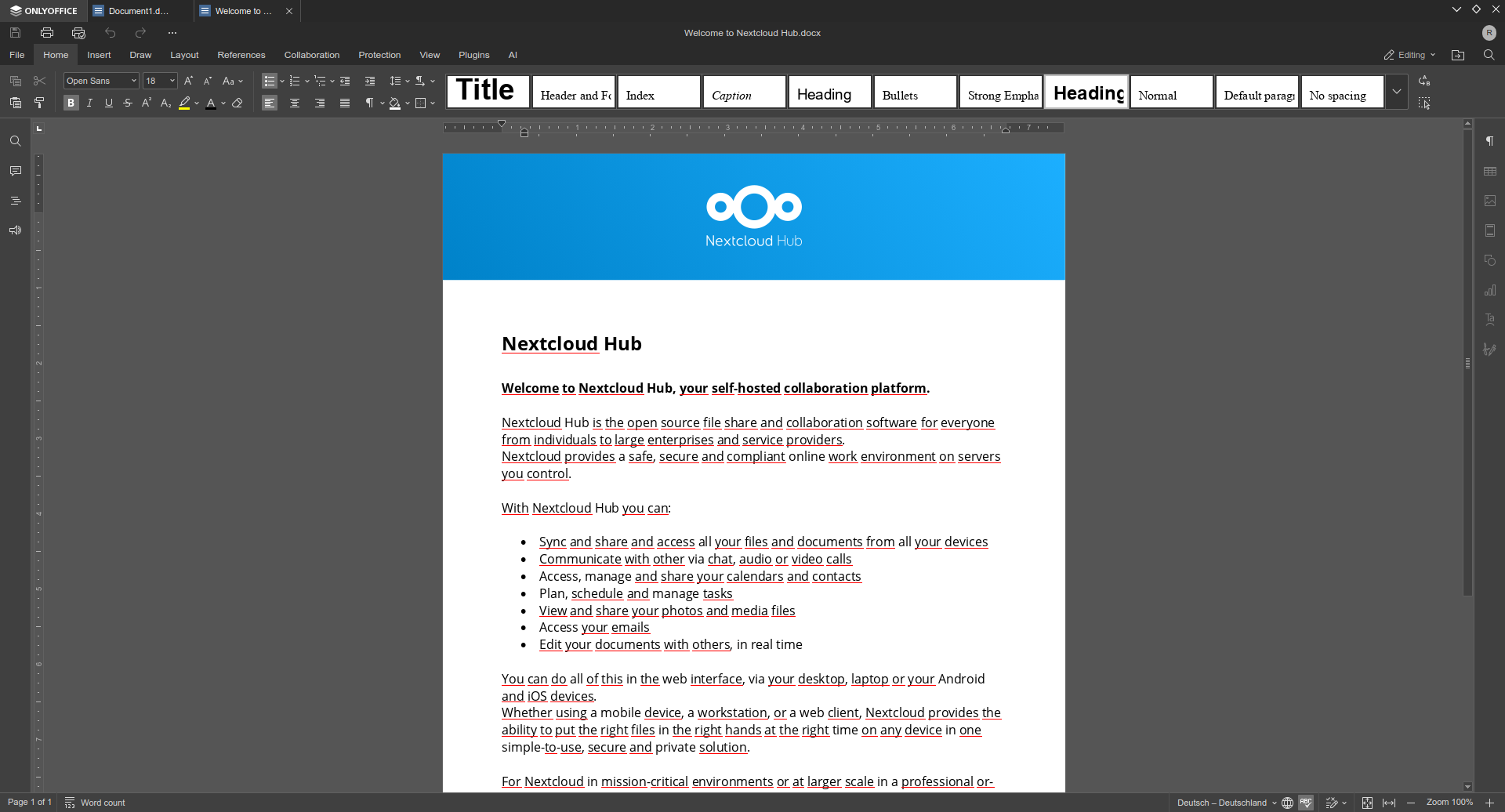
Unlike LibreOffice, which has largely retained the more traditional UI or earlier iterations, ONLYOFFICE aims to more closely resemble MS Office in both appearance and functionality. The first thing you'll notice when you open ONLYOFFICE is its modern aesthetic, which extends to the use of the interface style that was introduced and popularized with Microsoft Office.
Despite being the more "modern" choice, the ONLYOFFICE UI can be a little confusing if you're more used to the "classic", "traditional" interfaces common in office suites of the past. For instance, you might find yourself wondering whether to choose "Home", "File" or "ONLYOFFICE" from the toolbar when trying to open a file. Granted, once you're used to it, any interface becomes second nature, but I personally did find this redundancy to be a minor source of confusion.
Handling documents (word processing)
No office suite is worth even mentioning without a solid word processor, so it makes sense this component is arguably the most mature between these two.
LibreOffice Writer: The underrated juggernaut
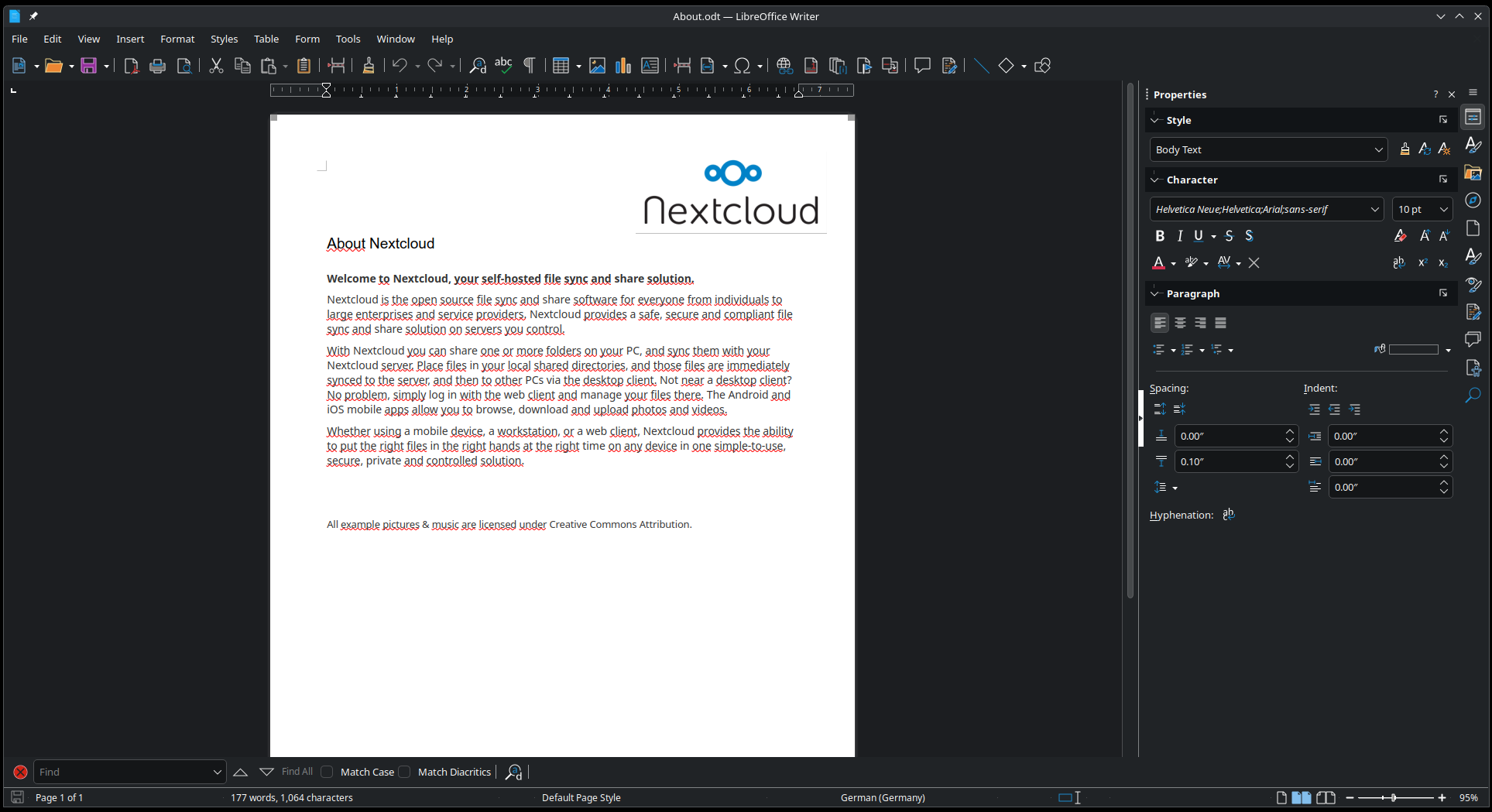
LibreOffice Writer running in KDE Plasma 6
As the subtitle suggests, LibreOffice Writer is often overlooked for just how powerful it really is. Perhaps my bias is showing here, since Writer is by far my word processor of choice whether for business or writing sci-fi novels. Writer comes with features you probably never knew you needed, and even more potential thanks to its extensibility.
Beyond the standard formatting features, Writer features spell-checking with custom dictionaries, grammar checking, a highly intuitive and versatile styling system, collaborative editing features (including comments, change tracking) and support for complex layouts. Writer also allows you to set a printable background image for your document's pages, something which both Microsoft Office and ONLYOFFICE lack.
As someone who sometimes needs to produce branded documents for clients, this is must-have feature that I have yet to find in any other document/word processor. This feature differs from the watermark feature found in other similar applications, a feature writer also possesses.
ONLYOFFICE Documents: Familiar, focused, and collaboration-friendly
As the "new kid on the block," ONLYOFFICE Documents may not feel quite as deep or immediately distinctive as LibreOffice Writer at first glance, but it makes up for this with its own slew of helpful features. It supports real-time collaboration, plugins for additional functionality, including spellchecking options, fillable forms, and a range of export and conversion options, including Markdown and HTML.
Beyond the expected formatting, styling, and layout tools, ONLYOFFICE Documents puts a strong emphasis on practical compatibility and teamwork. Its featureset and styling choices, even down to the decision not to include the aforementioned page background image support, are all choices to ensure fidelity of OOXML documents.
Its design suits writers who prefer a more focused writing space, with muted icons and tools that only activate when you need them. Where LibreOffice Writer often feels like everything plus the kitchen sink, ONLYOFFICE Documents feels quite streamlined. It doesn't try to overwhelm you with too many paths to the same result, and for many users that simplicity can be a strength.
The presentation experience
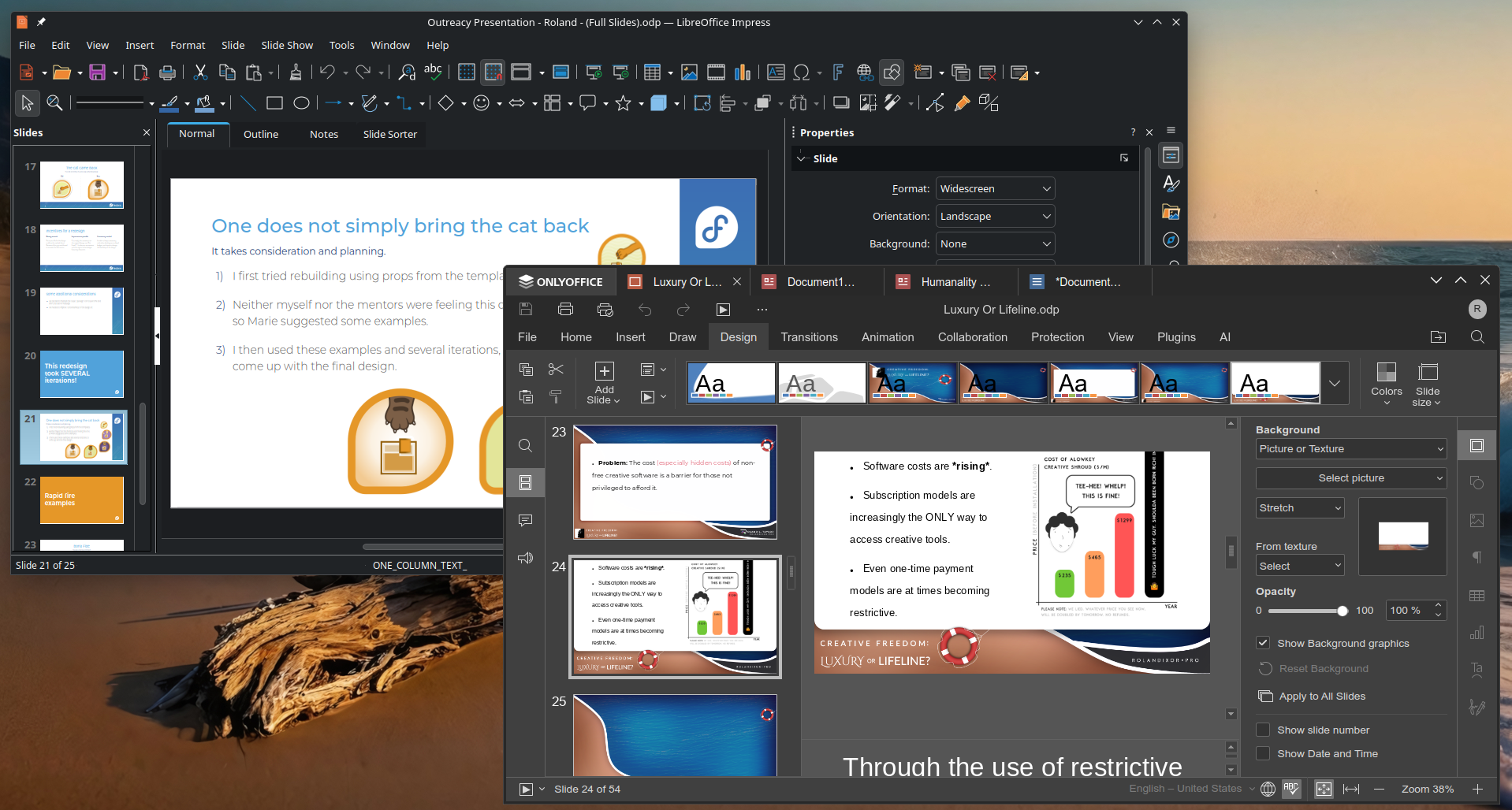
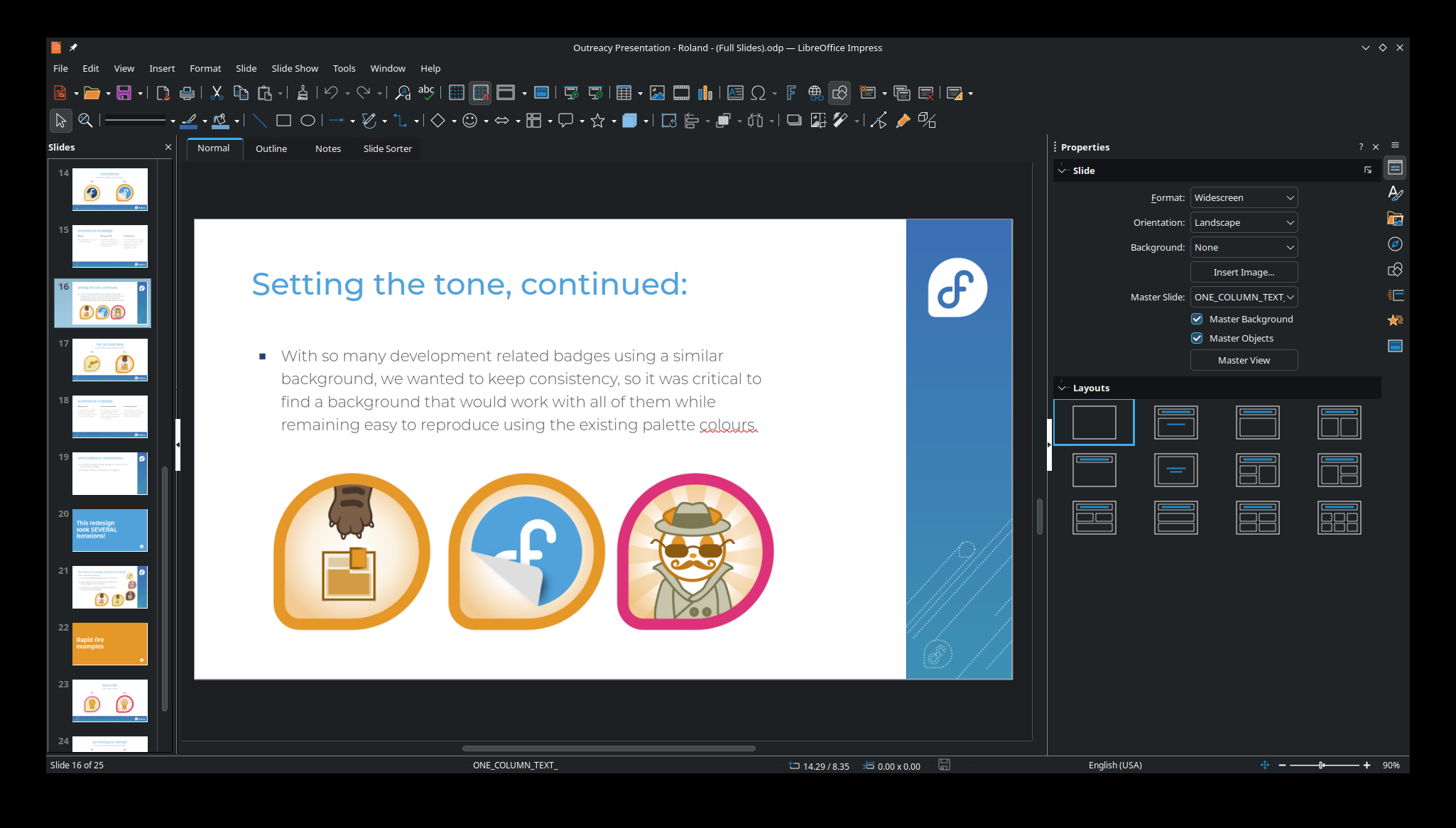
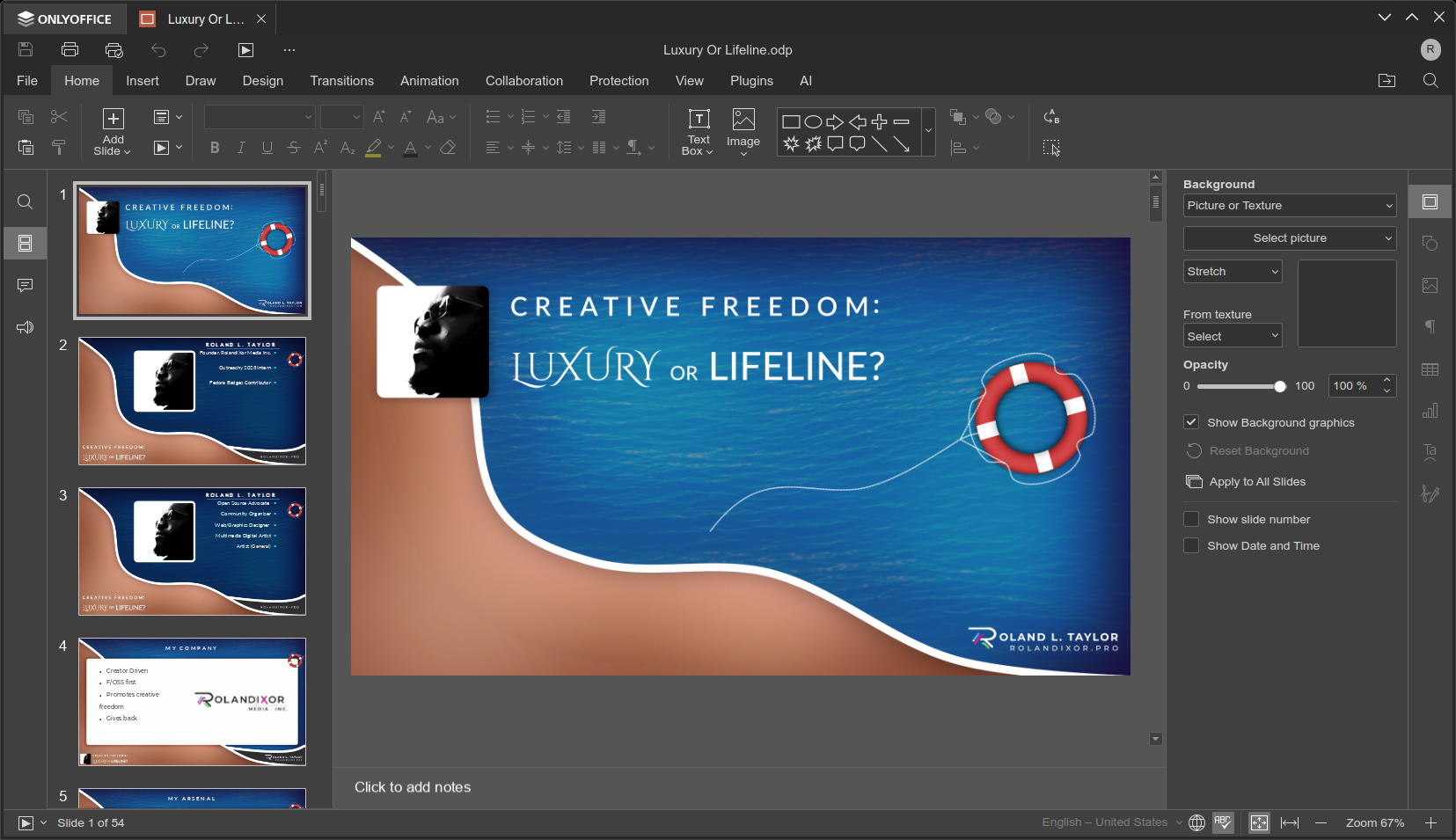
LibreOffice Impress (background) and ONLYOFFICE Presentations (foreground) running side by side. Two very different approaches to a common goal: building beautiful presentations with open-source tools.
Between the two suites, their approach to presentations is roughly similar, but each edges the other out in different ways, depending on what your priority is. To put it simple, if you're looking for an interface closer to what you'll get in Microsoft's PowerPoint, ONLYOFFICE Presentations is definitely the winner here. However, if you're looking for a more featureful experience, then LibreOffice Impress is arguably the stronger contender. Let's take a closer look below.
LibreOffice Impress: Mature, robust, yet a little rough
LibreOffice Impress lives up to its name, with an impressive set of features
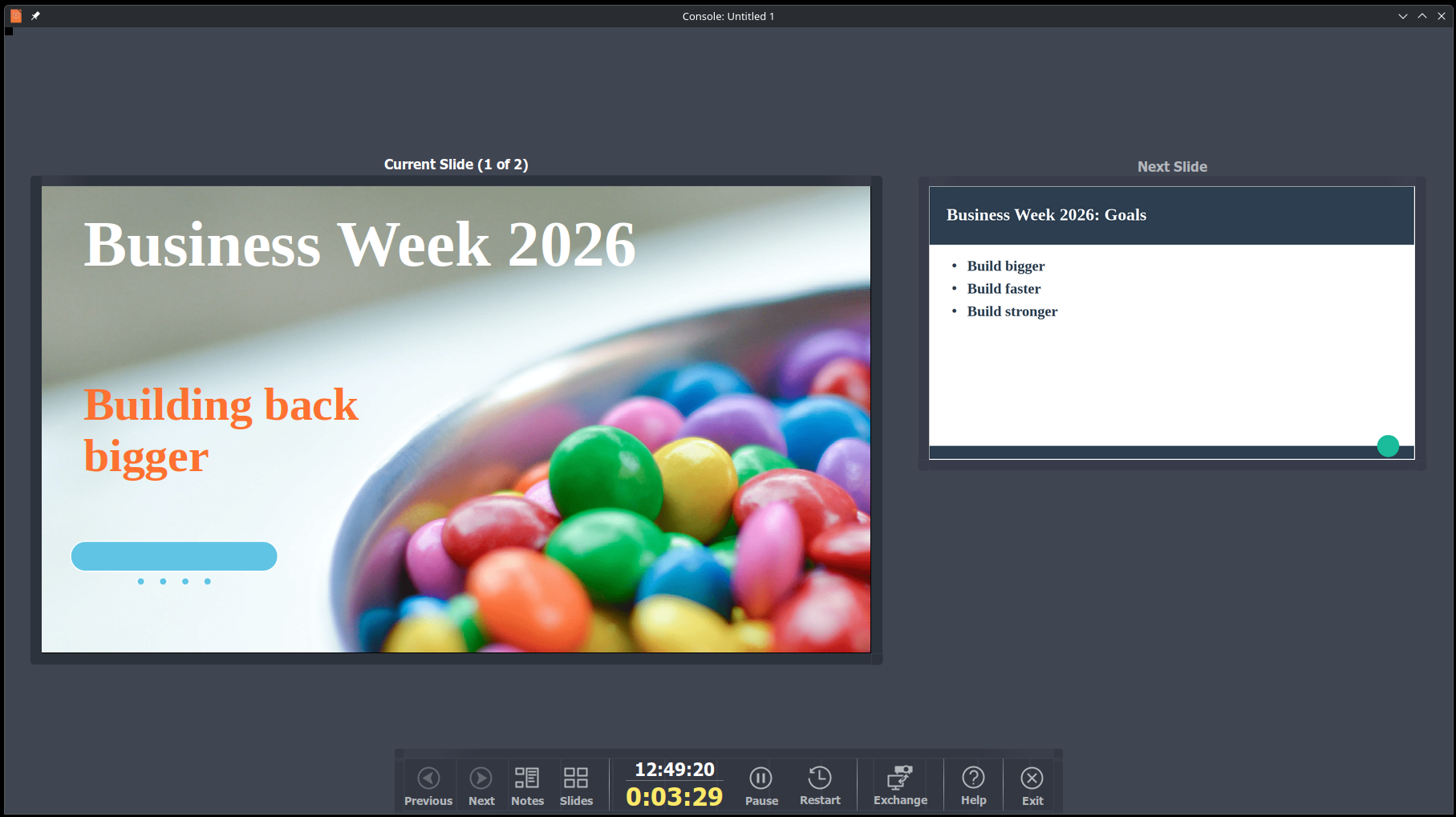
As far as presentation tools go, LibreOffice Impress stands out as one of the more mature options available, featuring much of the standard functionality you'd expect, including complex animations, transitions, and support for multiple master slides and layouts. It's quite comparable to the more well known Powerpoint, but it has long stood out on its own merits, even offering features other presentation editors still don't have. Additionally, it features a polished Presenter Console, and smooth, live presentation editing, two features crucial for professional presenation work.
One example is its impressive 3D transitions, which remain a distinctive and surprisingly effective way to add a little more visual life to a presentation. Impress also supports rich text editing, embedded spreadsheets and charts, videos, and other additions on top of the standard, basic featureset. In my experience over many years of usage, Impress handles both PPT and PPTX files quite well, even up to and including most animations and transitions. Even rich media tends to translate well both on import and export.
The LibreOffice Impress presenter console
Despite its maturity, Impress can still feel held back in two important ways: familiarity and responsiveness. Users who prefer a more traditional interface may feel right at home, but those more familiar with Microsoft's PowerPoint or similar editors may find the layout a little overwhelming at first. While the learning curve isn't severe, it can take some adjustment for newcomers.
The other issue that some users may encounter with Impress is its performance. In my own experience using LibreOffice across different operating systems and hardware over many years, Impress has consistently been a little sluggish when editing text, or working with larger presentations. Its 3D transitions have also historically not always fared as well on certain graphics drivers.
ONLYOFFICE Presentations: Effectively interesting
It's like looking at an open-source PowerPoint, but better
As the newer player of the two, ONLYOFFICE Presentations is not quite as mature as LibreOffice Impress, but it's still quite impressive in its own right. Designed to more closely resemble PowerPoint in both appearance and functionality, it offers a more familiar interface for users who are already accustomed to Microsoft’s presentation workflow. It supports animations, slide transitions, embedded GIFs, and other rich media content, while Slide Master support was added more recently in version 8.1.
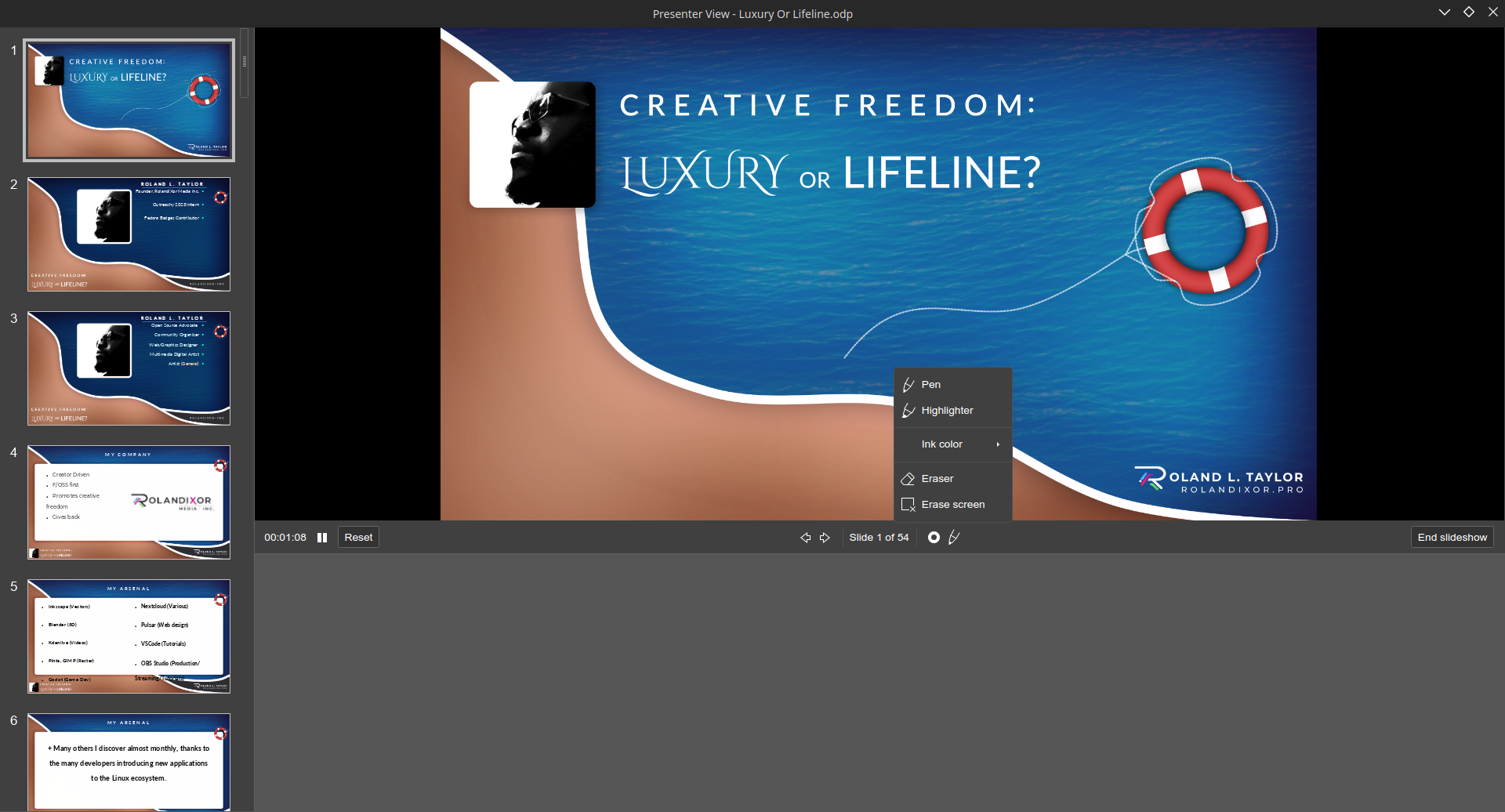
Where ONLYOFFICE Presentations truly stands apart is in its real-time collaborative editing features. From comments to chatting, these features standout front and center in the editor, and make sense for modern workflows where multiple individuals may often be tasked with working together in distributed teams. Additionally, its Presenter View features an intuitive annotation menu. This is a standout feature that even Impress lacks, and for anyone who regularly gives presentations, it could be the decision maker overall. Unfortunately, there's no live presentation editing, unlike with Impress and PowerPoint.
The dedicated annotation menu in ONLYOFFICE Presentations is a must-have feature for interactive presentations
In general, ONLYOFFICE Presentations keeps things simple. Its tools are laid out in a way that feels approachable and easy to understand, which is ideal for users who want to work quickly without digging through layers of controls. Power users may still notice the absence of some of the deeper animation and transition options available in editors like Impress, but for many people, that trade-off will feel perfectly reasonable.
Spreadsheets
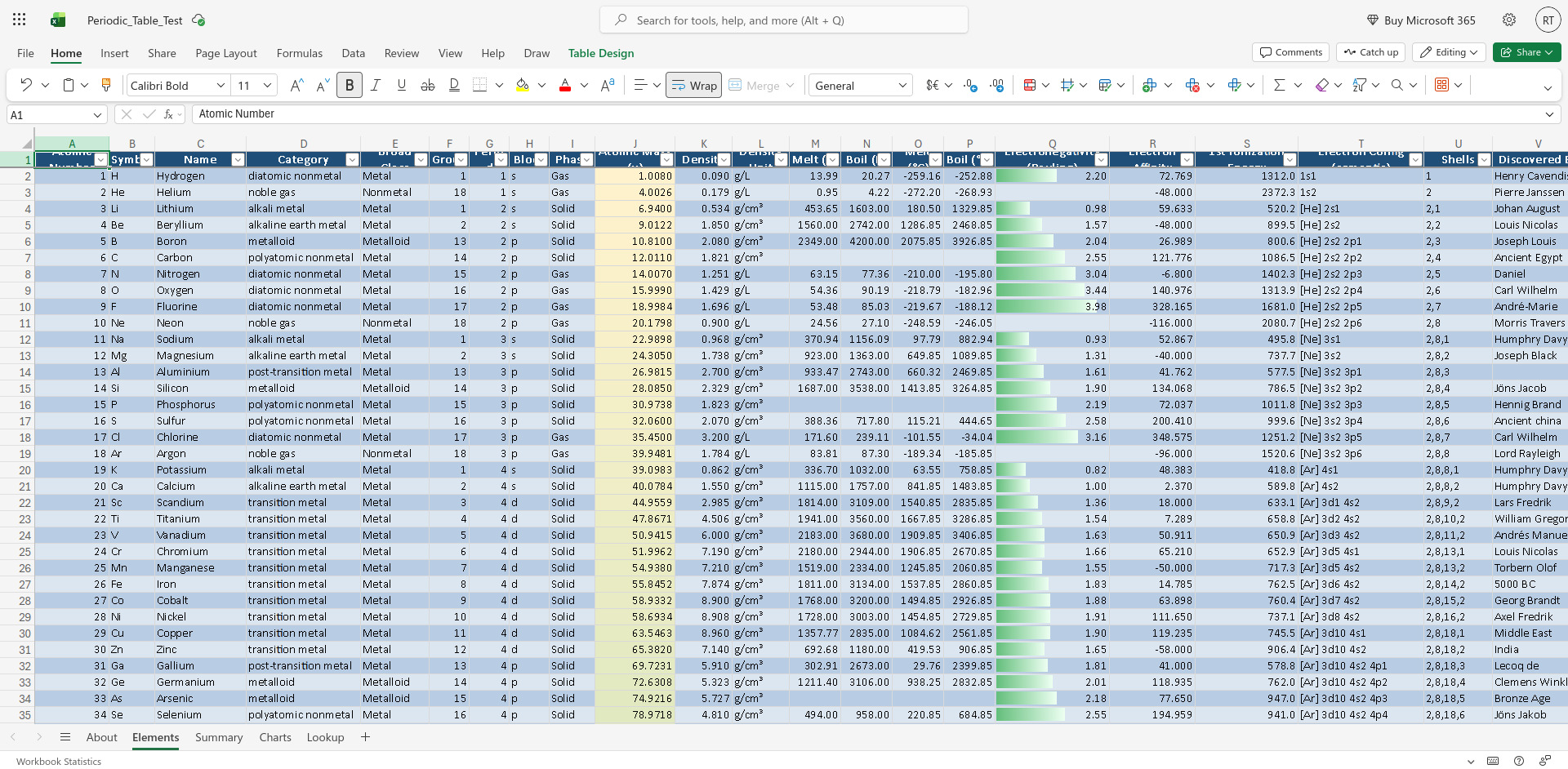
Test file opened and rendered in Microsoft Excel (365)
Both these office suites provide robust spreadsheet editors, though their differences are notable when working with complex files. Personally, my rule of thumb with just about any app is to work within its constraints, but when you're working with files that you don't control or you need certain advanced features, certain differences become non-negotiables.
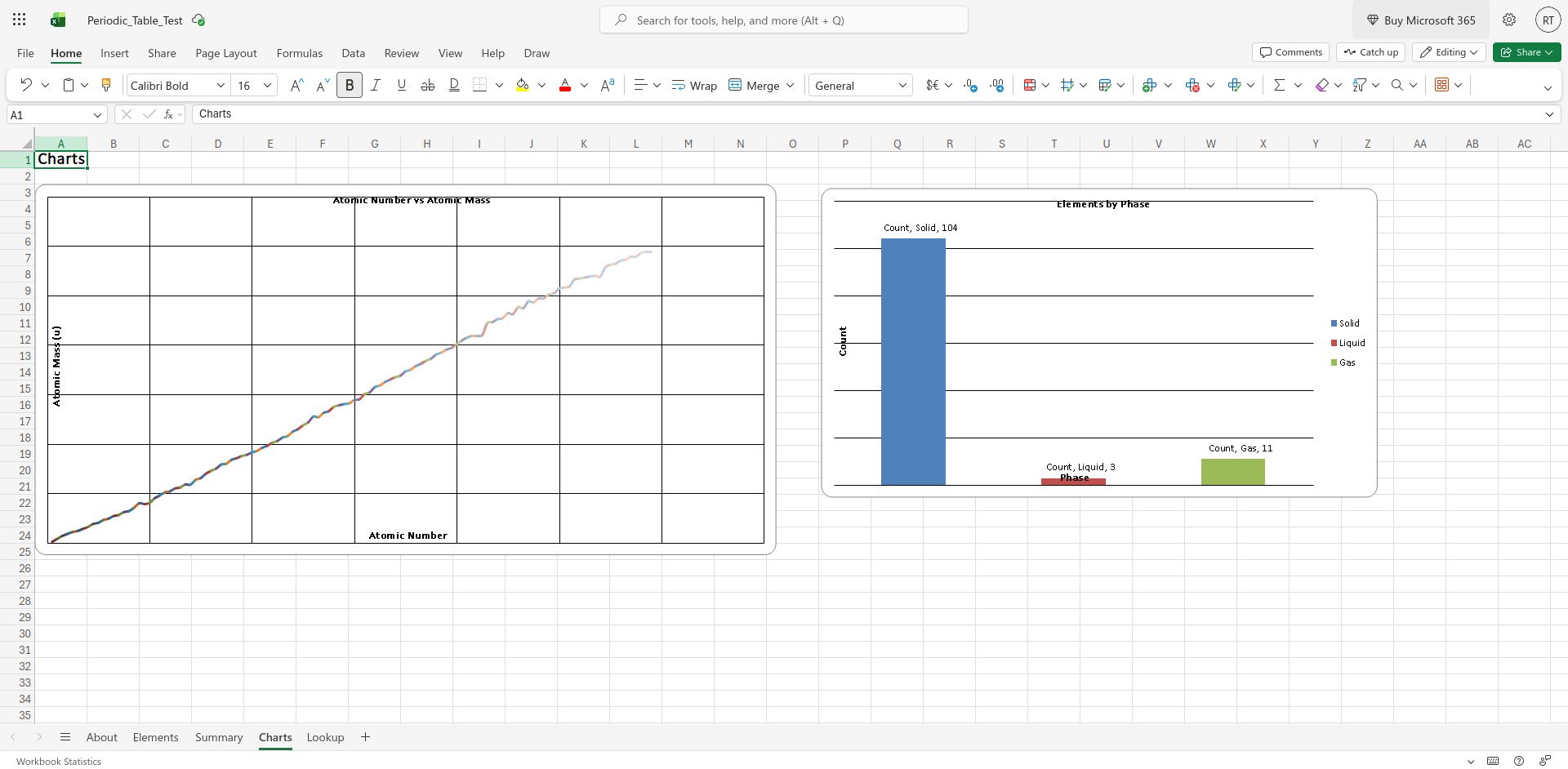
The test file in Excel 365, showing the charts
In testing these two with a complex spreadsheet, certain non-negotiables do begin to surface quite quickly. If you're someone who works heavily with spreadsheets, this is one area where the comparison could be "make or break".
LibreOffice Calc: The underrated workhorse
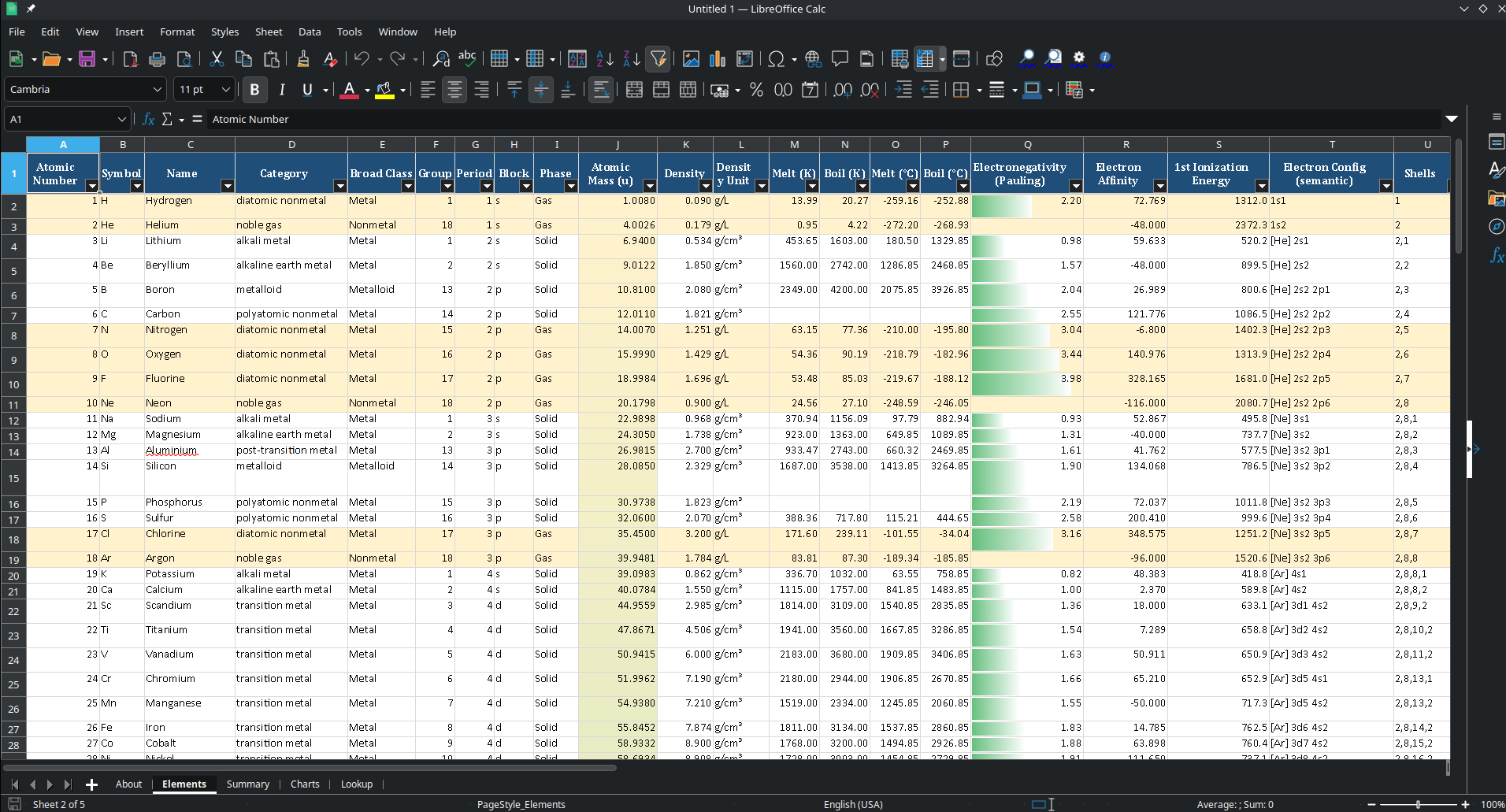
Calc rendered my test file relatively well, but dropped some background colours
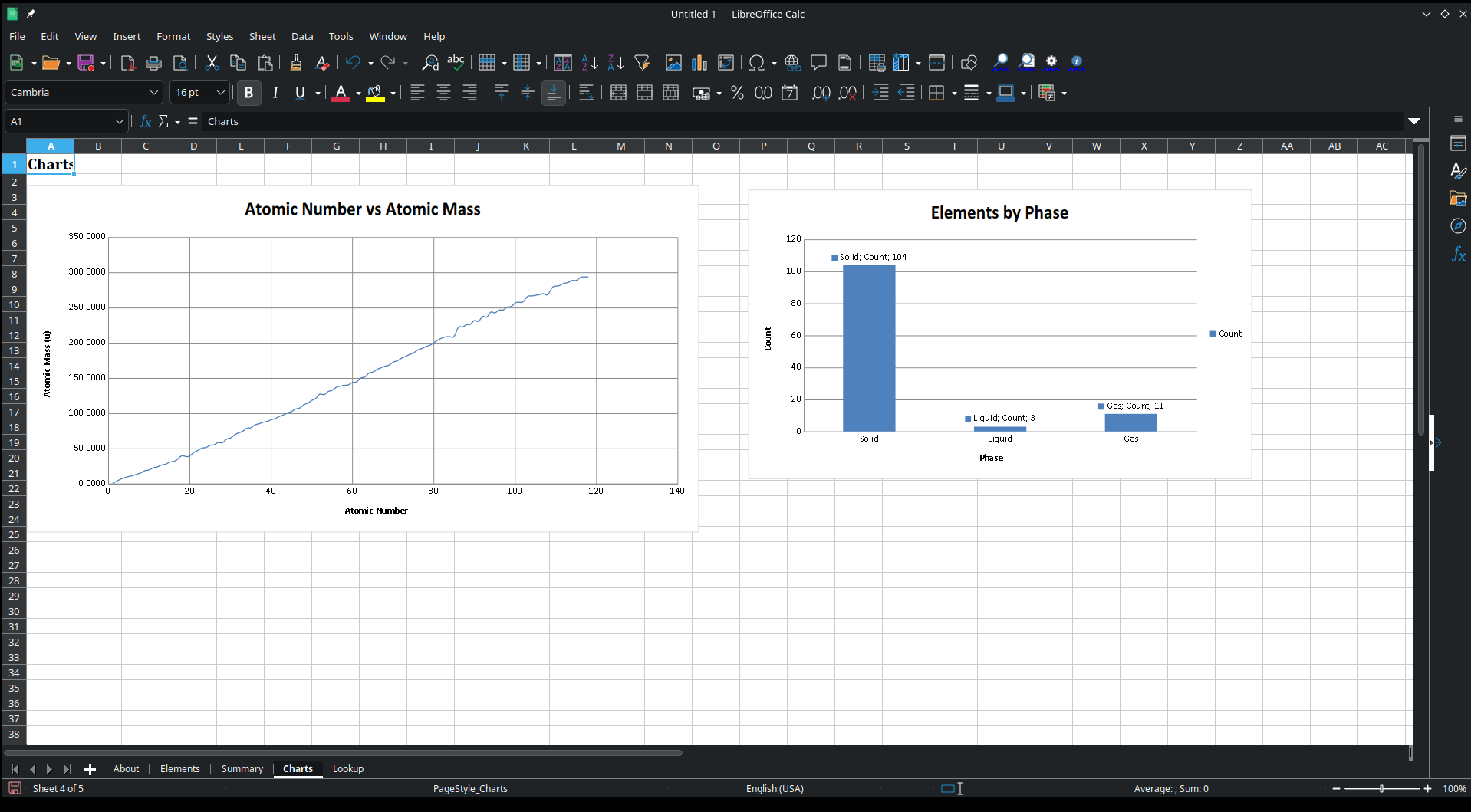
LibreOffice Calc handled the test file reasonably well overall. Both of the charts rendered almost correctly, plotting along the axes accurately. That said, the chart colours weren't preserved, instead defaulting to a generic blue.
The test file in Calc, showing the charts
In the lookup sheet, the atomic mass field was displayed with an extra decimal place, and some cell background colours were lost, with cells that appeared blue in Excel and ONLYOFFICE showing up with a white background instead.
Individually, these may seem like fairly small issues. In larger spreadsheets, however, especially those with multiple charts, visual cues, or more elaborate lookup tables, they can begin to add up. Even so, Calc still came across as the more dependable of the two in this particular test.
ONLYOFFICE Spreadsheets: Still has some ways to go
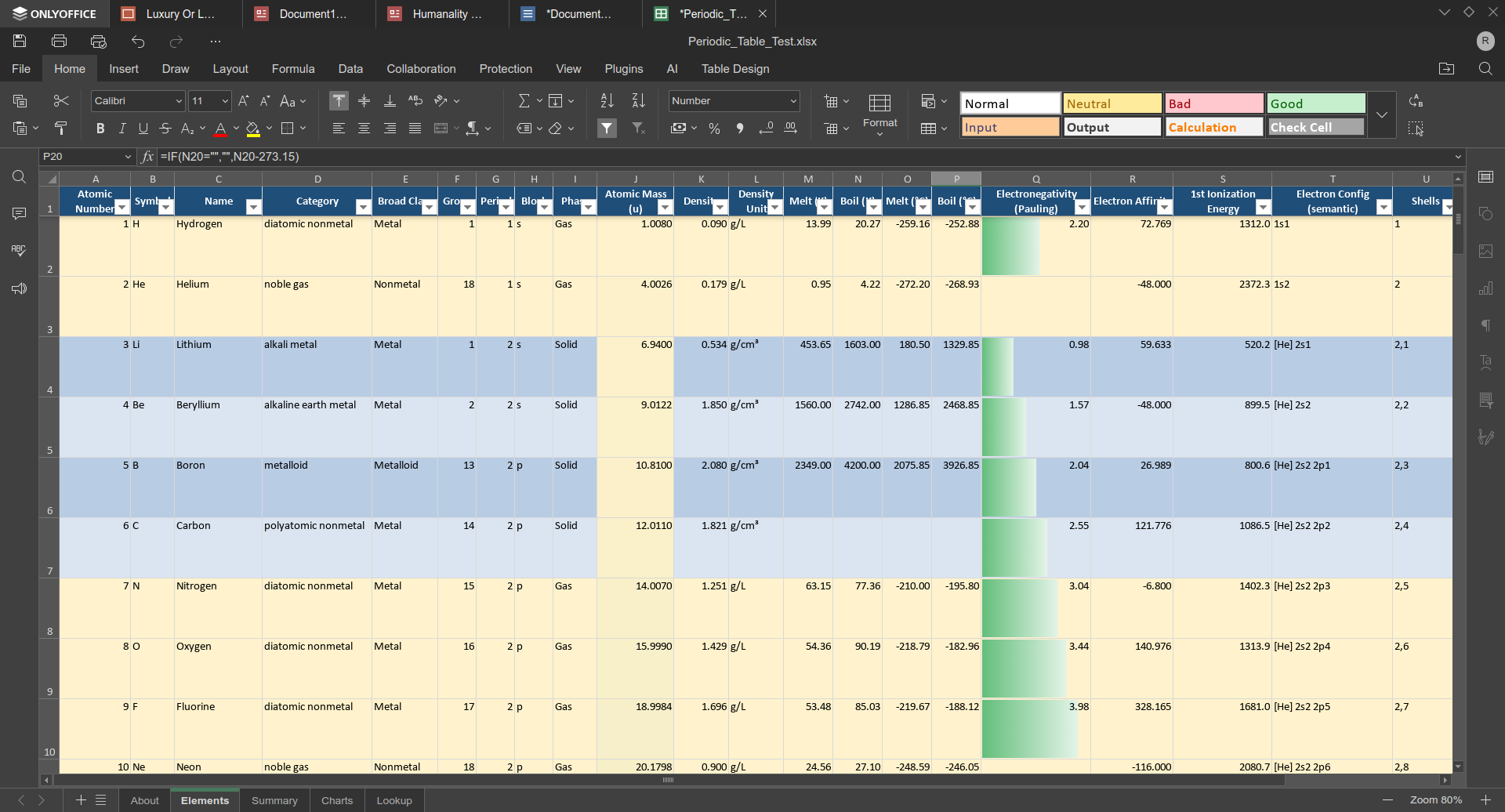
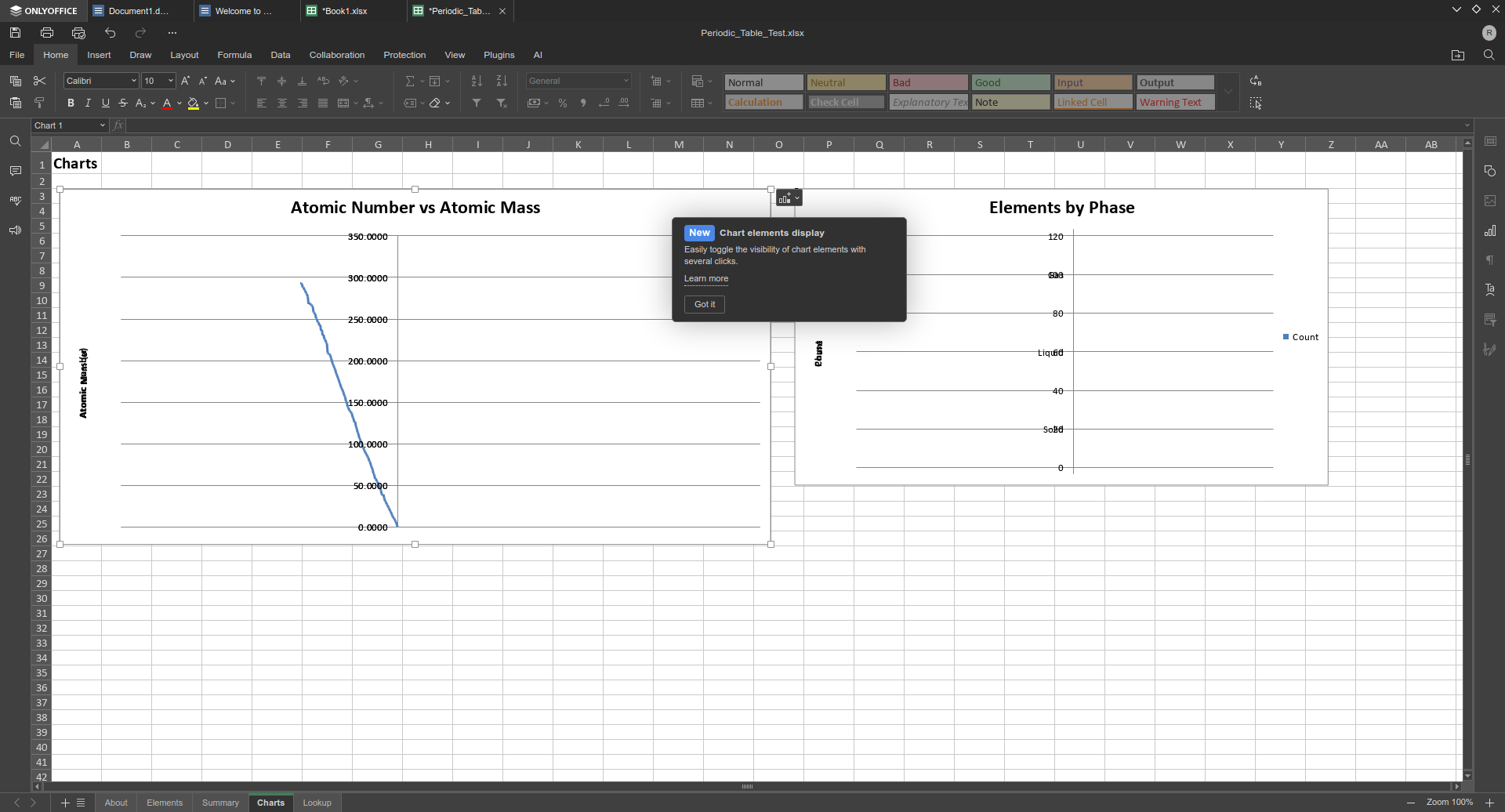
ONLYOFFICE Spreadsheets also managed to open the test file, but with more noticeable rendering problems. Some cells were stretched vertically because the editor chose to wrap overflowing text, which affected the overall layout. The lookup table itself worked correctly, aside from a small rendering bug in the horizontal dividing line beneath the fourth cell.
The bigger problem was chart fidelity. The first chart rendered with badly skewed axes, while the second failed to display any data at all. Formula results, however, remained consistent, and the more complex calculations I tested still worked as expected.
🗒️
A note on macros: It wasn't possible to test macros in this hands-on review. However, LibreOffice does offer limited support for Microsoft VBA macros, while ONLYOFFICE takes a totally different approach, relying on its own JavaScript-based macro system.
If you depend heavily on VBA-driven spreadsheets, it's best to test your own files carefully before settling on either suite.
PDF editing
Full disclosure: I generally use Inkscape and LibreOffice to produce my PDFs. When I need to edit, I just export and replace the original file most of the time. This is probably what most of us do. However, there's still a very real need for editing PDFs for which you don't have the source files, and in that case, you need something more purpose-built for the cause.
So how do these two stack up? Well, while both office suites support PDF editing out the box, the experience between the two couldn't be more different. I'll touch on both of these experiences in more detail below.
LibreOffice Draw: The odd child in the family
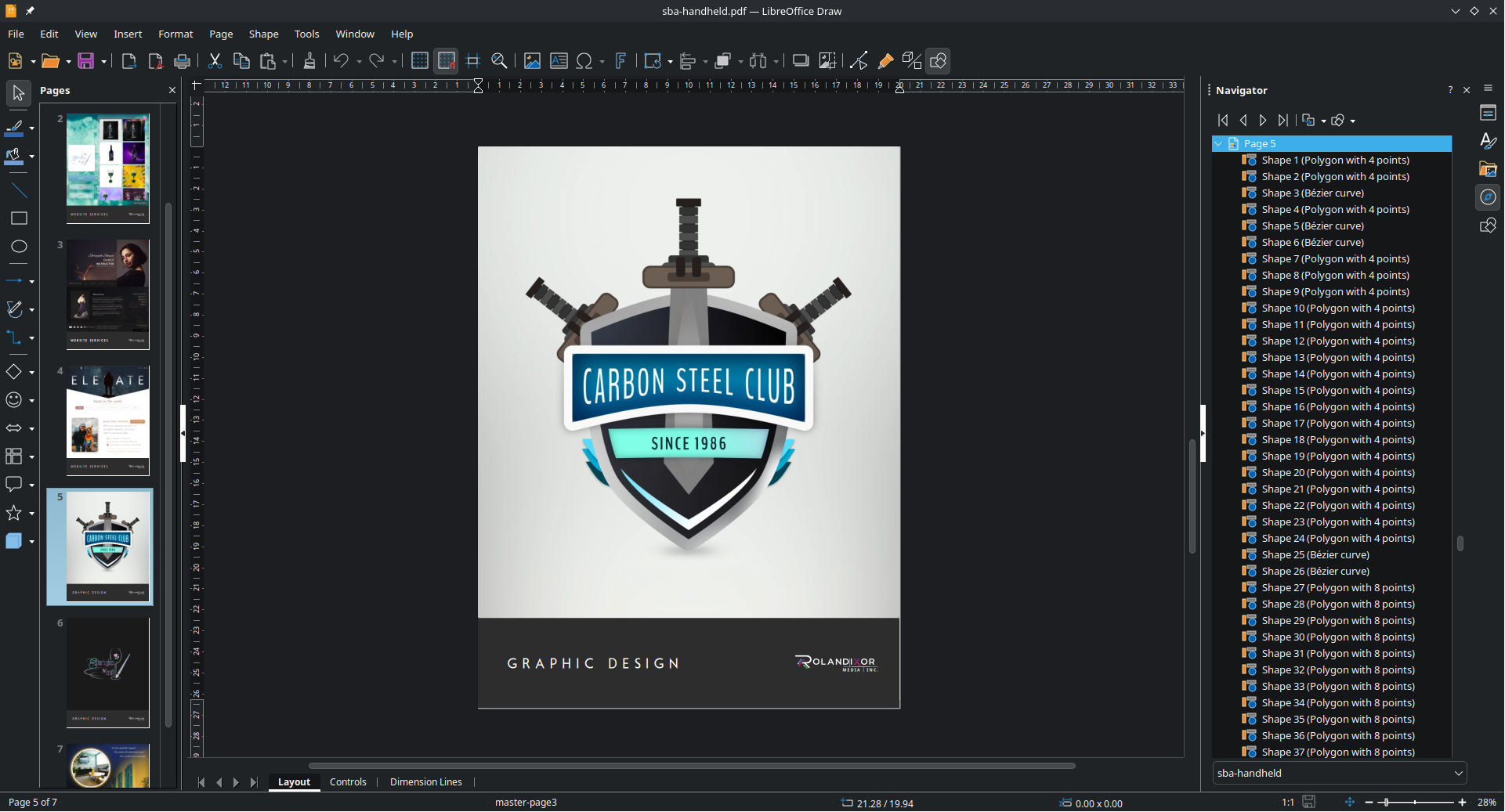
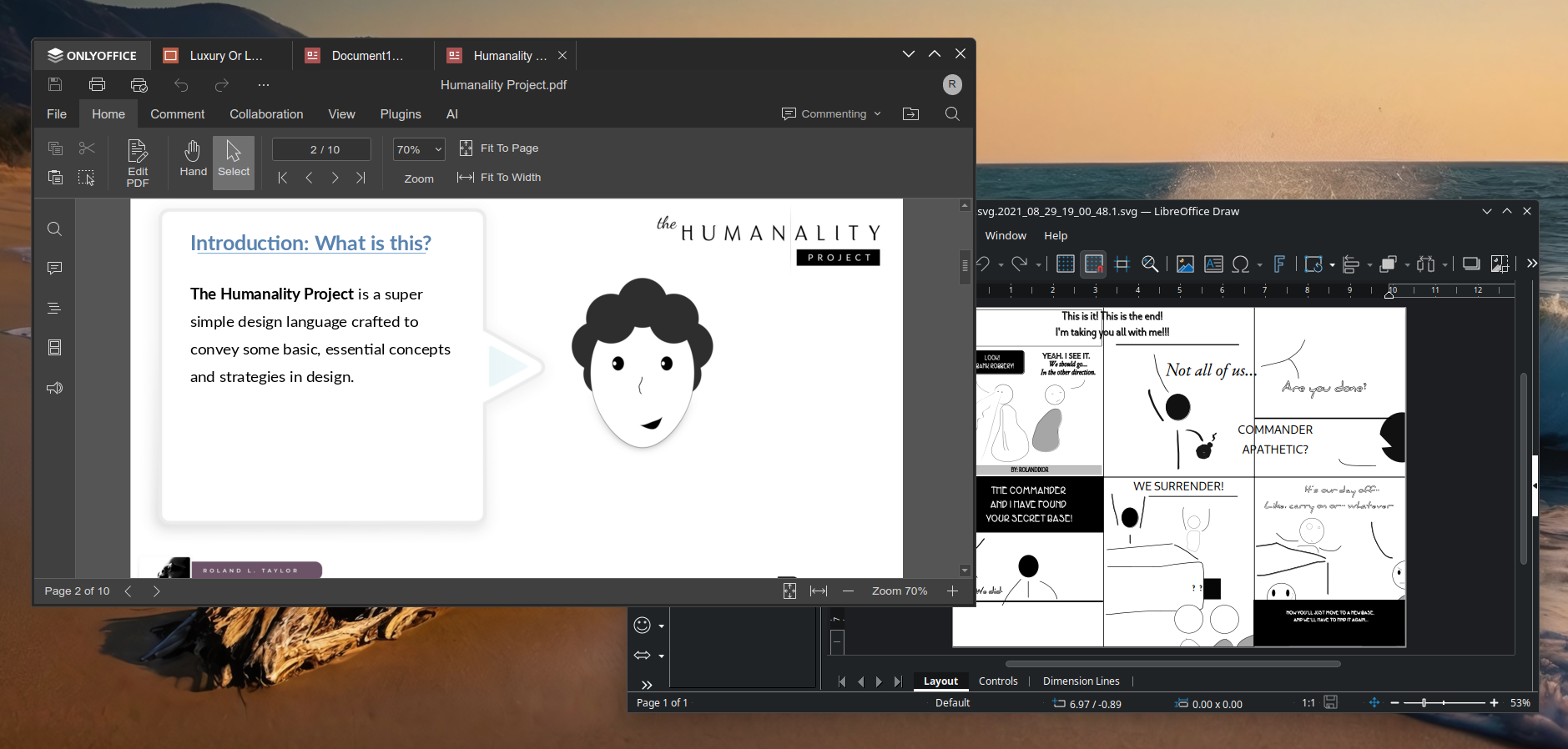
Editing a PDF in LibreOffice Draw
LibreOffice's PDF editing solution is Draw, an interesting blend of a lightweight desktop publishing solution, a diagramming tool, and a vector drawing editor. It doesn't fit neatly into any one category, but this is perhaps its greatest strength.
It can be used for creating and editing PDF documents with complex graphics, flowcharts, and simple illustrations, and is great for handling page layouts. It's one of the most flexible tools in the suite, but its development pace tends to be slower.
Unlike some other PDF editors, Draw isn't well suited for creating or editing long-form text, so if you're authoring such documents, I'd recommend using Writer and exporting to PDF over attempting to edit directly in Draw. Also, while this may be a matter of opinion, its interface and workflow can feel a little clunky when compared to more specialised software in this field, such as Inkscape, but once you get past the differences, Draw makes up for it with a breadth of utility that can sometimes be underestimated.
ONLYOFFICE PDF: "Just right" – at least for text
At first glance, ONLYOFFICE PDF appears to be just another word processor, which, I have to say, I found to be a major plus, as there is distinctive lack of Adobe Acrobat-style PDF editors, not only on Linux, but generally.
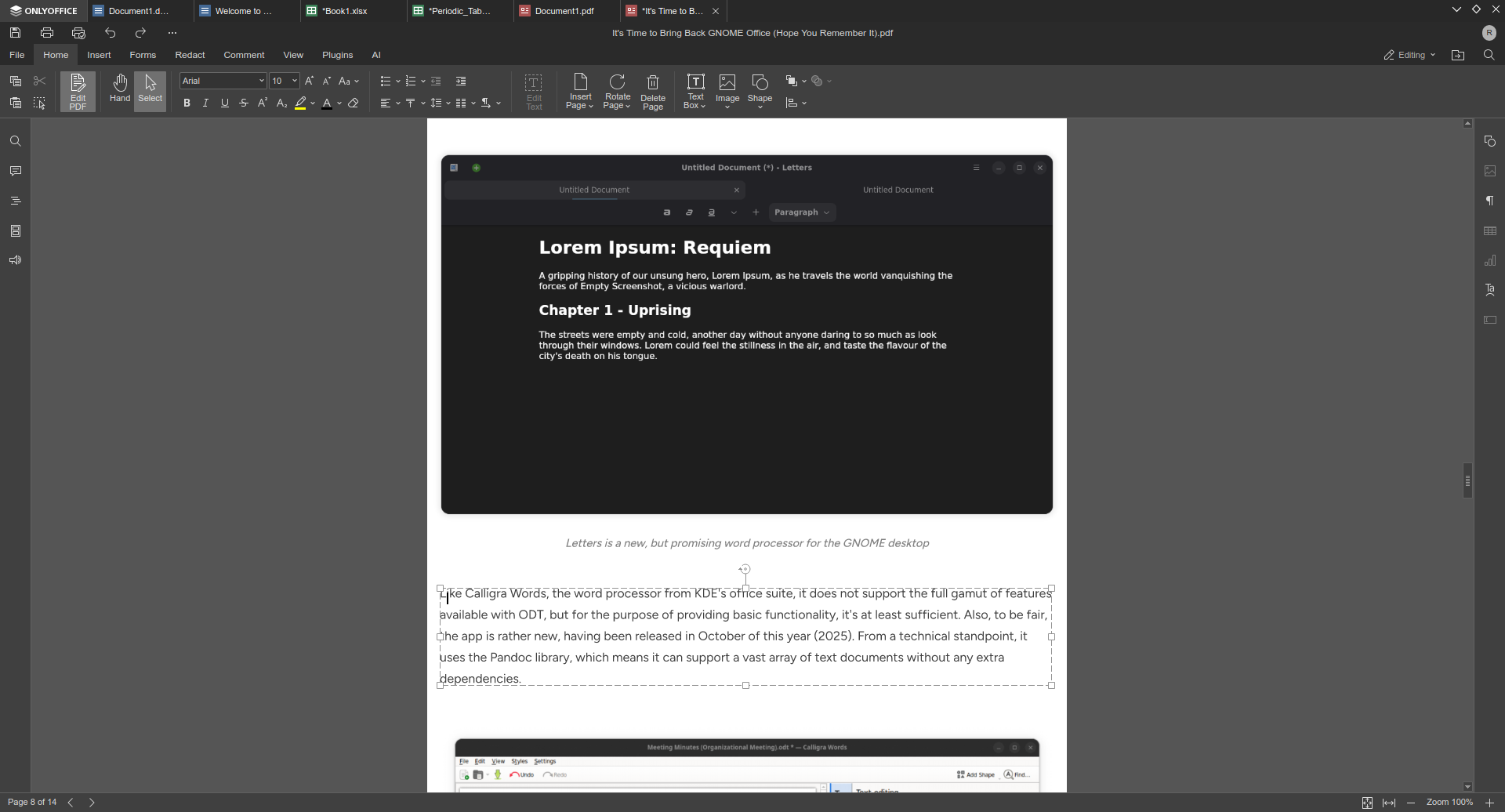
Where things get even more interesting is the inclusion of different "modes", which automatically activate depending on the nature of the PDF document. If you start a new file in ONLYOFFICE PDF, it functions solely like a word processor. However, if you open a PDF generated in another application, like Inkscape for example, it functions like a more traditional PDF editor, presenting the PDF's contents as objects rather than a flowing text document.
I found this versatility refreshing compared to LibreOffice Draw, but with no clear way to manually switch between these modes on the fly, it leaves a bit to be desired. Perhaps this functionality will improve with time, but for now, it can be a source of some minor confusion.
Unique features and apps between the suites
It's true that both these office suites are comprehensive in their own rights, but each one has unique features that set them apart from each other and even above other free and open-source office suites in some respects. After all, it's not just familiar interfaces and file format support that users care about.
LibreOffice: Base, Math
LibreOffice includes two additional applications not typically found in most office suites: Base and Math. They don't get nearly as much attention as the main three (or Draw, for that matter), but they're still an important part of what establishes LibreOffice as one of the of the most popular office suites (open-source or not).
Of the two, LibreOffice Math is least associated with traditional office work at first glance. Even so, all these apps help set LibreOffice apart, not just from ONLYOFFICE, but from office suites as a whole.
LibreOffice Base
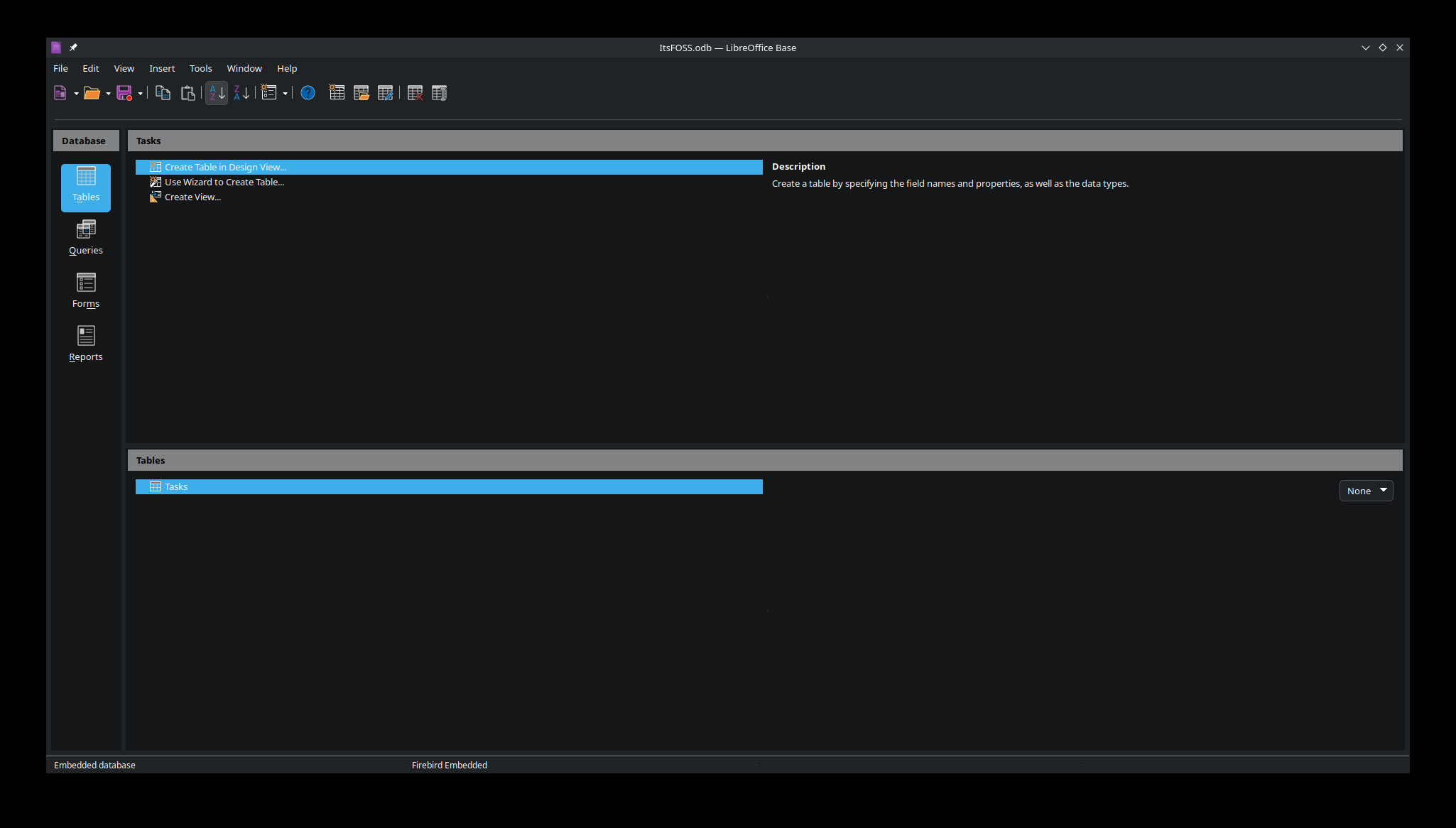
LibreOffice Base running in KDE Plasma 6
Base is LibreOffice’s database application, and while desktop database tools aren't as visible as they once were, it remains surprisingly relevant. What makes Base truly interesting is its flexibility. It can create embedded databases using HSQLDB or Firebird, or connect to a range of external database systems, including MySQL, Postgres, and others, through standard connectors. Unlike Microsoft Access, Base also a cross-platform tool, and not tied to any Windows-centric libraries or engines.
In practical terms, this means that Base can work equally well as a small, standalone database tool, or as a graphical frontend for other, external data sources. It can even use spreadsheets and other file-based sources, adding to its versatility and usefulness in mixed office environments.
LibreOffice Math
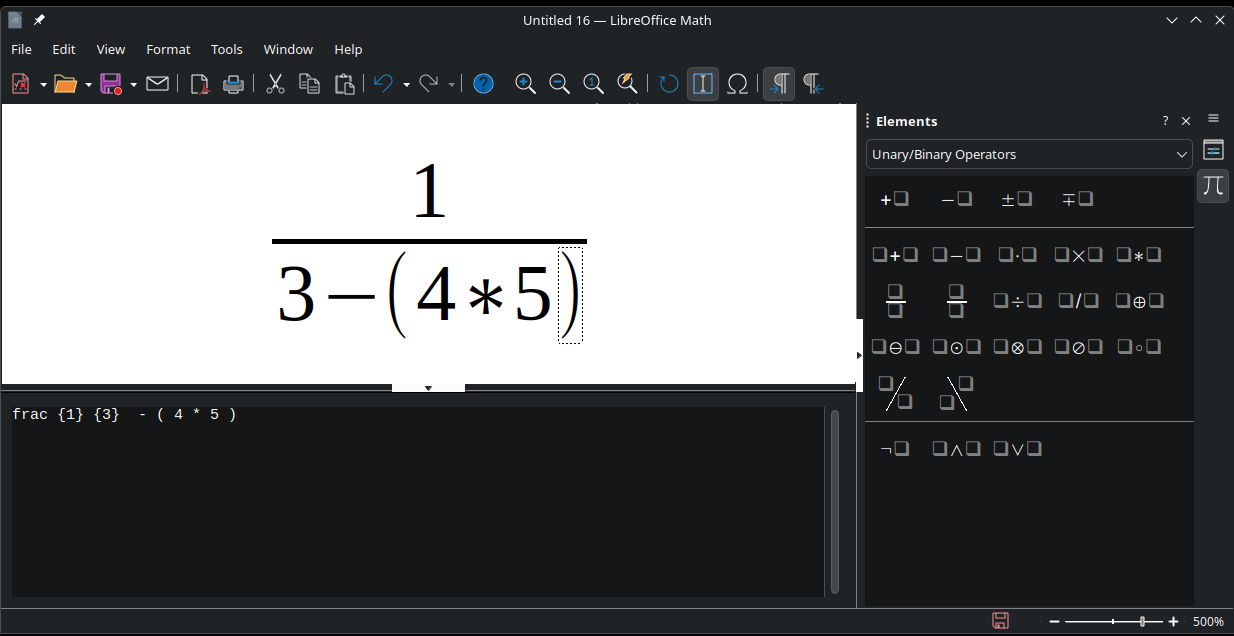
I will leave the more complex Maths to the experts
Math is LibreOffice’s formula editor, designed for writing mathematical and scientific expressions. It's perhaps the most specialised of the core LibreOffice apps, it's extremely useful for students, educators, researchers, and anyone working with technical documents. Math is best understood as a dedicated tool for building clean, properly formatted equations that can then be inserted into other LibreOffice documents. It isn't flashy, but it fills an important role that many office suites either overlook or handle less directly.
ONLYOFFICE: Complex AI Integration
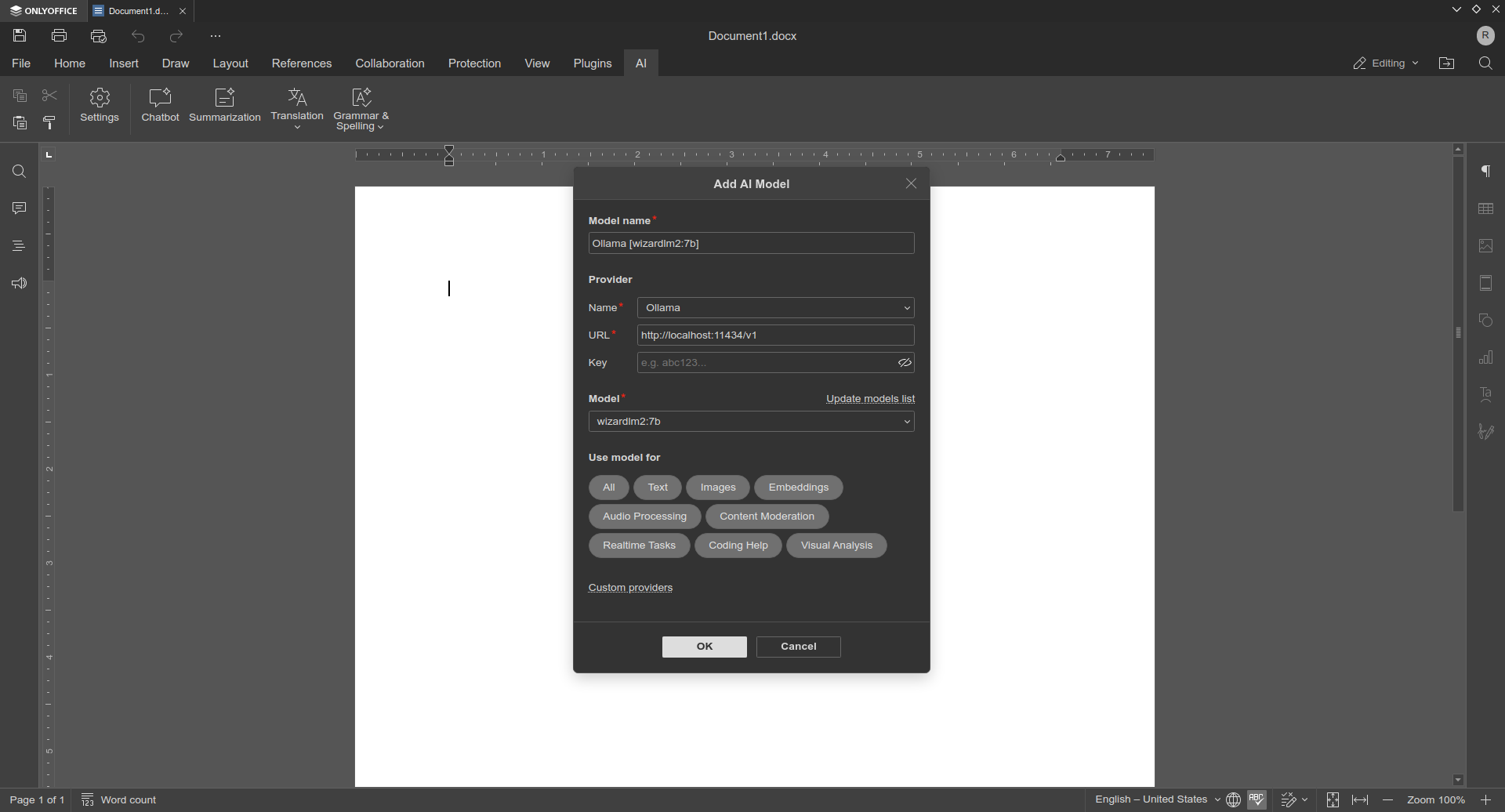
ONLYOFFICE AI integration is flexible enough to let you use your own locally installed models
A recent addition but still quite notable, ONLYOFFICE is the only free, open-source office suite currently available for the desktop with built-in AI integration. While this may not be for everyone, it is quite a useful feature to have on hand. Not only can be used for generating documents, but it can serve as an alternative spelling and grammar checker.
Online Availability & self-hosting
This is one area where these two office suites differ quite a bit in strategy and direction. ONLYOFFICE is built with the web as a core concept, but LibreOffice started, and is still best understood, as a desktop-first office suite. Still, both have solutions for online use, including self-hosted options, but they achieve these ends through very different means.
LibreOffice: A mixture of efforts
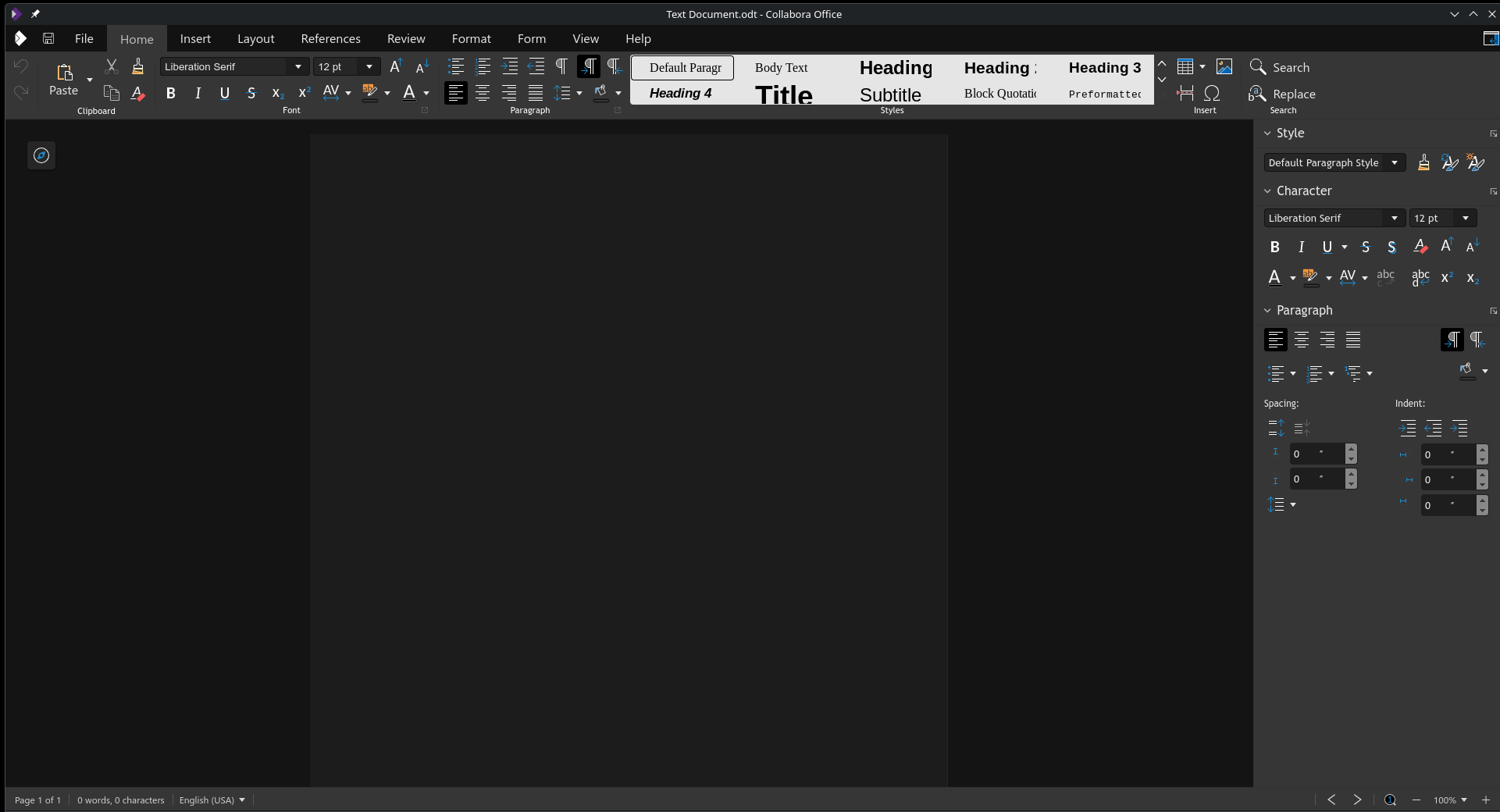
Collabora Office for the desktop is the same interface as Collabora Online
LibreOffice is a huge beast, and the effort to bring it to the web took years of engineering work. Today, the most mature browser-based deployment built on LibreOffice remains a third-party product, Collabora Online (which also powers Nextcloud Office).
That said, The Document Foundation has recently reopened work on LibreOffice Online after several years of dormancy. Interestingly, this decision has caused a bit of controversy, so it remains to be seen what will become of LibreOffice online in the future.
Between the two, ONLYOFFICE most certainly takes the crown in this arena, because its online editors are very much a central part of the product line, and it offers both self-hosted community options and commercial server offerings for individuals, teams, and businesses. In other words, online editing isn't a side quest or afterthought for ONLYOFFICE as a project; it's pretty much the gold standard.
With this being the case, ONLYOFFICE online feels more like what the product is meant to be, and switching between the online and desktop editors is about as close to seamless as you can get. Being designed from the beginning to operate by this modality, ONLYOFFICE doesn't have the same disparity between versions that is evident in LibreOffice's situation.
Mobile availability
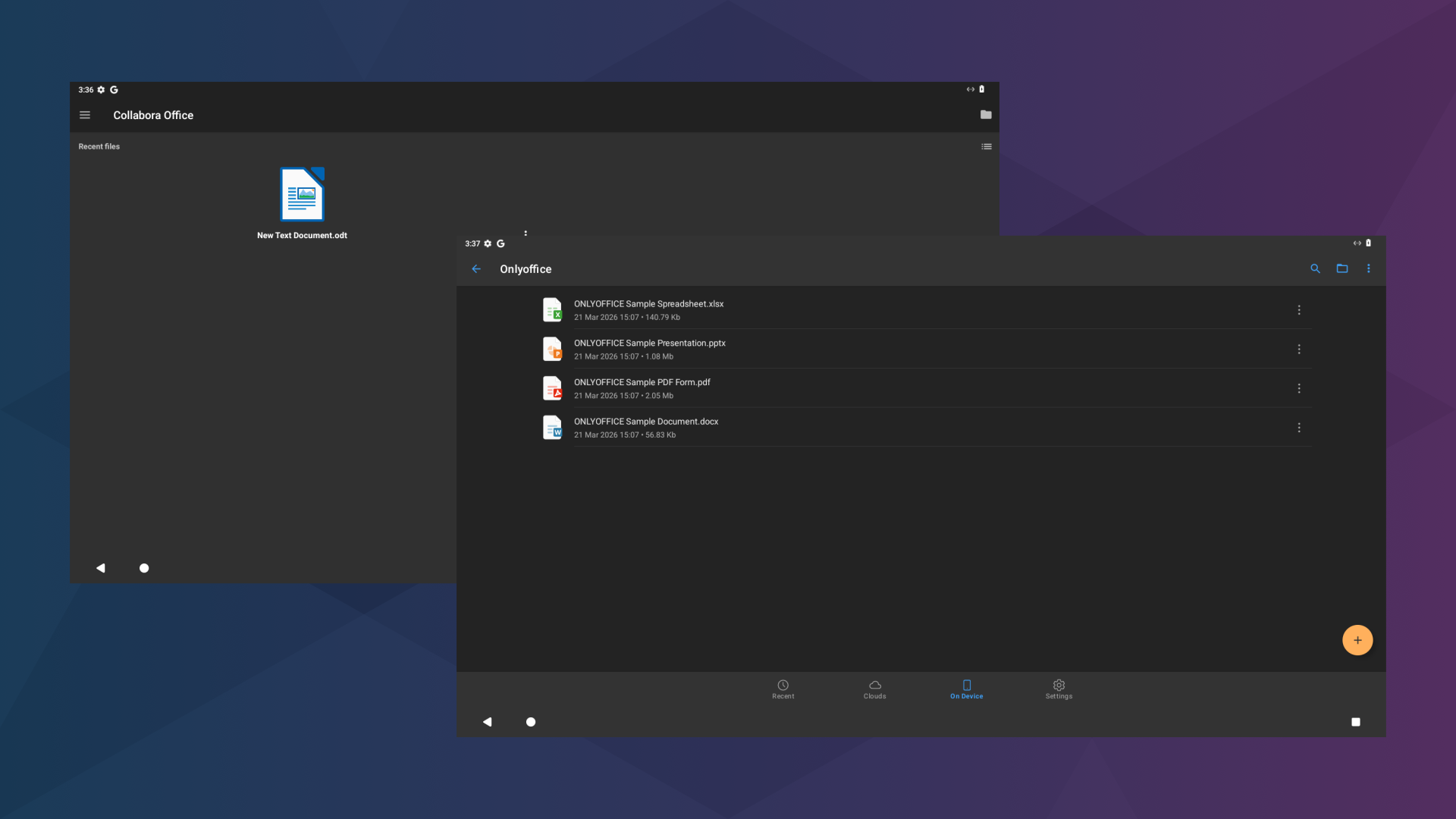
ONLYOFFICE (foreground) and Collabora Office (background) on Waydroid
It could be argued that no modern office suite feels complete without some kind of mobile counterpart, at least for Android if not on iOS as well. Both LibreOffice and ONLYOFFICE have a presence on mobile, but the experience differs in both maturity and approach. ONLYOFFICE offers dedicated mobile apps for Android and iOS as a direct part of its wider platform, while LibreOffice’s again serves up a duality of experiences, including an editor built by Collabora.
💡
Note: for the purposes of this article, we won't go into a full review of either app on mobile. This section just serves to give a general overview of what's available for either suite.
LibreOffice: A little here, a little there
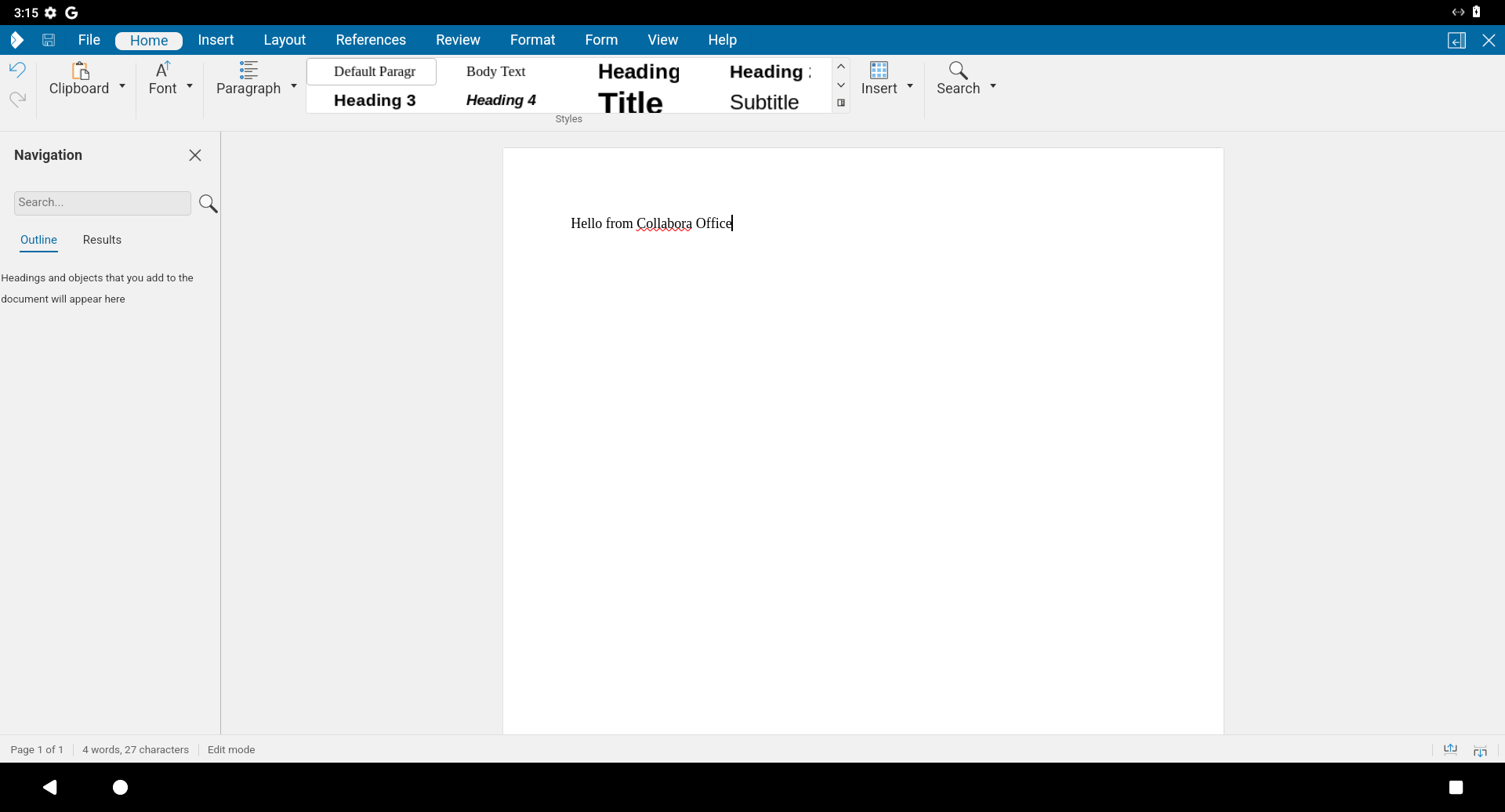
Editing a document in Collabora Office (running on Waydroid)
LibreOffice does have a meaningful mobile presence, but it is less direct than ONLYOFFICE’s. Rather than a first-party LibreOffice mobile app in the same sense, mobile editing is most visibly represented through Collabora Office for Android and iOS, which is built on LibreOffice technology and supports document, spreadsheet, and presentation editing on the go.
ONLYOFFICE: Cohesion preserved throughout
ONLYOFFICE editing a text document on Waydroid
ONLYOFFICE takes a more straightforward route here. It offers free mobile apps for both Android and iOS, positioning them as part of the same broader product family as its desktop and online editors. That makes its mobile story feel more unified, especially for users who want a more seamless experience across devices.
Of course, no app is without its own quirks and challenges. While both these suites are powerhouses in their own right, shortcomings, unusual behaviours and other issues are to be expected. To be fair, these quirks don't completely take away from the usefulness of either app; they're just things to be aware of that may help you decide which one you'd prefer to use full-time.
LibreOffice: held back by its toolkit
LibreOffice can occasionally feel a little less polished than its feature set deserves. Its interface can feel a little out of place on some platforms due to the VCL toolkit emulating native widgets as opposed using the native toolkit to draw them directly. Some users also report VCL choosing the wrong interface for their platform. This can be particularly jarring on Linux, especially when using custom themes, dark mode, or when certain rendering glitches occur.
ONLYOFFICE: Clean, but still maturing
While ONLYOFFICE generally feels cleaner and more streamlined, it's not without its own rough edges. On Linux, some users have reported issues around Wayland performance, rendering behaviour, and font handling, which can make the desktop editors feel a little less predictable than their polished interface suggests. Furthermore, despite using Qt for some aspects of the interface, most of the ONLYOFFICE UI is built using web technologies, so the "native look" is notably missing.
Final thoughts: which should you choose?
As with any comparison like this, the answer depends on your needs. LibreOffice and ONLYOFFICE are both strong open-source office suites, but they excel in different areas.
LibreOffice offers a broader and more traditional suite, with deeper functionality, more specialised tools, and a stronger connection to open formats. ONLYOFFICE feels more streamlined, more familiar to Microsoft Office users, and often more comfortable in collaboration-heavy workflows built around Microsoft's file formats.
If you value breadth, flexibility, and open standards, LibreOffice is the stronger choice. If you value familiarity, simplicity, and smoother Office-style compatibility, ONLYOFFICE may be the one for you. Of course, these are just my recommendations, but ultimately, the choice is really yours.
We all know Linux gives us a world of freedoms we couldn't possibly have on Windows, but have you ever stopped to think about that freedom in real, qualitative terms? After all, when most people say they can't switch to Linux, it's usually because of something they just can't do without Windows or macOS or Android (which itself is Linux, even if most don't consider it such).
So, let's take a closer look at some of the things you can do on/with a Linux system that you just can't typically do on Windows.
1. Live USB/Live session
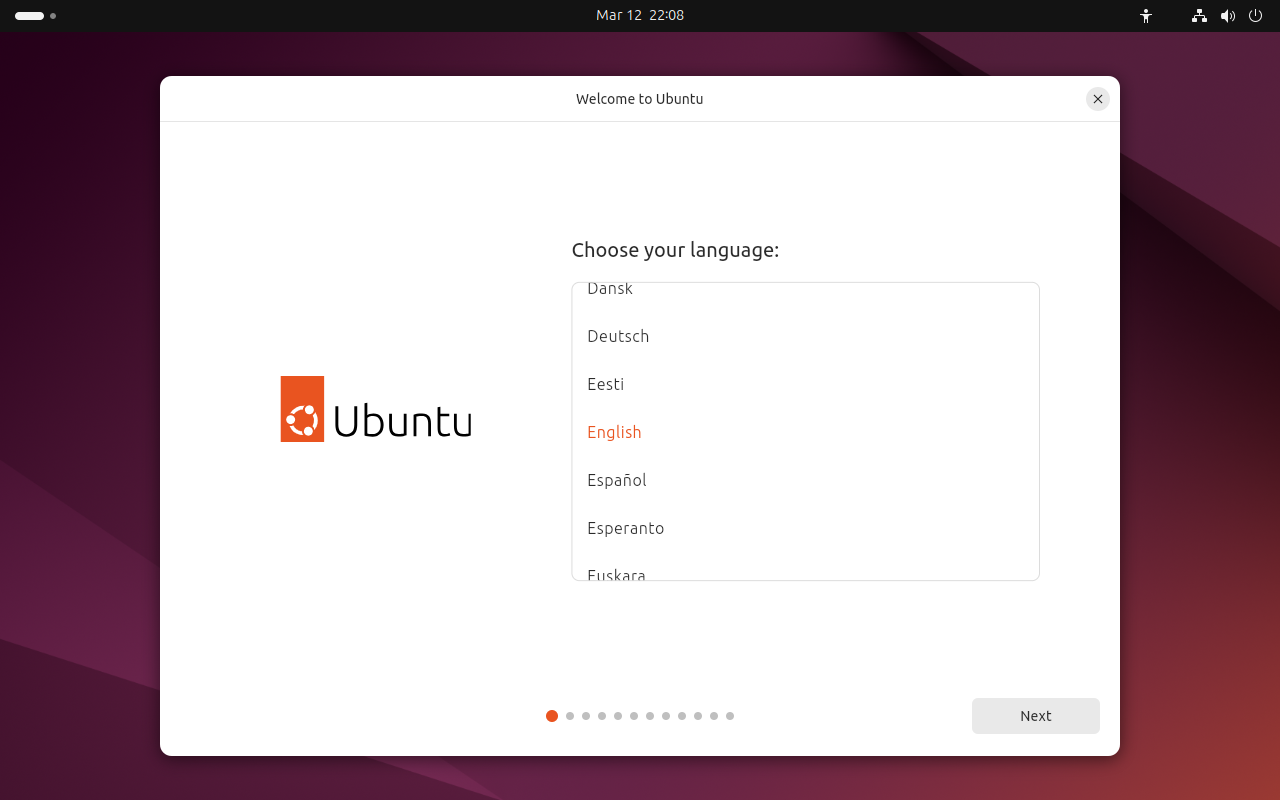
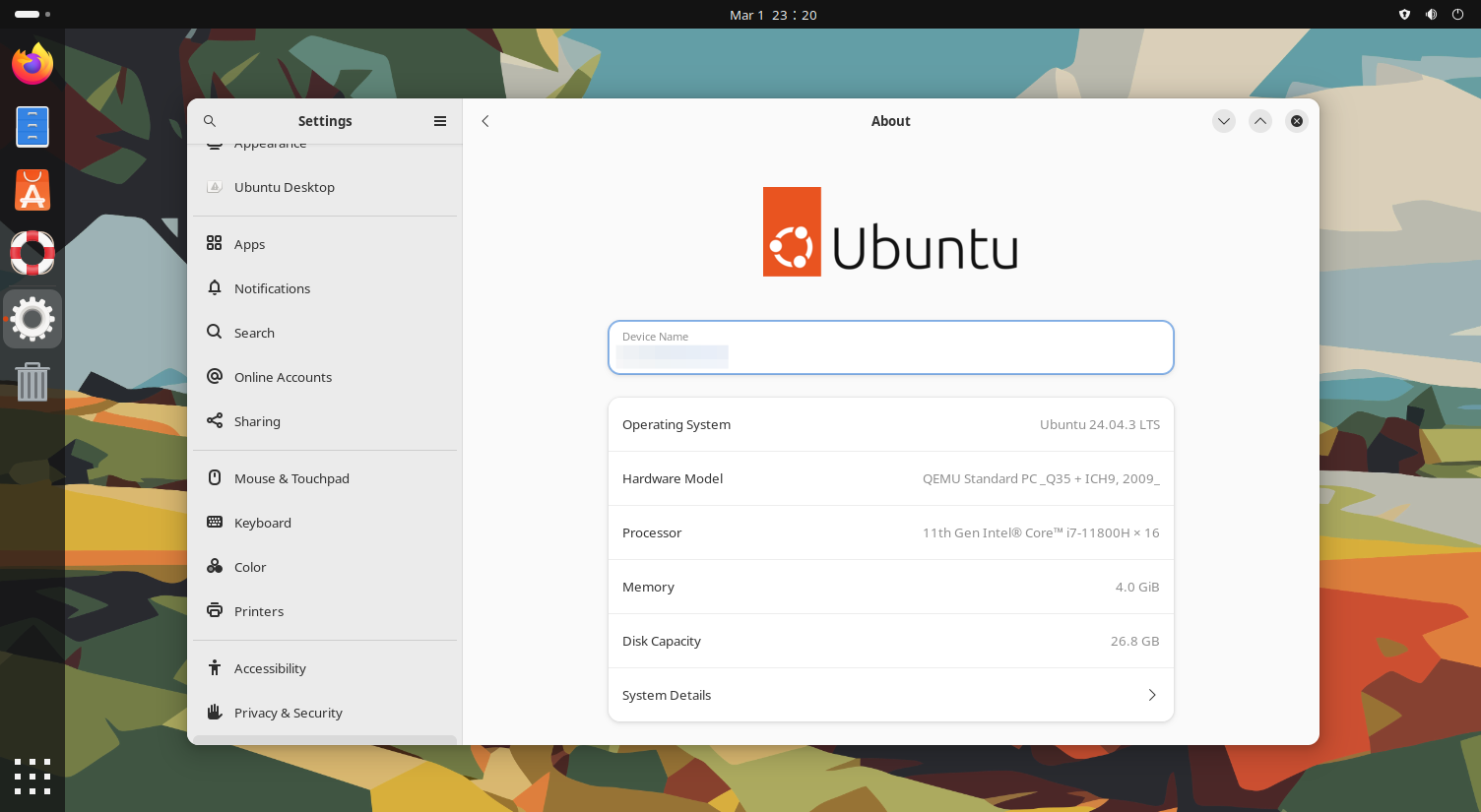
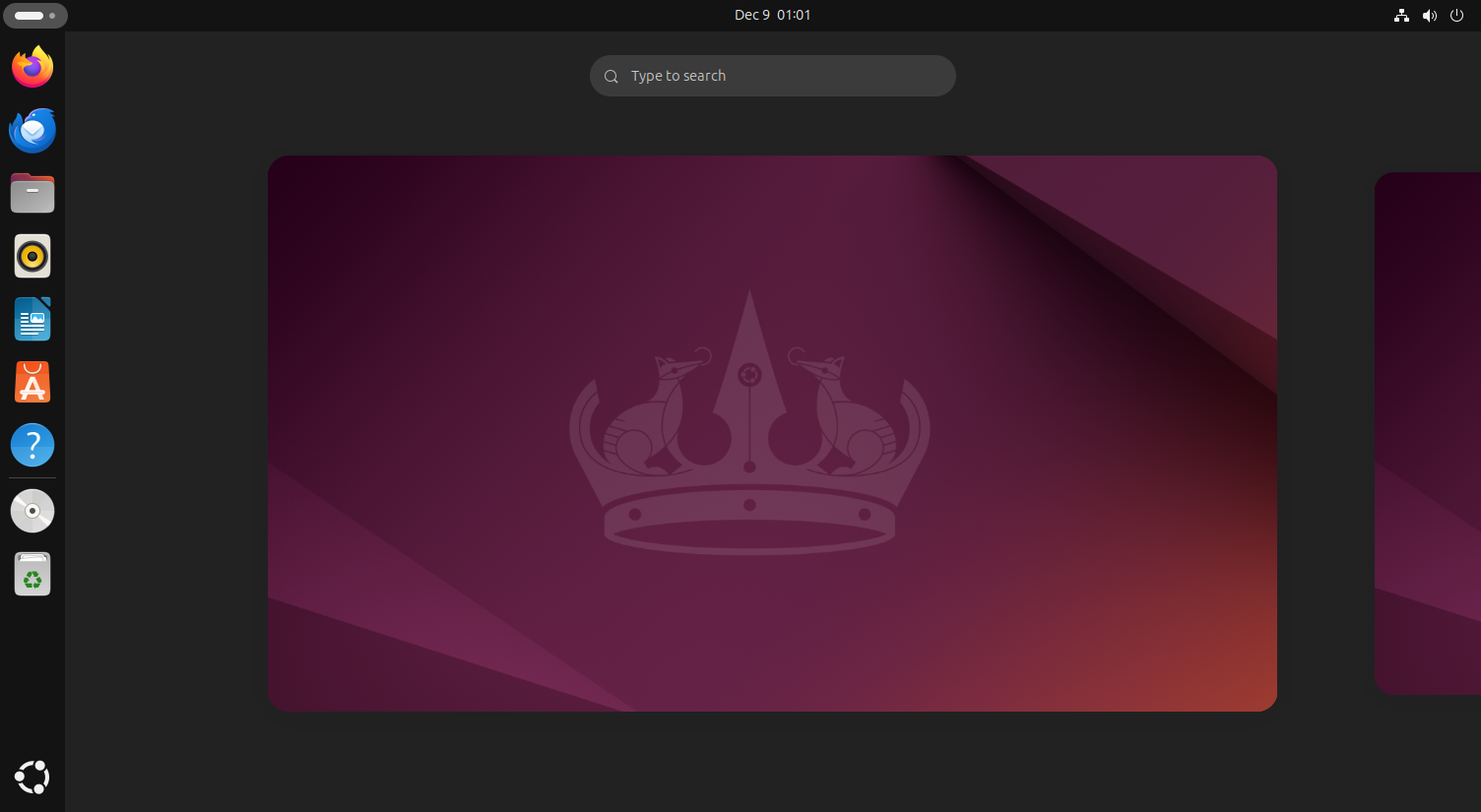
Running Ubuntu 24.04 in a live session
It goes without saying that this one deserves the #1 spot on this list. After all, for most of us, our first experience with Linux was at the welcome screen of a live session from a USB, SD card, or, in the past, CD or DVD. If you go even further back, some of us (myself included) first got to know Linux through the likes of Damn Small Linux running a live session inside Windows itself.
The crazy thing? Live CDs have been a part of the Linux experience since the early 90s, when we still regularly used floppy drives! And yes, live floppies were a thing, too. In fact, they still are.
Not only is there no official way to run Windows as a live session out the box, but Microsoft's own live session solution, Windows To Go, was an enterprise-only solution and has been discontinued. Non-standard solutions exist, but these are on shaky ground in that they rely on creating a Windows install on portable media, which is something Microsoft hasn't sanctioned.
2. Login screen customization
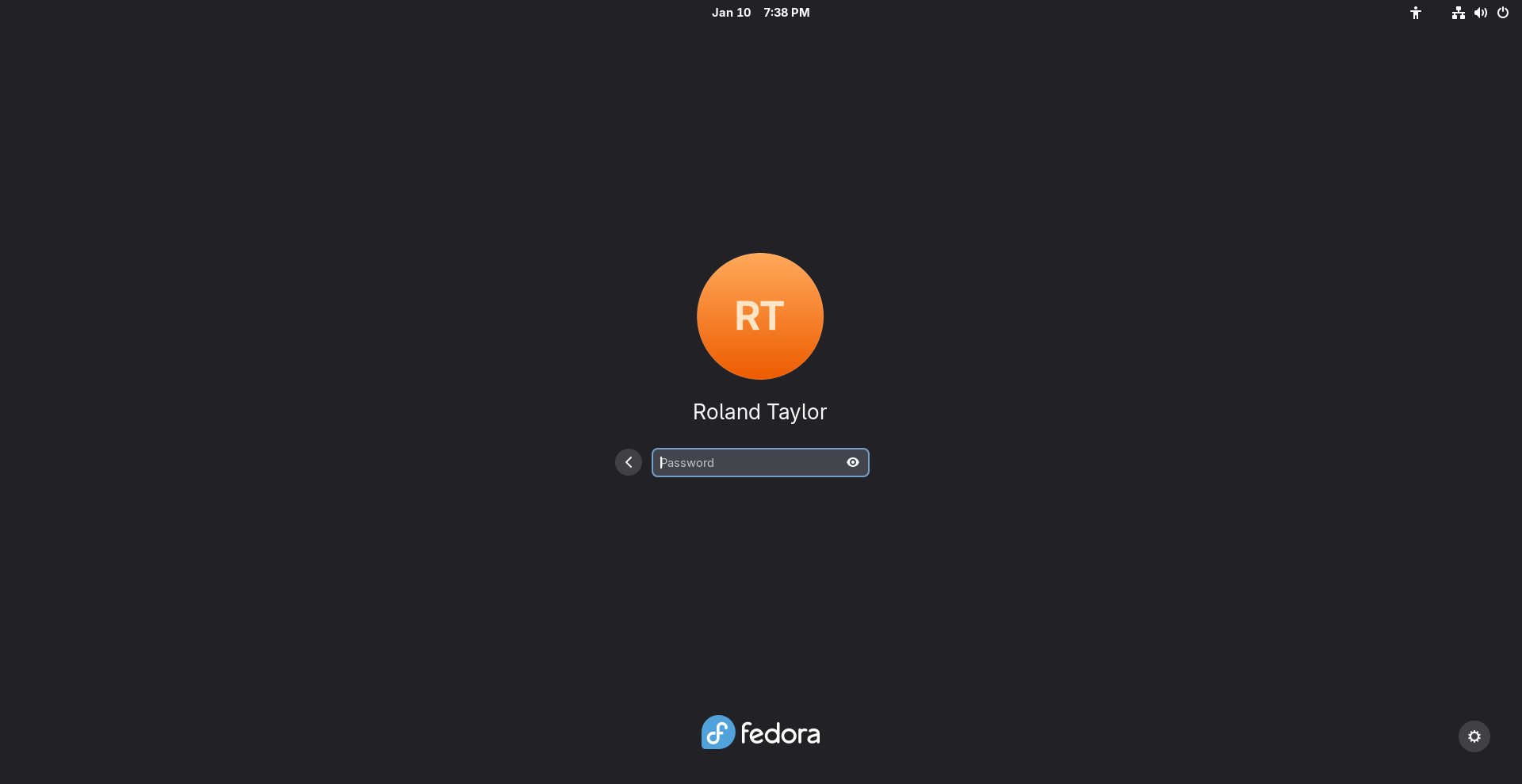
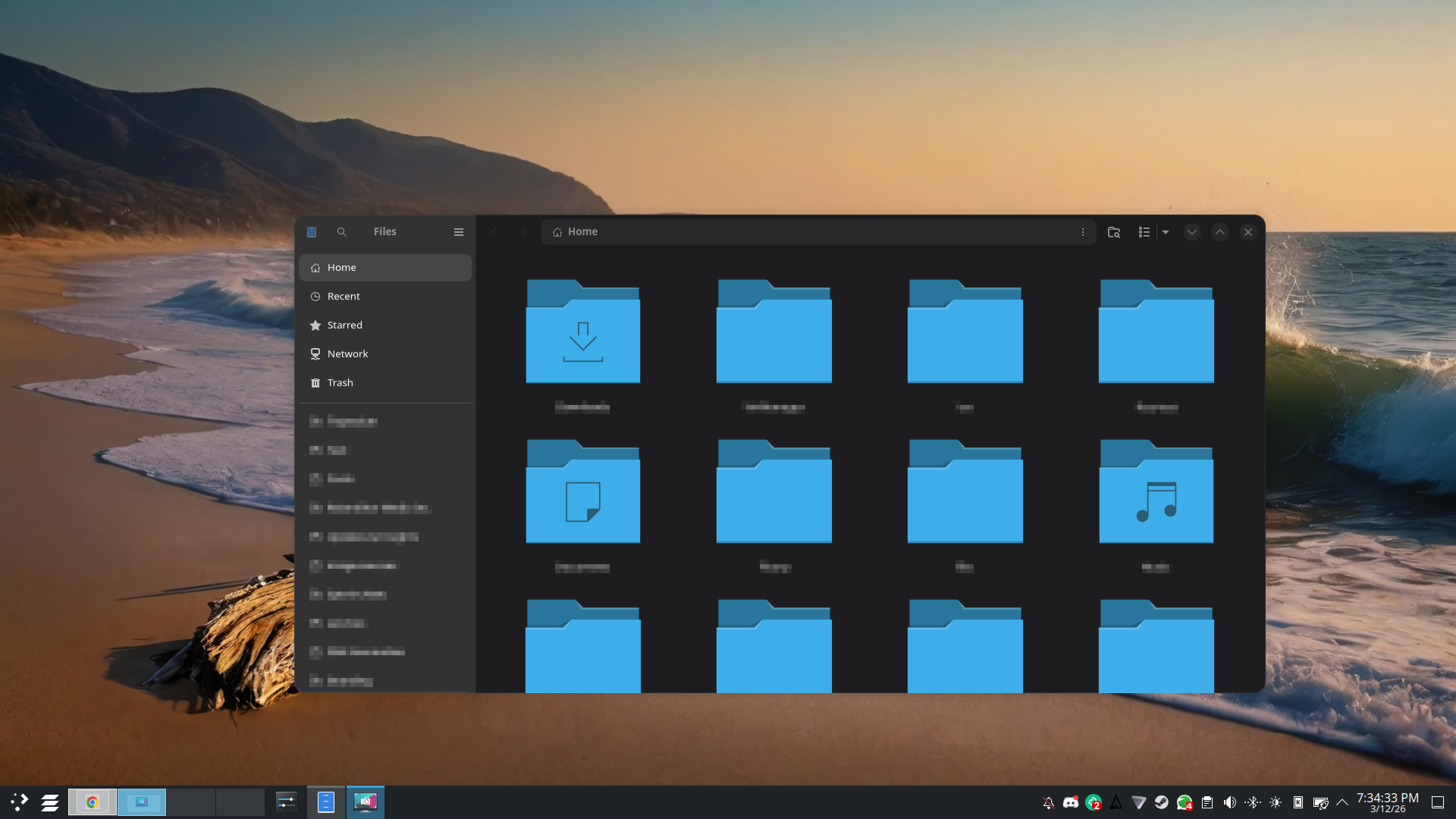
The GDM login screen comes by default on GNOME-based systems
No lie, this one blew me away when I first switched to Linux from Windows. I'd always loved the idea of customising my system's visuals, and the fact I couldn't do this easily on Windows was a source of frustration. So to come from a world where I needed to risk malware or pay a fee just to put a wallpaper on the login screen to the full-scale flexibility of Linux has never stopped being amazing.
Not only can you change your wallpaper, but you can change the layout, even swap out the login manager altogether. Don't like the layout and style of GDM? Try SDDM or LightDM for greater flexibility, or even Ly, if you prefer something terminal-based. As a matter of fact, you can completely ditch the login manager altogether and boot straight to a TTY or desktop environment if you desire.
While you can change your wallpaper on recent releases of Windows, customising your login screen beyond this or changing your login manager altogether is simply not possible. After all, Microsoft wants you to log in with your Microsoft account going forward, so a third-party solution would somehow need to account for this.
3. Changing your desktop environment
COSM Desktop running on Ubuntu 24.04
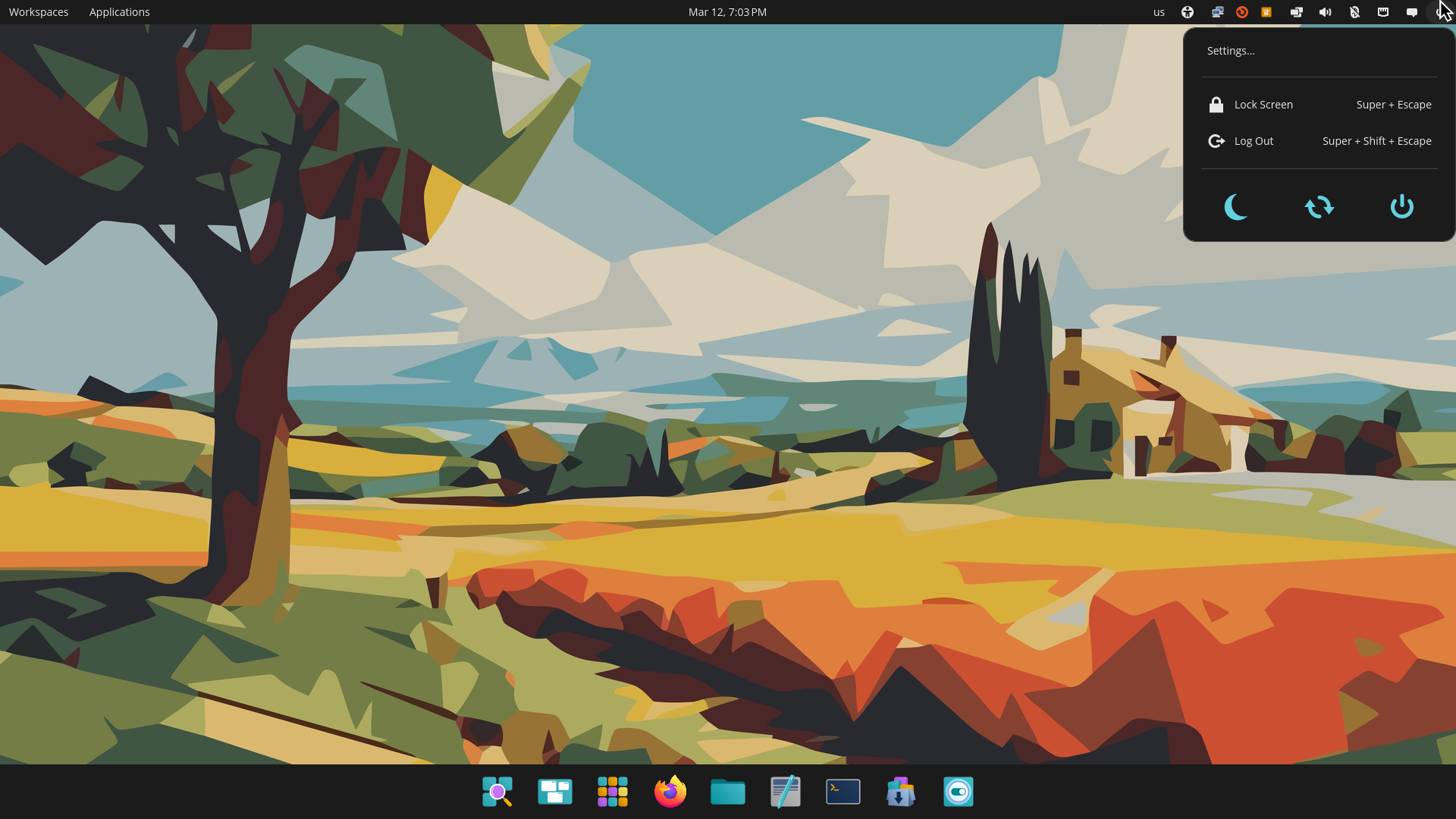
Maybe I shouldn't even say "desktop environment" here, because let's be honest — Linux has way more than just desktop environments for us to play with. We've got a broad selection of window managers (compositors, with the rise of Wayland), desktop environments, desktop-independent panels, docks, you name it. Whether you want to do minimal bling with Wayfire or Hyprland, or sink your teeth into something beefy with Plasma or GNOME, the choice is yours.
You can customise your layout, app selection, software store, launchers, or whatever you like, and you won't be penalised for it, nor do you have to pay a dime or risk giving your data to a company that could go defunct and leave you hanging.
Can you change your desktop environment or window manager on Windows? Nope. Sure, you can use third-party tools to achieve some degree of customisation, but these methods are not officially supported and may even violate the operating system's terms of use. Many of these customisations break standard features in Explorer or other parts of the system and can easily fail when Microsoft releases routine updates.
4. Use the system without a GUI
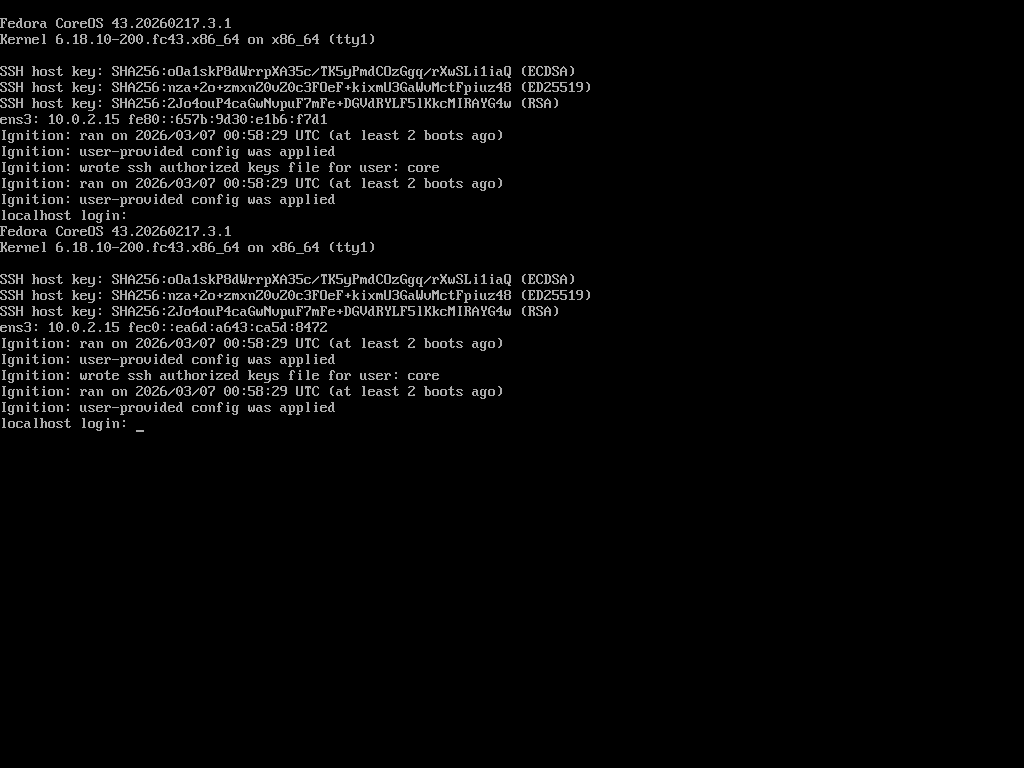
Fedora CoreOS is designed to run with no GUI
Whether it's booting to the recovery session, running with the login manager disabled, or using a headless install through SSH, there are many ways you can use Linux on real hardware without ever using a graphical interface of any sort. While this option may not appeal to the majority of "average" users, it's still a pretty important distinction. You can use Linux as minimally as you need, even if it's as a temporary solution to bring up your graphical system just as you'd prefer.
For instance, this is the standard way to install Arch, by the way, and you can customise just about any distro to function in the same way even after installation. What makes this possible is the fact that what we know as "Linux" is actually a collection of software: the kernel, GNU utilities, init systems, and more. By choosing exactly what combination of software you're using, you can set up a minimal system that requires no graphical components whatsoever and still directly or remotely execute software from the system. It's even possible to set up such a system to display graphics over the network.
In the case of Windows (for consumers), this pathway isn't supported whatsoever. If something goes wrong, recovery is typically a graphical affair. Even Safe Mode is primarily designed around this. Running Windows as a text-based operating system just isn't something the average consumer can do.
Linux on a fridge? A toaster? A toothbrush? Yes. And it probably can run Doom, too. The reality is, Linux is so flexible and portable, it can run on just about any device with a processor, even a tiny microcontroller. From the world's most powerful supercomputers to some of the smallest single-board computers and Internet of Things (IoT) devices, Linux has grown to basically power the majority of the digital world. There are even custom distributions for many non-standard devices, from game consoles to smartwatches, and the list just keeps growing.
On the contrary, while Windows has spread to some other devices over the years, it's not anywhere near the level of portability we have with Linux. You can't just grab a Windows ARM ISO and install it on a Raspberry Pi. You can't put Windows on a smart fridge either, unless the manufacturer happens to have an existing agreement and collaboration with Microsoft. Plus, since Windows is objectively not open-source, the community can't port it on their own.
Linux on the other hand, we can take wherever we want, not only because it's open-source but also because it was built with portability in mind. It can easily be stripped down and streamlined to fit just about any hardware. That's a freedom we just don't have with Windows.
You might not have ever considered this, but really think about it. Let's say your current laptop or workstation goes down, maybe because the CPU burnt out or the motherboard got damaged, but the SSD is still working just fine. With Windows, it's time to get a new licence. You can certainly recover your files, provided your drive wasn't encrypted, but it's unlikely you're sticking that SSD in another system, booting it up, and continuing on like nothing happened. The bad news is, this is getting even harder with the introduction of mandatory Microsoft accounts attached to your system's TPM chip.
With Linux on the other hand, that's actually a pretty common workflow. I know this first-hand, because I've done it with multiple systems in the past. Sure, if you've got proprietary drivers installed, you may need to ensure that you remove them if your hardware differs too strongly, especially in the case of graphics cards.
Yet, Linux won't just automatically give up and quit if your drivers don't match your hardware. Instead, it'll choose a fallback method or fail to a command-line interface until you get that sorted out. It's a fascinating experience once you actually try it (or are forced to do it).
7. Customize or even swap your kernel
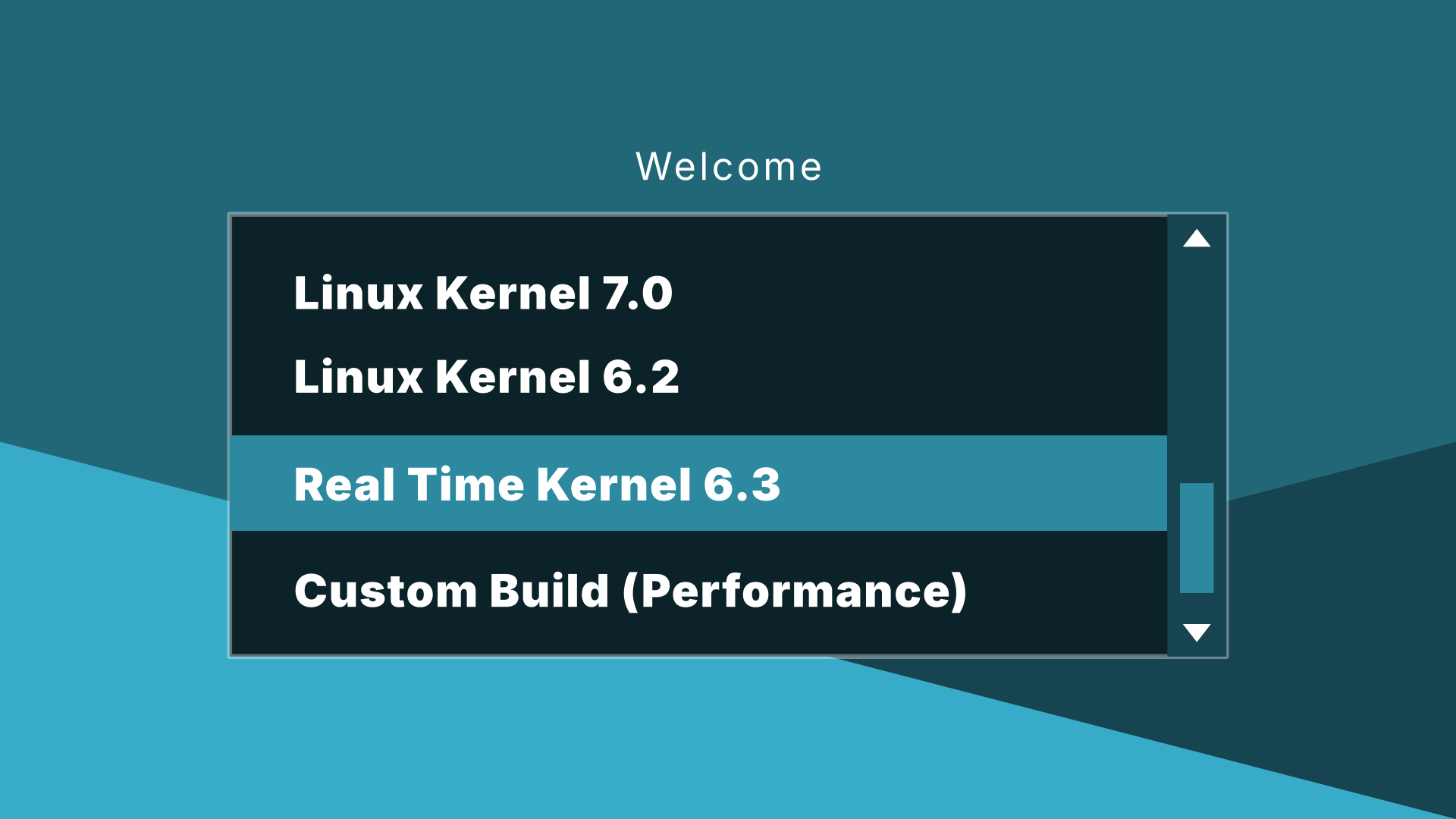
A simulated boot screen – perhaps someone wants to make this theme?
Imagine one day you wake up and decide you need to swap your kernel for a more optimised workflow. It could go something like this:
"Hmm, let's see here, should I run the Liquorix kernel today or the real-time kernel? How about the mainline kernel? Choices, choices..."
This is one thing long-time Linux users may take for granted, but it's actually a pretty big deal that we can do this in the first place. Again, this is made possible not only by the open-source nature of the kernel but also by the modular nature of most of the distributions we use. As a result of this modular nature, we can swap kernels any time we need to, especially so long as the distribution we're using provides a method for doing this.
🗒️
Immutable systems may have different restrictions or methods for changing the kernel.
Why might you need a different kernel? Well, it can be for any number of reasons, but typically, it's down to two main needs: better driver support and better performance. Newer kernels typically have broader support for new hardware, but sometimes an older kernel may also be needed for a specific device or quirk. Likewise, performance can vary with different kernel versions and build-time configurations.
Needless to say, this isn't something a normal user can do on Windows beyond applying standard updates. Yet on Linux, it's something so normal as to not even feel remarkable.
8. Choose different filesystems during installation
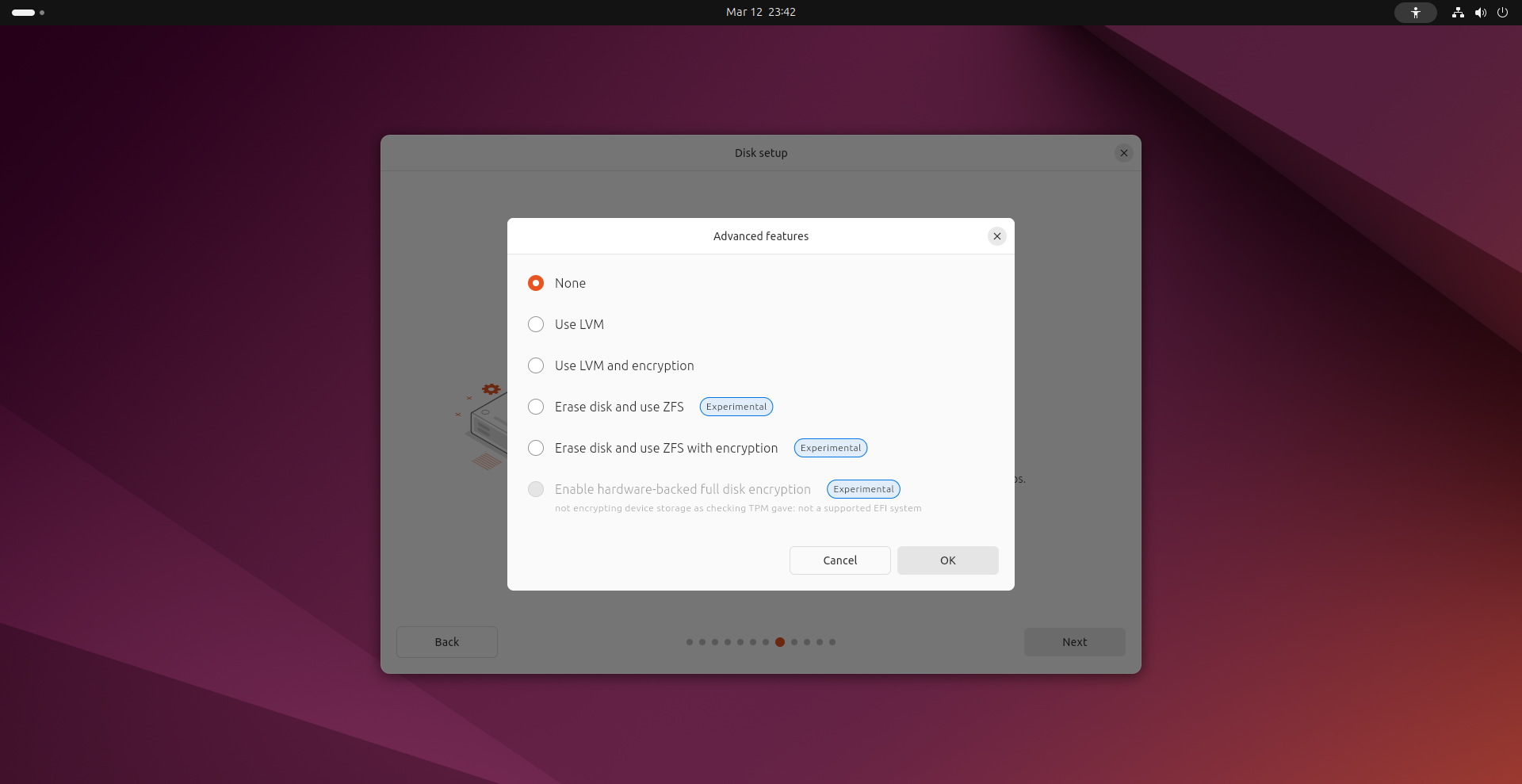
Choosing disk options in the Ubuntu 24.04 installer. The ZFS file system is available as an option.
Windows supports a few filesystems for reading/writing files, including the typical FAT and EXFAT filesystems, NTFS, and more recently, ReFS, which is more used for server environments. However, when it comes time to actually install the system your options are pretty limited. You can install your main system on an NTFS filesystem, and with the exception of the FAT32 EFI partition, that's about it. No other filesystems are supported out the box, and while Windows setup supports loading third-party drivers, this doesn't cleanly open the door to installing Windows on any non-standard filesystems.
On the other hand, Linux supports many filesystems by default, and most distros give you the option to install on a much broader selection of them. Most offer at least the option of using ext4 or Btrfs, with some, such as Fedora, offering additional options, like XFS. In theory, you can even move your Linux install from one filesystem to another, provided you have the knowhow. For instance, btrfs-convert lets you convert an existing ext2, ext3, or ext4 installation to Btrfs.
9. Revive older hardware
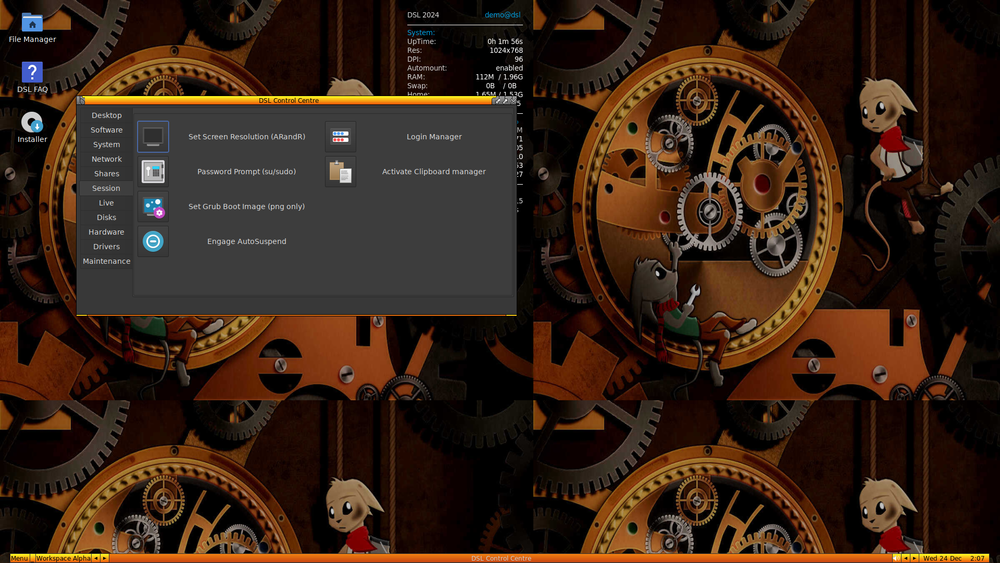
Damn Small Linux 2024 is designed specifically to run on older hardware
Windows is notorious for its tendency to introduce seemingly unnecessary, forced hardware requirements that stop users from being able to keep using their older hardware, even when testing proves that Windows would run on it just fine. With Windows 11, things have never been worse. Perfectly powerful systems from as recently as 2017 or 2018 are somehow not supported all because of Microsoft's tighter hardware requirements, including requiring a TPM 2.0 chip, Secure Boot, and other platform features that can sometimes just barely edge a system out.
It gets worse when you consider the bloat that's been steadily creeping (or pouring) into Windows over the decades. Since users don't have any right to control what's in Windows by default or create their own official "Windows distribution", there's no way around this.
Not so with Linux, as many are discovering, and as you may have seen earlier with Linux running live off a floppy disk. In fact, there are Linux distributions especially built for this very reason, such as Puppy Linux and antiX, which the modern DSL 2024 is based on. Furthermore, Linux can be compiled specifically for older systems, even those with 32bit processors, unlike Windows, which typically drops older hardware with no way back.
10. Swap parts of your stack, as you wish
We've already talked about how you can swap your desktop environment, login manager, and kernel, but to end off this list, I think we should dig a little deeper. Unlike Windows which basically dictates what your operating system stack is from the ground up and provides few options for change, Linux gives you freedom change pretty much everything. For instance, let's say you're running Ubuntu and you really don't like snaps. Solution? Remove snapd.
You're probably thinking "But won't snapd just reinstall itself on the next update?", and the answer is no, but even if that were the case, you could block the update by locking the package. You can also change your init system, audio system, display system (betwen X11 and Wayland, and now the various forks of X11 that have popped up since it was all-but-abandoned).
Put simply, whatever you don't like about Linux, technically, you can change it. You just have to know how to do it and what to do if something goes wrong along the way. In some cases, there are even scripts that can automate the process for you, or distributions that do exactly what it is you're looking for already. For example, there's Devuan for Debian users who don't want systemd.
While unofficial "builds" of Windows exist, such as Tiny 11, most of these taking risk by distributing modified ISOs of Microsoft's intellectual property. It's legally gray at best, but it's pretty much the only option for many users.
Final thoughts: The narrative needs to flip
That's it. That's the message.
I could've kept this list going even longer, but I think the point is clear. While there are legitimate grievances like software that hasn't been ported yet, or challenges with hardware that vendors haven't provided drivers for, the reality is that Linux has a lot going for it if you stop to give it a fair shake.
If you've not yet tried Linux, maybe now's a good time to see what all the hype's about (and I don't just mean Hyprland, all though that's pretty sweet too). There's a lot you can do just fine on Linux that you can't actually do on Windows, or if you can, it's definitely not a walk in the park, whereas for us Linux denizens, it's just another part of daily life.
If you ask my advice, I say go for it: see what you've been missing, and you might just get hooked over this side too.
These days, it’s become fashionable to make fun of Ubuntu.
Whether it’s jokes about Snap packages or criticism of Canonical’s decisions, mocking Ubuntu often feels like the default attitude in parts of the Linux community.
To be fair, Canonical has made decisions over the years that have not always been well received, and some of the criticisms of Ubuntu and the direction it’s taken have their own merit. Yet, the derisive way Ubuntu is often talked about online isn’t particularly fair and, frankly, misses the point.
Ubuntu didn’t become the “face of Linux” by accident, nor did it gain its popularity and mass appeal (both on the desktop and servers) without real, solid reasons behind it. For many, it is in fact these same reasons that cause them to feel so passionately about the shift in direction since the early days.
Ubuntu’s speciality: Linux for Human Beings
Ubuntu's simplicity and ease of use have always been its strengths
Ubuntu was once widely seen as the easiest Linux distro for beginners and a solid choice for both casual and “power” users alike. Many Linux enthusiasts (myself included) recommended it without hesitation because it was straightforward and opinionated in a way that just felt sensible for regular people. From the time you popped in a live CD, you got a sane, uncomplicated experience that felt like a breath of fresh air compared to Windows, and it made you feel like Linux could actually feel like home. All you had to do was install it, update it when necessary, and get on with your life.
The slogan “Linux for human beings” was more than a branding choice. Ubuntu embodied this motto in a very real way by reducing friction for everyday people and never being afraid to match form to function. It hasn’t always lived up to that purpose in ways that everyone agreed with, but the underlying mission has never truly changed, if we’re being fair.
Even with the shift towards a more developer-focused ecosystem, it has remained just as easy to download, install, learn the ropes (if you’re new) and get on with your life. Drivers are still a breeze to set up for most hardware. The default themes are still designed with a polished aesthetic taste in mind, and yes, installing apps easily and swiftly is still a major feature. Whether you’re deep in DevOps or a casual desktop user who wants a stable system that doesn’t demand constant babysitting, Ubuntu remains one of the most practical choices in the Linux world. In other words, the memes and tropes are loud and often funny, but reality still begs to differ because Ubuntu still delivers.
So why all the hate? What happened to our once beloved flagship among Linux distros?
From darling to punching bag (and why that happened)
In order to understand why Ubuntu has been falling from its place of overwhelming popularity among Linux users, it’s important to remember that Ubuntu was not just a community effort, as is the case with many other distros. Ubuntu is both a community effort and a product of Canonical, and it’s actually the latter first. While the community has some say in what happens through feedback, bug reports, feature requests, and other standard open-source infrastructure, Canonical ultimately makes the call for what defines Ubuntu as a whole.
Like any company, Canonical makes decisions based on factors that aren’t always known or agreed with by the broader public. While many of these decisions have ultimately worked out well, just about as many have also proven not to work out in the long run. This fluctuation between success and well, failure, is a natural part of the product lifecycle for any long-running product.
Ubuntu is no exception to this rule.
However, from the perspective of the community, many of these decisions started steering Ubuntu in directions that many users found puzzling and, at times, concerning. The backlash didn’t come suddenly, nor did it stem from a single decision. It came from a notable pattern: Ubuntu choosing its own path, even when the broader Linux community preferred a different direction. While this isn’t inherently “bad”, it’s unfortunately created friction within the community. To be fair, some of these decisions, such as introducing Amazon affiliate links during the Unity era, or the decision to keep the Snap Store closed on the backend, haven’t followed the expected ethos of the Linux/open-source world.
Furthermore, with the Linux desktop constantly fighting the challenges of “fragmentation”, the decisions to use snaps over Flatpaks for a containerised solution, AppArmor over SELinux, etc, have brought on accusations of ‘NIH’ (Not Invented Here) syndrome. Unfortunately, while Canonical has reversed course on some of its more controversial choices and attempted to show goodwill and engage more collaboratively, the reputation and distrust are unfortunately hard to shake. Yet, in spite of these difficulties, Ubuntu itself has largely settled into a steady state, even becoming, in the eyes of some, “boringly stable”.
But whether or not this accusation is fair, it’s a sign that Ubuntu is largely doing its job. A boring desktop is often a reliable desktop, and for most people, especially people trying to work, play, study, or just have a functional computer, reliability beats novelty any day.
Taking a path less travelled, and yet…
Ubuntu is often criticised for “driving in its own lane”, but that independence is also why it has remained so relevant and popular. Many of the distros that have taken its crown in the ranks of popularity and ease of use are still Ubuntu derivatives. Even if they look different on the surface, or choose not to include technologies that have become synonymous with Ubuntu, they’re still Ubuntu at heart (like snaps).
This isn’t a mistake. Ubuntu is a solid base for the likes of Mint, Zorin, AnduinOS, and others because it’s stable, widely supported, and consistent, even while Canonical is willing to take the heat for making strong platform decisions.
Like any other distro, Ubuntu is a reflection of choices and decisions, whether those are made by the community, upstream maintainers, or the entity curating and tying everything together. It represents the collective work of everyone who contributes, packages, and builds. As such, it’s not just “another Canonical product”, even if the influence of a product mindset is evident. That combination of open-source philosophy and community culture, alongside the stability and direction of a commercially stewarded platform, is what makes Ubuntu unique.
Ubuntu’s mission is simple: ship something cohesive, make it consistent, and keep it well supported over time. Sure, it’s not always going to please everyone, especially those of us who would prefer a more decentralised decision-making process or more community consensus. But if we’re being honest, it’s also why we so often assume Ubuntu when we’re writing tutorials and install instructions.
That’s no accident, either. Ubuntu may not be perfect (no distro is), but it makes enough of the right choices to remain a dependable foundation, not only for users, but for an entire ecosystem built on top of it.
More than a desktop OS
Ubuntu is popular as a server OS, with many platforms offering pre-built images for various applications
Ubuntu and its ecosystem are often easy to reduce to the realm of “beginner distro,” but that view is outdated, and I’d even argue it’s never really been true. Granted, I personally started using Ubuntu because I wanted to see what the hype was about where the likes of Compiz, Beryl, and other flashy effects were concerned. Yet, I never even got to try any of the whiz-bang features until I was a few years into my Linux experience, due to hardware limitations. So what kept me here? It was recognising that Ubuntu is so much more than a desktop.
Ubuntu is a serious platform across the server space, cloud platforms, and embedded environments and infotainment, and even lives on in the mobile space due to the efforts of UBPorts. Personally, I’ve never run a VPS on any other distro, not because I couldn’t, but because I haven’t found any reason to choose another. Ubuntu just works, and when your mission is to keep servers reliably online and updated for yourself and clients, that’s exactly what you need it to do.
Ironically, many of the same reasons Ubuntu gets flack on the desktop are the reasons it’s preferred in development and server spaces today. For instance, using a snap to install and configure a web service like Nextcloud is far simpler than even using a more well-known solution like Docker. Some snaps don’t even require any further configuration beyond setting up basic admin credentials and settings through web-based UI.
Ubuntu’s LTS cadence is a lifeline for server stability. Once you’ve successfully deployed a complex server environment, it’s often preferable to keep it “as is” for as long as humanly possible, while still getting the necessary security upgrades and minimal feature changes that you need to keep it up to date. With a Ubuntu LTS, that kind of stability isn’t even a challenge to solve, because there again, it just works. You get the flexibility and familiarity of a Debian-based system, with the freshness and stability that Ubuntu brings to the table.
Another important point is that a lot of production environments, containers, tutorials, and automation examples are written with Ubuntu (or Ubuntu-like) systems in mind. By matching what’s common in the field, you spend less time fighting your environment and more time understanding and using the tools you need to get actual work done.
Giving Snaps a fair shake
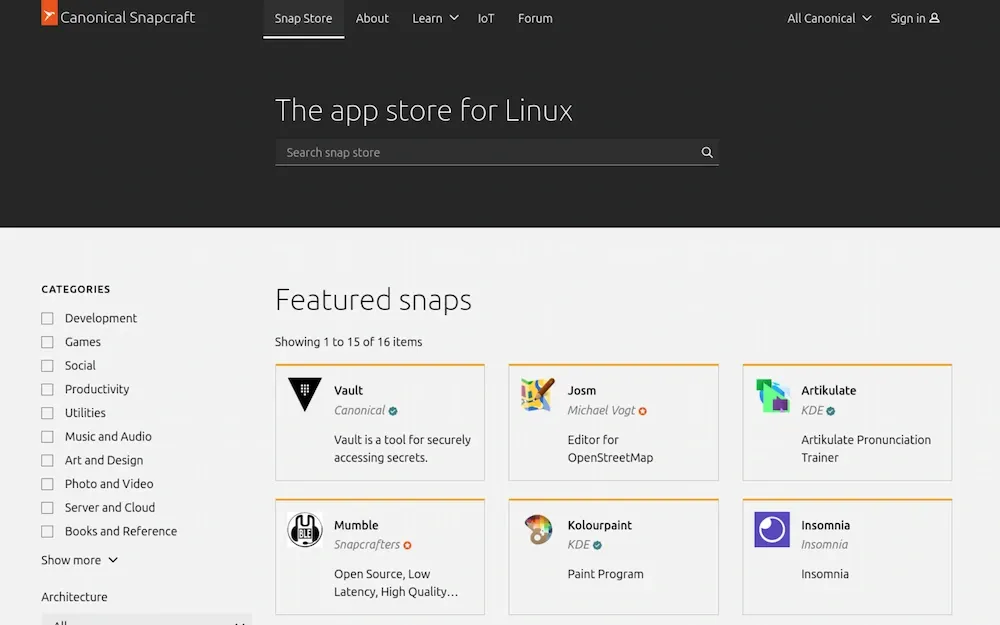
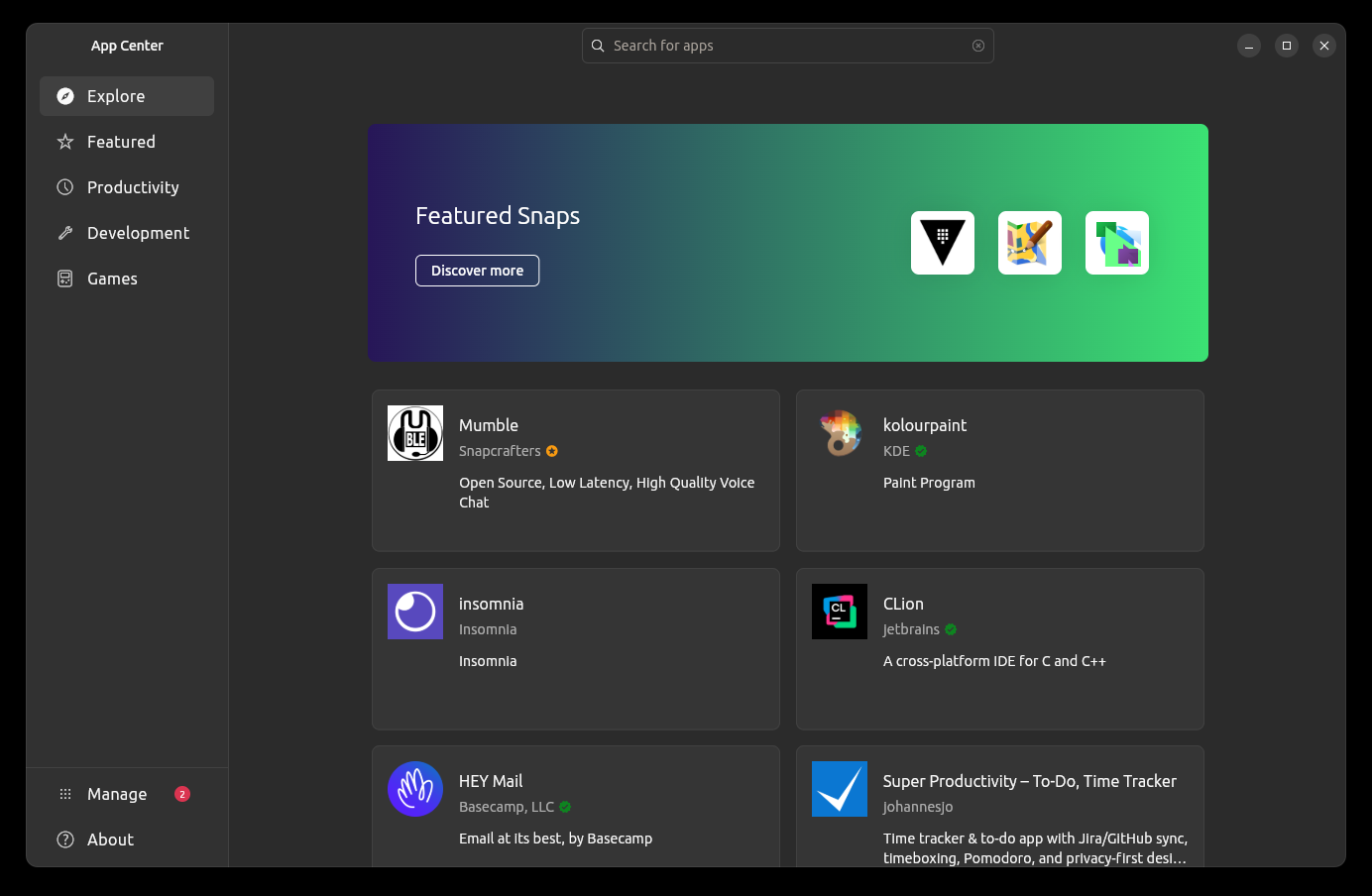
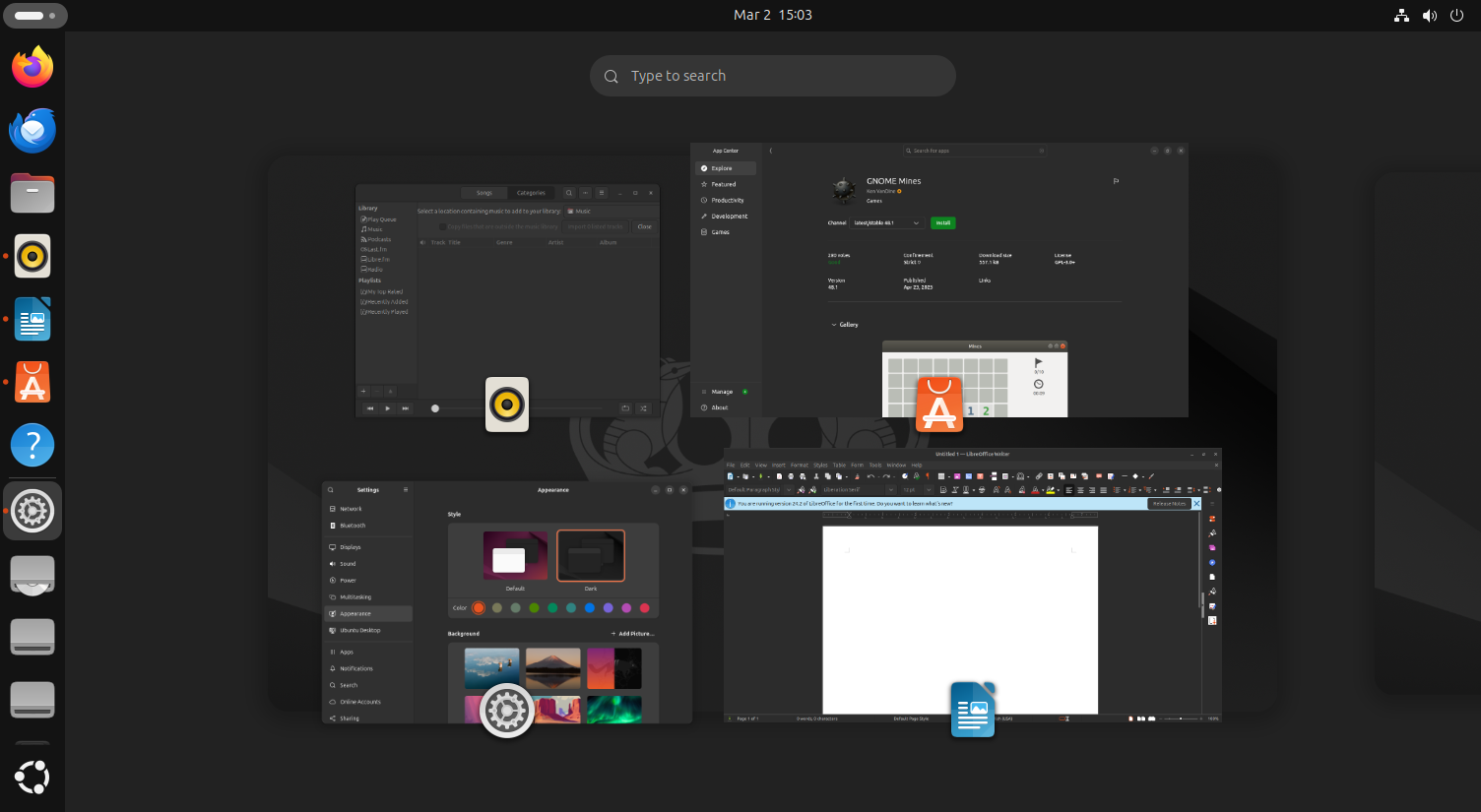
Ubuntu's App Center is the default "app store" for snaps
While “just getting work done” is one of Ubuntu’s hallmarks, that’s not typically what people think of when they think of snaps, and let’s be honest: snaps are a big part of why Ubuntu gets mocked. This criticism isn’t completely imaginary either. While the tech has come a long way, snaps still have some real-world challenges. But, the same can be said for just about any containerised packaging system. For the sake of fairness, let’s just get some of the remaining issues out of the way.
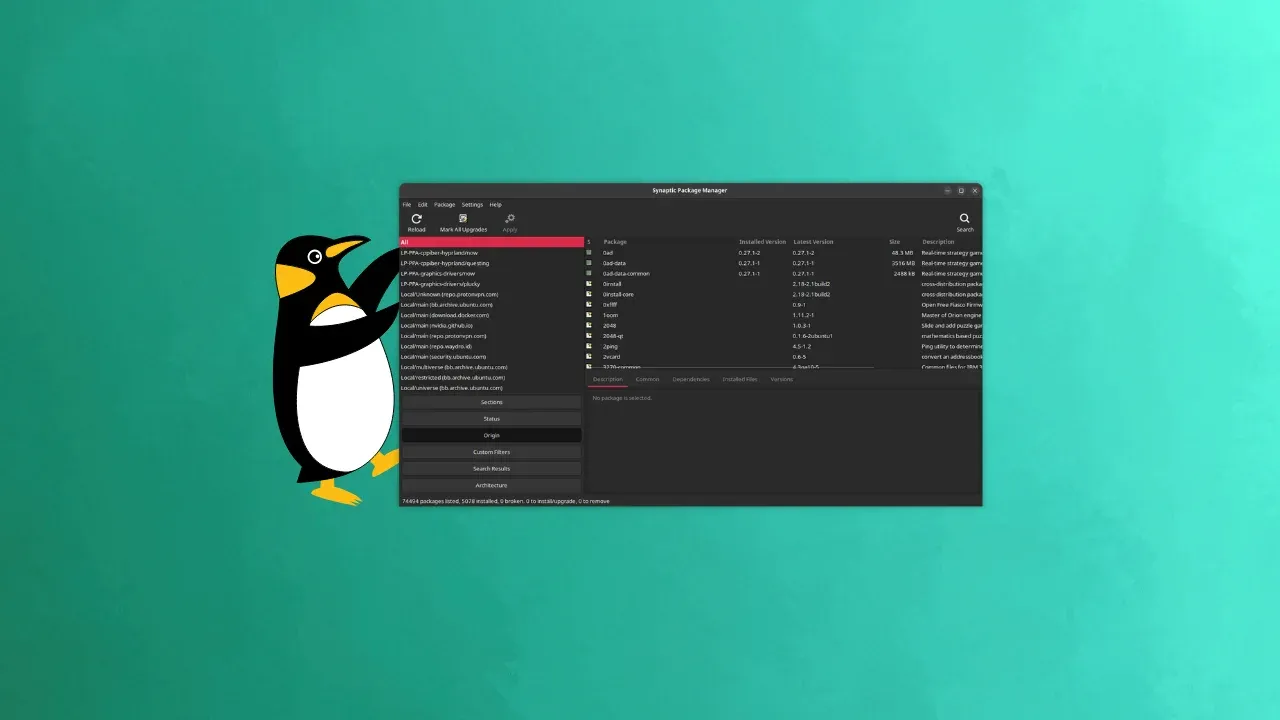
Theming inconsistencies still persist, especially if you are using an app built with a toolkit that your desktop isn’t built on. Snaps still take significantly more storage space than “native” packages, because they often depend on other “foundational” snaps. Also, there’s no open or decentralised software store, so we have to trust Canonical’s stewardship. These are real trade-offs, and it’s only fair to acknowledge them.
Usually, the discourse stops right here, as if “Snaps exist” is the same thing as “Ubuntu is unusable.” If I had a dollar for every time I’ve seen someone say “First thing I do is remove snap from the system”, I could end world hunger overnight. Yet, realistically, most people don’t choose an OS to make a statement about packaging decisions. They just want to be able to install what they need, do it quickly, keep it updated, and avoid breaking things in the process. Whether some in the community like them or not, snaps deliver on this promise.
By providing a consistent delivery mechanism for newer app releases, a simple rollback method and a clean way to clear app settings and data once an app is removed, snaps reduce dependency stress across different Ubuntu releases. For most types of software they simplify maintenance for developers and users alike. Plus, many of the issues that led to snaps being so heavily disparaged, such as slow startup times and terrible desktop integration, have been massively improved since their introduction, and continue to be improved with time.
Besides, even if you absolutely detest snap as a technology, Ubuntu is still flexible enough that you can make your own choices about where you get your apps and what package distribution formats you prefer. Case in point: most of the apps I use on my Ubuntu system today are Flatpaks and native applications, not because I don’t use snaps (I actually use quite a few), but just because that’s how most of the latest versions of the apps I need are currently packaged.
Why you can safely ignore the noise
Many of the arguments against Ubuntu these days are essentially identity- or philosophy- based, not practical positions. For most people, a better question is simply: what do you need your computer to do?
Ubuntu is still a strong choice if you’re new to Linux and want something straightforward, different from Windows and macOS, but familiar enough to not be a complete shock to the system. If you’re a developer seeking the friendly environment of a Linux-based workflow, choosing Ubuntu means you’ll have a system that matches the majority of guides and tutorials you’ll encounter online. The same is true if you work in DevOps or system administration.
The point is, whether you’re a casual desktop user or a seasoned denizen of SSH terminals, Ubuntu still meets the mark, offering stability, broad app availability, and the ability to Google a problem and find answers quickly.
Why it’s never going to be for everyone
Not everyone likes Ubuntu, and that's perfectly okay
It goes without saying, but Ubuntu can’t be everyone’s cup of tea either, and even some long-time users might find it no longer fits their needs. For instance, if you prefer ultra-minimal systems that let you build everything your own way, or even if you just want to avoid Canonical’s decisions on principle, Ubuntu won’t fit the bill, and that’s perfectly okay.
With the move to deliver more core components as snaps, it’s also understandable that some of us might be forced to choose other distros to avoid this fundamental change in direction.
What really matters here is that none of this is a matter of a moral judgement, though I’m sure some folks would argue otherwise (and hey, I respect it, even if I disagree). At the end of the day, it’s all about freedom and finding the matching tools to get the job done, whatever that means for you.
Final thoughts
Long story short, Ubuntu often gets the most backlash because it’s one of the most visible and durable targets. It’s a distro many of us have long outgrown, but it’s also the distro where we “cut our teeth” on everything Linux has to offer. It’s no surprise then, that it’s the distro many people now love to dunk on and poke fun at.
Love it or hate it though, Ubuntu remains. It’s still quietly doing what many people actually need, still serving its age-old role as many folk’s first foray into Linux, still pushing innovation and momentum across spaces where we need it most, and still helping the collective to gain market share. The work Ubuntu does behind the scenes may not always be exciting, but no doubt, it’s quite invaluable. It doesn’t have to be perfect, and sure, it would be nice to see it reclaim its former glory, even just for a bit of nostalgia.
But Ubuntu has earned its place among the Linux giants, and continues to prove itself every day. So maybe, just maybe, it doesn’t deserve our hate.
Debian's official tagline is "Universal Operating System". It's more than just a tagline: it's a deeper concept that underpins the very nature of Debian as a project.
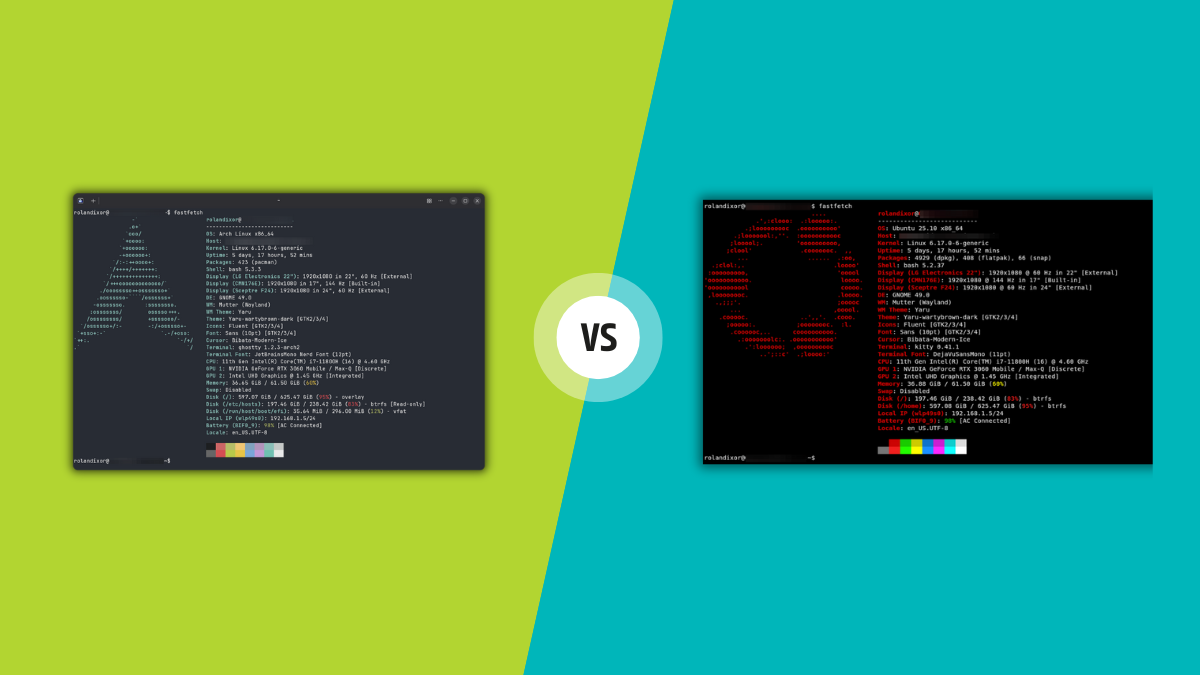
It's not that Linux became “GUI only”, but that the Linux desktop has become far more complete. The modern desktop we know today ships graphical tools that cover almost every common task in ways that are genuinely approachable.
While compatibility isn't perfect, it's sufficient for getting a feel of the program (if that's your desire) and even potentially for using it to do real work.
You don't always need to install an open source software on your desktop or self host in your homelab. I use some of my favorites from the comfort of a web browser.

 Connexion