Vue lecture

FCC Warns Montana FBO Over Unlicensed Radio Transmissions

A fixed-base operator at the Billings, Mont., airport has received a notice of unlicensed operation from the Federal Communications Commission.

At the Billings-Logan International Airport, Beacon Air Group provides services such as aviation fuel, aircraft ground handling and aircraft parking as part of its Fixed-Base Operator support.

FBOs commonly operate aeronautical radios to coordinate ground services with arriving and departing aircraft.

But the Denver office of the FCC’s Enforcement Bureau received a complaint of an unlicensed station operating in the VHF aircraft band on 128.825 MHz at the airport.

(Read the FCC’s notice of unlicensed operation.)

The station was causing interference with an entity licensed at the same location, according to the Enforcement Bureau.

On Aug. 7, an agent from the Denver office spoke with a representative of Beacon and the bureau confirmed that Beacon operated radios on 128.825 MHz as part of its fixed-base operator support at the airport.

But the commission’s records showed no license issued to Beacon for operating on the frequency there.

Beacon’s website lists its ARINC frequency at Billings as 128.82 MHz. A search of the FCC’s ULS database shows no records in Montana on either frequency.

The Enforcement Bureau warned that operating radio transmitting equipment without authorization is a violation of federal law and could subject Beacon to monetary fines and seizure of the equipment.

The transmissions must cease immediately, and Beacon has 10 days to respond to the commission with any evidence that it had the authority to operate.

[Do you receive the Radio World SmartBrief newsletter each weekday morning? We invite you to sign up here.]

The post FCC Warns Montana FBO Over Unlicensed Radio Transmissions appeared first on Radio World.

  •  

When It Comes to the Upper C-Band, Wireless Carriers Want More

Major U.S. wireless carriers like Verizon, AT&T and T-Mobile are aggressively lobbying the FCC to repurpose the entire upper C-band (3.98–4.2 GHz) for flexible-use wireless services, aiming to secure up to 180 MHz of additional spectrum for expanded capacity.

Observers say those companies want it all, top to bottom. Wireless industry association CTIA, for one, met with the FCC this month and put on the record that it wants the “maximum amount of spectrum” in the upper C-Band for full-power, licensed wireless deployments.

While carriers and other wireless service providers are anxious to grab the maximum amount of capacity, they face stiff pushback from broadcasters urging a limit of 100 MHz.

The FCC has issued a notice of proposed rulemaking to repurpose the 3.98–4.2 GHz band for flexible-use terrestrial services, with an auction targeted for 2027. The commission is mandated by Congress to take at least another 100 MHz for wireless services.

The National Association of Broadcasters said taking that much spectrum for terrestrial cellular services could disrupt vital content distribution services.

(This story focuses on filing by wireless entities. Read about NAB’s latest reply comments here.)

Data usage needs

Driven by the need for more mid-band spectrum to support 5G, and eventually 6G services, major wireless carriers are continuing their push for the maximum possible amount, aiming for the full 180 MHz.

The wireless carriers emphasized the importance of “maximizing” the amount of C-band spectrum to be repurposed. AT&T cited the historic growth in data usage by Americans that underscores the importance of the commission’s efforts in the proceeding to free up additional mid-band spectrum.

AT&T, in its comments, said that for the third year in a row, U.S. mobile network data usage demand grew approximately 35%, a historic surge and a pace that would nearly double the amount of data used every two years.

“Stakeholders broadly agree that the upper C-band will play a key role in 5G and beyond,” AT&T wrote.

Moving incumbents

Verizon focused part of its recent reply comments on the feasibility of moving incumbent users, including satellite audio and video services used by broadcasters, out of the upper C-band.

The broadband giant said comments filed in the proceeding confirm there is a feasible path for transitioning incumbents out of the spectrum, while ensuring they can receive “substantially” the same service that exists today.

Some existing space station operators, Verizon said, have detailed opportunities to reorganize and compress customers into a smaller segment of upper C-band spectrum, while others could be moved to Ku-band spectrum.

It also pointed to commenters who said fiber and internet protocol distribution technologies present effective alternatives for services provided today.

Transition plan

Verizon and others said that Fixed Service Satellite providers like SES – the largest upper C-band satellite operator, responsible for over 95% of all video content in the band – have already outlined a plan to clear 180 megahertz of the band (160 Megahertz for terrestrial wireless service and 20 Megahertz for a guard band), but that full transition could take years to plan.

Therefore, several commenters suggested a plan that would take several stages to complete, with the 100 MHz mandated in the Big Beautiful Bill being the first implemented in 2027.

Once the FCC makes a final determination on how much spectrum to repurpose, wireless carriers urged the commission to follow a similar regulatory framework of the lower C-band repurposing and auction in 2020, a transition that booted broadcast services to the upper section of C-band.

T-Mobile said in its comments: “The record in the proceeding reflects near-unanimous support for such a reallocation and a regulatory framework for terrestrial mobile use that is harmonized across the C-band, including, among other things, applying the licensing and technical rules adopted for the lower C-band (3.7–3.98 GHz) to the upper C-band.”

CTIA meets with the commission

In the latest round of comments collected by the FCC this week, CTIA shared what it wished for in a meeting with FCC officials in February: making available the “maximum amount of upper C-band spectrum” for licensed, or exclusive, full-power terrestrial wireless deployments.

CTIA also requested a “clear, unwavering schedule” for wireless licensees to begin their deployments in the near term following the auction and harmonizing the lower and upper C-band technical rules, as appropriate.

CTIA said the spectrum is also needed to support AI innovation.

“The fact remains that data demand continues to grow year after year and additional spectrum will be needed to support this continued growth, particularly as AI begins to scale, with AI applications projected to drive uplink traffic 20 percent higher than it would be with existing applications,” CTIA said.

Ericsson, the multinational networking and telecommunications company, said maximizing the upper C-band for wireless helps promote national security of the United States.

“Repurposing the upper C-band,” Ericsson said, “will promote national security through the advancement of secure and trusted communications networks and equipment.

“As the commission is well aware, the dry spectrum well of the past several years created a leadership vacuum that allowed China to advance its own economic interests and security prerogatives at home and abroad through exports of its equipment to other countries,” it commented.

Meanwhile, the Competitive Carriers Association said it is very much in favor of utilizing the upper C-band for 5G and future 6G endeavors, but emphasized the need to make it fair for small and rural carriers when auctioning off the spectrum for wireless services. It questioned whether previously designated bid credits for small and rural carriers are still adequate.

“CCA agrees that mid-band auctions present unique challenges for rural providers. Mid-band spectrum offers the optimal balance of coverage and capacity for rural deployment,” the group said. “However, rural providers frequently face substantial capital constraints when competing against nationwide carriers with exponentially greater financial resources.”

Next-generation satellite

Some commenters, including Space X, suggested reserving portions of the upper C-band spectrum for next-generation satellite services (Direct-to-Device) rather than solely for terrestrial cellular services.

T-Mobile and the other wireless carriers told the commission to decline those proposals seeking to introduce mobile satellite services or shared-use mechanisms in the repurposed upper C-band.

There are also some technical challenges to overcome once spectrum for FSS earth stations is shifted elsewhere, according to multiple filers. The upper C-band is adjacent to the 4.2–4.4 GHz band used by radio altimeters in aviation, requiring careful management of interference risks, according to Boeing and several aeronautical entities.

In addition, several commenters pointed to the Federal Aviation Administration’s recent notice of proposed rulemaking concerning upgrading radio altimeters to withstand interference from adjacent wireless operations. The timeframe for implementing those upgrades is uncertain, according to observers.

CTIA in its comments hinted at a need for collaboration between government agencies to accomplish the goal of repurposing the spectrum for flexible-use wireless services.

“The coordinated FCC and FAA proceedings, buttressed by congressional action, standards development and cross-industry collaboration, have positioned all stakeholders for timely execution,” it said.

[Do you receive the Radio World SmartBrief newsletter each weekday morning? We invite you to sign up here.]

The post When It Comes to the Upper C-Band, Wireless Carriers Want More appeared first on Radio World.

  •  

NAB Urges FCC to Tamp Down Reallocation Plans for Upper C-Band

The National Association of Broadcasters knows the FCC is going to reallocate 100 MHz of the upper C-band, which it is legally mandated to do.

But the association warns that any clearing beyond that minimum threshold poses a significant risk to the nation’s critical broadcast infrastructure.

In its newly-filed reply comments, NAB contended that the upper C-band (3.98 to 4.2 GHz) is currently optimized and lacks the “headroom” for extensive clearing.

We’ve also covered NAB’s previous filings during the comment filing period tied to the Notice of Proposed Rulemaking the commission opened in November.

Read one of those stories here.

The deadline to file reply comments with the commission in Docket 25-59 was on Wednesday.

“Upper C-band is mission-critical to broadcasting and is already operating at its practical limit,” NAB told the commission.

“Insatiable” wireless carriers

The upper C-band is used by earth station operators, including broadcasters, whose operations have already been curtailed by prior auctions of the lower C-band to wireless operators.

The commission is required by statute to auction a minimum of 100 MHz of the upper C-band (2.98 – 4.08 GHz) spectrum no later than July 2027, but the FCC has proposed auctioning up to 180 MHz through competitive bidding.

The spectrum auction is expected to generate billions of dollars.

But NAB contended that outside of the “insatiable nationwide wireless carriers and a small subset of proponents focused on speculative future uses,” commenters in the docket overwhelmingly caution that additional clearing would jeopardize broadcast distribution, increase systemic risk and undermine public-interest services.

Even with the loss of 100 MHz of spectrum, NAB said a repack will inevitably cause some disruption to incumbent users in part because compressing services into less spectrum creates a “Tetris-like” problem.

Keep it in the C-band

SES, the major provider of C-band services to broadcasters in the U.S., previously stated that most incumbent users can be repacked quickly into a reduced C-band if reallocation is limited to 100 MHz.

In addition, repacking all or most users within C-band will be far less disruptive than forcing incumbents out of the upper C-band into other satellite spectrum or alternative platforms, NAB told the commission.

NAB rejected claims from wireless companies that other technologies are suitable “one-for-one” replacements for C-band spectrum. Those alternative platforms include IP, fiber and Ku-band, which broadcasters and satellite operators say “are neither universally available nor functionally equivalent, particularly for point-to-multipoint distribution, rural service, and live event coverage.”

“Relocation out of C-band presents far greater uncertainty. The costs to transition may be many multiples higher,” it said.

NAB said two other major stakeholders in this proceeding – the satellite operators and the aviation industry – agree that clearing any portion of the upper C-band will require significantly longer timelines than the lower C-band transition.

The FCC proposed to clear incumbent earth station operators from the band over a five and a half-year period and, as with the prior migration to the Upper C-Band, the commission will reimburse incumbent earth station operators for their transition costs via money raised from an auction of the spectrum.

The FCC previously stated there are approximately 20,000 registered earth stations used by radio and TV broadcasters to receive satellite transmissions.

Substantially the same

NAB emphasized the FCC should follow precedent set in the order that forced incumbents to relocate from the lower C-band in 2020.

“The Lower C-band Order repeatedly stated that incumbents would be provided substantially the same service, which must again be assured,” NAB wrote in its comments.

“The commission previously rejected an all-fiber (or nearly all-fiber) deployment as carrying a bevy of challenges,” the association continued. “Ku-band, while a valuable improvement over terrestrial fiber, remains more susceptible than C-band to weather-related degradation and would require years of satellite launches and costly retrofits to approach current C-band reliability.

In fact, NAB pointed to the Communications Act, which it says does not permit the commission to substitute “theoretical alternatives for actual continuity of service,” according to NAB.

Merely accessing a different technology that performs adequately under ideal conditions is not acceptable, NAB asserted. It said the commission has long recognized that the act does not permit license modifications that affect a “fundamental change” in a licensee’s authorization.

Section 316 permits license modification, but not fundamental alteration of the essential rights conveyed by an FCC authorization, according to the recent filing.

NAB also asked the commission to implement a direct-pay or upfront reimbursement mechanism to replace the previous framework of the lower C-band transition where operators had to front costs and wait years for repayment.

“Commenters consistently warn that further upper C-band clearing beyond 100 MHz would jeopardize the reliability of the nation’s video distribution infrastructure, impose disproportionate harm on small entities, and undermine services the public relies upon for news, emergency information, and live events,” NAB concluded.

Comments in Docket 25-59 can be read at www.fcc.gov

[See Our Business and Law Page]

The post NAB Urges FCC to Tamp Down Reallocation Plans for Upper C-Band appeared first on Radio World.

  •  

Connecticut LPFM Reaches FCC Agreement Over WBLS Interference

WNHA(LP)

An LPFM operator in southern Connecticut has entered into a consent decree with the FCC after it was found to be operating above its licensed transmitting power and falsely certifying that it was in compliance.

107.5 WNHA(LP) is licensed to New Haven and operated by Alma Radio, running Spanish-language Christian programming. It has been silent under a special temporary authority since June.

The Media Bureau had launched an investigation into WNHA’s technical facilities following a petition filed by an entity called the WBLS Listeners’ Coalition.

The consent decree resulted in the commission terminating its investigation. But it admonished WNHA for falsely certifying that it was, in fact, operating with its proper transmitting power output. As a result, WNHA must revert to its previously licensed parameters and submit a full compliance report.

There is no financial forfeiture as part of the agreement.

WBLS listener coalition

The issue traces back to February 2022, when WNHA filed an application for a construction permit to relocate its antenna to a higher space on its tower, which lowered its authorized effective radiated power to 18 watts. The commission granted the application that February.

According to the Media Bureau, a few weeks later, the “WBLS Listeners’ Coalition” filed a petition for reconsideration of the grant. 107.5 WBLS(FM), the same-channel New York City R&B station, is approximately 65 miles southwest of New Haven, but it places 54 dBu coverage into much of neighboring Fairfield County.

The coalition claimed WNHA was operating at a power higher than authorized, causing interference to WBLS throughout towns such as Fairfield, Easton, Trumbull, Monroe and Milford. Its study concluded that the station was operating with approximately 975 watts of power.

(Read the details of the FCC’s consent decree with Alma Radio.)

Three years later in February 2025, WNHA responded, stating it was operating at its authorized ERP. However, according to the commission, one of its supporting documents showed the station was actually running with 50 watts of transmitter power output. Based on its documented antenna, this would have resulted in an ERP above 18 watts, according to the commission. 

That discrepancy led the Media Bureau to issue WNHA a letter of inquiry, requiring complete technical information on its transmitter and antenna.

The WBLS Listeners’ Coalition then submitted a supplement that included photos of WNHA’s transmitter and a statement from an engineer, Dave Anderson. 

The coalition provided a photo that it said showed the station was using a two-bay antenna rather than the single-bay system authorized in its 2022 license. Thus, the coalition asserted, WNHA violated both the antenna type and maximum ERP set out in its authorization. The coalition estimated that a two-bay installation with the deployed coaxial cable would result in an ERP of approximately 47 watts.

The FCC granted the coalition’s petition in June. Some back and forth resulted, eventually leading to WNHA acknowledging that the station had operated at 50 watts TPO “for a brief time” in 2022, though it denied its earlier “misstatement” was intentional.

Ultimately, the FCC agreed to end its investigation and return the station’s 2017 license to active status in exchange for Alma Radio admitting to the investigation’s factual findings.

Alma Radio is now required to relocate its antenna to the previously authorized antenna placement and adhere to a maximum permitted ERP of 66 watts at a height of approximately 65 feet.

Before broadcast resumption, the station must submit and receive approval for a comprehensive compliance report verifying the installation with photos, calculations and tower owner confirmation.

[Do you receive the Radio World SmartBrief newsletter each weekday morning? We invite you to sign up here.]

The post Connecticut LPFM Reaches FCC Agreement Over WBLS Interference appeared first on Radio World.

  •  

FCC Moves Ahead With NCE Translators

The FCC now has set in motion plans to open a window for noncom broadcasters to apply for new FM translators, the first such window ever.

We told you about this pending action earlier. After a unanimous vote Wednesday, the FCC officially has embarked on the plan, though it’s taking comment on certain details.

It said this initiative is intended to support noncommercial broadcasting and preserve the airwaves for future local services.

Chairman Brendan Carr said in a prepared statement: “This will particularly benefit educational broadcasters, to allow them to extend the programming their stations provide to the public and reach remote, rural and underserved communities.”

The chairman called it a “unique” window and an opportunity to promote the continued growth of noncom service in the FM band.

As of December 2025 there were 4,755 noncom FMs in the United States, according to FCC data, compared to about 2,140 NCE stations in the year 2000. NCE stations consist primarily of public broadcasters, college radio stations and religious broadcasters.

Dates for the window have not been set but it is expected in late 2026.

The window will be an opportunity for noncommercial FM, low-power FM and noncommercial AM stations to obtain translators and extend the services they provide, the FCC said.

Full details have yet to be released, but Media Bureau officials said the FCC tentatively has decided to tighten down the requirements, though it is asking for comments.

The window would be limited to applications for new NCE FM translator station construction permits in the reserved band, which is FM Channels 201–220, better known as 88.1 to 91.9 MHz. The plan would exclude applications for major modifications to existing translators in that band.

The commission also plans to limit applications nationally to 10 per applicant, to avoid “speculative filings and protect spectrum for local radio services.” Any entity filing more than the maximum would trigger a review and the Media Bureau would retain the applications that were filed first, dismissing others that exceed the limit.

The commission noted that it has imposed eligibility restrictions and limits in prior windows to comply with the Local Community Radio Act of 2010, which requires it to ensure that licensing is available for all secondary services.

It noted that a 2003 FM translator window generated more than 13,000 applications and left thousands pending for years. The mass filings forced it to impose remedial processing rules later to protect LPFM spectrum.

Filing limits in the noncommercial full-power windows of 2007 and 2021, the FCC said, helped reduce “daisy chains” of mutually exclusive filings and allowed applications to be processed efficiently.

A draft of the public notice had indicated that tribal LPFM entities would be limited to four applications nationwide, while other LPFM applicants would be limited to two. Presumably those caps are in the final notice, which had not been released at this writing.

A period of public comment will be opened once the public notice (MB Docket 26-20) is published in the Federal Register.

The post FCC Moves Ahead With NCE Translators appeared first on Radio World.

  •  

Licenses at Risk in Michigan, Georgia for Unpaid FCC Fees

This week, the FCC issued orders to pay or show cause to two radio station licensees — one in the Upper Peninsula of Michigan and the other in Georgia — citing unpaid regulatory fees.

In Michigan, the commission has initiated proceedings to revoke the licenses held by Sovereign Communications due to unpaid fees, interest and penalties it said total approximately $37,000 for the years 2021 through 2024.

The affected stations in northern Michigan are 1400 WKNW(AM), 1230 WSOO(AM), 101.3 WSUE(FM) and 99.5 WYSS(FM) in Sault Ste. Marie; 93.9/1450 WNBY(AM/FM) in Newberry; and 105.5 WMKD(FM) in Pickford.

The commission noted that Sovereign has approximately $9,200 available from a prior overpayment that it can apply toward this debt.

In Georgia, meanwhile, Core Communications North faces similar scrutiny regarding two stations.

North of Atlanta, 94.5 WIPK(FM) in Calhoun owes approximately $21,000 in regulatory fees dating back to 2015. It missed payments each year since then, except for 2023, according to the Media Bureau.

Its sister station, 93.5 WMRG(FM) in Morgan, which is south of Columbus near Albany, owes approximately $6,500 for fees covering 2015, 2020, 2021, 2022 and 2024.

Both Sovereign Communications and Core Communications North have 60 days to file evidence of full payment with the Media Bureau or show cause why the payment should be waived or deferred. Failure to comply within this timeframe may result in license revocation, the commission said.

Under FCC rules, the annual deadline for regulatory fees is typically in late September.

Late or incomplete payments incur a mandatory penalty equal to 25 percent of the unpaid fee, along with additional interest and administrative costs that accrue until the debt is paid in full.

[Related: “Radio Station Annual Fees Decline for 3rd Straight Year”]

The post Licenses at Risk in Michigan, Georgia for Unpaid FCC Fees appeared first on Radio World.

  •  

FCC Issues Clarification on FRN Update Procedures

While radio license holders should make every effort to keep their contact information registered with the FCC up to date, they are not under threat of a $1,000-per-day penalty for failing to do so.

That is according to a public notice the commission issued Friday. The confusion stems from a robocall mitigation database proceeding it released the day prior.

In that proceeding, the commission announced that it had received approval to require every holder of an FCC Registration Number (FRN) to update their contact information within 10 business days of a change or face a $1,000-per-day fine.

This announcement alarmed broadcasters, as all corporate and individual owners of station licenses in the FCC’s LMS database are tied to FRNs.

The panic led to a surge in traffic on Friday that overwhelmed the FCC’s website as licensees rushed to verify their information, according to Scott Flick of Pillsbury’s Comm Law Center, who has been following the FRN-related developments.

Some licensees even interpreted the notice to mean that if they didn’t log in to update their FRN within 10 days of the FCC’s notice, regardless of whether or not any underlying change occurred to their contact information, they would face the forfeiture.

The FCC’s late Friday public notice walked back this interpretation. The commission clarified that the new, steeper base forfeitures — $10,000 for false information and $1,000 per day for failure to update — apply only to RMD filers, such as voice service providers.

“The robocall mitigation database report and order did not address or change any forfeiture amounts that may be associated with failures to update the CORES information by non-RMD filers,” the update read.

Flick called the update a “win.”

No bouncing emails

But despite the relief, the underlying requirement is still in effect. All entities with an FRN — including radio stations — must update their CORES contact information within 10 business days of any change, such as a change in address, email or contact person.

John Broomall of Christian Community Broadcasters told us that, while he always advises for his clients to keep contact information up to date, this is the first time he can recall such a focus on it from the commission.

But for Broomall, it’s a necessary practice.

“When a consultant such as myself emails clients to ‘keep their info current,’ and the emails bounce, that is a conundrum,” he surmised.

While broadcasters are safe from the new “robocall” penalties, maintaining accurate FRN data remains a regulatory necessity. As Flick noted, if these penalties can be levied against telecom providers for data lapses, it creates a potential pathway for broadcaster fines in the future.

[Do you receive the Radio World SmartBrief newsletter each weekday morning? We invite you to sign up here.]

The post FCC Issues Clarification on FRN Update Procedures appeared first on Radio World.

  •  

FCC’s Gomez: Fewer Owners Means Fewer Voices

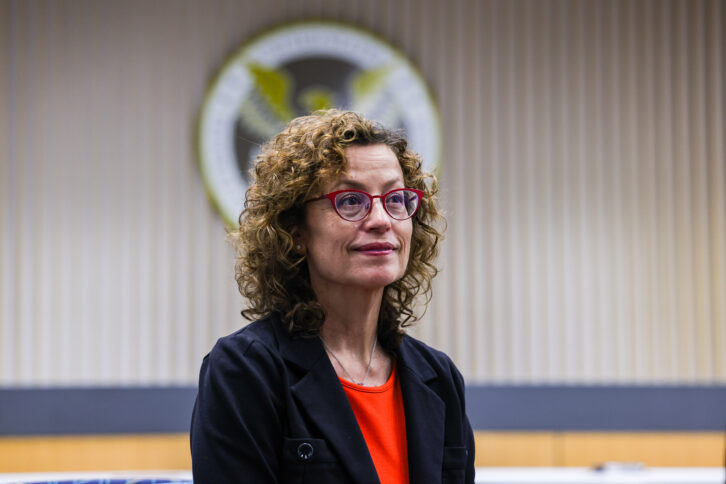
Anna Gomez at the FCC headquarters in Washington, D.C. on July 22. Credit: Valerie Plesch/For The Washington Post via Getty Images

The State of the Net Conference annually focuses on internet-related policy. But for FCC Commissioner Anna Gomez, the potential rapid consolidation of media ownership was a topic too important to ignore.

In her speech, Gomez acknowledged the financial realities that affect broadcasters today, almost 30 years to the date of the passage of the Telecommunications Act of 1996.

But she argued that easing or removing ownership limits for broadcasters should not be considered as the only solution, and in fact, she believes it would end up exacerbating some of the same problems proponents claim it solves.

Most of the commissioner’s comments were geared toward the local TV ownership rules, but the FCC is currently reviewing all of its local ownership rules — including for radio, as we have covered. The National Association of Broadcasters, and other radio groups, support a total removal or easing of current caps, believing that such reform is needed to merely keep radio afloat against big tech.

Gomez argued that ownership concentration ends up hurting consumers the most.

“If the FCC continues down its current path, it risks repeating the same mistake that hollowed out local newspapers, only this time in broadcast television,” she warned.

Blurred lines

Speaking at the event today, the lone Democratic commissioner explained that because the lines once separating communications markets no longer exist, preserving local journalism is more important than ever.

“Even when people get their news through social media, search engines or streaming platforms, much of the original reporting still comes from local journalists,” Gomez said.

Using the newspaper industry as an example, she said there is clear evidence of what happens when local journalism weakens.

“Newspapers were not eliminated because people stopped caring about the news,” Gomez said. “They were hollowed out through consolidation, cost cutting and the loss of advertising revenue to digital platforms, as ownership decisions were increasingly made far from the communities they affected.”

Gomez worked at the FCC three decades ago when Congress passed the Telecommunications Act of 1996. She said that back then, even with the easing of limits the act allowed, part of its implementation was ensuring that no single voice, company or interest could dominate what communities see, hear and rely on for information.

She acknowledged that broadcasters today are dealing with declining revenues from advertising, digital platform competition and changing consumer habits.

But when consolidation becomes the default solution, Gomez said, it often accelerates “the very decline it is supposed to address.”

“Fewer owners does not just mean fewer balance sheets,” Gomez explained. “It means fewer independent editorial decisions and fewer local perspectives.”

Gomez cited a recent email she received from a viewer stating that a single corporate owner controls or operates most of the major broadcast TV affiliates in their local market. While it might appear that viewers in that market have more options, many of those stations share reporters, crews, anchors and often the same stories, she explained.

She also pointed to a recent poll revealing that nearly three out of four likely voters oppose large broadcast corporations buying or merging with local TV stations.

We reported on a recent poll cited by NAB, which demonstrated the opposite.

Regulatory power

The FCC itself, Gomez said, has used its power to pressure coverage in ways that are favorable to President Trump’s administration, including a recent public notice sent to ensure “equal time” for late-night TV programming. FCC Chairman Brendan Carr later clarified the notice was not geared toward talk-radio shows.

“These billion-dollar media companies have significant business before the FCC. They need regulatory approval for transactions, and they are actively seeking to reduce regulatory guardrails so they can grow even larger,” she said.

“That reality leaves local stations trapped in the middle, as corporate owners weigh regulatory risk against editorial independence and impose their will and their values on communities they may never meaningfully engage with.”

Gomez reminded the audience that Congress established a national TV ownership cap to prevent excessive concentration that threatens competition, localism and viewpoint diversity.

“It is not a suggestion,” she explained. “It is the law.”

She noted that one of the clearest examples of the agency ignoring this is its openness to transactions that would further entrench national dominance, including a potential merger between two major broadcast groups in Tegna and Nexstar that she argued would violate Congress’s restriction.

“The FCC’s responsibility is not to manage consolidation, but to steward a media ecosystem that serves consumers and communities in the real world,” Gomez concluded. “If we keep that focus, we can meet this moment without sacrificing the voices that make our democracy work.”

Comment on this or any article. Email radioworld@futurenet.com.

The post FCC’s Gomez: Fewer Owners Means Fewer Voices appeared first on Radio World.

  •  

What Should the FCC Consider in an NCE Translator Window?

The FCC has released the details of its proposed noncom educational band (88.1–91.9 FM) translator filing window, of which its commissioners will hold a vote to open a public notice on Feb. 18.

But are there other considerations it should make before proceeding?

Consulting engineer Edward (Ted) Schober is getting his opinion in early and he has laid out a detailed list of items he said the commission should consider that he filed in prior to a comment period that would come if the commission, as expected, approves the notice.

Schober felt his framework would enhance both the public interest and equitable distribution of authorizations.

Under the current plan the FCC has put forth, an eligible applicant for new FM translator construction permits for noncom educational stations in the reserved band would have to be a licensee or permittee of an existing NCE FM or noncommercial AM radio broadcast station or LPFM. Any proposed translator would rebroadcast the primary channel.

The FCC proposes a limit of 10 applications nationally for each applicant.

For LPFMs, however, the limits are lower. According to the proposal, a Tribal LPFM would be limited to four translator applications, while all other LPFMs would be limited to two translator applications.

Schober believes the commission’s effort is laudable in that the proposal seeks to avoid the landslide of applications for FM translators distant from the primary station.

(Read Edward Schober’s comments filed to the FCC.)

But he asked the FCC to consider other options that he felt would guarantee the public interest is served, its staff is not overwhelmed and the applications to be granted are equitably reviewed.

A fair count

Schober’s first suggestion is that if an applicant has existing FM translator licenses, either in the NCE band or the non-reserved band, the total count of existing translators should be included in the translator cap for this window. That would, naturally, render some licensees ineligible.

In addition, he said that when a licensee entity has a majority of its board or other governing body also serving as the majority of another licensee, both or all the entities should be considered as a single entity.

Schober also proposed that if an applicant wished to surrender one or more existing FM translator authorizations, conditioned on a grant of a translator authorization in this new window, the entity should be permitted one additional translator application for each translator license or LPFM license surrendered.

He told the FCC he believes applicants should be prohibited from transferring existing translators or the primary station to a different party in order to increase the number of NCE FM translator applications eligible to file in this window.

Schober, who has been providing engineering counsel for hundreds of commercial and noncommercial AM, FM and translator stations for the past 45 years, said since LPFM stations are designed to provide service to a specific local area, and not provide wide area coverage, perhaps there should be limitations to their translator ambitions.

For example, he said that a translator should be denied if its proposed 60 dBu coverage extended more than approximately 30 miles from the LPFM’s own 60 dBu contour, with the exception of Tribal and public safety entities.

Tiebreakers

Observers have wondered if the FCC might modify its existing rules to consider mutually exclusive applications, or where two or more applications can’t be granted.

Schober had several suggestions in such scenarios for NCE translator applications.

  • When mutually exclusive applications are tendered, the distance from the FM translator’s 60 dBu contour to the primary station’s 60 dbBV contour (up to approximately 30 miles, with zero distance most preferable) should be the primary tiebreaker between the applications.
  • If a noncom full-power station or an LPFM station F(50,50) 60 dBu or AM 2 mV/m contour serves only a portion of an urbanized area, and a proposed new NCE FM translator’s F(50,50) 60 dBu contour serves a portion, or all, of that same urbanized area, the distance between service contours should be considered zero — or given higher priority.
  • Mutually exclusive applications with greater distance than 30 miles between the proposed and primary station contours should be withheld until all the more local applications are granted, then the remaining applicants given an opportunity to amend.
  • Fill-in translator applications should be evaluated as having zero distance between primary and translator contours, provided that at least half of the fill in translator’s F(50,50) 60 dBu contour is shown to have primary station service of less than 70 dBu contour using the Longley-Rice model.

The commission could assign whatever weight it chooses to assign to fill in FM translators that will carry HD-2, HD-3 or HD-4 programming of the primary station, Schober wrote.

Special cases

Schober proposed that Tribal entities and public safety should be permitted any number of NCE FM translators whose 60 dBu contour remain at least 90% within their reservation or area of jurisdiction, provided they have no other NCE FM translator applications that are outside the physical area of jurisdiction or responsibility.

Applicants for new FM translators within the window should be exempt from the cap if all the applications, and the principal community of the primary station are within the same minor insular outlying area, provided the applicant has no applications outside that minor outlying area. That includes applications in the USVI, Guam, Northern Mariana Islands and American Samoa.

For the purpose of greatest frequency utilization and efficiency, he said that waivers should be granted to authorize NCE FM translators co-channel to the primary station, or to other co-channel NCE FM translator applications repeating the same primary station, provided that the F(50,10) 54 dBu of the new NCE FM translator remains within the F(50,10) 40 dBu contour of the primary station.

These should be conditioned that all other stations are fully protected, and proven FM synchronization methods must be used, Schober wrote.

“The nature of noncommercial educational FM stations does not entail the competitive issues that are raised with commercial broadcast stations, so there is no controversy concerning the expansion of the service contour of NCE FM stations,” he wrote in the proposal.

The commission has already said it will not accept applications for major modifications to existing NCE reserved band translators.

If the FCC adopts the proposal at its Feb. 18 meeting, a comment period will commence once the notice is printed in the Federal Register.

[Do you receive the Radio World SmartBrief newsletter each weekday morning? We invite you to sign up here.]

The post What Should the FCC Consider in an NCE Translator Window? appeared first on Radio World.

  •  

Petition Would Ease a Short-Spacing Restriction

A new petition before the FCC seeks the elimination of a section of the rules that pertains to short-spaced FM assignments.

Consulting engineer Charles Anderson wants the FCC to be able to accept applications that specify a short-spaced antenna location for which minimum distance separations are not met.

Anderson says the current language is outdated given the maturity of the band. He thinks the FCC should shift its allocations priority to improving existing facilities.

The relevant part of the rule specifies an “absolute minimum distance” for commercial FM stations, below which no amount of power reduction or signal contour overlap protection may be used to site an antenna.

The rules allow commercial FMs to request sites that are “short-spaced” to other stations by protecting existing service from interference through specific “contour protection” requirements, ensuring the new station’s predicted interfering signals don’t overlap with protected contours of other stations.

Anderson says the rules often allow transmitter site flexibility, especially in congested areas, but that the troublesome subsection prohibits the FCC from accepting applications that specify a short-spaced location for which stated minimum distance separations are not met.

It’s a “strict go/no-go limitation,” he writes. But throughout his years assisting broadcasters to improve their facilities, the “limitations in subsection (e) to §73.215 are the major impediment to existing facilities utilizing directional antennas and contour protection to move to locations that better serve their market areas.”

In many cases, he continues, broadcasters are seeking to relocate to existing towers when sites are lost, or when it is not economically viable to replace aging towers or sustain existing land and tower leasing rates inflated by wireless services.

Andreson calls it noteworthy that reserved-band stations — some 41% of FMs in the country — have never been subject to the restriction on the use of contour spacing.

“While painfully obvious to broadcast engineering professionals, it is useful to observe that there is no inherent nor even significant difference in FM propagation and reception for radio stations in the 88 to 92 MHz reserved portion of the FM band for which the subsection (e) limitation does not apply, and for radio stations in the 92 to 108 MHz non-reserved portion of the FM band for which subsection (e) does apply.”

He says broadcasters are often faced with the difficulty and expense of constructing new towers, because the restrictions frequently have blocked the use of a station’s existing tower for upgrades or the use of other towers when sites are lost or become prohibitively expensive.

Anderson cited an example of a rural Alabama broadcaster being denied a 0.44 km (1,441 feet) waiver in order to upgrade from Class A to C3 at the station’s licensed site even though there was no prohibited overlap.

“Acquisition and tower construction for a new site were financially prohibitive and the expanded 60 dBu service to an additional 58,820 listeners, a 192% increase, was thwarted. In many other cases stations have lost tower sites and the availability of alternate towers was severely limited” by the subsection rule.

The directional antenna 15 dB maximum to minimum rule and the 70 dBμ city-grade coverage rule provide adequate protection from extreme short-spacings, he told the FCC.

In his filing Anderson describes himself as a “heritage” broadcast engineering consultant, adding in a footnote that he has prepared the engineering portions of more than 1,000 FCC applications, engineering exhibits and petitions over 45 years.

The timing of his petition coincides with Chairman Brendan Carr’s “Delete, Delete, Delete” initiative seeking to do away with outdated rules and regulations.

The post Petition Would Ease a Short-Spacing Restriction appeared first on Radio World.

  •  

FCC Will Create a “Foreign Adversary Control System”

Two items involving foreign ownership that were adopted by the FCC last week will have an impact on broadcasters.

Attorneys Gregg Skall and Dennis Corbett of Telecommunications Law Professionals have posted details to help stations understand the implications.

First, stations will have new attestations to file and a new portal to file them in.

The commission will require broadcast licensees, among others, to file these attestations regarding whether their ownership structure involves “foreign adversary control.” That term for the FCC refers to people or organizations from, among others, China, Cuba, Iran, North Korea and Russia.

Skall and Corbett write that the commission is categorizing each type of license and permit into one of three schedules. Broadcasters will be required to enter certain ownership information into a new consolidated portal called the Foreign Adversary Control System. The attestations and additional disclosures will be made available to the public.

The portal has not been established yet, nor have due dates been announced.

The FCC also streamlined and clarified the foreign ownership rules for broadcasters and other FCC licensees that file petitions for declaratory ruling under Section 310(b) of the Communications Act.

These are petitions from entities with foreign ownership in excess of regular limits who want approval to hold certain regulated licenses, including broadcast licenses. In the order, the FCC codified its practices and explained how these rules affect the processing of broadcast license applications and how they apply to non-commercial, educational and low-power FM stations.

Read the Skall and Corbett blog post.

The post FCC Will Create a “Foreign Adversary Control System” appeared first on Radio World.

  •  

FCC Cites Errors in Dismissing Fla. LPFM Application

The FCC says an LPFM hopeful failed to respond “fully and accurately” to a request for more information, so it has dismissed its application for a station in Hudson, Fla.

The commission rejected the application from Money Matters Educational Inc. (MME). The FCC found its response to be “problematic, incomplete and uncredible.”

MME had applied in the 2023 LPFM filing window, but its paperwork drew scrutiny for several errors and omissions.

The FCC questioned the location of the proposed main studio and whether its board members resided within the required distance. Board members must live within 10 miles of the proposed antenna site, according to FCC rules.

On its application, MME listed Hamon Francis Fytton as sole director. Yet Florida law requires not-for-profit corporations to have a minimum of three directors, according to the FCC. In addition, the entity’s Articles of Incorporation list three other individuals as directors: Kirby Julian, Ruben Alcoba and Luis Villa.

“None of these three individuals is included as a party to the LPFM application,” the FCC wrote in its dismissal.

In November 2024, the FCC sent a letter of inquiry seeking additional information, including confirmation of MME’s directors, notarized declarations from each individual attesting that they authorized the filing of the application and copies of each individual’s driver’s license.

The FCC says MME responded and provided some but not all of the information.

MME told the FCC it had permission to use space in an office building at the address on the application “as the main studio, headquarters and transmitter site for the proposed station.” However, it failed to provide written confirmation from the building owner, only promising to send confirmation later, which it never did, according to the FCC.

As for providing identification of the directors of the corporation, MME’s response included a copy of Fytton’s license, the FCC said, but not for the others in question.

In fact, as MME’s response explained, Kirby Julian had died nearly a month before the filing of the application.

“The LOI response further states that Luis Vila is no longer associated […] with MME, and that Ruben Alcoba was travelling out of the country and unavailable at the time of the response,” according to the FCC.

MME stated that copies of identification for “Kirby Julian and Luis Vila would not be forthcoming,” but that a driver’s license for Ruben Alcoba would be supplied “after his return from travel.”  The Audio Division said it never received a further filing.

In addition, the driver’s license for Fytton indicated he resides in Fort Pierce, Fla., about 150 miles from the proposed community of license. And in their response to the letter of inquiry, officials provided a different address for Fytton in Melbourne, outside the residential requirements.

With those strikes against MME, the FCC stated it had no option but to reject the LPFM application.

“In this case, MME has failed to respond timely to the Audio Division’s request for necessary information,” wrote Albert Shuldiner, chief of the Audio Division. “The failure to comply therefore renders the application defective.”

The FCC has dismissed several other LPFM applications recently for various reasons.

The post FCC Cites Errors in Dismissing Fla. LPFM Application appeared first on Radio World.

  •  

WKRP (a Real One) Is Willing to Share Its Call Sign

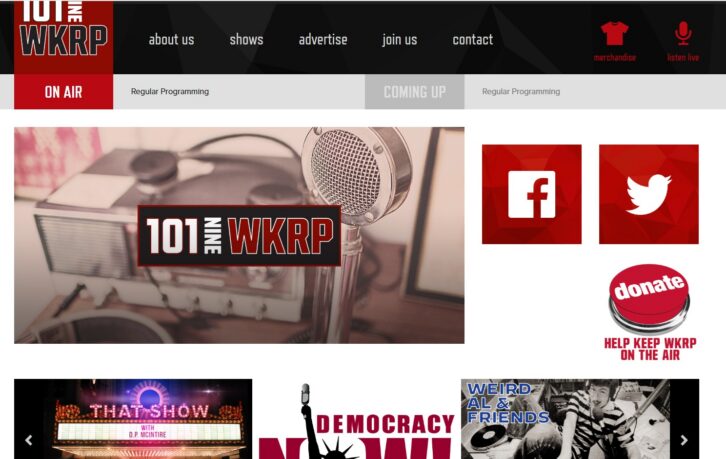
The home page of WKRP-LP
The home page of low-power FM station WKRP.


Text has been updated with additional information.

Would you like your station call letters to be WKRP?

That famous call sign currently is held by a low-power FM station in Raleigh, N.C. And while the station isn’t planning to give it up, it would be willing to share if the price is right.

The licensee issued this announcement:

Oak City Media, a non-profit organization that’s operated a real WKRP for over a decade, is announcing a process by which certain other broadcast stations can share this nostalgic call sign in accordance with FCC regulations, allowing simultaneous use by one AM radio station, a full-power FM station (as ‘WKRP-FM’), full-power television station (with the suffixes ‘-TV’ or ‘-DT’) and one low-power TV station (using the suffixes ‘-CD’ or ‘-LD’).”

Executive Director D.P. McIntire wrote: “For five years, ‘WKRP in Cincinnati’ was the fictional, often dysfunctional setting behind one of the most popular situation comedies in the United States. Originally airing on the CBS television network, immediately after its network run it became a syndication staple for stations, and episodes can still be found on the air in many markets; as can episodes of a revival of the series in the early 1990s.”

He invited broadcast licensees to email him for an info packet “explaining the process, timelines and requirements.”

“At the end of this process, one station in each of these categories will receive authorization to use the WKRP call sign along with Oak City Media,” according to the release.

“The organization meanwhile intends to use proceeds generated through the process to help a number of newer non-profit groups build the ‘third generation’ of LPFM radio stations.”

FCC rules allow applicants to request call signs of their choice if the combination is available.

They state: “Where a requested call sign, without the ‘-FM,’ ‘-TV,’ ‘-CA,’ ‘-DT,’ or ‘-LP’ suffix, would conform to the call sign of any other non-commonly owned station(s) operating in a different service, an applicant utilizing the online reservation and authorization system will be required to certify that consent to use the secondary call sign has been obtained from the holder of the primary call sign.”

McIntire told Radio World that Oak City Media receives several approaches each year from parties interested in obtaining or sharing the call letters.

“We do not want Oak City Media’s involvement in this process to violate either FCC regulations or IRS rules governing 501(c)(3) organizations,” he said, so they’ve created a 501(c)(3) non-profit called IBC Inc., short for Independent Broadcast Consultants.

“Oak City Media will conduct the selection process for whom shares the WKRP call sign,” McIntire said.

“Those who ‘win’ will donate funds to IBC, which in turn will oversee the funds and disburse them to ‘third-generation’ LPFM stations in need until we’ve exhausted what we generate.”

He said the effort has no stated goal amount, “simply to get the most we can so as to provide the biggest ‘pay it forward’ we’re able.”

(See a list of historical uses of WKRP at FCCInfo.com.)

The post WKRP (a Real One) Is Willing to Share Its Call Sign appeared first on Radio World.

  •  

NAB Cautions Lawmakers About TV Ownership

The National Association of Broadcasters says registered voters support the elimination of the national broadcast ownership cap for television — and the association says “there are clear political consequences for lawmakers” who don’t agree.

NAB commissioned a study by research firm Fabrizio Ward. It posted the findings here.

The national cap limits entities from owning or controlling broadcast television stations that, in aggregate, reach more than 39% of television audience households in the country.

“Voters say the cap is unfair and they want government to give local stations a fair chance to compete for advertising and audience against Big Tech platforms, which face no such restrictions,” NAB said in a press release.

The survey found that “58% of voters say the 39% ownership restriction is unfair, including 33% who say it is very unfair, while just 20% say it is unfair.”

NAB said the survey shows that voters “want local broadcasters to compete nationally for advertising by a 42-point margin.”

It said voters say they are more likely (36%) rather than less likely (13%) to vote for a member of Congress who “supports allowing local station owners to compete nationally for advertising.” And they are less likely (36%) rather than more likely (12%) to vote for “a member of Congress who opposes reform.”

It said 52% want government policies to “make it easier for local TV stations to compete for advertisers against Big Tech while just 9% think government should make it harder.”

And the survey found that local TV remains a trusted source of news.

Fabrizio Ward surveyed 1,000 registered voters in late January using cell, landline and SMS to web channels.

NAB President/CEO Curtis LeGeyt said voters think “the government should not impose arbitrary limits on trusted local broadcasters while Big Tech platforms face no such restrictions.”

Bob Ward of Fabrizio Ward told NAB, “Voters see this as a fairness issue, and they respond to where elected officials stand.”

The results seem to contradict a recent poll commissioned by the National Hispanic Media Coalition and Defend the Press Campaign which found that large majorities of likely voters in the upcoming mid-term elections opposed “large national broadcasters buying up or merging with local TV stations.” Read about there here.

FCC Chairman Brendan Carr is seen as sympathetic to the idea of easing broadcast ownership limits. President Trump last fall expressed opposition to changing the national cap.

The post NAB Cautions Lawmakers About TV Ownership appeared first on Radio World.

  •  

LPFM Advocate Warns FCC of Possible Side Effects of More Consolidation

A group that advocates for low-power FM stations is worried that any changes made by the FCC to current ownership rules for commercial broadcasters will have consequences on smaller community-based radio services.

In fact, it said if the commission relaxes ownership limits for primary broadcasters, it should update LPFM’s ownership limits in unison, to ensure consistency, fairness and preservation of community-based service.

The Low Power FM Advocacy Group (LPFM-AG) is among the thousands of filers who have commented during the FCC’s proceeding on broadcast ownership rules, which could result in major reforms and the elimination of AM and FM ownership caps.

“If ownership limits are relaxed, the resulting increase in local market power will have predictable downstream effects on smaller broadcasters unless complementary measures are considered,” according to the group’s filing.

The recent reply comments, signed by Dave Solomon, executive director of LPFM-AG, outline its concerns about further radio ownership consolidation and how increased local market power affects broadcasters that lack those advantages.

“Increased concentration alters the economic environment in which smaller broadcasters operate, particularly those without access to multi-station sales operations, regional branding, or capital reserves,” the group wrote.

In addition, Solomon said the FCC’s existing rules for the LPFM broadcast service create many challenges, despite the service being closely aligned with the commission’s localism objectives.

Restrictive ownership rules for LPFM

Right now, a party cannot hold an “attributable interest,” as defined by the FCC, in more than one LPFM station. Radio World has reported on repeated LPFM application rejections as a result of the ownership limit rule.

Solomon cautioned that LPFM operators are currently hampered by the most restrictive ownership, transfer and technical rules of any broadcast service.

“These constraints become more consequential as ownership consolidation increases elsewhere in the broadcast landscape,” he wrote.

(Read LPFM-AG’s reply comments, filed on Dec. 25.)

Therefore, the advocacy group is concerned that commercial broadcast ownership changes without parallel reform for LPFM would amplify existing asymmetries and increase pressure on community-based services.

If LPFM ownership rules were updated with reasonable “guardrails,” the group asserted that the service would be better assured that increased concentration does not operate “to the exclusive benefit of large clusters,” while leaving small and community broadcasters “increasingly exposed.”

The group pointed out that the commission has already determined that a rigid one station ownership limit for LPFM is not universally appropriate. Under existing FCC rules, according to the group, certain applicants are “expressly permitted to hold attributable interests in more than one LPFM station where doing so is necessary to serve their communities effectively.”

Specifically, the LPFM advocacy group noted that the commission already allows Tribal applicants and public safety or governmental entities operating within their jurisdiction to own up to two LPFM stations.

In addition, under current rules, LPFM stations may not be transferred for fair market value, according to the group.

“As a result, LPFM licenses are frequently surrendered rather than transferred,” LPFM-AG said.

AM broadcasters face similar challenges

Meanwhile, the LPFM advocate argued that small, locally-owned AM broadcasters face the same threat as LPFMs if further commercial ownership consolidation is allowed by the FCC.

They often rely on a single FM translator to remain viable. In addition, the group said, many AMs are minority owned and serve local or cultural communities.

LPFM-AG, which claimed over 500 low power FM radio stations have been killed off in the past 15 years, said noncommercial broadcasters also face comparable structural exposure.

“LPFM stations depend on local underwriting, fundraising and volunteer support. Neither service can realistically compete for local economic support against large clusters with dominant market presence,” the group wrote.

The LPFM advocacy group said commenters in the record supporting deregulation repeatedly argue “that rigid, legacy rules should give way to more flexible, service-based standards.”

Solomon argued that applying that same logic requires examining whether LPFM ownership transfer, and technical restrictions remain necessary in all circumstances.

“Absent such LPFM reforms, existing LPFM transfer and ownership restrictions will continue to force license surrender and permanently deprive communities of locally originated radio service,” Solomon wrote.

(Read our ongoing coverage of comments the FCC has been taking in its review of broadcast ownership rules.)

The post LPFM Advocate Warns FCC of Possible Side Effects of More Consolidation appeared first on Radio World.

  •  

FCC Approves New GVP Devices for 6 GHz Band

No burning decisions specifically about radio broadcasting appeared on the FCC’s January meeting agenda today, but the commission took several actions of interest.

It unanimously adopted an order to enhance unlicensed use in the 6 GHz band for a new product category called “geofenced variable power” or GVP devices that can operate both indoors and outdoors at higher power than previously authorized devices.

“This action enables consumers to benefit from supercharged Wi-Fi and a new generation of wireless devices, from AR/VR and IoT to a range of innovative smart devices,” it said.

We reported on this pending action earlier this month. The proposal has been pushed by tech companies Apple, Broadcom, Google, Intel, Meta, Microsoft and Qualcomm. In 2024 the Consumer Technology Association told the FCC it supported the idea.

Chairman Brendan Carr said that at the recent CES show, “America’s tech industry debuted Wi-Fi 8 routers and chips for launch as soon as this year. This next generation of Wi-Fi will offer blazing fast speeds and massive bandwidth with more efficient power, higher throughput and better client-to-client communications.”

He noted that in 2020 the FCC opened 1,200 MHz in the 6 GHz band for unlicensed use. With this action he said the FCC brings more unlicensed spectrum to the marketplace “and [will] allow innovators to supercharge existing unlicensed bands. … With higher power and outdoor mobility, expect more compelling AR/VR, short‑range hotspots, automation and navigation.”

Gary Shapiro, the executive chair and CEO of the Consumer Technology Association, issued an enthusiastic statement: “Unlicensed spectrum is the foundation for transformative technologies like Wi-Fi, and opening more of the 6 GHz band will supercharge the next wave of innovation, including augmented reality, virtual reality and other game-changing applications.”

Foreign ownership

Separately and unanimously the FCC also codified foreign ownership review requirements.

It said the goal was to maintain strong national security review processes while providing clarity for foreign investment.

“The agency’s longstanding foreign ownership review has helped protect against national security risks when reviewing increasingly complex ownership structures for FCC license holders, namely broadcast, common carrier wireless, and aeronautical licensees,” it said in a statement.

“Today’s action codifies many of those processes to ensure its foreign ownership requirements are clear and consistent, and to streamline the review process.”

The rules codify the policies and practices that it says the FCC has developed over the last decade to review complicated ownership structures under its Section 310(b) rules.

Foreign ownership reviews for broadcast licenses are led by the Media Bureau.

Foreign adversaries

The commission also established new rules intended to create transparency about the control of licensed entities by foreign adversaries. Again the FCC was unanimous.

“Foreign adversaries have made clear their intent to probe and penetrate vulnerabilities across our communications ecosystem,” said Carr.

“We have seen this through cyberattacks like Salt Typhoon. We have seen it in the equipment pipeline, where foreign adversary‑controlled labs could attempt to influence the testing and approval of devices bound for the U.S. marketplace.

“We have seen it in the online marketplace, where millions of prohibited devices linked to foreign adversaries were being sold to American consumers. And we have seen it at the carrier level, where entities with concerning ties to foreign governments have sought to operate in U.S. networks despite clear national‑security risks.”

Carr said the vote “sets up a clear, risk-based reporting structure that requires entities to attest to whether they are owned by, controlled by, or subject to the direction of a foreign adversary.” He called it an agency-wide effort that “builds on a year’s worth of national security initiatives and establishes a uniform system for identifying foreign adversary control across all FCC licensees and authorization holders.”

The order places each license, permit or authorization into a series of schedules, based on a variety of factors including national security risk of foreign adversary control and reporting burdens, and it imposes reporting requirements about equity and controlling interests.

The FCC said, “Today’s action, as well as those spearheaded by the commission over the past year, including establishing the Council on National Security, will strengthen the security of U.S. communications networks by tracking many of the ideas laid out in the pending bipartisan Foreign Adversary Communications Transparency (FACT) Act led by Senator Deb Fischer and moving swiftly to protect national security.”

We will watch for announcements about the paperwork impact of these foreign ownership and foreign adversary rules on broadcasters.

Meantime next month’s FCC meeting will include an agenda item specifically of interest in radio broadcasting: an application window for new FM translators for noncom educational stations.

The post FCC Approves New GVP Devices for 6 GHz Band appeared first on Radio World.

  •  

FCC Releases Details of Proposed NCE Translator Window

We have more details about the FCC’s plan to invite applications for new FM translator construction permits for noncom educational stations in the reserved band, 88.1 to 91.9 MHz.

We reported yesterday that Chairman Carr had mentioned a planned vote in a blog post. The commission subsequently released the draft of the notice on which it will vote on Feb. 18.

You can read the full draft notice here in PDF format.

The notice will direct the Media Bureau to begin work to open the filing window, the first of its kind for stations in the reserved band. Specific dates would come later.

Under the plan, an applicant would have to be the licensee or permittee of an existing NCE FM or noncommercial AM radio broadcast station or LPFM that the proposed translator would rebroadcast. The FCC does not plan to accept major modifications to existing NCE reserved band translators.

The commission also is proposing a limit of 10 applications nationally for each applicant (but four for tribal LPFMs and two for other LPFMs). But it also is asking for public comment on its proposed eligibility restrictions and caps.

“The commission has employed application caps or eligibility restrictions in prior reserved band full-service NCE FM windows and non-reserved band FM translator windows to promote efficiency, curb speculative applications and expedite the processing of applications and expansion of new service while preserving spectrum and future licensing opportunities,” it wrote in a summary sheet.

“For example, in both 2007 and 2021, before the NCE FM station filing windows opened, the commission sought comment on an application cap and subsequently established a limit of 10 NCE FM new station applications filed by an applicant during each filing window.”

It said the application limit was an effective safeguard and helped restrict the number of MX applications, prevented mass filings and allowed the FCC to process and grant thousands of new NCE FM applications. It noted that it also has imposed such restrictions in prior translator filing windows.

And as noted above, the FCC said that it will not accept applications for major mods to existing NCE reserved band translators. “An applicant seeking a major modification to an existing NCE reserved band FM translator station authorization may apply for a new station and, subsequent to commencement of operations with its newly authorized facilities, surrender its old station license.”

Do you receive the daily Radio World SmartBrief newsletter?

The post FCC Releases Details of Proposed NCE Translator Window appeared first on Radio World.

  •  

FCC to Vote on First-Ever Noncom FM Translator Filing Window

Brendan Carr stands in a conference room speaking to members of the FCC staff.
Chairman Carr talks to staff members prior to an FCC meeting in September. (Kent Nishimura/Bloomberg via Getty Images)

As Brendan Carr shovels out from under the snow and ice, he revealed that he and his fellow commissioners will take a vote next month for opening a window for new noncommercial band FM translator construction permits.

The FCC chairman announced the commission’s plans for the month of February in a Jan. 27 blog entry on the FCC’s website, titled “Good Governance,” which outlines the actions he said ensure the agency “is a good steward of scarce federal dollars.” It includes a vote to launch a public notice for what would be the first filing window for translators in the noncom FM band. 

There have been past filing windows for full-power noncom stations, or for stations that broadcast between 88.1 and 91.9 MHz, most recently in 2021.

And while a provision for filing windows for translators in the noncom frequencies exist in the FCC’s rulebook, as attorney Gregg Skall explained for Radio World, past translator filing windows, such as in 2003, have been only for commercial (above 92 MHz) frequencies. 

If the three commissioners vote to approve the item, the FCC would release a public notice seeking comment on the proposed rules for noncom translator filings. Carr said in his post that in doing so, the commission also seeks comment on eligibility requirements and application limits to prevent “speculative filings” and ensure fair access to licenses.

During the 2021 full-power noncom filing window, for example, the commission wanted to cap the number of applications to avoid a repeat of the 2003 translator window in which it was swamped with 13,000 applications, many from speculative filers.

The chairman said that the proposed filing window is part of the steps the FCC is taking to support noncom educational broadcasting and preserve the airwaves for local and community-focused services.

“These actions help strengthen localism and support the continued growth of noncommercial service on the FM band,” Carr wrote.

On Wednesday, the FCC released more details of the proposed NCE filing window. Read Radio World’s coverage.

NEW: Chairman @BrendanCarrFCC announces FCC Good Governance Agenda for February 🏛️

📞 Lifeline Program Reforms
🛜 Expand Broadband Use
📺 Educational Broadcasting
💻 IP Network Transition

Read more 🧵⬇️ pic.twitter.com/6KpKOTYAw5

— FCC (@FCC) January 27, 2026

The post FCC to Vote on First-Ever Noncom FM Translator Filing Window appeared first on Radio World.

  •  

NRB Would Drop AM Caps But Keep FM Limits

When it comes to local ownership caps, the National Religious Broadcasters believes the FCC should treat the AM and FM bands differently.

It thinks the commission should adopt “a measured, service-specific” approach, eliminating AM restrictions but keeping the caps for FM. It says the bands face “materially different” market conditions.

The commission is weighing the future of ownership limits as part of its quadrennial review. In each of the largest markets, a licensee currently can own up to eight commercial radio stations and no more than five on each band (FM/AM) in the market. The cap shrinks as the number of stations in a market decreases.

NRB represents 1,100 Christian broadcasters and media organizations in radio, television, digital and emerging platforms.

NRB said the elimination of local restrictions on AM would help stabilize, promote and revitalize the band.

“AM radio faces a distinct and well-documented set of technical, economic and competitive challenges. In this environment, continued application of local ownership caps no longer meaningfully advances the commission’s core policy objectives.”

It said AM ownership flexibility can serve as a stabilizing mechanism, allowing operators to combine resources, spread fixed costs and reinvest in facilities and programming that might otherwise be lost.

“Greater flexibility could also facilitate technical improvements, including transmitter modernization, signal upgrades and enhanced emergency-alert capabilities.”

But NRB urges the commission to retain its local limits for FM radio.

It says FM stations continue to play a central role in local markets, maintain strong audience reach and serve as primary platforms for locally originated news, public affairs, educational and community programming.

Relaxing FM limits would risk accelerating consolidation in precisely the segment of radio where localism and viewpoint diversity remain most vibrant and most vulnerable, NRB believes.

It said that for faith-based, educational and mission-driven broadcasters in particular, local FM ownership is not merely a structural consideration but a prerequisite for serving distinct communities with programming tailored to local needs.

“Further consolidation of FM ownership would likely reduce opportunities for independent ownership, narrow editorial diversity and weaken the connection between licensees and the communities they are licensed to serve.” The association says that would run counter to the objectives of the Communications Act and the commission’s commitment to a locally responsive broadcast system.

NRB expressed concern that further consolidation would “disproportionately harm independent, mission-driven broadcasters, who lack the scale, capital and national infrastructure of large broadcast groups,” and it said increased consolidation “would reduce educational and public-interest programming, which depends on local commitment and community service, not commercial scale or national efficiencies.”

[Related: “NAB Presses FCC to Accelerate Broadcast Ownership Changes”]

The post NRB Would Drop AM Caps But Keep FM Limits appeared first on Radio World.

  •  

FCC Rejects Iowa LPFM Hopeful’s Bid for Channel Change

A nonprofit in Iowa was denied by the FCC in a second attempt to change its application frequency to resolve short-spacing with a vacant allotment.

The organization tried to point to prior legal precedent in its defense. But the commission stood firm, pointing to its long-established rule that classifies changing operating channels as a “major amendment.”

The Catholic nonprofit Holy Mother Mary filed an application in the 2023 LPFM window to broadcast on 98.7 FM in Cascade, located in eastern Iowa between Cedar Rapids and Dubuque.

Holy Mother Mary’s application was originally dismissed by the FCC for failing to meet spacing requirements regarding a co-channel vacant allotment for a Class A FM station in Asbury.

After Holy Mother Mary successfully petitioned the FCC to reconsider the initial dismissal, the organization filed a waiver request to move its application to a different frequency. But as Radio World reported, the commission denied that request, noting it only allows for minor amendments.

In its second petition, filed last April, Holy Mother Mary argued that the commission lacks statutory authority to prohibit major amendments to pending new LPFM applications. It further argued that the refusal to accept a major amendment in this case was “a patent violation” of the Administrative Procedure Act.

The FCC remained unconvinced.

Major qualifications

The commission defines “minor amendments” as certain site relocations, ownership changes, time-sharing agreements and changes in general and/or legal information.

It excludes all channel changes from the list of minor amendments. The commission adopted this rule in 2001.

Holy Mother Mary successfully petitioned the commission in the summer of 2024 to reconsider the initial ruling, based on the fact the short-spacing was due to a vacant allotment. But it was only permitted to make a minor adjustment to its application. The end result would have been the same — a short-spacing to the Asbury allotment.

It followed up with an August 2024 waiver request, desiring to move its application to the second-adjacent frequency of 98.3 FM, with would have required a separate waiver due to a short-spacing with new adjacent 98.1 KHAK(FM).

(Read the FCC’s denial of the petition for reconsideration.)

As an alternative to that waiver, Holy Mother Mary asked to move to the non-adjacent frequency of 93.5 FM, where there’d be no such conflict.

In its waiver request, Holy Mother Mary also questioned the “statutory underpinning” of the FCC’s minimum power limit requirement for LPFM stations, established in 2000. It cited the Administrative Procedure Act and the Loper Bright Supreme Court decision to support its contention that a major amendment, such as a channel change, should be allowed.

But the FCC denied both the waiver and its proposed move to 93.5.

Unclear requirements

Holy Mother Mary argued in its second petition, filed last March, that the APA requires courts to set aside agency actions and findings found to be “arbitrary, capricious, an abuse of discretion or otherwise not in accordance with the law.”

“Congress never gave the FCC a specific law to prevent the type of curative amendment we wanted to make in February 2024 when we sought leave to amend from [98.7] to [93.5],” Holy Mother Mary wrote in its petition.

The group also claimed that the Communications Act of 1934 is “ambiguous” and “does not give the FCC express authority to dismiss applications such as that filed” by Holy Mother Mary.

The less forgiving the FCC’s acceptability standard, “the more precise its requirements must be,” the organization wrote in its petition, citing the Salzer v. FCC court case from 1985.

According to the Media Bureau, the organization also contended it lacked “clear notice” of major amendment restrictions — such as channel changes — for new LPFM applications.

For those reasons, Holy Mother Mary felt it should be permitted to change frequencies.

Petition denied

The Media Bureau pointed to the classifications established when it adopted rules governing LPFM amendments in 2001. Those rules have been published since, the Bureau explained, and the deadline for challenging the basis of those classifications “passed decades ago.”

The commission also took issue with Holy Mother Mary’s contention that it lacks the authority to make rules regarding frequency assignments, pointing to specific language in the 1934 Communications Act specifying “all the channels of radio transmission.”

The Act, the Media Bureau said, allows the commission to adopt “reasonable” classifications of applications and amendments.

“Defining a channel change as a major amendment to a pending new LPFM application is one such reasonable classification,” it wrote.

A minor change, the Bureau explained, is one that would not require a reevaluation of the application by its staff. Using a new, non-adjacent channel would require a repeat technical review and a determination of whether the amended application would be mutually exclusive with other groups.

The Loper Bright decision, the commission contended, did not change the circumstances for processing the organization’s application. The situation did not warrant “special circumstances” for a waiver, and the denial properly followed its own rules.

The Media Bureau dismissed the petition for reconsideration.

Holy Mother Mary sought to broadcast Catholic religious programming, fed primarily by the EWTN network, according to its application.

[Do you receive the Radio World SmartBrief newsletter each weekday morning? We invite you to sign up here.]

The post FCC Rejects Iowa LPFM Hopeful’s Bid for Channel Change appeared first on Radio World.

  •