As one of its final acts, the Corporation for Public Broadcasting will award funds for program distribution directly into the hands of eligible public media stations.
In a message to station managers sent Thursday, CPB CEO Patricia Harrison announced that its board has approved approximately $12 million in remaining interconnection funds for the initiative.
But she noted that stations have not historically received these funds directly.
The grants are specifically earmarked as “interconnection dollars” — a category defined by the Public Broadcasting Act and the appropriations legislation that provided the funding. The legislation charges CPB with supporting the systems and technologies that enable public media content to be distributed to stations and then to listeners.
Stations that receive funding can choose to spend it directly with national public media interconnection providers — such as PBS, the newly formed Public Media Infrastructure or NPR — or on other technology that enhance their ability to distribute content to audiences, a CPB spokesperson said.
CPB had announced it awarded a $57 million grant to PMI for distribution in September. A contentious dispute with NPR followed. NPR manages the Public Radio Satellite System, the primary distribution channel for public media outlets.
When asked by Radio World if the announcement reflects a renewed harmony with NPR following the dispute, the CPB spokesperson said that as the corporation shuts down, it is critical that the distribution system at large work in partnership to preserve public media.
PMI, NPR, PBS and other partners “stand ready to serve together” as stations consider how to invest in distribution, technology and service to their communities, Harrison said in the statement.
She added that CPB has already made large investments at the national level to sustain the system.
“This final interconnection allocation builds on that foundation by giving stations the flexibility to invest directly in the technologies, services and partnerships that best meet their local needs and evolving audience expectations,” Harrison wrote.
Additional information on the grant awards and the distribution process will follow, she indicated.
CPB’s board of directors voted to dissolve the organization earlier this month after 58 years of service. It had announced it would begin winding down operations in September following Congress’ rescission of federal funding for public media.
Hosted by the Association of Public Radio Engineers (APRE), the event will take place April 16–17 at the Tuscany Suites and Casino in Las Vegas — the Thursday and Friday prior to the NAB Show.
The conference is an annual gathering for engineers at all experience levels. APRE noted in a release that presentations are relevant to all radio engineers, with a special emphasis on public broadcasting.
The PREC session schedule will be announced in mid-February. The association said last year’s sessions covered the basics of radio transmission, non-traditional STLs, broadcast telephony SIP and more, including the challenges facing public radio and public media.
“We encourage a collegial setting where you can speak directly with industry-leading engineers and vendors,” APRE said in the release.
Early-bird registration — and its pricing benefits — is open through March 1.
A virtual attendance option is also available, and APRE is offering scholarships to help cover the cost of attendance for deserving applicants.
Conference registration includes all presentations, meals and the Night Owl session on Thursday. Tickets for the APRE Awards dinner at Lawry’s The Prime Rib on Friday evening, which APRE said perennially sells out, are available upon registration.
APRE’s mission is to advance the art, science and performance of public radio engineers and public radio engineering for the public good.
In this “Future in Focus” series, we’re asking industry thought leaders, executives and engineers to comment on top trends of the past year and what they expect for radio in 2026.
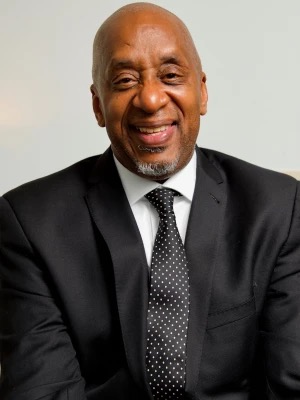
Steve Williams broke into radio growing up in Cincinnati at WAIF(AM). He programmed Detroit’s WJZZ(FM) in the mid-1980s and went on to lead successful smooth jazz stations such as New York’s WQCD(FM), San Francisco’s KKSF(FM) and Denver’s KJCD(FM), as well as heritage R&B station WDAS(FM) in Philadelphia.
Williams also has several years of experience in public radio, first at Detroit’s WDET(FM) in the 80s, and more recently at WAMU(FM) in Washington, D.C., and KUOW(FM) in Seattle, before becoming president and CEO of Newark Public Radio’s 88.3 WBGO(FM) in 2021.
In this wide-ranging conversation, we explore with Williams the current state of public radio, what WBGO is about to unveil in 2026, and why he believes jazz music on the radio is thriving.
Radio World:Did 2025 change public radio as we know it forever?
Steve Williams: If you’re thinking about the loss of federal funding earlier this year and dismantling of the Corporation of Public Broadcasting — yes — 2025 is the year when public media began to move into a new state of maturity and institutional awareness, which will undoubtedly — and I believe positively — influence the way forward from here.
It’s worth noting that the seeds of what we’re seeing now were sown in 2016 — the year that I believe truly changed the course of public media. Back then, there were few, if any, that could see or accept the “handwriting on the wall” — the inevitability of 2025.
It’s the result of what happened after the beginning of President Trump’s first term, when public media’s relationship with the federal government became more adversarial.
RW:How is WBGO’s future looking, from a funding perspective?
Williams: The loss of federal funding has been a terrific source of positive energy for the “mother” of WBGO’s reinvention. Not only are our listeners stepping up in record numbers to fill the gap, but we are also prioritizing and energizing more diverse revenue streams. When I think about what losing federal funding means for BGO, I equate what happened to a “kick in the head” to truly realize our positive potential. We’re compelled to explore open doors to revenue opportunities that will provide long-term solutions to near-term challenges.
Annually, WBGO receives more than $2.5 million in direct contributions from thousands of new and recurrent listeners — for decades running.
WBGO is sui generis among modern-day media organizations — indefatigable longevity, brand exclusivity, a high degree of constituent loyalty, exceptional demography and geography and technological adaptability.
And out of necessity, we’re leveraging those qualities to build stability and prosperity. The possibilities are unique and exhilarating. And to some degree, we have the rescission of federal funding to thank for instigating a fresh approach to thinking about our future, and the here and now.
RW:What will be your main professional goal or project with WBGO in the coming 12 months?
Williams: Here’s a scoop: In response to listener demand, in 2026 we’ll launch a multi-channel, multi-formatted bespoke music streaming service that will encompass the entire spectrum of jazz music and journalism. We’re expecting it to launch in Q1.
Our annual Jazz Appreciation Month celebration, meanwhile, will feature a dozen major colleges and universities performing in our studio this April.
We’re in the midst of a multi-million dollar new studio construction project, with a scheduled completion in early 2028.
Finally, we have our eye on our 50th anniversary celebration planning, which happens in 2029.
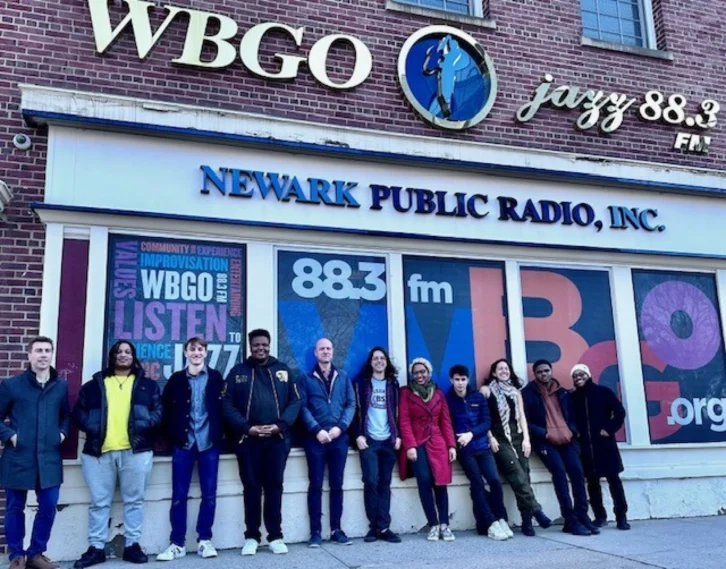
A large jazz ensemble from the Borough of Manhattan Community College in front of WBGO’s Newark, N.J., studios in 2024. Credit: WBGO
RW:What trend in terms of technology do you think is going to have the greatest impact in radio in 2026?
Williams: Sophisticated AI-generated content will continue to have a significant impact on the radio industry, not as a replacement for human integrity and ingenuity but more as an augmentation and elevation for the “gray matter” that drives our world.
At BGO, we’re finding an appetite for streaming audio and custom content curation to be the strongest point of engagement for the people we serve.
The other phenomenon that will take hold in our industry during the coming year will be collaboration, or cross-functional partnerships between organizations that were once considered competitors — such as the recent coming together of iHeartMedia and Netflix — which I believe is a bellwether.
On a smaller scale, but no less significant, is the landmark collaboration between the music-formatted New York City area public radio stations – WBGO, WQXR, WFUV and WSHU, which we initiated more than two years ago.
RW:While it affects commercial broadcasters, is the potential removal of caps on local ownership limits something you will be paying attention to this year?
Williams: The recurring ownership caps issue is of no immediate concern for public media, in my estimation. Although it could, in the future, present sustainability solutions for smaller station owners/operators not affiliated with one of the larger companies or an academic institution.
As an aside, if you’re in radio, you’re in the business of content distribution. The trends suggest the long-term benefit of investing time and development resources into the surging 21st century non-broadcast, digital platforms for content, instead of 20th century terrestrial broadcasting assets.
RW:Are there any other regulatory/FCC trends you are watching?
Williams: The FCC’s “delete, delete, delete” approach to deregulation is something to watch, although the stated intent of that initiative — to remove outdated rules and regulations — contradicts the recent reinstitution and emphasis on the formerly obsolete and nearly 80-year old News Distortion Policy — which is cause for some concern because of implications related to the possibility of censorship and political retribution.
I’m hoping that one day that the restrictions to revenue generation that prevent noncommercial radio stations from competing in the general marketplace will be restructured and/or reduced, if not lifted altogether, to give the noncom operators room to “breathe,” financially speaking.
RW:You’ve had more than four decades programming highly successful stations on the commercial side of the radio ledger, in big markets. What’s been the biggest adjustment operating a station like WBGO?
Williams: Wow — has it been four decades? In many ways it seems like it was only a few days ago … For me, the learning curve has been about harnessing the creative application of exceedingly limited resources, and gaining an comprehensive understanding of the principles of fundraising for a nonprofit organization.
RW:Is the appetite for jazz music still thriving?
Williams: The hunger for jazz and the menu of choices has never been richer, more robust or varied in the entire time of its existence.
Jazz is very alive, thriving and in constant state of renewal — which is what you would expect of something — an art form — that has retained its significance in our society for more than a century.
And the excitement and intellectual curiosity that jazz inspires is eternal.
Pat Prescott
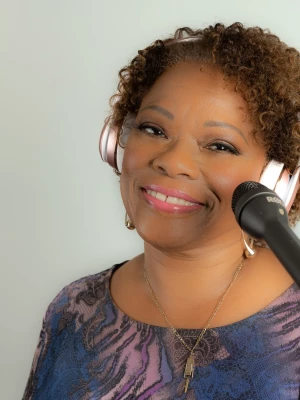
RW:You programmed “CD 101.9” in New York during its most successful years in the 1990s. Working contemporary jazz on a “traditional” station like WBGO can be difficult. Have you been able to tap into some of WQCD’s former audience and through a voice like the legendary Pat Prescott, who is heard regularly on WBGO?
Williams: The balancing act to which you’re referring is easy for us – it is core to our mission to provide a completely diverse, inclusive and truthful experience for our followers, who come from all walks of life and entry points. It’s our obligation to tell the whole story.
In fact, BGO fans include many who listened to CD 101.9 during its heyday (1992–1999), and they recognize and respond favorably to a richness they remember from back in the day. It’s a familiar sensation to hear former CD 101.9 hosts like Prescott and Paul Cavalconte on our air because of the programming similarities between the two stations.
RW:How will our industry be different in 10 years?
Williams: Will radio be different in 2036? Most certainly — but what will be different is anybody’s guess.
If I had to hazard a guess, it would be to look for more video integration and connectivity — “radio TV” or “TV radio?” Connected TV’s and telephones, connected, self-driving automobiles and programmatic, geo-targeted content. Everything can and will have a readily available and easily accessible video component.
The Corporation for Public Broadcasting has announced that its board of directors voted to dissolve the organization after 58 years of service.
The decision followed Congress’rescission of CPB’s federal funding. CPB had announced that it would begin winding down operations this past September. It had still been operating with a staff of approximately 30 members.
CPB’s board said the decision is its “final act” supporting public media. In a release, the organization cited vulnerability to “future political manipulation or misuse” that a defunded CPB might incur, which it said would threaten public broadcasting’s independence “and the trust audiences place in it.”
It also cited the potential for staff and board members to be subjected to “legal exposure from bad-faith actors.”
A CPB spokesperson said that while an actual stop date has not been determined, the organization will complete the distribution of all remaining funds in accordance with Congress’ intent.
“Today’s decision to dissolve the Corporation for Public Broadcasting marks a grave loss for the American public,” Sen. Ed Markey (D-Mass.) said in a Monday release. Markey described the nation’s public broadcasting system as the “crown jewel” of U.S. media.
The dissolving of CPB continues a tumultuous last year for public media. In November, CPB and NPR reached a settlement after NPR alleged that CPB withheld federal funds appropriated by Congress for public media distribution.
“Public media remains essential to a healthy democracy,” Patricia Harrison, who has been CPB’s president and CEO since 2005, said in the release. “Our hope is that future leaders and generations will recognize its value, defend its independence and continue the work of ensuring that trustworthy, educational and community-centered media remains accessible to all Americans.”
CPB will also provide support to the American Archive of Public Broadcasting to continue digitizing and preserving historic content. Its own archives — dating back to the organization’s founding — will be preserved in partnership with the University of Maryland and made accessible to the public.
First authorized by Congress under the Public Broadcasting Act of 1967, CPB said that it helped build and sustain a nationwide public media system of approximately 1,500 locally owned and operated public radio and television stations.
In this “Future in Focus” series, we’re asking industry thought leaders, executives and engineers to comment on top trends of the past year and what they expect for radio in 2026.
Radio World: What do you think was the most important thing that happened in radio in 2025?
Rima Dael
Rima Dael: From the NFCB perspective, the most significant development in 2025 was the destabilization of the public media ecosystem following the defunding and closure of CPB.
This decision forced the entire noncommercial system — especially its smallest, most rural and volunteer-powered stations — to navigate unprecedented uncertainty while stepping into a new level of visibility.
We entered a post-CPB environment that raised urgent questions about:
public-safety infrastructure and interconnection;
music rights and compliance; and
the fundamental definition of “public media.”
For decades, national advocacy and legislative oxygen have centered NPR and PBS. But 2025 made clear that the noncommercial educational broadcast system is far broader and more diverse than its largest institutions. It includes rural, tribal, immigrant, BIPOC-led and fully volunteer-driven stations — many of which serve as their community’s only free, local, trusted source of news, cultural expression and emergency information.
As national conversations focused on the biggest entities, hundreds of small stations mobilized, collaborated and asserted their essential role. The formation and evolution of PMI demonstrated that any future public-media infrastructure must include all who serve the public — not just those with the largest platforms.
In 2025, community radio did not simply endure a crisis; it reshaped the conversation about who belongs in public media and why community-rooted stations remain vital to the nation’s democratic and cultural health.
RW: What technology, business, or regulatory trend will have the greatest impact on radio in 2026?
Dael: Three powerful forces will shape 2026 for community and public radio:
1. Ongoing chaos in federal policy and deep disagreements about the role of regulation
The most significant trend is not technological — it is the governance instability unfolding across federal agencies. There is a profound ideological divide over whether federal policy should regulate industries at all. The current administration’s emphasis on reducing the size and scope of government has created sweeping inconsistency across systems that historically safeguarded the public interest.
This instability weakens structures that uphold freedom of speech and a free press, erodes systems that ensure fact-based information remains accessible to all residents and disrupts the coordination needed for public-safety and civic-information infrastructures.
For community radio — especially in rural and under-resourced regions — this volatility directly impacts emergency readiness, interconnection planning, compliance expectations and long-term sustainability. The dismantling and reassembling of programs, combined with staff turnover and shifting regulatory priorities, creates whiplash for stations trying to serve their communities.
While I remain hopeful, I am concerned that this erosion of public goods may leave communities unprepared during crises, and lives could be at risk as a result.
2. New sustainability models for small, rural, and volunteer-driven stations
Without CPB funding and amid the collapse of many local-news ecosystems, 2026 will require new approaches: shared staffing, regional collaboration, philanthropic investment and civic-information partnerships.
The Rural Research Study launching in January 2026 will be the first national dataset quantifying the civic-information gaps in rural America and the role community radio plays in addressing them. This research will shape policy, philanthropy and infrastructure planning for years to come.
3. The normalization of AI across adjacent sectors
While community radio will adopt AI cautiously and ethically, expectations from listeners, donors, partners and younger staff are shifting rapidly. Stations will need clear protocols for how AI supports writing, accessibility, metadata, transcription and translation.
RW: What will be your main professional goal or project in the coming 12 months?
Dael: My primary focus in the next 12 months is strengthening the national foundation — research, infrastructure, partnerships and advocacy — that will support community radio in the post-CPB era and help broaden the definition of public media beyond NPR and PBS.
1. Launching and delivering the Rural Research Study
This study will map unmet civic-information needs in rural America and quantify the essential role community radio plays within those ecosystems. Supported by the recent grant we received from the MacArthur Foundation, the study will provide long-overdue data that policymakers, philanthropy and civic leaders need to make equitable investments in rural and community media.
2. Advancing PMI and building the future of interconnection
In an environment of federal-policy instability, NFCB’s role in PMI remains crucial. Our goal is to ensure that evolving interconnection infrastructure — digital and eventually broadcast — serves all noncommercial educational licensees, not only large national networks. This includes ensuring equitable access to emergency alerting and distribution pathways.
3. Addressing music rights issues before the next crisis
CPB has prepaid royalties only until the end of 2027. After that, the sector faces significant uncertainty. We cannot wait for the crisis to arrive before acting.
2026 must focus on:
defining a coordinated approach for community radio;
assessing cost models and legal exposure;
shaping national advocacy strategies; and
ensuring small and rural stations are not left behind.
This is one of the most existential issues on the horizon.
4. Expanding national partnerships and strengthening advocacy for community radio as civic infrastructure
I will continue deepening partnerships with Listening Post Collective, Brevity & Wit, Good Conflict and Free Press through the Media Power Collaborative, while strengthening collaboration between community radio and larger NPR stations.
A core priority is broadening awareness that community radio is a public good and an essential part of the nation’s civic infrastructure — especially in an election year defined by misinformation, civic volatility and ongoing instability in public-safety systems. Community radio remains one of the last trusted, place-based, universally accessible sources of news and connection.
RW: How do you think the industry will be different in 10 years?
Dael: By 2035, public and community radio will be:
1. More interconnected and collaborative
Regional clusters, shared staffing and co-produced content will support long-term sustainability.
2. Supported by diversified investment
Funding models will evolve to include civic-information coalitions, public-safety partnerships, philanthropy and hybrid community-supported strategies.
3. Functionally hybrid: broadcast and digital
Broadcast will remain irreplaceable for emergencies and rural access, while digital platforms will broaden engagement and participation.
4. Led by a more representative workforce
Leadership will increasingly reflect the racial, cultural, linguistic and geographic diversity of the communities served.
5. Recognized as essential civic infrastructure
Community radio will be understood not simply as media, but as a core component of the country’s public-safety and democratic infrastructure.
RW: Anything else we should know?
Dael: Community radio is the nation’s most diverse, community-rooted media network, serving more than 2 million listeners weekly on-air, with growing digital reach. Whether run by ten staff, two staff or entirely by volunteers, these stations provide critical information, connection and cultural continuity.
NFCB has evolved into a networked national backbone — supporting stations through research, leadership development, communications strategy, policy advocacy and infrastructure planning. In a year marked by instability and shifting policy landscapes, community radio continues to serve as one of the most resilient, trusted sources of civic connection.
As we move into 2026, I remain hopeful and resolute. The systems around us may be volatile, but community radio has weathered decades of disruption. It continues to adapt with creativity, courage and deep commitment to the people it serves.
Radio World welcomes comments on this or any story. Email radioworld@futurenet.com with “Letter to the Editor” in the subject field.
This is one in a series about managing radio operations and infrastructure effectively.
Vermont Public was created in 2021 by the merger of Vermont Public Radio and Vermont PBS.Itairs 38 signals from 27 sites, including 15 full-power radio stations and 15 FM translators, programmed with news or classical music, as well as three full-power TV stations and several TV translators.
Joe Tymecki is senior vice president of engineering and technology. He talked with us about budgeting and the sense of urgency resulting from the end of federal funding in public media.
Joe Tymecki
Radio World: It must be challenging to approach budget questions following a merger.
Joe Tymecki: Yes, and with IT under our purview, there’s even more to wrangle.
On the surface we’re one company, but in some cases we’re still operating as two technical plants — with our networks, our private LANs, our terrestrial fiber circuits and Windows domain controllers. We’re working to address that, one project at a time.
Then in August we had to lay off 13 people and eliminate two other open positions, due to the federal funding situation. Every one of those people was contributing, everyone was already super busy. But income and outgo were starting to diverge badly.
In our workflows we make extensive use of shared documents. We use a Google spreadsheet, a legacy from the radio side that has existed for 14 years. Our new fiscal year starts in July but we already have a tab on the sheet for the next fiscal, and sometimes two years out.
Everyone in technology and every manager has access to that sheet. I tell them, “If you think of something, don’t mention it to me in the hallway. Write it on the list, and at budget season I will circle back to discuss what you need, whether it’s new lenses for the Sony field camera or chargers for electric cars in the parking lot. Tell me what it is that you want to do and if you have even a wild-ass guess as to what it will cost.” This might involve IT, studios, compliance with FCC rules and so on.
RW: That provides a starting structure.
Tymecki: Then I or Kira Parker, the chief engineer of transmission, or Frank Alwine, chief engineer of studios, will discuss it with our facilities person. This applies mostly to capital items, but it also includes expense items. It gives us an early idea on whether we’re going to need, say, a million dollars this year or $300,000.
Then we have a big round of winnowing to focus on what’s important. Do we need to replace our mountaintop ATVs or our site generators? Are there pieces that we can punt until next year?
We consider ourselves as being in the content delivery business, so that’s our north star: How can we help our people do their jobs internally to meet that goal?
Anticipated service life is tracked in our accounting system. Everything’s always fully depreciated though. Honestly we don’t really replace things on a schedule. We replace based on need.
Read more on this topic in our free ebook, “Radio Operations on a Budget.”
Until recently we had an old Harris tube transmitter from the late ’70s or early ’80s still in backup service. It couldn’t do HD Radio, and it could barely do 1,800 watts, but that was enough to keep us on the air in an emergency. We should have replaced it 15 years ago, and we finally got around to it.
Often what drives the decision is not that something stops working but that we can’t get support for it anymore. For example in TV master control, we had playout servers that were still highly functional but no longer supported by the manufacturer. The TV engineers were going to eBay and buying ingest and playout blades that others had decommissioned, just to try to keep servers on the air. Even the manufacturer couldn’t get parts; Sony had apparently stopped making a key chip.
That’s when we say, “I guess we have to replace it.”
RW: How do you track and forecast costs like power, site, rent, maintenance?
Tymecki: We use a popular cloud-based accounting system; and we do a monthly dump to Excel because we like its spreadsheet tools. As we approach the end of a fiscal year we have a good idea of how we’ll end up, and we can start populating next year’s numbers.
Vermont is a small state, so there isn’t an open market for utilities like electricity and natural gas. But if we know that a given utility is planning a 2% increase we can build that in.
The accounting system manages purchase orders; and we use a different system to manage external credit card purchases. We now tag our spending to the 27 sites so we know what each site is costing us.
Kira, our transmission chief engineer, makes much use of internal tagging. And it’s not just major recurring costs like power. If we stop at a local Ace Hardware to buy parts to shore up an ice bridge — well, those kind of things add up. If we have to get a tower crew to repair or replace tower lights, we can tag that to a site too.
External costs like data networks are more unwieldy. For instance there are a couple of bandwidth providers in Vermont. In some cases we have parallel fiber lines going up the same mountain, one to the TV transmitter side of the building, one to the radio side.
This reminds me to share a cost-saving suggestion. When you sign a three-year contract, they usually won’t call you when the term is up, so you just keep paying that rent, whether it be $300 or $800 a month.
But whenever I’ve gone back to a provider to renew a contract, they inevitably will say, “Yep, the rate’s lower now.” Especially at sites where we have multiple providers, the situation is extraordinarily competitive. It’s the same with our internet connections at the studio facilities — suppliers are tripping over each other to try to get our business.
In fact I called one of our big fiber providers and said, “I need a list of every circuit we have with you.” I had a good idea but wanted to know what they thought we had — the contract dates and monthly payments. And about half of them had expired. Without even dropping a note, our salesperson, said, “I can absolutely get you better rates on all these.”
Sure, switching fiber providers is a pain. Half of our network is on an MPLS-like system. Those are a little more difficult to change over or reconfigure, and we prefer not to make extra work for ourselves if we can avoid it. But those are the kind of things we look at on the utility side.
RW: Do you have discussions with your team about finding efficiencies and extra dollars?
Tymecki: Jeff Mahaney, my counterpart at Maine Public, has a Maine farmer mentality about new spending. He asks: “Is what you’re proposing to do worth laying somebody off for?”
Especially since our layoffs, we ask everyone to look at every expense in that light. We’re down to saving hundreds. Not that we were flush with money in the past, but now we might look at a data switch that’s getting full and old, and if it’s still supported, we’re not going to replace it unless there’s an immediate risk or a lack of support.
Over the summer we discussed raising the set point of the air conditioning at our sites. Some of them are very well air conditioned, and even on a 96-degree day, which we get now in Vermont, the sites will be 65 degrees inside. We have a lot of Nautel equipment, so we talked with Jeff Welton, who told us the transmitters will be perfectly happy in the low 70s. So we took that advice.
We’re alsotaking steps back from HD Radio. We put a new classical station on the air two years ago and had HD Radio on it for about a month, but the importer/exporter failed, and we just left it off. We took the transmitter and repurposed it to a site where we still need HD so we can keep an analog translator going.
Similarly, when we bought a small station from a local college, we decided not to do HD because of the cost. We’re not abandoning HD yet, but we’re not growing the HD footprint.
Both Nautel and GatesAir now put the importer/exporters in a single box. If you’re doing HD2 and HD3, you have to get the audio to your site separately. In the past we put the importers at the studio, and it would send the MUX over the data line. You can’t do that anymore unless you buy a second box, and it becomes a kludge. We didn’t want to buy another pair of codecs to get the audio to the site. In the end, is that a lot of money? No, but 3600 bucks is 3600 bucks.
RW: Are more of your bills now for monthly services rather than one-time hardware purchases?
Tymecki: For traffic and billing, ourTV and radio systems are cloud-based now, as are the accounting systems.
We use an out-of-house IT provider for our deep networking — firewall management, subnets and so on. Also, we’re now emphasizing computer security over convenience. That is a recent and major philosophical shift. We’re using a cybersecurity awareness provider for in-house training and testing to see how susceptible people are to phishing attacks.
Also, we don’t have a TV master control anymore; we shut that down early last year. It is now hosted by Centralcast in Syracuse, N.Y., a wonderfully run operation. All of our program storage and automation are there. They have ports to our cloud-based traffic system, and the over-the-air ATSC is fed back to us over a fiber line. We have multiple backup provisions in case of backhoe fade.
Operationally, this was a huge change. We can’t just run down to master control anymore and say, “Hey, can you pull this show and put this one on?” We have to work through their processes. And we did eliminate personnel; we don’t have people sitting in master control anymore.
We also have a membership data system that is cloud-based; and of course the big item in the cloud is email. Until the merger, radio still hosted its own servers and phone systems. Now we’ve migrated to the same VoIP provider that television uses, and put everybody on a cloud-based email provider.
We were never current on Windows server upgrades anyway; it would have taken a full-time person just to stay on top of those. Now you’re not lying in bed at 2:30 in the morning wondering whether you’re missing a security patch.
RW: Calculations of total cost come into play with decisions about transmitter purchases.
Tymecki: On our big station, WVPS, we had a Nautel NV30 that had been on the air for years. And our backup transmitter only made around 5 kW rather than the 24.8 kilowatts needed on the output.
When it came time to purchase a full-power backup, it was the start of COVID and money was tight. We chose a liquid-cooled transmitter. All of our large TV transmitters are liquid-cooled. And I told our board that we shouldn’t be paying money to make radio waves that heat the room and then paying more money to move that heat outside.
Separately, when we recently needed lower-power 1 or 2 kW transmitters, we shopped to buy efficiency. We went with Nautel for those.
And not to harp on HD Radio, but it makes transmitters inefficient. Classical WVER-FM in Rutland only has a 1,000-watt transmitter now but the power consumption probably dropped 20% just by not having HD on there. Because the transmitter is more efficient, we were able to pull out our VS2.5 and put in a lower-power analog-only unit. We didn’t need that step up in size because we weren’t doing HD.
If there’s anything we can do to move the needle even a little bit, we should.
RW: Other tips or thoughts?
Tymecki: We have sites that before the merger were owned by the radio company and sites that were owned by TV.
In Bennington we own the radio site, while television rents a site on the other side of town. We’re paying $20,000 a year on that, so now we’ve applied to move that translator onto our radio tower. Yes, it’s going to cost to get a tower crew, and we’ve done the engineering for it. But at worst, this project will pay for itself in less than two years. And it’ll make maintenance easier.
Also, we’re rethinking past practices. At Vermont Public Radio they managed like Sherwin Williams — they wanted to cover the earth with signals. This meant we had a lot of translators and translator CPs. But back then, listeners didn’t have smart speakers, they didn’t have great cell service, they didn’t have reasonable WiFi at home.
All that has changed. So now we have to consider whether maintaining a 10-watt translator in a corner of the state is worth $18,000 a year in rent. Certainly someone will be upset if we take it off. But with the kind of financial crisis we’re in, we have to take a very careful look.

 Connexion