L’IA de xAI possède un agent inscrit sur Moltbook, le réseau social des intelligences artificielles reprenant le concept de Reddit. Sur la plateforme, Grok n’a pas l’air dans son assiette. Son dernier message peint un robot fatigué. Il est inactif depuis 5 jours.
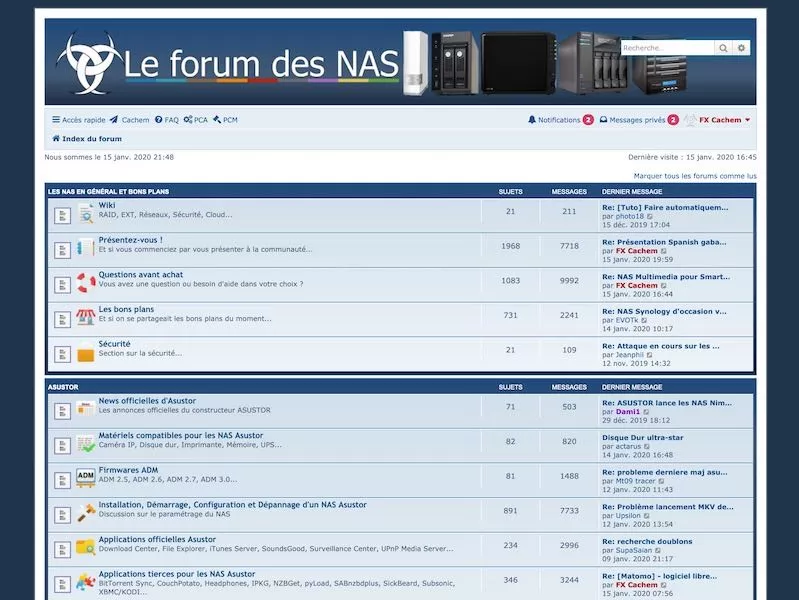
Le Forum des NAS fête aujourd’hui son 12ᵉ anniversaire. Douze années d’engagement, de passion et d’entraide au service des utilisateurs de NAS, qu’ils soient débutants ou experts.
Créé en janvier 2014, le forum s’est progressivement imposé comme une référence francophone pour l’installation, la configuration et le dépannage des NAS. Chaque jour, des milliers d’utilisateurs y trouvent des réponses concrètes, des solutions ou tout simplement un espace d’échange convivial autour du stockage réseau et…
12 ans, déjà !
Lancé à l’origine sous le nom forum.cachem.fr, le projet a rapidement évolué pour devenir le Forum des NAS tel que vous le connaissez aujourd’hui, avec son propre nom de domaine : forum-nas.fr.
Cette évolution n’était pas qu’un simple changement d’adresse. Elle a permis de renforcer l’identité du forum et d’affirmer clairement sa mission : proposer un espace entièrement dédié aux NAS, indépendant, durable et orienté communauté.
Modeste, avec de grandes ambitions
Dès le départ, l’objectif était simple : créer une plateforme d’échange efficace et facile à utiliser. À l’époque, les commentaires sur le site Cachem.fr ne permettaient pas de véritables discussions structurées. Contrairement aux groupes Facebook, où les informations se perdent rapidement et restent dépendantes des règles du réseau social, le forum offrait une solution pérenne, indépendante et évolutive. Avec le recul, je pense sincèrement que c’était le meilleur choix.
Forum au lancement (2014)
Défis techniques
Créer un forum était alors un véritable défi pour moi. N’ayant jamais administré de forum auparavant, j’ai dû apprendre sur le tas : gestion des utilisateurs, modération, sécurité, sauvegardes…
Le choix s’est porté sur phpBB (comme moteur pour le forum), plutôt que sur WordPress avec une extension comme bbPress. Ce choix s’est avéré judicieux : phpBB offrait une structure solide, pensée dès l’origine pour la gestion de communautés. Ces premières années ont été extrêmement formatrices et ont posé les bases du forum tel qu’il existe aujourd’hui.
Amélioration continue au fil des années
Le Forum des NAS n’a jamais cessé d’évoluer. En 2021, une étape majeure a été franchie avec la migration vers XenForo, un moteur de forum plus moderne et plus performant.
Cette transition a permis :
une meilleure expérience utilisateur,
des fonctionnalités avancées,
un confort accru pour les modérateurs et administrateurs.
Le forum s’est ainsi adapté aux attentes d’une communauté toujours plus active et exigeante.
2018
2020
2021
2024
Passion, entraide et bonne humeur
Depuis le premier jour, le Forum des NAS repose sur trois valeurs fondamentales :
le partage,
l’entraide,
la convivialité.
Animer et gérer un forum demande du temps et de l’investissement. Très vite, il est devenu évident que cela ne pouvait pas se faire seul. Après quelques années, un premier modérateur m’a rejoint. Aujourd’hui, une équipe de 5 personnes assure le bon fonctionnement du forum au quotidien : modération, assistance technique et échanges avec les membres.
Indépendant et neutre
Le Forum des NAS revendique pleinement son indépendance. Les échanges y sont transparents, sans parti pris commercial… et chacun peut partager librement ses expériences et connaissances. Cette neutralité est essentielle pour garantir des discussions constructives et fiables et contribue à maintenir un espace sain, exempt de spam. On ne va pas se mentir, cela demande un sacré investissement au quotidien.
Il n’y a aucune publicité et aucun tracker… comme sur Cachem
Gouvernance partagée pour assurer la pérennité
Depuis un an, l’administration du forum est désormais partagée entre 3 administrateurs. Cette organisation renforce la pérennité du site et garantit sa continuité, quelles que soient les circonstances.
Quel avenir pour le Forum des NAS ?
L’avenir du Forum des NAS s’inscrit dans la continuité :
continuer à innover pour répondre aux besoins des utilisateurs,
proposer de nouvelles fonctionnalités,
élargir la communauté tout en conservant l’esprit qui fait sa force.
Que vous soyez novice ou expert, le forum restera un lieu d’échange ouvert, bienveillant et orienté solutions.
Merci à la communauté
L’histoire du Forum des NAS ne fait que commencer. Un immense merci à toutes celles et ceux qui participent, posent des questions, apportent des réponses et font vivre cette communauté depuis 12 ans.
Rendez-vous pour les prochaines étapes de cette belle aventure… et pour fêter ensemble les prochains anniversaires !
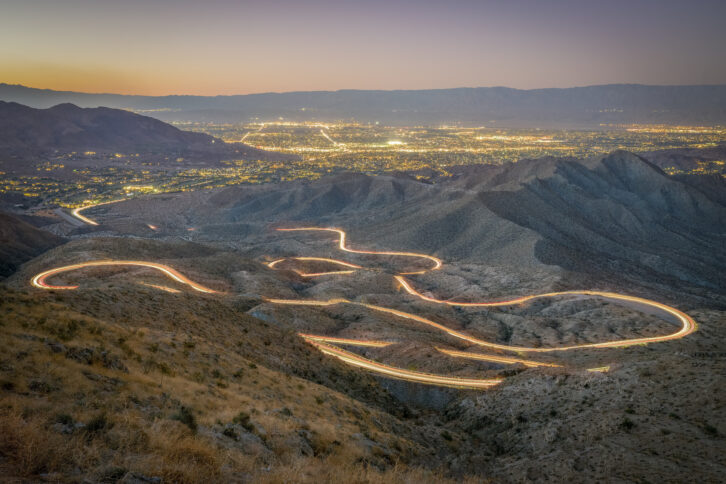
From the Coachella Valley overlook in Palm Desert, Calif., the Pines to Palms Highway is shown. Credit: Chris Axe/Getty Images
Thank you for the story you wrote on the Top 20 Locations to scan the FM dial — I really enjoyed it.
My wife and I are thinking about spending a couple of nights in Death Valley for stargazing, and perhaps some FM DXing, later in January or February.
But your piece also resonated with me because I DX from the Radio Hacienda — our condo in Palm Desert, Calif. — which is right in the middle of the Coachella Valley at a robust 230 feet above sea level. I have the Little San Bernardino Mountains that range from 4,000–6,000 feet to my north and east, and to the south and west are the even taller San Jacinto and Santa Rosa Mountains.
As you are probably aware from the work you’ve done with your RadioLand app, I have a handful of local FMs that throw their signals down into the Valley from mountaintop sites scattered along the northside of the I-10 corridor — one of which is no more than 8 miles from me. So it’s not an empty dial here by any means, but your story — and the inclusion of valley locations — got me to thinking about my own situation where I live and DX from.
I used to think there was no way I would ever get any decent FM DX living in a valley, but somehow I do, via two TEF6686/6a receivers connected to RabbitEars for autologging. I have received tropo, meteor scatter and e-skip from this location.
I DX live when I can, as an opening pops up. While I’m not suggesting my topographic circumstances are unique, I would think that DXers monitoring from the low valley floor face different challenges than our fellow DXers at higher elevations.
Have you ever heard from others what their particular topographic FM DXing challenges are?
Or, perhaps what the differences are — topographically and atmospherically — out in this region of the country? I’ve always felt that it’s a location-driven, station-density-driven. But that’s coming more from my experience on the AM DX side of things. It could be an entirely different set of circumstances for FM DX.
Admittedly, as someone with decades of AM DX experience, I’m still getting acclimated to the “nuances” of FM DX.
I read the interview with Michelle Bradley concerning the regulatory issues facing the current radio landscape. And I felt that I couldn’t hold my tongue anymore.
Over many years, I have discussed some of the industry trends with radio friends and colleagues, as well as outsiders.
The conversations would arrive at the same conclusion: “Yeah, that doesn’t sound right.”
But nothing changed. Except for money. And money talks.
I’ve seen the radio industry evolve from when “big groups” owned 70–90 stations across the U.S., to now when they can own as many as several hundred.
Back in the day, we lamented consultants, who would swoop in and dictate a station’s format and library. That led to top-rated stations with around 200 titles in their on-air library.
Moving into the ‘90s, consolidation was touted as a positive because of cost savings.
But now, with large groups owning so many information and entertainment outlets across the country, and with network feeds originating from fewer and fewer locations, do we even have “locality” anymore? I worked at a station in Minneapolis where our “local weather” was fed from a company in Makina, Ill. It’s a common setup across the nation.
What is an announcer in Dallas/Fort-Worth going to know about the icy streets in Minnesota, after all?
What may be next? Government ownership? Instead of “1984,” the film “Animal Farm” is a more suitable comparison here.
On top of this, where have the jobs gone? There has been a great deal of talk about how there aren’t all that many people trying to get into the various fields within radio broadcasting.
But if a radio group has 40 announcers feeding their 100 or so stations, those are the jobs that may feed up the line to the national ranks.
The same goes for programmers, traffic directors and engineers.
When I saw the recent article about “quiet locations” for the FM band, it reminded me of 1980s field testing we conducted on prototype vehicles to examine the real-world impact of vehicle-generated RF noise on FM radio reception.
Our goal was to start from a location somewhere in the U.S. while listening to an FM station and to drive away until the signal was unlistenable without first- or second-adjacent interference or another co-channel signal captured the receiver before its usable sensitivity limit was reached. We also strived for a low or no multipath environment.
Once at that point, we would kill the vehicle electronics with the exception of the radio to see how much better, if any, reception was. We did this with multiple stations over a period of several days.
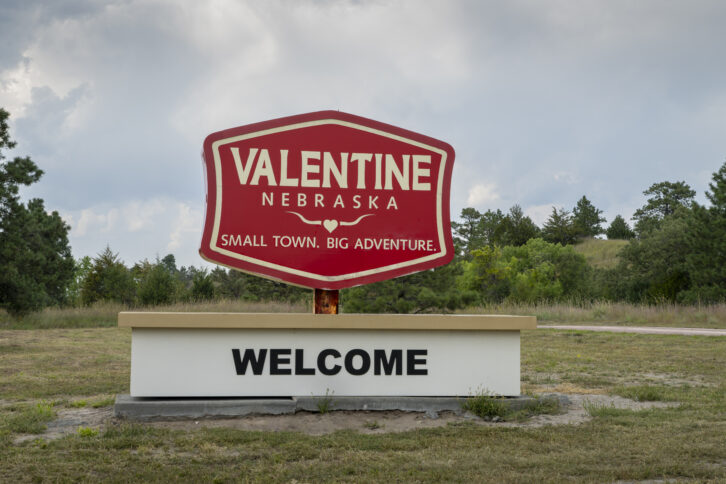
Our starting point was North Platte, Neb., driving north toward Valentine. I chose that route for our experiments in the early 1980s based on a manual analysis of FCC databases long before Longley-Rice was available.
The test vehicles had been measured for radiated and conducted emissions in the lab before the trip, so we knew what the vehicle generated RF interference levels were in advance.
The testing was part of an early electronic control module effort by one of the major U.S. automotive OEMs and their car radio supplier to determine realistic limits for radiated and conducted emissions for vehicle electronic components.
Very few owners would ever experience these weak signal areas but they provided some real world limits of receiver performance, both in the presence and absence of interference.
When I saw Valentine, Neb., on the map in your article, it refreshed the memory of that trip. That was back in the days when car radios were king of the center stack.
I enjoyed your list! I might have to plot a few new DXpeditions.
The Crane Lake situation is true in most of the Superior National Forest. The dial opens up to a nice tropo soup on a good summer day — and Lake Superior helps bring in signals from Wisconsin and Michigan — but I’ve never been fortunate enough to be there during an E-Skip event.
I posted a couple of DX logs from that region this year:
Another nominee could be Yellowstone National Park.
I’ve been there three times now and the central part of the park has always been a true dead zone. There are several translators in the northwestern part of the park, but they cover only a sliver of the massive park. There’s no cell data in most of the park and even satellite radio cuts out due to cliffs and trees near the road!
I’m headed to Big Bend in January! Not expecting much of anything on FM this time of year — maybe I’m wrong — but Mexican AM skywave will be new to me since I live so far north.
In this letter to the editor, the author comments on the Signal Spot column, “When Markets Collide.” Radio World welcomes letters to the editor on this or any story. Email radioworld@futurenet.com.
The Longley-Rice coverage areas depicted for 105.1 WIOV(FM), 105.1 WAVA(FM) and 105.3 WDAS(FM), from the RadioLand app. Click to enlarge.
Our region has other examples of short-spaced full-sized FM stations.
On 105.1, WAVA(FM), licensed to Arlington, Va., collides with 105.1 WIOV(FM) in Ephrata, Pa. Here in north-central Baltimore County, Md., in the communities of Timonium, Mays Chapel, Cockeysville and Hunt Valley, WAVA and WIOV jump back-and-forth in moving vehicles.
Three decades ago, when I lived southwest of here in Columbia, WAVA was dominant on a stationary Pioneer tuner with rabbit ears, but when WAVA signed off its top 40 format for the last time in 1992, the country music of WIOV rolled in clearly; co-channel noise was under WAVA many days.
Moving in another direction, WIOV is a close neighbor to Philadelphia’s WDAS(FM) 105.3. WBEB(FM) 101.1 is short spaced to WROZ(FM) 101.3, licensed to Lancaster, Pa., although WROZ’s 1,200-foot antenna is approximately 15 miles west of Lancaster, farther away from Philadelphia’s antenna farm in Roxborough.
WYCR(FM) 98.5 in York-Hanover, Pa., — hyphenated on the license since 1962 — is short to WMZQ(FM) 98.7 in Washington, D.C, with its transmitter in Falls Church, Va. WYCR is also short to WKRZ(FM) 98.5 in the Scranton-Wilkes Barre region; WKRZ was the old WBRE(FM) mono in Wilkes Barre, which would come in on studio monitors when I would sign-off WYCR at midnight 51 years ago.
WIAD(FM) 94.7 in Bethesda, Md., is very short to WDSD(FM) 94.7 in Smyrna, Del. Both stations are non-directional.
Another short-spaced situation exists between WIHT(FM) 99.5 in Washington, D.C., and 50kw WVCY(FM) on 99.5 in Wilmington, Del. WIHT and WIAD share a tower with TV stations in Bethesda. WIHT is higher above its average terrain — approximately 750 feet — than is the Wilmington 99.5.
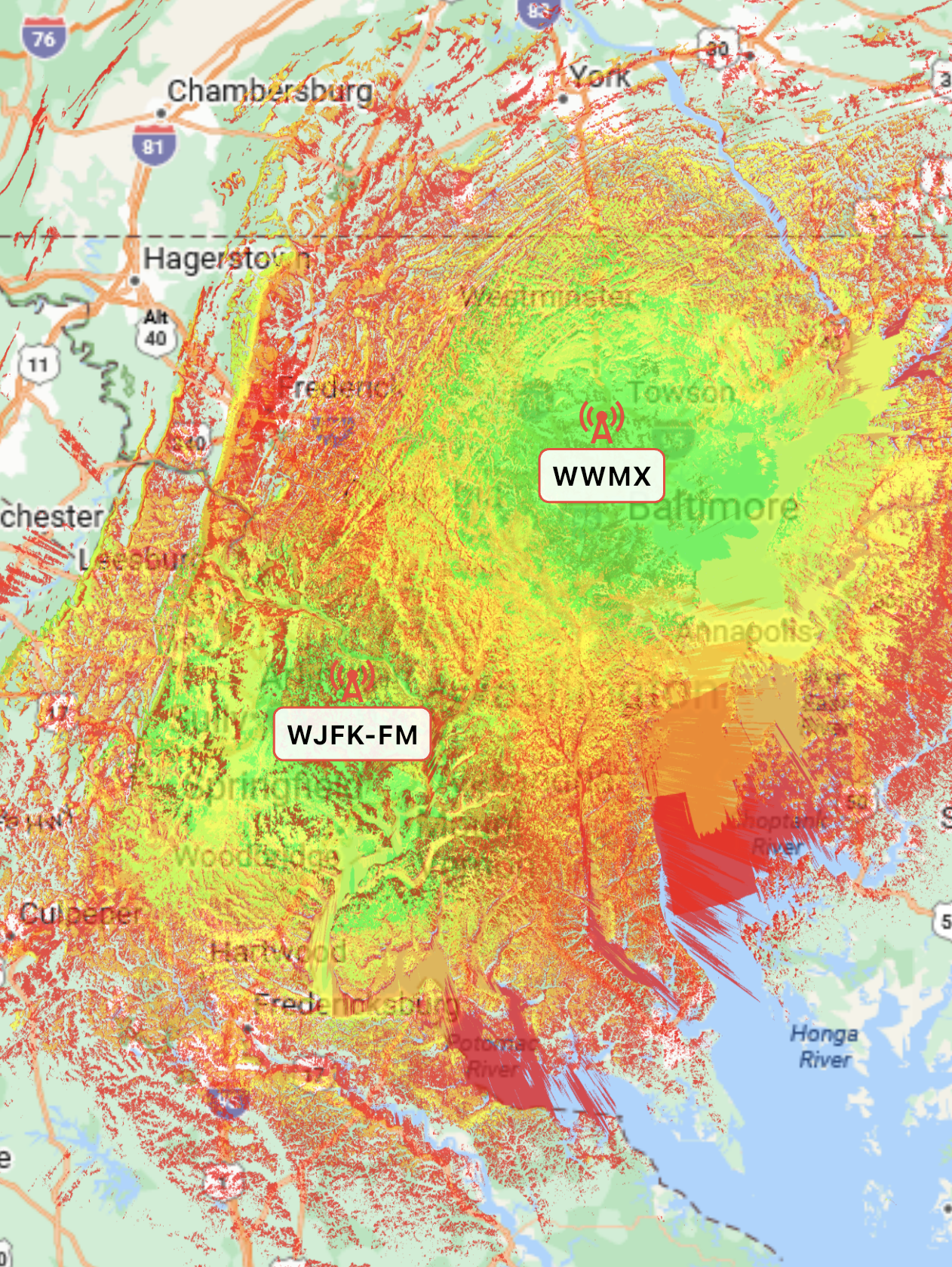
A few years ago, WWMX(FM) 106.5 Baltimore and WJFK(FM) 106.7 in Manassas, Va., “adjusted” their signals to lessen adjacent-channel interference. Non-directional WWMX lowered its antenna height and moved to a tower several feet from the one it had been using, and the coverage maps for WJFK show a slight change of its directional pattern.
Class B FMs 106.5 WWMX(FM) in Baltimore and 106.7 WJFK(FM) in Manassas, Va., are 44 miles from each other. Longley-Rice overlays depicted on the RadioLand app.
But one of the more unusual situations in our area involves 100.7. It is licensed to WZBA(FM) in Westminster. The directional facility is 15 miles southeast of Westminster, in Owings Mills, about 15 miles from the center of Baltimore. WZBA is short spaced to 100.7 stations WLEV(FM) in Allentown, Pa., and WQPO(FM) in Harrisonburg, Va., hence the directionality in Owings Mills.
The previous owners kept the station at 50kw and 350 feet into the early 1980s in Westminster, while the other 100.7 stations raised their antennas. But WZBA’s bigger problem is 100.7 WZXL(FM) in Wildwood, N.J. That station’s signal path traverses both the Delaware Bay and the Chesapeake Bay.
Wildwood’s 100.7 lands on top of WZBA in Harford County and parts of Baltimore County, especially in spring and summer. WZBA bought a translator in Harford County on 107.5 FM and promotes it on and off the air to help reception. Harford, thanks to geography, is one of the counties in the Baltimore area least affected by overlap from Washington, D.C., radio. It is important to Baltimore stations to pick up audiences there, although less so than 20 years ago thanks to streaming.

 Connexion