
 Connexion
Codecs: Increasingly Smart, Increasingly Flexible

As part of Radio World’s latest ebook about trends in codecs, we asked a sampling of industry engineers and users for their perspectives on the evolution of codec designs and applications, from remote broadcasts to sophisticated distribution applications.
Some opted to focus on specifics of their favorite codec brands, others spoke more generally, but all gave insight into the many ways these solutions are serving radio today. Their comments are below, and you can read much more on this topic in the ebook itself.
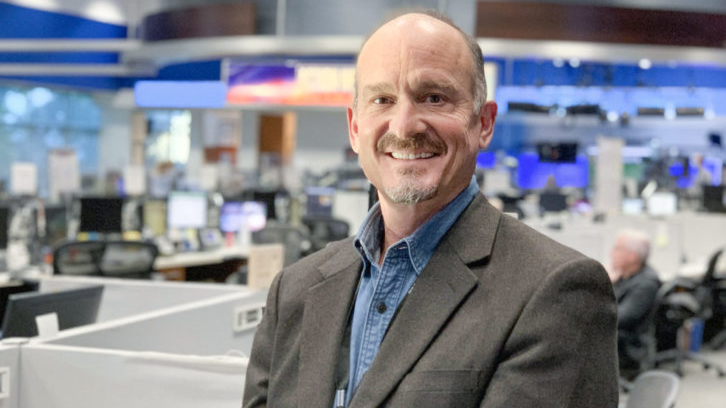
“A trend that continues and is not a fad is the integration of transport codecs within the broadcast infrastructure via hardware or software that includes associated data, control and timing signals,” said Roz Clark, executive director of radio engineering at Cox Media Group.
“The traditional infrastructure of a broadcast facility continues to evolve, and the ability to add process-intensive capabilities such as PPM, audio processing and other functions to devices that once were designed for a single purpose is moving forward.”
A key requirement of this, Clark said, is to transport all associated signals — not just audio — on time, securely and reliably.
“Interoperability between the various systems and vendors is key to long-term success and to allow incremental upgrades within the broadcast plant to take advantage of capabilities and efficiencies.”
He said this topic is being addressed in the IEEE-BTSC Aggregated Content Delivery Link standard work currently underway. “The ACDL standard will formalize these requirements and others to ensure interoperability and an international standard to reference.”
How do today’s codecs avoid problems with dropped packets?
“The use of multiple disparate network connections that can use the connections simultaneously to deliver the content is an important feature,” Clark said.
“Ensuring the last-mile connections on each end of the circuit uses different physical delivery is important. Network connections that only use physical media that are delivered over a cable or fiber fall victim to backhoe fade, while last-mile connections that are over-the-air such as 4G or satellite can fail for other reasons.”
By mixing these types at a location, risk can be minimized, and service is likely to survive complete outages.
At Cox, he said: “The use of IPL technology from GatesAir in links between studios and transmitters has opened up opportunities for us to enhance our operational resiliency. This technology takes the traditional point-to-point dedicated nature of an STL to a scenario where it becomes a multipoint-to-multipoint network of content distribution.”
That opens the possibility of flexibly feeding a tower site from alternate locations on demand as part of a BCP program. “If properly configured, the alternate site can maintain normal operations for the station for internal customers, as well as external customers including streaming audio, metadata etc.”
Browse in and go
“Codecs are becoming agnostic to the infrastructure,” said Ed Bukont, owner of E2 Technical Services & Solutions.
“It is no longer so necessary for a user to physically touch the box to make adjustments. You plug in power, network and maybe some local I/O in the field, browse in and go.”
The “box,” he noted, can be anywhere.
“All of the tech you need is built in, including AoIP and the latest public network protocols. Several popular brands have multiple codecs in one box, all accessed via a network for connection, control and audio — doing more with less, faster, better, cheaper, a better ROI for the expense of the device.”

Given that more functions in the air chain are now in software, how has this affected workflows?
“Air chains are generally static except for EAS and backup situations,” Bukont replied.
“By and large, software has made this harder for the installer but easier on the user. A faceless box can have multiple network ports, allowing secure connections to multiple sites while being controlled securely on a management port.
“Software, and how it integrates at different levels of the OSI model, can allow multiple users and vendors to interact on a common platform from the console, through processing, program delay, EAS, watermarking, STL, all the way into the transmitter, while maintaining a diverse set of reliable paths that may be divergent between content and control.”
Bukont said codecs and a variety of IP connection technologies are making it possible to merge studios while keeping a local presence that was not practical for many even 10 years ago.
“I am less concerned with minute improvements in audio quality that may be masked by background noise of an event. The real advances are in accommodating a diversity of paths via various technologies to create reliable connections with an acceptable fail-over.”
Links to data centers
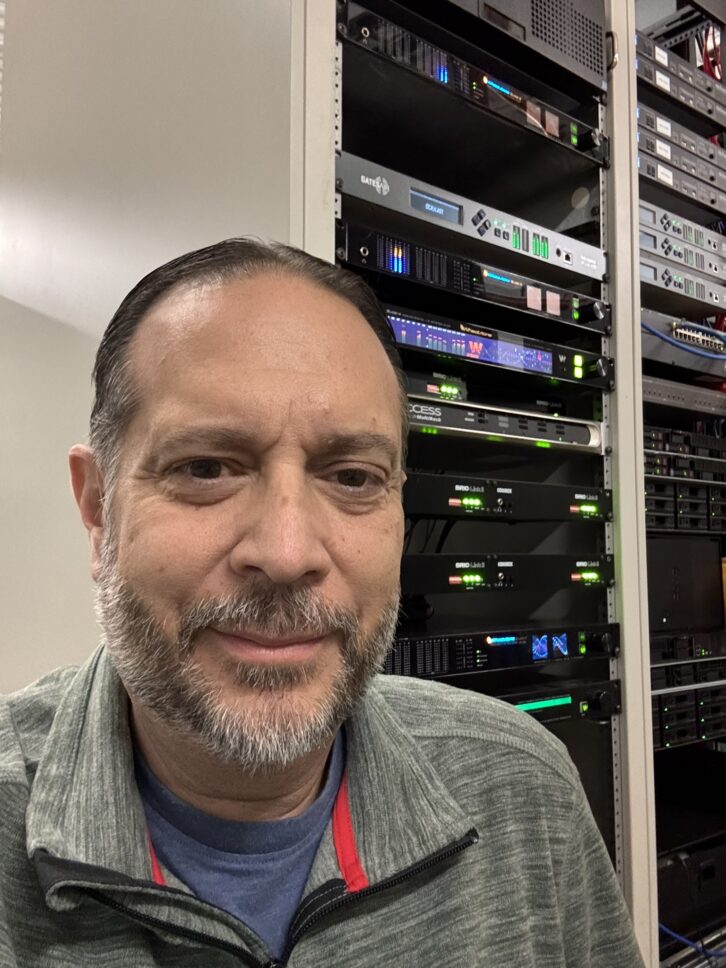
Lamar Smith, VP and director of corporate engineering at Beasley Media Group, notes that the expansion in use of codecs in radio feels exponential.
“With the COVID pandemic we scrambled to get as many codec units as possible, from any flavor possible, to allow our staff to remotely work from home,” he said.
“They all served their purpose during that time, but surprisingly, they have continued to be a vital part of what we do daily.”
He said some have changed their purpose a little, but the remote connectivity has continued to be a vital part to all the company’s operations.
“We are finding the current trend being the use for STL replacements in place of our historical traditional 950 MHz gear and as a way of linking our studies to our data centers, transmitter sites and remote staff contributing to our programming.”
Smith said radio’s familiar tower industry faces a crisis. “It has become too expensive as a way to distribute our content. The delivery of audio to a transmitter site via ISP is a way of limiting the needs on towers for STL antennas.”
He said the use of data centers to distribute content to transmitter sites plays into this. “We may have a data center on the East Coast but feed content to transmitter sites on the West Coast.”
The need to create more and more multi-channel audio paths means software-based devices must be able to handle a number of paths versus an individual piece of hardware for each codec path.
“While the hardware handling a single audio codec path is still needed, with all the downsizing we have been going through, the data centers have demanded that we have server-based solutions that can handle a lot of traffic in a small footprint,” Smith said.
“That traffic is everything from the traditional algorithms — linear or ACC — as well as using SIP technology to accomplish the needs.”
Given advances in audio coding, DSP and wireless IP over recent decades, what improvements can still be made in the quality of audio delivered by codecs?
“Reliability and robustness are critical to the operation of our codec systems, and these areas need to be the focus of the manufacturers,” he replied.
“While we have seen massive improvements in reliability from our ISPs, inherent issues of the public internet cause short temporary interruptions as well as jitter and latency.”
The use of multiple ISPs to overcome these issues has proven to be effective, he said.
“But it’s my opinion that this is an area where we should and will see improvements as manufacturers continue to adapt to the needs of the industry and push for quality audio at near-real time delivery while overcoming public internet obstacles.”
Smith said that in one market, Beasley recently needed to move quickly out of a building that housed its offices and studios because the building was being sold.
“We quickly implemented a data center implementation that allowed the studios and offices to move within 60 days. Using ISP codecs as a way of linking the audio between temporary studios and to the transmitter sites was critical and made the move viable.
“While we have used the GatesAir IPlinks for years now, we have started implementing stream-splicing on our links that feed the transmitter sites across the public internet. We have done this using dual ISP connections such as a fiber provider and Starlink, for example,” he said.
“Sometimes getting dual ‘good’ ISP connections at the transmitter site is difficult, so we have even found success in implementing on the same provider with enough latency on the second path to overcome the failures of the provider. While this adds to the delay of audio going from ‘live’ to ‘on-air,’ we’ve all moved on from expecting real-time audio on the air years ago.”
Diverse connections
Randy Williams is chief engineer of media and technology company Learfield, which specializes in college athletics. Learfield deploys numerous Comrex codecs.
“The use of CrossLock or some type of SD-WAN technology within the codec allows two or more diverse IP connections to be installed,” he said.
“The codec unit will monitor the incoming connections and ‘switch/bounce’ to the IP source that has the best reliability and lowest amount of packet loss. This ensures connectivity without sacrificing missing audio bits or downtime.” (By default, the IP codecs aggregate all data connections, but Redundant Transmission mode can be selected.)
He said the codecs do well at avoiding dropped packets.
“By using CrossLock, the codec is placed into a VPN connection where it is managing two different network IP connections, similar to SD-WAN. While a connection is established and running, Comrex employs several error protection and concealment techniques and Automatic Repeat Request, which instructs the codec software to send redundant data, allowing the codecs to reconstruct or resend lost packets. These features are running simultaneously in live streams to reduce audio loss.”
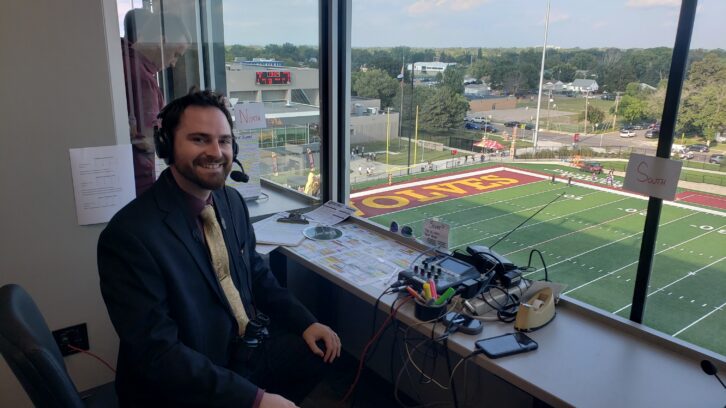
Learfield also has begun a systematic migration to a Wheatstone AoIP platform. “There are processing, compression and level adjustments inside the WheatNet blades or software applications. This is drastically reducing the amount of physical audio cabling that would traverse our building and also is replacing external hardware devices that used to perform the same or similar processes.”
He said Learfield’s Comrex IP rack codecs offer various algorithms for broadcast audio connections with AES digital audio inputs and outputs.
Also useful is the multi-stream feature available in Comrex codecs.
“By configuring a primary ‘main’ unit in multi-stream mode as the ‘encoder’ unit, as many as 10 other codecs can connect to the ‘encoder,’ providing the same quality audio and relay closures. Learfield has made up to 25 different codec connections in multi-stream mode if only using AAC-Mono as the common algorithm profile.”
Williams is looking forward to a recently introduced product called FieldLink. “Once it is proven in larger Division 1 football and NFL stadiums it will be a game-changer for Learfield. It is a dynamic WiFi Access Point codec that allows roaming field reports to connect via smartphone application and deliver high-quality, full-duplex audio to the producer in the press box or studio. This would eliminate the wireless microphone and IFB systems in use during large-scale sporting event productions.”
When it comes to doing remote broadcasts, field users tend to focus on the practical aspects.
David Tukesbrey is sports director at Hub City Radio, a group of FM, AM and HD multicast stations in Aberdeen, S.D. He uses Tieline gear in his play-by-play work.
After audio quality, he said, “The most important thing for being user-friendly is a tad bigger screen, so I can get connected to the station. I also like that fact that the codec is versatile in terms of size and weight. It doesn’t take up a lot of space on game day on the desk or table that I use.”
For Tukesbrey, a codec fills many needs.
“I do all my coaches interviews on it, with an SD card for storage, and it’s so versatile. I’ve worked at radio stations where audio quality isn’t prioritized. When I’m calling play-by-play or listening on the radio to a game, I want to hear and feel like I’m there. The codec provides that. And you click a few buttons and you’re connected. Getting connected via Ethernet is simple, and even via Wi-Fi is easy.”
Balance for budget
We close with thoughts from Jeremy Preece, owner of Wavelength Technical Solutions.
“As more broadcasters move to using the internet for audio delivery, it is critical to consider codecs that can effectively handle multiple IP paths, using diverse NICs, and integrate stream-splicing,” he said. “This will minimize glitching and occasional dropouts that are inevitable on shared services, especially on wireless/cellular and satellite internet connections.

“It is also helpful to choose a unit that can provide detailed stream performance and alarm reporting via SNMP, etc., as unrecovered packet losses and similar problems can affect listener experience while going unnoticed on standard audio monitoring hardware.”
Audio codecs have been available as software for some time, he noted, so the technology is well tested in that format.
“Using software codecs can greatly simplify distribution from a studio to multiple tower sites and your station’s website and mobile apps. Codecs can also run in the cloud, reducing on-prem hardware and reducing failure points.”
Preece said hardware codecs still have a place, but software models should not be overlooked if redundancy and scalability is a consideration.
Given advances in audio coding, DSP and wireless IP over recent decades, what improvements can still be made in the quality of audio delivered by codecs?
“While it is possible to deliver decent audio at lower bitrates than ever before, broadcasters should budget for the bandwidth to use the highest bitrates possible,” he continued.
“For primary audio paths, choose a codec that can use modern algorithms — AAC+ etc., never MP3 — and whenever possible use 192k or higher. Even better, use microMPX, which provides exceptional audio quality, with stereo pilot and RDS, at bitrates comfortably as low as 384k.
“If your link budget allows, consider going linear/uncompressed to maximize quality. For emergency or cellular modem backups, that’s a good place to sacrifice quality for reliability and cost-efficiency.”
And when he’s in the market for a codec, Preece bases the purchasing decision on the project goal.
“A platform for a multi-booster FM+HD SFN system will involve a lot more complexity than a basic IP-STL,” he noted.
“The first step is to accurately identify your needs: Are you sending analog L/R audio, AES, AES192 or MPX? What about metadata, E2X or other IP data services? Consider IP redundancy: Do you need a second or third built-in NIC or will one suffice?
“If HD Radio content is in play, give careful consideration to the delivery method and where the HD equipment is placed. In some cases, sending I2E or E2X from the studio to a tower site may be more cumbersome than simply encoding three or four AES audio streams with a separate IP link for PAD. If you’re not sure what the best solution is, reach out to a sales rep or dealer and ask them to walk you through options. There may be five ways to do it, but only one that is truly the best for your scenario.”
Comment on this or any story. Email radioworld@futurenet.com with “Letter to the Editor” in the subject field.
Read more expert comments about codec designs in the free ebook.
The post Codecs: Increasingly Smart, Increasingly Flexible appeared first on Radio World.